
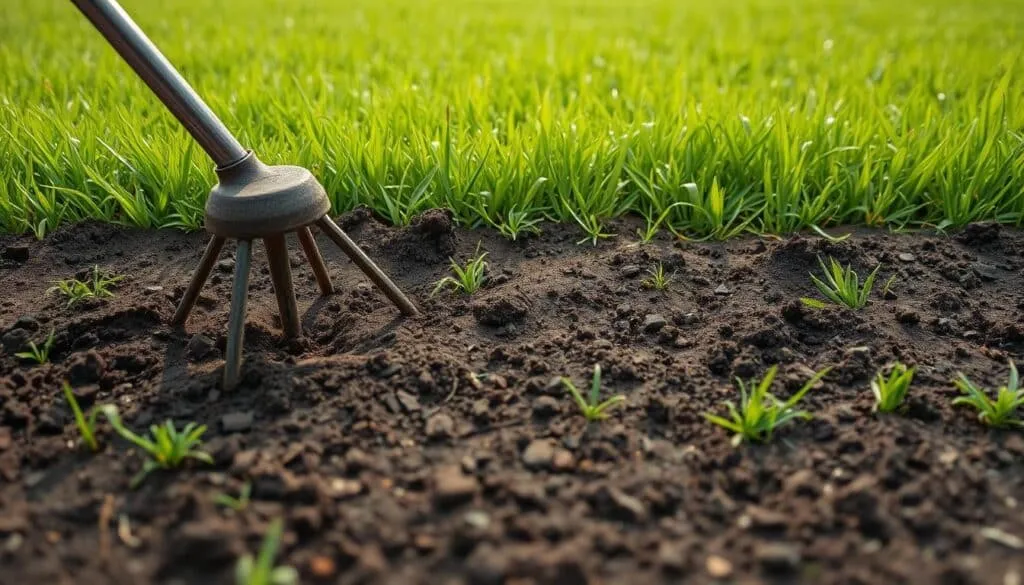
Ever wonder if your lawn care routine might be doing more harm than good? What if I told you that the timing of just one simple task could make or break your entire yard’s health?
Through my research, I discovered that proper mowing timing around aeration is crucial. This process punches holes in compacted earth. It lets water, air, and food reach grass roots.
Many people rush to cut their grass right after this service. But that can hurt your equipment. Mowing before aeration often works better for machine safety.
Getting the schedule right matters for strong, green turf. I will share what I learned about the best practices. Your yard’s condition depends on these details.
Key Takeaways
- Timing your mowing correctly protects your lawn mower from damage.
- Aeration improves nutrient flow to grass roots for healthier growth.
- Compacted soil prevents proper absorption of water and fertilizers.
- Mowing before aeration is generally safer for your equipment.
- Understanding this relationship maximizes your lawn’s health benefits.
- Proper scheduling enhances the effectiveness of the aeration process.
Understanding Lawn Aeration and Why Timing Matters
Many homeowners overlook how soil compaction silently strangles their lawn’s potential for greatness. I discovered that this underground pressure prevents essential elements from reaching grass roots. Proper timing around aeration makes the difference between mediocre and magnificent turf.
What Lawn Aeration Actually Does for Your Grass
Aeration creates small holes in compacted earth. These openings allow air, water, and nutrients to circulate freely. The process literally breathes life into suffocated soil.
Grass roots gain immediate access to previously blocked nourishment. This underground highway system transforms struggling turf into thriving landscapes. The mechanical process involves removing small soil plugs or creating perforations.
The Connection Between Aeration and Overall Lawn Health
Regular foot traffic gradually compresses soil particles together. This compaction creates an impermeable barrier that starves grass of essentials. Aeration breaks this destructive cycle.
Healthier roots develop deeper and stronger foundations. Your lawn becomes more resilient to droughts, heat stress, and diseases. I’ve seen aerated lawns maintain vibrant green color during summer’s toughest conditions.
“Aeration is like giving your lawn a deep tissue massage – it releases tension and allows everything to flow properly.”
Why Mowing Timing Impacts Aeration Results
The timing of cutting your grass directly affects aeration effectiveness. Mowing at the wrong moment can disrupt the freshly created soil passages. These openings need time to stabilize and function properly.
Proper scheduling ensures nutrients reach the root system without obstruction. The relationship between cutting and aerating determines your lawn’s recovery speed. I learned that patience with mowing schedules maximizes the health benefits.
| Soil Condition | Water Absorption | Root Development | Nutrient Access |
|---|---|---|---|
| Compacted | Poor | Shallow | Limited |
| Aerated | Excellent | Deep | Optimal |
This comparison shows why aeration matters for lawn care. The difference in soil condition affects every aspect of turf health. Your grass’s growth potential depends on these underground conditions.
Different Aeration Methods: Core vs Spike and Their Mowing Implications
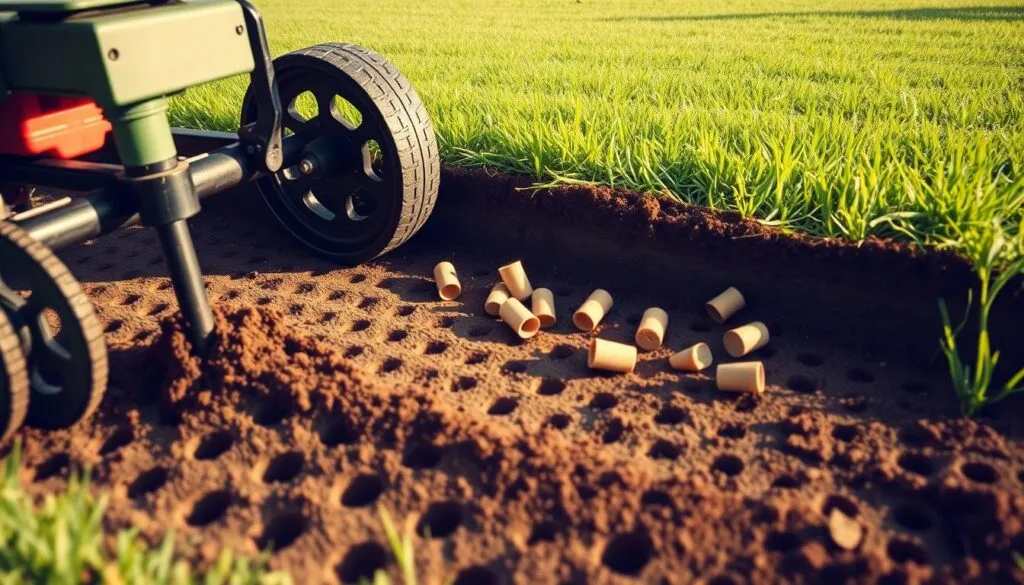
I discovered that not all aeration techniques deliver equal results. The method you choose determines your lawn’s recovery path. Each approach creates distinct underground conditions that affect grass health.
Your mowing schedule must adapt to these differences. I compared both techniques to understand their unique requirements.
Core Aeration: Removing Soil Plugs for Deep Recovery
This process uses specialized equipment with hollow tines. The machine extracts small soil plugs from compacted ground. These cores typically measure 2-4 inches apart across your turf.
The removed plugs remain on the surface to decompose naturally. This method creates genuine space for root expansion. I found it particularly effective for severely compacted soil.
Core aeration improves water penetration dramatically. Nutrients reach grass roots more efficiently. The technique encourages deeper, stronger root development.
Spike Aeration: Simple Perforation Without Soil Removal
Spike aeration uses solid tines to puncture the ground. This technique creates holes without removing any soil. The process is simpler and faster than core extraction.
I learned that spike aeration can sometimes increase compaction. The solid tines push soil sideways rather than removing it. This method works best for mildly compacted lawns.
Many homeowners choose spike aeration for its convenience. The equipment is often more affordable and accessible. Manual spike aerators are available for small yards.
How Each Method Affects Your Mowing Schedule Differently
The core aeration process leaves soil plugs on the surface. These need time to break down and integrate back into the turf. Mowing too soon could disrupt this natural decomposition.
Spike aeration causes less surface disruption. The simple holes allow for quicker recovery times. You can typically resume mowing sooner after this type of treatment.
I always consider the aeration method when planning my lawn care calendar. The technique determines the waiting period before the next cut. Your choice impacts the entire maintenance schedule.
“Core aeration provides long-term benefits that justify the extra waiting time. Spike aeration offers convenience but may require more frequent treatments.”
Understanding these differences helps you select the right approach. Your lawn’s condition should guide your aeration method choice. The technique directly influences your grass’s health and appearance.
How Soon Can You Mow After Aeration: The Ideal Timeframe
Determining the perfect moment for cutting your grass post-aeration requires understanding different techniques. I found that each method demands unique timing considerations. Your lawn’s recovery depends on this critical scheduling decision.
Immediate Mowing After Spike Aeration
Spike aeration creates simple perforations without soil removal. This technique allows for immediate turf maintenance. You can proceed with cutting your grass right away.
The solid tines don’t leave debris on the surface. Your mower blades face no obstruction from soil plugs. This makes the process safe for your equipment.
I discovered that spike treatments work well for quick maintenance cycles. The convenience factor makes this approach popular among homeowners. Just ensure your blades are sharp for clean cuts.
Waiting Period for Core Aeration: 2-4 Weeks
Core extraction requires more patience before resuming regular maintenance. The soil plugs need time to break down naturally. I recommend waiting two to four weeks for optimal results.
This period allows the extracted cores to decompose properly. Nutrients return to the soil during this decomposition process. Your grass develops stronger roots during this recovery phase.
Rushing the mowing schedule could damage your equipment. The soil plugs might get dragged across your turf. This creates uneven cutting and potential lawn damage.
Signs Your Lawn Is Ready for Mowing After Aeration
Visual indicators help determine when your turf has recovered sufficiently. The soil plugs should show visible breakdown after approximately two to four weeks. They’ll appear dissolved and integrated back into the lawn.
Your grass will demonstrate improved height and fullness. The overall appearance becomes lush and vibrant. These changes signal successful nutrient absorption.
Check moisture levels before starting your equipment. The ground shouldn’t feel overly damp from recent watering. I test soil conditions with a simple screwdriver method.
If the tool penetrates easily, wait longer before mowing. Proper dryness ensures clean cuts and prevents soil compaction. Your lawn’s health depends on these careful observations.
Key Factors That Influence When to Mow After Aeration
Your turf’s recovery timeline depends on several interconnected factors that work together to determine the right moment for cutting. I discovered that proper lawn care involves understanding how these elements interact. The timing isn’t just about days on a calendar.
Each yard has unique needs based on its specific conditions. I’ll explain the most important considerations for your maintenance schedule. These factors protect your grass health and prevent equipment damage.
Weather Conditions and Soil Moisture Levels
Weather patterns dramatically affect recovery speed after the aeration process. Hot, dry conditions require extended waiting periods before cutting. The soil needs adequate watering to support root development.
I check moisture levels carefully before starting my mower. Overly damp ground can cause compaction from equipment weight. Proper dryness ensures clean cuts and prevents soil damage.
Rainfall amounts influence how quickly nutrients reach grass roots. Dry spells may require additional watering to support growth. These conditions determine when your lawn can handle maintenance.
Grass Type and Current Lawn Health
Different grass varieties recover at varying rates after treatment. Cool-season types often bounce back faster than warm-season varieties. Your specific grass type influences the entire timeline.
Current lawn health plays a crucial role in recovery speed. Struggling turf needs more time to absorb nutrients properly. I prioritize grass condition over strict scheduling.
Healthy lawns with strong root systems handle maintenance sooner. Weaker turf requires extended recovery periods before cutting. Always assess your yard’s overall vitality first.
Aeration Depth and Lawn Usage Patterns
Deeper aeration creates more significant soil disruption that needs time to settle. The extraction depth determines how long cores take to break down. I’ve found that deeper treatments require more patience.
Lawn usage patterns affect recovery and maintenance timing. High foot traffic areas need extra protection after treatment. These zones may require delayed cutting schedules.
I recommend limiting activity on recently aerated lawns. Heavy equipment can damage the freshly created holes. Proper protection ensures optimal nutrient absorption.
Whether You Overseeded After Aeration
Overseeding changes everything about your maintenance timeline. New grass seeds need time to establish before facing mower blades. The aeration overseeding combination requires careful scheduling.
I wait until new grass reaches adequate height before cutting. This protects tender growth from equipment damage. The timing ensures successful seed establishment.
Proper watering becomes even more critical with overseeding. Moisture supports both recovery and new growth simultaneously. These combined processes demand extended patience.
“The most successful lawn care strategies consider all environmental and treatment factors together, not just individual elements in isolation.”
These factors work together to create your ideal maintenance schedule. I consider all elements before deciding on cutting timing. Your lawn’s health depends on this comprehensive approach.
Conclusion: Best Practices for Mowing After Lawn Aeration
I’ve learned that proper timing makes all the difference in lawn care success. The right approach protects your equipment and maximizes grass health.
Cutting before the aeration process prevents mower damage from soil plugs. For core treatments, waiting two to four weeks allows natural decomposition. This patience ensures nutrients reach roots effectively.
Always check lawn conditions before maintenance. Sharp blades and limited foot traffic support recovery. These practices lead to stronger, greener turf over time.
Your yard’s growth depends on these careful considerations. Following these tips transforms ordinary care into exceptional results.
FAQ
What does lawn aeration actually do for my grass?
Aeration creates small holes in the soil, allowing air, water, and nutrients to reach the roots more effectively. This process reduces soil compaction and encourages deeper root growth for a healthier, more resilient lawn.
How does core aeration differ from spike aeration?
Core aeration removes small plugs of soil, creating space for roots to expand and nutrients to penetrate. Spike aeration simply pokes holes without soil removal, making it less effective for compacted lawns but faster to recover from.
When is the best time to mow after core aeration?
I recommend waiting two to four weeks after core aeration before mowing. This gives the soil plugs time to break down and allows the grassroots to establish better access to water and nutrients.
Can I mow immediately after spike aeration?
Yes, you can typically mow right after spike aeration since it doesn’t remove soil. The perforations are superficial, so your lawn care routine can resume almost immediately without risking damage.
What signs indicate my lawn is ready for mowing after aeration?
Look for the soil plugs to break down and blend into the turf. The grass should show vigorous growth, and the ground should feel firm underfoot, not soft or muddy from recent watering.
How does overseeding affect when I can mow after aeration?
If you overseed after aeration, delay mowing until the new grass reaches about 3-4 inches in height. This usually takes three to four weeks and ensures the young seedlings aren’t damaged by the mower.
Does grass type influence how soon I can mow after aeration?
Absolutely. Cool-season grasses like Kentucky bluegrass recover faster, often within two weeks. Warm-season varieties such as Bermuda grass may need the full four-week period before mowing to maximize benefits.
How do weather conditions impact mowing timing post-aeration?
Dry, sunny weather helps the lawn recover quicker, potentially shortening the wait. Wet conditions prolong recovery time, so I advise extra patience and avoid mowing on soggy soil to prevent compaction and damage.