
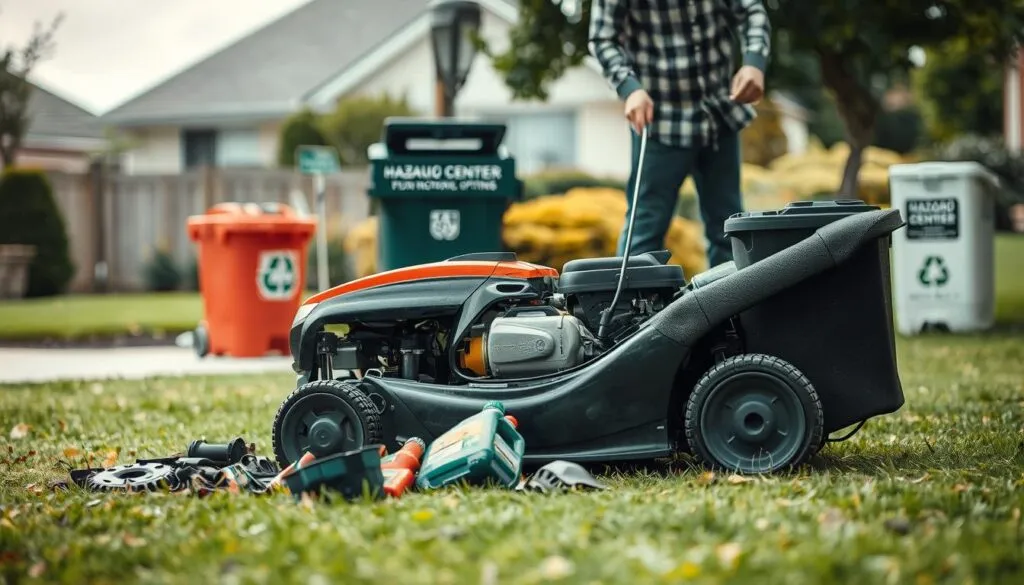
Have you ever wondered what happens to that rusty lawn mower rusting in your shed? Most people simply toss it with regular trash, but this creates serious environmental risks.
Proper disposal matters whether your equipment works or not. Gas and oil can contaminate soil and water. Metal parts take decades to break down in landfills.
Maybe you’re upgrading to an electric model. Perhaps your machine broke beyond repair. Either way, you need safe options that free up space.
I’ll show you methods ranging from DIY disassembly to professional pickup services. Preparation like draining fluids is crucial for any approach.
Key Takeaways
- Improper disposal harms the environment through fluid contamination
- Both working and non-working equipment require special handling
- Multiple disposal options exist from recycling to donation
- Always drain gasoline and engine oil before disposal
- Metal components can often be recycled for scrap value
- Some charities accept functional lawn care equipment
- Professional services handle all preparation and transportation
Understanding the Importance of Responsible Lawn Mower Disposal
That neglected machine in your garage poses more risks than you might realize. Gas-powered models emit harmful pollutants even when not in use. These emissions include carbon monoxide and hydrocarbons that contribute to air quality issues.
Leaking fluids create another serious problem. Oil and gasoline can seep into soil and groundwater. This contamination affects local ecosystems and drinking water sources.
Safety concerns extend beyond environmental damage. Older equipment often has worn blades and exposed wiring. These defects present real dangers for children and pets who might explore your storage area.
Upgrading to modern equipment offers compelling advantages. Newer models provide better fuel efficiency and advanced features. Robotic mowers can maintain your yard with minimal effort on your part.
Proper handling supports sustainability efforts too. Metal components and plastics can get new life through recycling. This approach reduces landfill waste significantly.
You also gain practical benefits around your home. Removing unused equipment creates valuable storage space. Your garage or shed becomes more organized and functional.
| Aspect | Old Equipment | Modern Alternatives |
|---|---|---|
| Environmental Impact | Fluid leaks, higher emissions | Cleaner operation, less pollution |
| Safety Features | Worn blades, exposed wiring | Safety switches, improved designs |
| Operating Efficiency | Higher fuel consumption | Better performance, less waste |
| Convenience | Manual operation required | Programmable, automated options |
| Space Requirements | Bulky storage needs | Often more compact designs |
Choosing the right disposal method matters for everyone. It protects our environment while keeping your family safe. You also contribute to recycling efforts that conserve natural resources.
The time invested in proper handling brings multiple rewards. You eliminate potential hazards around your home. Your property gains better organization while supporting ecological responsibility.
Preparing Your Lawn Mower for Safe Disposal
Getting your equipment ready requires careful attention. Proper preparation ensures safety and environmental protection. I’ll guide you through the essential steps for handling your machine.
Draining Hazardous Fluids: Gas and Oil
Removing fluids is the most critical step. Gasoline and engine oil pose serious contamination risks. Always work in a well-ventilated area for safety.
Start by locating the fuel tank. Use a siphon hose to transfer gasoline into an approved container. Never use your mouth to start siphoning – this is extremely dangerous.
For oil removal, position an oil catch pan beneath the engine. Tilt the equipment carefully to access the drain plug. Remove the spark plug wire first for safety.
Wear thick work gloves throughout this process. Sharp edges and hot components can cause injuries. Protect yourself from potential hazards.
All collected fluids require special handling. Take them to a Household Hazardous Waste facility. Never pour these materials down drains or on the ground.
Cleaning and Removing Personal Items
A thorough cleaning improves your equipment’s appearance. Remove all grass clippings and dirt buildup. This makes your machine more presentable for potential reuse.
Check every compartment and storage area. Remove any personal tools or accessories you might have stored. Don’t forget to retrieve the owner’s manual if available.
Inspect the blade condition carefully. Dull or damaged blades should be replaced before donation. Sharp blades function better for the next user.
Wipe down all surfaces with a damp cloth. Remove any grease or oil residues. A clean machine shows better care and maintenance.
| Preparation Step | Essential Tools | Safety Measures |
|---|---|---|
| Fluid Drainage | Siphon hose, catch pan | Gloves, ventilation, spark plug disconnect |
| Component Cleaning | Brush, cloth, cleaner | Gloves, eye protection |
| Personal Item Removal | None required | Thorough inspection |
| Final Inspection | Flashlight (if needed) | Secure all removed parts |
Proper preparation takes time but prevents problems. You ensure safe handling and transportation. Following these steps protects both people and the environment.
Always check local regulations before proceeding. Some areas have specific requirements for fluid disposal. Compliance avoids potential fines or complications.
Where to Dispose of Lawn Mower: Recycling Options
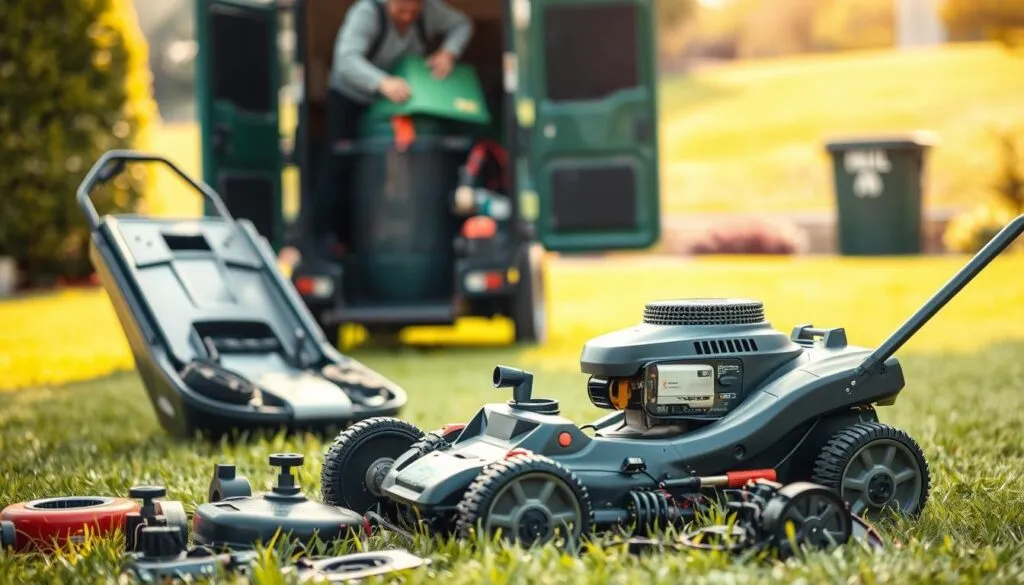
Recycling your equipment offers an eco-friendly solution that benefits our planet. This approach keeps valuable materials out of landfills. It also gives components new life through proper processing.
Different machines require specific handling methods. Gas-powered models need different treatment than electric versions. I’ll guide you through the best approaches for each type.
Local Recycling Centers and Scrap Yards
Many communities have facilities that accept old equipment. These centers specialize in handling various materials safely. They ensure proper processing of all components.
Gas mowers typically need disassembly before recycling. Separate metal parts from plastic components for better processing. This separation increases the value of your scrap metal.
Scrap yards often pay for clean, separated metals. Prices vary based on current market rates and material condition. Disassembled parts typically bring higher returns.
Earth911 provides an excellent resource for locating facilities. Their database includes recycling centers across the United States. You can search by material type and zip code.
Some locations charge small fees for accepting equipment. Others pay you for bringing valuable metals. Always call ahead to confirm requirements and pricing.
E-Waste Recycling for Electric Mowers
Electric models contain electronic components that need special handling. Batteries and motors require proper e-waste recycling. This prevents hazardous materials from contaminating the environment.
Never place electric equipment in regular trash. Lithium-ion batteries can cause fires in garbage trucks. They also contain valuable materials that should be recovered.
Many electronics retailers offer take-back programs. Some municipalities host special e-waste collection events. These options ensure safe processing of electronic components.
Check your local regulations for specific requirements. Some areas mandate separate e-waste recycling by law. Compliance helps protect our environment and community.
| Equipment Type | Preparation Required | Potential Value | Special Considerations |
|---|---|---|---|
| Gas-Powered Mower | Drain fluids, separate metals | $5-20 scrap value | Check for fluid disposal fees |
| Electric Mower | Remove battery if possible | Usually no payment | Must use e-waste facility |
| Riding Mower | Complete fluid drainage | $20-50 scrap value | May require appointment for drop-off |
| Push Mower | Basic cleaning and disassembly | $3-15 scrap value | Easiest to transport and process |
Recycling requires some effort but offers environmental rewards. You contribute to reducing landfill waste significantly. This method also recovers valuable resources for reuse.
Always prepare your equipment properly before recycling. Drain all fluids and remove personal items completely. This ensures safe handling at the recycling facility.
Consider the size of your machine when planning transportation. Riding mowers may need special arrangements for moving. Some facilities offer pickup services for larger items.
This eco-friendly option gives you peace of mind. You know your old equipment gets processed responsibly. It’s a great way to support sustainability efforts.
Utilizing Municipal and Curbside Pickup Services
Many homeowners find municipal services the easiest way to handle unwanted equipment. Your local government may offer special collection programs for large items. These services provide convenient solutions without requiring transportation.
Availability varies significantly between different municipalities. Some cities provide regular curbside collection for large items. Others schedule specific dates throughout the year for bulky waste pickup.
Scheduling with Your Local Waste Management
Contacting your municipal waste department is the first step. They can explain available programs and requirements. Many cities maintain online portals for scheduling pickups.
Some locations require appointments for large item collection. Others designate specific weeks for this service. Always confirm scheduling details before placing items curbside.
Potential fees often apply for special pickup services. Charges typically range from $15 to $50 per item. These costs cover the extra handling required for large equipment.
- Check municipal websites for collection schedules
- Call your waste management department for specifics
- Schedule appointments when required
- Understand any applicable fees beforehand
- Confirm preparation requirements for your equipment
Size restrictions sometimes limit this option. Very large riding mowers might not qualify for curbside service. Always verify size limits with your local provider.
Proper preparation remains essential for municipal pickup. Drain all fluids completely before placement. Remove batteries from electric models for separate recycling.
This convenient option works best for standard push mowers. It eliminates transportation hassles for homeowners. Not all areas provide this service, so verification is crucial.
Curbside collection offers simplicity but has limitations. It might not accept equipment with remaining fluids. Some municipalities exclude certain types of machinery entirely.
Always place your prepared equipment curbside on the designated day. Position it clearly visible from the street. Avoid blocking sidewalks or traffic lanes.
This service represents one of several available solutions. It works well for those preferring minimal effort. Research your local options to determine suitability.
Donating or Selling a Working Lawn Mower
A machine in good condition opens up opportunities for both financial return and community support. You can recoup some value while helping others maintain their properties. This approach benefits everyone involved.
Selling Online Through Marketplaces
Online platforms offer excellent venues for selling functional equipment. Facebook Marketplace reaches local buyers quickly. Craigslist serves many communities across the country.
OfferUp and Letgo provide mobile-friendly options. These apps make connecting with potential buyers simple. You can negotiate directly through the platform.
Clear photography significantly improves listing performance. Take pictures from multiple angles in good lighting. Show any special features or accessories included.
Transparent descriptions build buyer confidence. Mention the age, maintenance history, and current condition. Highlight recent repairs or part replacements.
Competitive pricing attracts serious inquiries. Research similar listings in your area. Consider slightly lower pricing for quicker sales.
Safety matters during in-person transactions. Meet in public locations during daylight hours. Bring a friend along for added security.
Donating to Charities and Community Organizations
Charitable giving provides meaningful alternatives to selling. Habitat for Humanity ReStore accepts functional outdoor equipment. Your donation supports affordable housing projects.
Goodwill locations often take working yard care tools. Local schools sometimes need maintenance equipment for groundskeeping. Community gardens may appreciate donated machinery.
Many charities offer pickup services for larger items. This convenience eliminates transportation hassles. Schedule pickups according to their availability.
Proper preparation ensures successful donations. Clean the equipment thoroughly before giving. Drain all fluids completely for safety.
Include any available documentation if possible. Owner’s manuals help the next user understand operation. Maintenance records show good care history.
Donations often provide tax deduction benefits. Keep receipts for your charitable contributions. Consult a tax professional about specific deductions.
Retail trade-in programs present another interesting option. Home Depot and Lowe’s sometimes offer discounts on new purchases. This approach combines removal with upgrading your equipment.
These methods help you clear space while doing good. Someone else gains affordable yard care solutions. You contribute to community sustainability efforts.
Professional Disposal Services and Junk Removal
Sometimes you need expert help removing large equipment. Professional services handle everything from pickup to proper processing. They offer convenience when you lack time or transportation options.
Hiring a Junk Removal Company
Companies like LoadUp specialize in eco-friendly equipment removal. They provide upfront pricing before scheduling your service. This transparency helps you budget for the project.
Their process begins with online booking or phone consultation. You describe your old lawn mower and any additional items. They quote a fixed price without hidden fees.
Professional teams handle all preparation work themselves. They drain fluids and disassemble components properly. This ensures compliance with environmental regulations.
These services prioritize recycling and donation when possible. Functional equipment might find new homes through charity partnerships. Non-working items get processed at proper facilities.
Consider these advantages when choosing this option:
- No transportation requirements on your part
- Proper handling of hazardous materials
- Environmental compliance guaranteed
- Multiple items removed simultaneously
- Scheduling flexibility for busy homeowners
Costs vary based on your location and equipment size. Minimum truck space requirements might apply. Always confirm pricing details before booking.
Renting a Dumpster for Multiple Items
Larger cleanout projects might benefit from dumpster rentals. This option works well when clearing various yard tools alongside your machine. You fill the container at your own pace.
Rental companies deliver dumpsters directly to your property. Choose sizes based on your project scope. Standard containers handle most residential cleanup needs.
You maintain control over the loading process. Arrange items efficiently to maximize space. Most companies provide guidelines about acceptable materials.
This approach offers excellent value for multiple items. You pay one fee for comprehensive waste removal. It eliminates multiple trips to recycling centers.
Remember these important considerations:
- Check local permit requirements for placement
- Confirm weight limits to avoid overage charges
- Understand prohibited items in your rental agreement
- Schedule rental period according to your project timeline
- Prepare equipment properly before placement
Professional services save time and ensure proper handling. They manage the entire process from start to finish. This convenience justifies the investment for many homeowners.
Environmental and Safety Considerations
The way we handle our retired outdoor power tools speaks volumes about our commitment to environmental stewardship. Every choice we make impacts our community’s health and safety.
I want to highlight why these considerations matter beyond just clearing garage space. Our actions create ripple effects throughout the local ecosystem.
Reducing Pollution and Landfill Waste
Proper handling prevents dangerous fluid leaks from contaminating our soil and water sources. Gasoline and oil can seep into groundwater when dumped improperly.
Landfills strictly prohibit hazardous materials for good reason. These facilities cannot safely process leaking chemicals.
Recycling gives valuable materials new life instead of wasting them. Metal components can be repurposed through proper processing.
This approach significantly reduces landfill overcrowding. Every machine kept out saves precious space for truly non-recyclable items.
Avoiding Safety Hazards
Old equipment presents multiple risks that many homeowners overlook. Sharp blades can cause serious injuries during handling.
Chemical exposure remains a concern with residual fluids. Gasoline fumes create fire hazards in storage areas.
Children and pets face particular dangers around stored machinery. Curious exploration can lead to preventable accidents.
Professional services eliminate these risks through proper protocols. They handle dangerous components using appropriate safety gear.
Following local regulations ensures legal and ethical practices. Many municipalities have specific rules for handling yard equipment.
Certified services guarantee compliance with environmental standards. They understand the complex regulations governing equipment processing.
Our choices today shape tomorrow’s environment. Responsible management protects natural resources for future generations.
Community health improves when we prioritize proper handling practices. Everyone benefits from cleaner soil, water, and air quality.
- Fluid containment prevents soil and water contamination
- Recycling conserves natural resources and reduces waste
- Proper handling eliminates safety risks for families
- Regulatory compliance avoids legal complications
- Community impact extends beyond individual actions
Conclusion
Your old yard equipment deserves thoughtful handling. I’ve shown multiple eco-friendly paths for its next chapter.
Remember to drain gasoline and engine oil first. This protects our soil and water from contamination. Clean components help maximize recycling potential.
Choose options matching your machine’s condition. Working models can help charities or earn you cash. Non-functional equipment often brings scrap value.
Research local rules before proceeding. Some cities offer convenient pickup services. Others have specific recycling center requirements.
This effort benefits everyone involved. You gain cleaner garage space while protecting our environment. Responsible handling makes a real difference.
FAQ
Can I just put my old lawn mower out with the trash?
I wouldn’t recommend it. Most regular trash services won’t accept large equipment, especially if it still has gas or oil inside. These fluids are hazardous and can cause environmental damage. You need to explore specific disposal options for this type of item.
What’s the first thing I should do before getting rid of my mower?
My first step is always to drain all the hazardous fluids. I make sure to safely remove all gasoline and engine oil. This prevents leaks and makes the equipment safer and easier to handle, whether I’m recycling, donating, or having it picked up.
Where can I take my mower for recycling?
I look for local scrap metal recycling centers or yards that accept small engines. Many communities also have special household hazardous waste collection days where you can drop off items like this. For electric models, I check with e-waste recycling facilities.
My mower still works. What should I do with it?
If my equipment is in good working condition, I try to sell it online through Facebook Marketplace or Craigslist. I also consider donating it to a local charity, community garden, or a neighbor in need. It’s a great way to give it a second life.
Are there services that will pick it up from my home?
A> Absolutely. Many junk removal services, like 1-800-GOT-JUNK?, will schedule a pickup for a fee. I can also check if my city’s waste management offers special large-item collection days. I just need to call and schedule it in advance.
Why is it so important to dispose of it properly?
I do it to protect the environment. Gas and oil can contaminate soil and water. Proper recycling also keeps metal out of landfills. It’s a simple step I take to reduce pollution and be a more responsible consumer.