
Are you unknowingly putting your lawn mower’s performance and longevity at risk with the wrong fuel choice? The type of gasoline you use in your lawn mower can significantly impact its starting reliability and overall engine health.
Small engines, like those in lawn mowers, are more sensitive to fuel quality than car engines. They operate at higher temperatures, have simpler fuel systems, and often sit unused for extended periods. Choosing the right fuel is crucial for maintaining your mower’s performance and extending its service life.
We’ll explore the critical factors in selecting the optimal fuel for your lawn mower, including the impact of ethanol content and octane rating on engine performance.
Key Takeaways
- Understand the importance of choosing the right fuel for your lawn mower.
- Learn how ethanol content in gasoline affects small engines.
- Discover the relationship between octane rating and lawn mower performance.
- Find out why small engines require specific fuel considerations.
- Get expert advice on selecting the optimal fuel for your lawn mower.
Understanding Lawn Mower Fuel Basics
The fuel you choose for your lawn mower plays a critical role in its overall performance and durability. Small engines, like those in lawn mowers, are more sensitive to fuel quality than car engines due to their higher operating temperatures, simpler fuel systems, and periods of inactivity.
Why Fuel Quality Matters for Small Engines
Fuel quality is crucial for small engines as they lack the sophisticated filtration systems found in cars. Using low-quality fuel can lead to issues such as hard starting, rough running, and premature engine wear. Most lawn mowers run on regular unleaded gasoline with an octane rating of 87 or higher.
How Lawn Mower Engines Differ from Car Engines
Lawn mower engines operate at higher temperatures and have simpler fuel systems compared to car engines. This makes them more susceptible to fuel-related problems, particularly when using gasoline with high ethanol content. Avoid using gas with more than 10% ethanol (E10) to prevent engine damage.
The Impact of Fuel Choice on Performance and Longevity
The choice of fuel directly affects both the day-to-day performance and long-term reliability of your gas lawn mower. Using the right fuel ensures optimal engine performance, reduces the risk of engine damage, and prolongs the lifespan of your mower. Proper fuel choice is essential for maintaining your lawn mower’s efficiency and durability.
Best Gas Options for Lawn Mowers
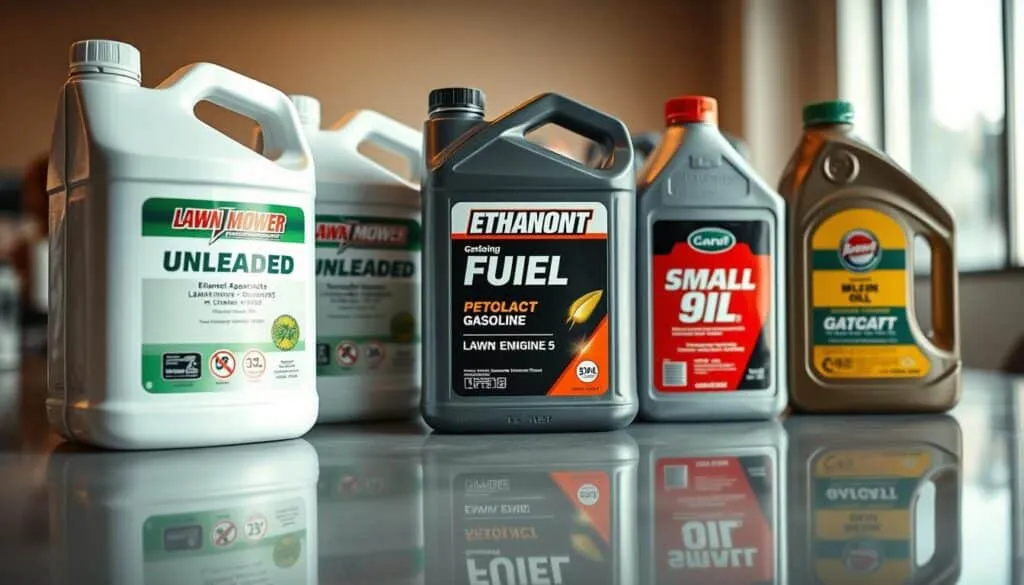
Choosing the right gasoline for your lawn mower is crucial for optimal performance and longevity. The type of gas you use can affect your mower’s efficiency, maintenance needs, and overall lifespan.
Regular Unleaded Gasoline (87 Octane)
For most lawn mowers, regular unleaded gasoline with an 87 octane rating is the recommended fuel type. This gasoline typically contains up to 10% ethanol (E10) and provides a good balance between performance and cost-effectiveness. Using 87 octane gasoline in your lawn mower ensures that you’re getting the right fuel for your engine without paying for higher-octane fuel that your mower doesn’t need.
As noted by lawn care experts, “Regular unleaded gasoline is sufficient for most residential lawn mowers, offering the best balance of performance, availability, and cost.” This makes it an ideal choice for homeowners who want to keep their lawn mowers running smoothly without breaking the bank.
Ethanol-Free Gas: The Premium Choice
Ethanol-free gas is another option for lawn mower owners, particularly those who store their equipment for extended periods. This fuel type eliminates the risk of ethanol-related issues such as corrosion and moisture absorption, which can be problematic for small engines. Although ethanol-free gas is typically $0.30-0.50 more per gallon than E10, it’s a worthwhile investment for equipment that sees occasional use.
A study by the Equipment Manufacturers Association found that ethanol-free fuel can significantly reduce the risk of engine damage in small engines. This makes it a popular choice among professionals who need reliable equipment.
Premium Gasoline: When Is It Worth It?
While premium gasoline with higher octane ratings (89-93) is not typically necessary for most lawn mowers, there are some exceptions. If you live at high altitudes or use commercial-grade mowers with higher compression ratios, premium gasoline might be beneficial. However, for the average homeowner, regular unleaded gasoline is sufficient.
Pre-Mixed Canned Fuels for Convenience
Pre-mixed canned fuels like TruFuel offer a convenient solution for lawn mower owners. These fuels combine ethanol-free gasoline with fuel stabilizers, providing extended shelf life and consistent quality. Although they are more expensive, costing $15-20 per gallon, they offer maximum convenience and engine protection for occasional use equipment.
| Fuel Type | Octane Rating | Ethanol Content | Cost | Best For |
|---|---|---|---|---|
| Regular Unleaded | 87 | Up to 10% | Standard | Most residential lawn mowers |
| Ethanol-Free | 87 | 0% | $0.30-0.50 more per gallon | Equipment stored for extended periods |
| Premium Gasoline | 89-93 | Varies | Higher than regular | High-altitude or high-performance mowers |
| Pre-Mixed Canned Fuels | Varies | 0% | $15-20 per gallon | Occasional use equipment |
What Gas to Use for Different Lawn Mower Types
To keep your lawn mower running efficiently, it’s essential to understand the fuel requirements for your specific engine type. Most modern lawn mowers come with either 4-stroke or 2-stroke engines, each having different fuel needs.
4-Stroke Engine Requirements
Most modern lawn mowers are equipped with 4-stroke engines, which require straight gasoline with no oil mixed in. These engines have separate oil reservoirs for lubrication, making it crucial to use the correct type of gasoline. Using regular unleaded gasoline with an octane rating of 87 is typically sufficient for most 4-stroke lawn mower engines. It’s also important to check your owner’s manual for any specific recommendations regarding ethanol content and octane rating.
2-Stroke Engine Fuel Mixtures
2-stroke engines, on the other hand, require a mixture of gasoline and oil to run. The typical mixing ratio is 50:1, but it’s crucial to consult your owner’s manual for the exact ratio recommended by the manufacturer. The quality of the oil used for mixing is also important; you should use high-quality 2-stroke oil that’s specifically designed for air-cooled engines.
- Always mix the fuel and oil in the correct ratio to avoid engine damage.
- Use high-quality 2-stroke oil for better engine performance and longevity.
Matching Fuel Type to Your Specific Mower Model
Different lawn mower models may have specific fuel requirements as recommended by the manufacturer. It’s essential to consult your owner’s manual to determine the acceptable ethanol content and recommended octane rating for your mower. Some high-performance or commercial-grade mowers might require premium gasoline or have stricter fuel specifications.
By understanding the fuel requirements for your lawn mower’s engine type and model, you can ensure optimal performance, longevity, and prevent potential damage.
Fuel Storage and Maintenance Best Practices
Fuel storage and maintenance are critical aspects of lawn care equipment upkeep. Proper handling of fuel can significantly impact the performance and longevity of your lawn mower.
Using Fuel Stabilizers Effectively
Fuel stabilizers are additives that help maintain the quality of fuel over time. When storing your lawn mower for extended periods, such as during winter, adding a fuel stabilizer can prevent fuel degradation and corrosion within the engine. To use fuel stabilizers effectively, follow the manufacturer’s instructions for the correct dosage and ensure you mix it with fresh fuel.
Proper Storage Techniques for Seasonal Equipment
When storing your lawn mower for the winter or other extended periods, it’s essential to follow proper storage techniques. You can either run the mower until it’s out of gas or add a fuel stabilizer to the tank. Storing the mower in a well-ventilated area, away from direct sunlight, and keeping it on a level surface can also help maintain its condition.
Signs of Fuel-Related Problems in Your Mower
If your lawn mower is experiencing hard starting, rough running, or performance issues, it may be a sign of fuel-related problems. Stale or contaminated fuel can cause these issues, so it’s crucial to check your fuel and consider using a fuel stabilizer or replacing the fuel if it’s old.
How to Properly Dispose of Old Fuel
Disposing of old or contaminated fuel should be done responsibly to protect the environment. Check with local authorities for designated fuel disposal facilities or consider taking it to a service station that accepts used fuel for recycling. Never dispose of fuel in regular trash or down drains.
Conclusion: Keeping Your Lawn Mower Running Smoothly
Proper fuel selection is vital for ensuring your lawn mower operates reliably and effectively. For most homeowners, regular unleaded 87 octane gasoline with no more than 10% ethanol (E10) provides the optimal balance of performance, availability, and cost. When storing your mower for extended periods, such as during winter months, it’s crucial to either empty the tank or add a fuel stabilizer to prevent fuel system damage.
To maintain your lawn mower’s fuel system, consult your owner’s manual for manufacturer-specific fuel recommendations. For long-term storage or in humid climates, consider using ethanol-free gas. By following these guidelines and using fresh fuel from a reputable gas station, you’ll ensure your lawn mower’s reliability and extend its lifespan.
Implementing these best practices will improve your lawn mower’s performance and reliability for the current and future mowing seasons. By choosing the right fuel and maintaining your mower properly, you’ll contribute to a well-maintained lawn and save money over time.
FAQ
What type of gasoline is best for my lawn mower?
We recommend using regular unleaded gasoline with an octane rating of 87 for most lawn mowers. However, it’s essential to check your owner’s manual to confirm the recommended fuel type for your specific mower model.
Is ethanol-free gas better for my lawn mower?
Ethanol-free gas is a great option for lawn mowers, especially if you live in areas with high humidity or store your mower for extended periods. Ethanol can attract moisture, leading to fuel system problems, so ethanol-free gas can help minimize these risks.
Can I use premium gasoline in my lawn mower?
While premium gasoline is not necessary for most lawn mowers, it can be used if your mower’s manual recommends it. However, using premium gas in a mower that doesn’t require it will not provide any significant benefits.
How do I store fuel for my lawn mower during the winter?
To store fuel for your lawn mower during the winter, we recommend using a fuel stabilizer to prevent fuel breakdown and corrosion. Store the fuel in a well-ventilated area, away from direct sunlight, and consider using a fuel container specifically designed for storing fuel.
What are the signs of fuel-related problems in my lawn mower?
If your lawn mower is experiencing fuel-related problems, you may notice symptoms such as difficulty starting, rough idling, or poor performance. If you notice any of these issues, check your fuel system and consider consulting a professional for assistance.
How do I properly dispose of old fuel?
To dispose of old fuel, we recommend taking it to a local service station or recycling center that accepts used fuel. Do not dispose of fuel in the trash or down the drain, as it can contaminate soil and water.