
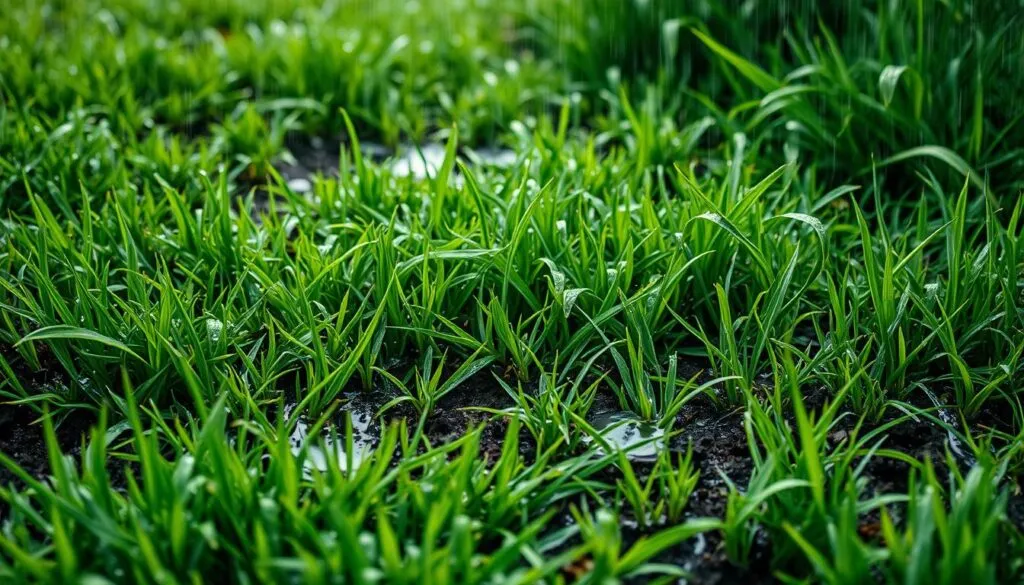
Have you ever stood in your backyard, gazing out at the wet grass, wondering when it’s safe to fire up the mower again?
We all know the frustration of having to postpone lawn care due to rain. But mowing wet grass can be more than just a nuisance – it can damage your lawn and your mower, and even pose a risk to your safety.
In this article, we’ll explore the critical factors to consider when deciding when to mow your lawn after a rain shower, ensuring you achieve the best results while maintaining lawn health and safety.
Key Takeaways
- Understand the risks associated with mowing wet grass.
- Learn how to determine if your lawn is dry enough for mowing.
- Discover the factors that affect drying time after rainfall.
- Find out why timing is crucial when it comes to mowing after rain.
- Get practical guidance on maintaining a healthy and resilient lawn.
The Risks of Mowing Wet Grass
Mowing your lawn when the grass is wet can have several adverse effects on both the lawn and the mower. Wet grass blades tend to clump together and bend over, making it difficult for the mower to cut them cleanly.
Damage to Your Lawn
When you mow wet grass, the blades are often torn rather than cut cleanly. This tearing can leave your lawn vulnerable to diseases, as the damaged blades provide an entry point for fungal infections like dollar spot, rust disease, and brown patch. Torn grass blades can lead to long-term lawn damage, affecting its overall health and appearance.
Damage to Your Mower
Mowing wet grass can also cause problems for your mower. Wet grass clumps can clog the mower’s deck, strain the engine, and dull the blades faster. Additionally, the moisture can cause rust and other mechanical issues that can shorten the lifespan of your equipment. Regular maintenance is crucial to prevent these problems.
Safety Hazards
Wet grass is slippery, making it hazardous to operate a mower. The risk of slipping and falling is increased, especially on slopes and uneven ground. A fall can result in serious injury, particularly if you land near the mower blade. We must be cautious when mowing to avoid such accidents.
- Mowing wet grass can lead to uneven cuts and torn grass blades.
- It increases the risk of lawn diseases due to fungal infections.
- Wet grass can clog your mower’s deck and cause mechanical issues.
- Slippery wet grass poses significant safety risks, including falls and injuries.
How Long After Rain to Mow
Understanding how long to wait after rain to mow your lawn is essential for achieving the best results. A general rule of thumb is to wait at least 24 hours after rainfall before mowing your lawn. However, this timeframe can vary significantly based on several factors.
Light Rain vs. Heavy Downpours
The intensity of the rainfall plays a crucial role in determining when it’s safe to mow. For light rain, a few hours may suffice before your lawn is dry enough to mow. In contrast, heavy downpours can saturate the lawn, requiring a longer waiting period, often beyond 24 hours. The key is to inspect the ground conditions and grass texture before deciding to mow.
Soil Type Considerations
Soil type significantly affects how quickly your lawn dries out. Sandy soils drain faster than clay soils, which tend to retain moisture longer. Understanding your soil type can help you better estimate the waiting time after rain. For instance, if you have sandy soil, you might be able to mow sooner than if you have clay soil.
| Soil Type | Drainage Rate | Waiting Time |
|---|---|---|
| Sandy Soil | Fast | Less than 24 hours |
| Clay Soil | Slow | More than 24 hours |
| Loamy Soil | Moderate | 24 hours |
Testing If Your Lawn Is Dry Enough
To determine if your lawn is dry enough to mow, you can perform a few simple tests. The footprint test involves stepping on your lawn; if the grass blades spring back quickly, it’s likely dry enough. You can also visually inspect the lawn for signs of moisture and check the soil moisture by digging a small sample.
- Perform the footprint test to check grass resilience.
- Visually inspect the lawn for moisture.
- Check soil moisture by digging a small sample.
Signs Your Lawn Is Too Wet to Mow
Mowing a wet lawn can be detrimental to its overall condition, so it’s vital to assess its moisture level. Before you decide to mow, there are several signs you should look out for to determine if your lawn is still too wet.
Visual Indicators
One of the simplest ways to check if your lawn is too wet is by looking at the grass itself. Wet grass blades tend to be clumpy and don’t stand up straight. If the grass appears flattened and mushy, or if there are visible water droplets clinging to the blades, it’s a sign that the lawn is still too wet to mow. Additionally, if the grass is matted or has a soggy appearance, it’s best to wait until it dries out.
The Footprint Test
Another effective method to determine if your lawn is too wet is by performing the footprint test. Step on the grass in a few areas; if your foot sinks into the ground and leaves noticeable footprints, the soil is likely too wet. When the soil is saturated, mowing can create ruts and damage the root system of your lawn.
Checking Soil Moisture
To further assess the wetness of your lawn, you should check the soil moisture at different depths. This can be done by digging a small sample or using a soil probe. If the soil feels wet or soggy below the surface, it’s an indication that the ground is not yet ready for mowing. It’s also important to check multiple areas of your lawn, as some sections may dry faster than others due to variations in sunlight exposure and drainage patterns.
| Indicator | Description | Action |
|---|---|---|
| Visual Appearance | Grass is clumpy, flattened, or has visible water droplets | Wait until the grass dries out |
| Footprint Test | Footprints remain visible after stepping on the grass | Postpone mowing until the soil is drier |
| Soil Moisture | Soil feels wet or soggy below the surface | Check again after some drying time |
How Wet Grass Affects Lawn Health
The effects of mowing wet grass on lawn health are multifaceted and can be detrimental. When we mow the lawn after rain or in wet conditions, it can lead to several issues that impact the overall well-being of our grass.
Uneven Cuts and Torn Grass Blades
Mowing wet grass often results in uneven cuts and torn grass blades rather than clean cuts. This damage creates entry points for diseases and weakens the overall health of our lawn. Torn grass blades are more susceptible to disease and pests, further compromising lawn health.
Increased Risk of Lawn Disease
When grass blades are torn, the combination of damage and wet conditions allows fungal diseases to take hold. Common lawn diseases that develop in such conditions include dollar spot, rust disease, brown patch, anthracnose, leaf spot, and red thread. These diseases thrive in damp, damaged grass, making it essential to avoid mowing when the lawn is wet.
Soil Compaction and Rut Formation
Running a lawn mower over water-saturated ground presses down and compacts the soil, making it difficult for air, water, and nutrients to reach grass roots. This compaction can lead to long-term lawn damage. Additionally, the formation of ruts by mower wheels on wet lawns creates an uneven surface and can lead to drainage issues, potentially creating breeding grounds for mosquitoes.
By understanding how mowing wet grass affects lawn health, we can take steps to mitigate these risks and maintain a healthy, vibrant lawn. Proper lawn care practices, such as waiting for the right conditions to mow, can significantly impact the overall health and appearance of our lawn.
Problems with Mowing Equipment on Wet Lawns
Wet lawns pose significant challenges to mowing equipment, affecting its efficiency and durability. When you mow wet grass, you’re not just risking your lawn’s health; you’re also putting your mower through a tough ordeal.
Clogging and Clumping Issues
Mowing wet grass leads to clumping and clogging issues with your mower. The wet clippings stick together and to the mower deck, discharge chute, and collection bag, requiring frequent stops to clear blockages. This not only reduces mowing efficiency but also demands more maintenance.
Blade Damage and Dulling
The moisture in wet grass causes increased friction on mower blades, leading to faster dulling. Dull blades result in reduced cutting performance, necessitating more frequent sharpening or replacement. This adds to the overall cost and effort of maintaining your lawn.
Engine Strain and Performance Problems
The additional weight and resistance of wet grass put extra strain on the mower’s engine, potentially leading to overheating, stalling, or premature wear. This strain can shorten the lifespan of your equipment, requiring costly repairs or even replacement.
To illustrate the impact of mowing wet grass on your equipment, consider the following comparison:
| Issue | Dry Grass | Wet Grass |
|---|---|---|
| Clogging | Minimal | Frequent |
| Blade Dulling | Normal | Accelerated |
| Engine Strain | Low | High |
By understanding these challenges, you can take steps to mitigate the negative effects of mowing wet grass on your equipment.
Tips for Mowing Damp Grass (If You Must)
If you must mow your lawn when it’s damp, following a few key tips can make a big difference in the health of your lawn and the performance of your mower.
Adjusting Mower Height
When mowing damp grass, it’s advisable to adjust your mower to a higher cutting height. This reduces the chance of damaging the grass and helps prevent clumping. Cutting higher allows the grass to recover more quickly. Using a higher mowing height is a simple yet effective way to minimize stress on your lawn.
Slowing Down Your Pace
Going slow is another crucial tip when mowing damp grass. This reduces clumping and helps the mower cut more evenly. By slowing down, you allow the mower more time to process the heavier, wetter clippings, resulting in a more even cut. It’s a matter of patience and taking your time to ensure a clean cut.
| Mowing Technique | Benefits |
|---|---|
| Raise Mower Height | Reduces clumping, minimizes damage to grass |
| Slow Down | Improves cut evenness, reduces clumping |
| Use Sharp Blade | Cuts cleanly, reduces disease susceptibility |
Post-Mowing Maintenance
After mowing damp grass, it’s essential to perform thorough post-mowing maintenance. This includes cleaning the mower deck, blades, and discharge areas to prevent rust and component damage. Regular maintenance not only prolongs the life of your mower but also ensures it continues to perform optimally.
By following these tips, you can minimize the risks associated with mowing damp grass and keep your lawn healthy.
Conclusion
In summary, understanding when to mow your lawn after rainfall can significantly impact its health, appearance, and your safety. We recommend waiting at least 24 hours after rain before mowing, but this can vary based on factors like soil type and the intensity of the rainfall. Mowing wet grass poses significant risks, including damage to your lawn, your mower, and potential safety hazards. Before mowing, it’s crucial to test if your lawn is dry enough using methods like the footprint test. If you must mow damp grass, adjust your mower height, slow down, and perform post-mowing maintenance to minimize damage. Patience in lawn care often yields better results, protecting both your lawn’s health and your equipment’s longevity.
FAQ
Is it okay to mow wet grass?
We generally advise against mowing wet grass, as it can cause damage to our lawn and mower. Wet conditions can lead to uneven cuts, torn grass blades, and clogged mower decks.
What are the risks of mowing wet grass?
Mowing wet grass poses several risks, including damage to our lawn, mower, and safety hazards. Wet grass can be slippery, causing accidents, and the mower can clog or suffer blade damage.
How can I determine if my lawn is dry enough to mow?
We can check if our lawn is dry enough by performing the footprint test. If the grass springs back after stepping on it, it’s likely dry enough. We can also check soil moisture by digging a small hole or using a soil probe.
What happens if I mow my lawn too soon after rain?
Mowing our lawn too soon after rain can cause soil compaction, rut formation, and increased risk of lawn disease. It’s best to wait until the grass is dry enough to avoid these problems.
Can mowing wet grass damage my mower?
Yes, mowing wet grass can damage our mower. Wet clippings can clog the mower deck, and the blades can become dull or damaged. We should clean and maintain our mower regularly to prevent these issues.
Are there any tips for mowing damp grass?
If we must mow damp grass, we should adjust our mower height to avoid cutting too much at once, slow down our pace to prevent clogging, and perform post-mowing maintenance to keep our mower in good condition.
What are the signs that my lawn is too wet to mow?
Visual indicators, such as water pooling on the surface or grass blades that are still wet from morning dew, can signal that our lawn is too wet to mow. We can also perform the footprint test or check soil moisture to confirm.