
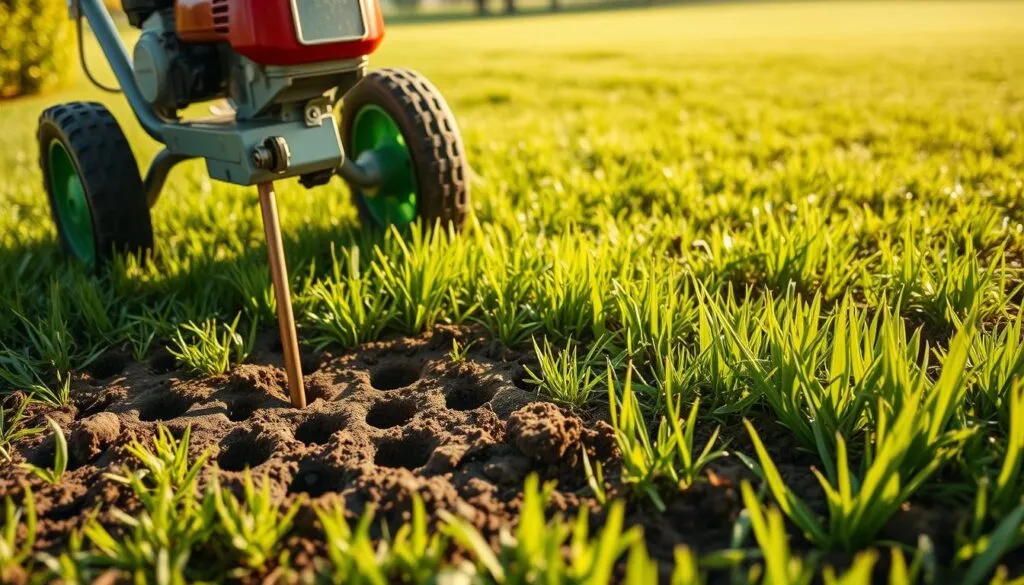
What if the most common piece of lawn care advice is actually holding your grass back? Many homeowners follow a routine without questioning the logic behind the steps. The sequence of preparing your turf can make a huge difference.
In my experience, proper preparation separates a mediocre result from a thriving, healthy lawn. The order of mowing and aerating directly impacts your soil‘s ability to breathe and absorb nutrients. Getting this step right sets the stage for everything that follows.
I want to share what I’ve learned about the entire process. This guide covers preparation through post-care maintenance. Understanding the relationship between grass height and aeration effectiveness helps avoid common mistakes. My goal is to provide clear, actionable information for a confident approach to lawn health.
Key Takeaways
- Proper preparation is critical for successful aeration and overall lawn health.
- The sequence of lawn care tasks directly affects soil absorption of air, water, and nutrients.
- Grass height plays a significant role in aerating effectiveness.
- A well-executed plan prevents common mistakes that hinder grass recovery.
- Following proven practices leads to a lush, dense turf that withstands seasonal challenges.
Preparing Your Lawn for Aeration Success
The foundation of any successful lawn renovation begins long before the aerator touches the turf. Proper groundwork transforms the entire aerating lawn experience into a comprehensive revitalization project.
Testing and Dethatching: The First Steps
I always begin with soil testing to understand my lawn needs. This simple step reveals pH levels and nutrient content, guiding post-aeration treatments.
Many homeowners overlook dethatching, but it’s one of the most important things to address. When thatch exceeds half an inch, it blocks water and nutrients from reaching the soil. Removing this barrier ensures optimal conditions.
Proper Mowing Techniques Before Aeration
The mowing process requires careful attention before core aeration. I cut my grass to about two inches, allowing the aerator to penetrate effectively. This height also helps grass seed contact the soil directly.
I follow the One-Third Rule during mowing to avoid stressing the lawn. Proper watering with about one inch of water two days prior creates ideal soil conditions. These preparatory steps set the stage for efficient nutrient absorption and robust grass recovery.
Should You Mow Before Aerating?
Proper grass height management before soil aeration transforms the entire lawn renovation process. My testing confirms that cutting the turf first creates optimal conditions for core extraction and seed contact.
Benefits of a Well-Mowed Lawn
Maintaining grass at two inches allows the aerator to penetrate effectively. Tall blades can obstruct the machine’s path and reduce core quality.
A trimmed lawn ensures seeds reach bare soil after overseeding. This direct contact dramatically improves germination rates for thicker turf.
My Personal Mowing Tips and Techniques
I adjust cutting height based on grass variety. Cool-season types like fescue work well at 2-4 inches, while warm-season grasses prefer 1-2 inches.
Sharp mower blades create clean cuts that heal quickly. Dull blades tear grass tissue, increasing stress during the demanding aeration process.
Leaving grass slightly longer after aeration protects new seeds. This natural blanket retains moisture and provides shade for developing roots.
Essential Tools and Techniques for Lawn Aeration
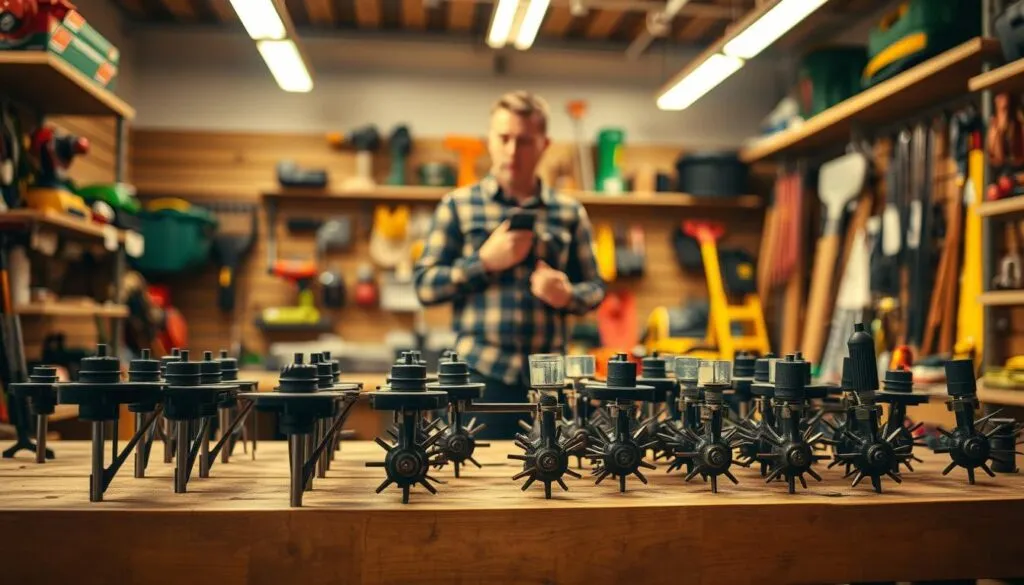
The right tools transform lawn aeration from a challenging task into an efficient process. Proper equipment selection ensures optimal results for turf health and soil improvement.
Choosing the Right Aerator for Your Lawn
I always consider two main aerator types: core and spike models. Core aeration removes small soil plugs, creating genuine openings for air and nutrients. Spike aeration simply pokes holes without soil removal.
My experience shows core aeration delivers superior results. The hollow tines extract 2-3 inch deep plugs, reducing compaction effectively. This method creates space for root expansion and better water absorption.
Selecting the right machine depends on lawn size. Manual aerators work well for small areas. Larger properties benefit from push-behind or tow-behind equipment available for rental.
The core aeration process leaves characteristic soil plugs on the surface. These might appear messy initially but break down naturally over weeks. They return valuable nutrients to the turf during decomposition.
Proper aerator operation requires careful handling. These are heavy machines that demand respect to avoid injury. The right equipment choice makes lawn aeration efficient and highly effective for long-term grass health.
Post-Aeration and Overseeding Care Steps
Many lawn enthusiasts focus intensely on preparation but neglect the critical recovery phase. The work following aeration determines whether your investment yields temporary improvement or lasting turf transformation.
Proper aftercare during these crucial weeks separates successful lawn renovations from disappointing results. My approach balances moisture management, nutrient delivery, and careful mowing practices.
Watering Practices for New Growth
I begin watering immediately after aeration overseeding. The first week requires light, frequent sessions—typically 10-20 minutes twice daily.
Morning watering prevents rapid evaporation while keeping the top soil inches moderately damp. This approach protects delicate grass seed from washing away while encouraging germination.
After the first week, I transition to deeper, less frequent watering. This change encourages new grass roots to grow downward, establishing stronger systems in the soil.
Fertilizing and Maintaining Healthy Soil
My fertilizer strategy starts with phosphorus-rich starter fertilizer applied during seeding. Phosphorus needs direct soil contact, making post-aeration the ideal time for application.
I wait approximately three weeks before adding balanced fertilizer. This second feeding supports new grass maturation as temperatures become favorable for growth.
Adjusting Mower Settings After Aeration
Patience proves essential when returning to mower use. I never cut new grass until it reaches 4 inches in height, then trim to only 2 inches.
Sharp mower blades create clean cuts that heal quickly. I allow the lawn to dry completely before that first post-aerating cut to prevent damage.
These careful steps during the recovery time ensure seeding efforts produce thick, resilient turf. The investment in proper aftercare transforms the entire lawn‘s appearance and durability.
Troubleshooting and Avoiding Common Lawn Care Mistakes
I’ve identified several recurring issues that compromise lawn care efforts post-aeration. Even with excellent preparation, simple oversights can hinder your turf’s full recovery potential.
Water management represents one of the most critical areas for attention. Both overwatering and underwatering create significant problems for new grass establishment.
Overwatering, Underfeeding, and Other Pitfalls
Excessive moisture drowns seeds and encourages fungal growth. I make sure to provide consistent dampness without saturation.
Insufficient watering causes seeds to dry out before germination. The top inch of soil requires careful monitoring during this period.
Aerator selection dramatically impacts results. Spike models compact soil rather than relieving pressure. Core aerators with hollow tines deliver proper aeration by removing plugs.
Seed application rates demand precision. Overcrowding weakens grass competition, while sparse coverage yields thin turf. I follow package instructions carefully for optimal density.
Basic maintenance often gets overlooked during recovery. Dull mower blades tear delicate grass, creating entry points for disease. Sharp blades ensure clean cuts that heal quickly.
Watch for clear signs indicating lawn needs. Thatch accumulation over one inch, compacted areas, and discolored patches signal underlying soil issues. These visual cues guide my care adjustments.
My practical tips include the screwdriver test for compaction detection. Regular blade sharpening and disease monitoring complete a comprehensive approach. Vigilant observation prevents small problems from becoming major setbacks.
Special Considerations for Soil, Weather, and Timing
Timing represents the most overlooked variable in successful lawn aeration overseeding projects. My experience confirms that choosing the right time based on grass type and regional climate makes all the difference in results.
Preparing for Seasonal Changes in the United States
I schedule aeration according to grass growth patterns. Cool-season varieties like fescue and bluegrass thrive with early spring or fall treatment. Warm-season grasses prefer late spring to early summer timing.
| Grass Type | Common Regions | Best Time for Aeration | Soil Temperature Range |
|---|---|---|---|
| Cool-season (Fescue, Bluegrass) | Northern United States | Early Spring or Fall | 50-65°F |
| Warm-season (Bermuda, Zoysia) | Southern United States | Late Spring to Early Summer | 65-75°F |
| Transition Zone Grasses | Central United States | Early Fall | 55-70°F |
Fall has become my preferred time for most lawn renovation projects. Cooler temperatures and natural rainfall create ideal establishment conditions.
Monitoring Soil Moisture and Nutrient Levels
I always check soil conditions before starting aerating lawn work. The ground needs adequate moisture for proper core extraction without becoming muddy.
My moisture test involves checking dampness 2-3 inches deep. This ensures the soil is soft enough for clean plug removal. I monitor weather forecasts to avoid scheduling during heavy rain periods.
The best time for lawn aeration overseeding combines calendar dates with actual ground conditions. Regional variations across the United States require flexible timing approaches for different grass types.
Conclusion
The transformation from a struggling lawn to a vibrant landscape begins with understanding the complete aeration journey. This comprehensive process delivers remarkable benefits that justify every preparation step.
Proper lawn aeration creates thicker grass blades supported by deeper roots. The holes allow better airflow and water absorption while reducing soil compaction. Fertilizer reaches root zones more effectively, and thatch buildup diminishes naturally.
I always protect the lawn from heavy foot traffic for several weeks after aerating. Those soil plugs break down naturally, returning valuable nutrients to feed the grass. This attention to post-care ensures lasting results.
The true power of aeration overseeding reveals itself over time. View this practice as regular maintenance rather than a one-time fix. Annual attention to soil health creates the foundation for a lush, resilient lawn that withstands seasonal challenges beautifully.
FAQ
What is the ideal grass height for lawn aeration?
I aim for a height of about 1.5 to 2 inches. This length allows the aerator’s tines to penetrate the soil effectively without excessive grass interference, promoting better soil contact for seeds and nutrients.
How soon after aeration can I mow my lawn?
I typically wait at least a week. This gives the soil cores time to break down and the grass roots a chance to recover from the aeration process, ensuring a clean cut without damaging new growth.
Is it better to aerate before or after applying fertilizer?
I prefer to aerate first. The holes created by the aeration process allow fertilizer and other nutrients to reach the root zone more efficiently, maximizing the benefits for overall lawn health.
Can I use a regular lawn mower after overseeding?
Yes, but I adjust the mower settings. I raise the blades to a higher cut to avoid disturbing or uprooting the new grass seed, which is crucial for successful germination and establishment.
What are the signs that my lawn needs aeration?
I look for compacted soil, thinning grass, and water pooling on the surface. If the ground feels hard and a screwdriver is difficult to push in, it’s a clear indicator that aeration is necessary.
What type of aerator is best for a residential lawn?
For most home lawns, I find a core aerator to be most effective. It removes small plugs of soil, which is superior to spike aerators for relieving compaction and improving air and water flow.