
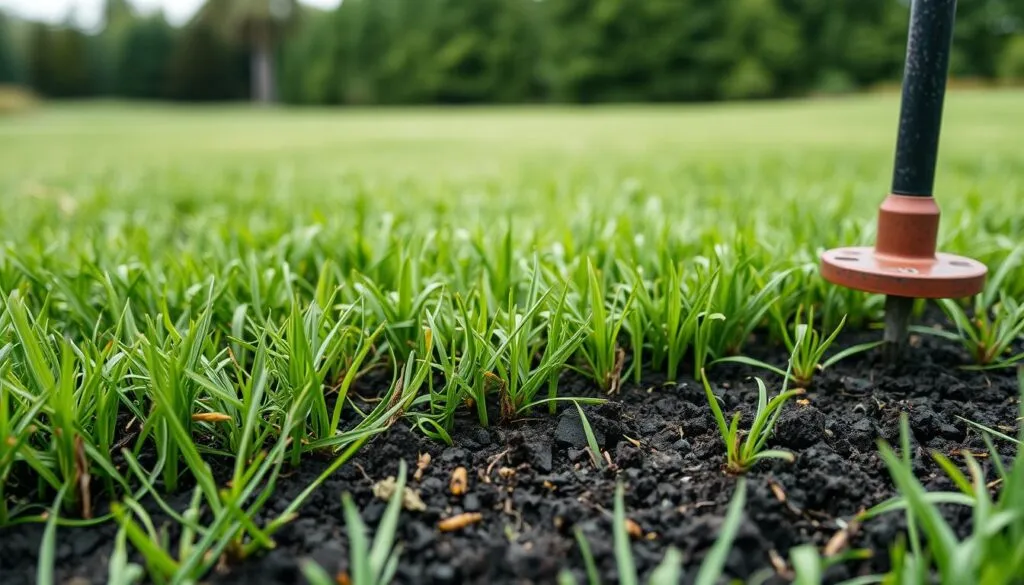
What’s the single biggest mistake homeowners make right after aerating their lawn? Many believe the next logical step is to fire up the mower. This common assumption, however, overlooks the delicate state of your turf.
As a lawn care professional, I’ve seen this scenario play out countless times. While it is physically possible to run a mower over a freshly aerated lawn, the timing of this action is critical. The process of aeration creates small holes in the soil, relieving compaction and helping your grass roots breathe.
This treatment temporarily stresses the grass plants. Mowing immediately afterward adds another layer of stress. My experience has taught me that protecting your equipment and maximizing the health benefits for your lawn requires a specific sequence.
I always recommend a different approach for the best results. The interaction between mowing and core aeration is more nuanced than a simple yes-or-no answer. Getting this sequence right is about setting up your grass for optimal recovery and vigorous growth.
Key Takeaways
- Mowing immediately following aeration is possible but not ideal for lawn health.
- Aeration temporarily stresses grass, and mowing adds additional stress.
- The best practice is to mow your lawn before you begin the aeration process.
- This sequence helps protect your mower from potential damage.
- Proper timing maximizes the benefits of both lawn care activities.
- Understanding this interaction is key to a thicker, healthier lawn.
Understanding Lawn Aeration and Its Benefits
Aeration serves as a vital reset button for soil that has become hardened over months of use and weather exposure. This treatment addresses the invisible barriers that limit your turf’s potential.
What is Lawn Aeration?
Lawn aeration creates small perforations throughout your turf. These openings combat natural soil compaction from foot traffic and regular use.
The process involves mechanical equipment that removes cores of soil and thatch. Alternatively, some tools simply punch holes without removing material.
Benefits for Grass, Soil, and Roots
Compacted soil acts like a solid barrier against essential elements. Nutrients, oxygen, and water struggle to reach grass roots where needed most.
Thatch buildup compounds this problem. Layers of dead organic matter create a double barrier on the soil surface.
Aeration directly benefits your turf by creating space for root expansion. Deeper, wider roots result in more resilient grass.
| Feature | Compacted Soil | Aerated Soil |
|---|---|---|
| Water Absorption | Poor – runs off surface | Excellent – penetrates deeply |
| Root Growth | Shallow and restricted | Deep and expansive |
| Nutrient Uptake | Limited access | Optimal absorption |
| Thatch Breakdown | Slow accumulation | Natural decomposition |
Think of your lawn like a sponge needing air pockets. Aeration restores this functionality for proper nutrient distribution.
How Lawn Mowing Interacts With Aeration
Understanding how these two lawn care activities interact is essential for maximizing turf health benefits. The relationship becomes clearer when considering that most homeowners perform aeration as part of a larger renovation project involving overseeding.
Mowing Before vs After Aeration
I consistently recommend completing your mowing lawn task before beginning the aeration process. This sequence makes practical sense when dealing with the soil plugs extracted during core aeration.
The optimal cutting height should match your regular setting or be slightly shorter. Reducing by up to ½ inch prepares the turf without causing unnecessary stress to the grass plants.
| Timing Factor | Mowing Before Aeration | Mowing After Aeration |
|---|---|---|
| Equipment Protection | Prevents contact with soil cores | Risk of blade dulling from plugs |
| Lawn Health Benefits | Allows natural core breakdown | Removes nutrient-rich soil plugs |
| Overseeding Preparation | Creates ideal seedbed conditions | Disturbs fresh aeration holes |
| Stress on Grass | Single stress event | Compound stress from both activities |
Impact on Mower Blades and Equipment
The risk of mower damage from soil cores is relatively low with quality equipment. However, these plugs can gradually dull cutting blades over repeated contact.
More importantly, leaving the cores undisturbed allows them to break down naturally. This process returns valuable nutrients to your lawn, enhancing the benefits of the entire aeration procedure.
The “mow before” approach isn’t just about equipment protection. It maximizes the health advantages for your turf during recovery and growth phases.
Can You Mow After Aeration
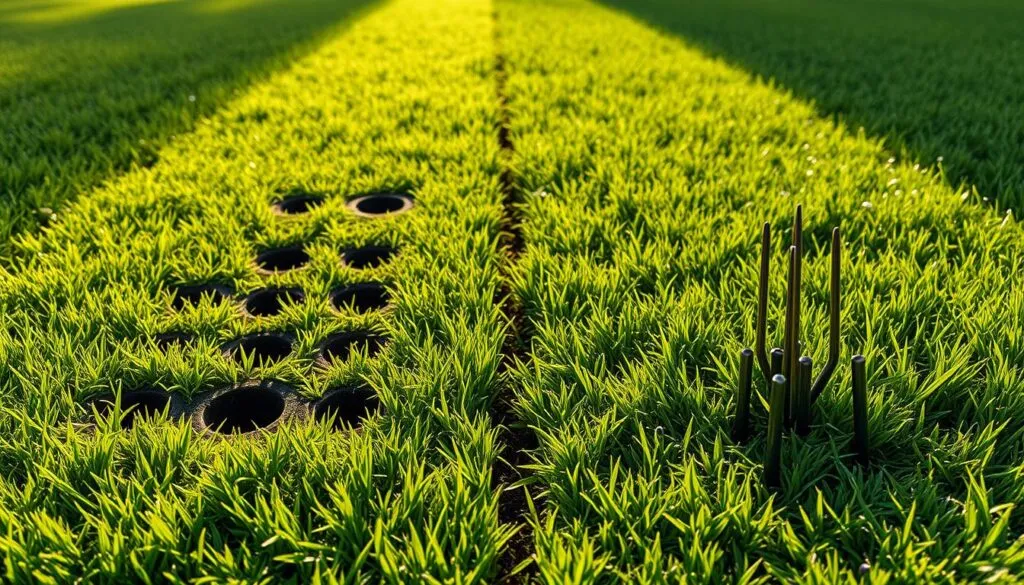
Spike and core aeration, while both beneficial, create vastly different conditions on your lawn that affect when you can next use the mower. The technique used is the deciding factor for your turf care schedule.
Spike aeration involves punching holes without removing soil. This method allows for resuming mowing immediately. There is no debris left on the surface to interfere with your equipment.
Core aeration is a different story. This process extracts small plugs of soil and thatch. Mowing too soon risks dragging these nutrient-rich cores across the yard.
This creates an uneven cut and removes valuable organic matter before it breaks down. I recommend a waiting period of at least one week following this treatment.
For maximum benefit, a delay of two to four weeks is ideal. This gives the lawn time to recover and allows new grass seed to germinate undisturbed.
| Aeration Type | Recommended Waiting Time | Primary Risk of Mowing Too Soon |
|---|---|---|
| Spike Aeration | Immediately | Minimal to none |
| Core Aeration | 1-4 weeks | Dragging soil plugs, uneven cut, nutrient loss |
While it is physically possible to mow right after core aeration, it often defeats the purpose. Patience during this critical recovery time yields a thicker, healthier lawn.
Optimizing Your Lawn Care Routine After Aeration
The period following lawn aeration represents a critical window for establishing superior turf health through coordinated care practices. I approach this phase as an integrated system where timing and sequence determine your results.
Ideal Timing for Overseeding and Mowing
I always recommend overseeding immediately following the aeration process. The freshly created holes provide perfect seed-to-soil contact for optimal germination. This timing dramatically improves new grass establishment.
For the first mowing session, I wait approximately one week. Using sharp blades prevents tearing tender growth. Light cutting encourages healthy development without stressing the recovery process.
Watering and Fertilization Tips
Proper watering after aeration with seeding requires careful attention. The first week needs light, frequent sessions to maintain damp soil. This prevents seed washaway while promoting sprouting.
After initial establishment, I transition to deeper, less frequent watering. This encourages root growth downward for drought resistance. Consistent moisture remains crucial throughout.
Fertilization timing maximizes nutrient uptake. I apply phosphorus-rich starter fertilizer during seeding. The opened soil delivers nutrients directly to root zones where needed most.
Three weeks later, balanced fertilizer supports continued growth. This coordinated approach creates the ideal environment for thick, healthy turf development.
Key Tips for Aeration, Overseeding, and Fertilizing
The difference between mediocre and exceptional aeration results often comes down to preparation details many overlook. Proper planning ensures your lawn receives maximum benefits from the entire process.
Pre-Aeration Lawn Preparation
I always begin by marking sprinkler heads and irrigation lines. This simple step prevents expensive damage to underground systems during the aerating lawn procedure.
Choosing the right equipment makes a significant difference. Core aeration with hollow-tine aerators pulls soil plugs, while spike aeration merely compacts the ground around holes.
Mowing to normal height prepares the turf effectively. Slightly shorter grass helps plugs reach the soil without stressing plants.
Post-Aeration Care Strategies
Limit foot traffic immediately following treatment. Heavy use compacts the freshly opened soil, reducing aeration benefits.
Apply seeds and starter fertilizer right after core aeration. The open holes provide ideal contact for germination and nutrient absorption.
Watering requires careful balance. Light, frequent sessions maintain moisture without washing away valuable seeds.
Common Mistakes to Avoid
Using spike aerators instead of core models undermines soil improvement goals. The wrong equipment choice can actually increase compaction.
Incorrect seed application rates cause problems. Too much creates overcrowding, while insufficient amounts leave thin patches.
Neglecting equipment maintenance affects results. Sharp mower blades ensure clean cuts during the first post-aeration mowing.
Assessing Lawn Health and Recovery Post-Aeration
Monitoring your lawn’s post-aeration condition provides the clearest indicators for when to resume regular care routines. I rely on specific visual cues rather than strict timelines to determine optimal timing.
Identifying Signs of Recovery
I look for grass that appears taller and fuller with vibrant green coloration. This visual transformation signals that roots are successfully absorbing nutrients through the aeration holes.
The soil plugs typically take two to four weeks to fully decompose. Their breakdown progress tells me much about the lawn’s recovery. When plugs have mostly dissolved, the lawn shows positive health indicators.
My simple moisture test involves pushing a screwdriver into the ground. If it slides in easily, the soil retains sufficient moisture. I delay mowing to avoid compaction during damp conditions.
When Is Your Lawn Ready for Mowing?
Weather conditions significantly impact recovery timing. Lawns treated during hot, dry periods need more monitoring than those aerated in ideal cool, moist conditions.
Deeper aeration penetrating several inches requires longer recovery than shallow treatment. I adjust expectations based on the aeration depth used.
Grass health always takes priority over schedule. If I notice stress, yellowing, or slow growth, I delay mowing regardless of elapsed weeks. New grass reaching 3-4 inches indicates established recovery.
For the first mowing session, I remove only about an inch of height. Sharp blades and dry soil conditions protect both established grass and tender new growth.
Conclusion
Proper lawn maintenance involves more than just individual tasks—it’s about strategic timing and sequence. I strongly recommend completing your mowing lawn routine before beginning the aeration process. This approach protects equipment and maximizes benefits for your turf.
The distinction between core aeration and spike aeration remains critical. Spike treatment allows immediate resumption of regular activities, while core aeration requires patience. Waiting one to four weeks ensures optimal recovery and seed establishment.
Successful lawn care integrates preparation, execution, and aftercare. Proper watering, fertilization, and traffic management support healthy growth. Patience during this period yields the lush, vibrant lawn that makes the entire process worthwhile.
Following this guidance ensures your grass receives maximum benefits from each treatment. The coordinated approach delivers superior results for any lawn care enthusiast seeking optimal turf health.
FAQ
How long should I wait to mow my lawn after aeration?
I recommend waiting at least two to three days before mowing. This gives the soil plugs time to break down and allows the new holes in your turf to settle. Mowing too soon can damage the freshly aerated ground and disrupt the benefits of the process.
Is it better to mow before or after I aerate my lawn?
I always advise mowing your grass a day or two before aerating. Cutting the lawn to a slightly shorter height makes it easier for the aerator machine to penetrate the soil and pull effective cores. This preparation helps the equipment work more efficiently for better results.
What is the best way to water my lawn after aeration?
After aeration, I suggest a deep, thorough watering. The holes created allow moisture to reach grass roots directly. This helps the soil absorb water and nutrients more effectively. Consistent watering is crucial, especially if you’ve applied fertilizer or grass seed.
Can I overseed immediately after aerating my lawn?
Yes, this is an ideal time for overseeding. The aeration holes provide perfect spots for new grass seeds to settle and germinate. I apply seed right after the process, followed by fertilizer, to maximize growth and improve lawn health.
Will aeration damage my lawn mower blades?
The soil plugs left on the surface are generally soft and should not harm your mower if you wait a few days. However, mowing over them immediately can dull the blades faster. I check my equipment for debris after mowing a recently aerated turf to prevent any issues.
How do I know if my lawn has recovered from aeration?
I look for signs like the soil plugs breaking down and new, vibrant grass growth. The lawn should feel firm underfoot again. Once the cores have dissolved and the grass shows healthy growth, it’s a good indicator that recovery is complete.