
Have you ever assumed that a factory-fresh blade is instantly ready for a perfect cut? Many homeowners believe that purchasing a replacement blade guarantees optimal performance right out of the box. This common belief, however, might be costing you a clean, healthy lawn.
The truth about factory edges can be surprising. While some manufacturers deliver a sharp edge, others ship blades that are merely shaped and require honing. The quality of the initial sharpening varies greatly. Understanding this from the start is crucial for effective lawn care.
This guide provides expert insights into your equipment’s maintenance from day one. You will learn how to evaluate the sharpness of a blade yourself. This knowledge saves time, money, and prevents potential damage to your grass.
Making an informed decision about your equipment ensures a beautiful lawn from the very first mow. Let’s uncover the reality behind that shiny, new piece of hardware.
Key Takeaways
- Factory sharpness on replacement blades is not always guaranteed.
- Evaluating a blade’s edge before its first use can prevent a poor cut.
- Proper blade maintenance directly impacts the health and appearance of your grass.
- Initial sharpening can save you money on fuel and future repairs.
- Understanding blade quality helps you make smarter purchasing decisions.
- A sharp blade provides a cleaner cut, which is better for your lawn.
Introduction to Lawn Mower Blade Maintenance
The secret to a truly healthy lawn lies not just in watering and fertilizing, but in the precision of your equipment’s cutting edge. Consistent care for this component is essential for sustaining vibrant turf.
Why Blade Sharpness Matters
A sharp edge slices through grass cleanly. This creates a straight edge that heals quickly. Your turf maintains its lush, green color.
In contrast, a dull instrument tears and shreds the grass. This leaves ragged, brown tips. These frayed ends become entry points for disease.
Overview of Common Blade Damage
Your equipment encounters many hazards. Hidden rocks, sticks, and uneven terrain can cause nicks and dents. This damage gradually degrades the cutting performance.
Regular inspection helps you spot these issues early. Recognizing wear from regular use is part of smart upkeep.
| Condition | Effect on Grass | Impact on Lawn Health |
|---|---|---|
| Sharp Blade | Clean, precise slicing | Promotes quick healing and vibrant color |
| Dull Blade | Tearing and shredding | Causes brown tips and increases disease risk |
| Damaged Blade | Uneven, incomplete cutting | Leaves lawn susceptible to pests and stress |
Do New Lawn Mower Blades Need to Be Sharpened
Factory specifications aim for a balance between sharpness and durability right from the start. Most replacement components arrive pre-sharpened with a specific degree angle, typically around 30 degrees. This initial edge is designed to be effective yet resilient.
Evaluating New vs. Dull Blades
You can assess a component’s readiness with a simple, safe test. Carefully run your thumb perpendicular to the metal edge. A properly prepared blade should have a distinct edge, similar to a butter knife, not a razor.
An overly sharp edge would wear down too quickly during operation. The factory finish is engineered for longevity and consistent performance.

Manufacturer Recommendations and Best Practices
Always consult your equipment’s manual. It provides the exact degree angle and thickness specifications for the cutting edge. This is your most reliable reference point.
If the component appears blunt or shows shipping damage, honing before the first use is recommended. This ensures optimal cutting performance from the very beginning.
| Blade Condition | Feel of the Edge | Recommended Action |
|---|---|---|
| Factory New (Ideal) | Distinct edge, like a butter knife | Ready for immediate use |
| Dull or Damaged | Rounded, blunt, or nicked | Sharpen before first use |
| Overly Sharp | Extremely fine, razor-like | Use with caution; may dull rapidly |
How to Sharpen Your Mower Blades
Proper maintenance of your cutting tool requires specific techniques and safety precautions. Following the correct procedure ensures your equipment performs optimally while protecting both you and the machine.
Step-by-Step Sharpening Process
Begin by securely clamping the component in a vise. This provides stability during the sharpening process. Always disconnect the spark plug for safety before starting.
Use a hand grinder for better visibility and control. Maintain the manufacturer’s recommended 30-degree angle throughout the process. Work evenly on both side surfaces to preserve balance.
Sanding pads offer an excellent alternative to traditional abrasive discs. They cut quickly without generating excessive heat that can damage the metal. This prevents the edge from becoming brittle.
Essential Tools and Safety Tips
Your toolkit should include work gloves, eye protection, and a mask. These items protect you during the sharpening procedure. A wrench and penetrating cleaner help with component removal.
After sharpening, always check for proper balance. An unbalanced component causes vibration and strains your equipment. This simple verification step extends your machine’s lifespan.
Avoid using an angle grinder unless you have experience. This tool can overheat the metal quickly. Proper technique creates a sharp edge without compromising the component’s integrity.
Factors Influencing Blade Dulling
Your mowing environment plays a crucial role in determining how frequently maintenance is required. Several conditions can accelerate wear on your cutting equipment.
Mowing Conditions and Debris Impact
Hidden obstacles present the most immediate threat to your cutting edges. Contact with rocks, tree stumps, or exposed roots causes instant damage.
These impacts create dents and chips that degrade performance. Sandy soil introduces additional abrasion as particles are drawn upward.
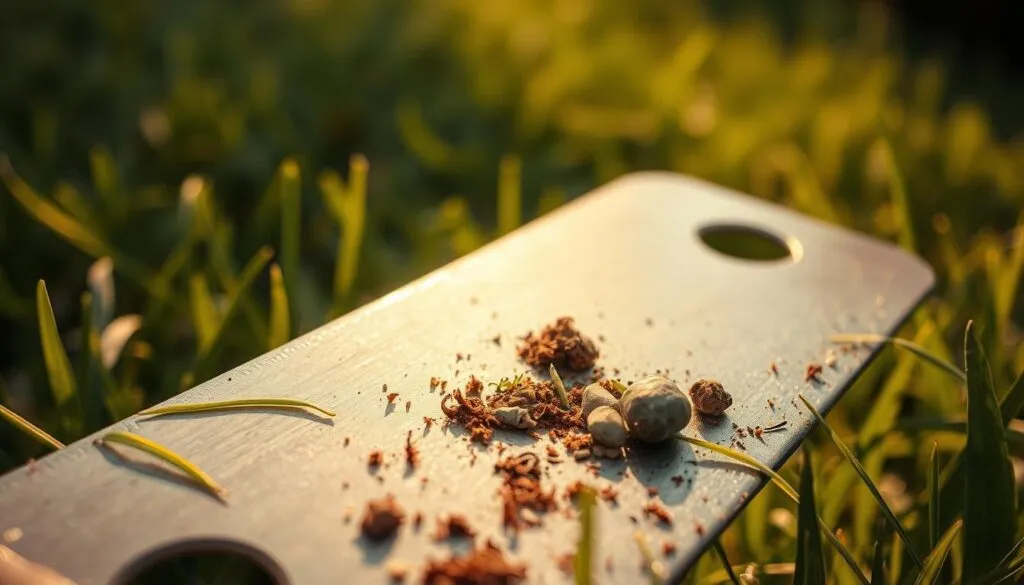
Uneven terrain increases soil contact during operation. This exposes the metal to abrasive particles that wear down the edge faster.
Effects of Lawn Size and Grass Type
Larger properties require more mowing time throughout the season. This extended use naturally leads to more frequent sharpening intervals.
Grass variety also affects wear rates. Warm-season types like Zoysiagrass have thicker, coarser blades. These varieties cause faster edge deterioration.
| Factor | Impact Level | Maintenance Frequency |
|---|---|---|
| Rocky Terrain | High | After each impact |
| Sandy Soil | Medium-High | Every 20 hours |
| Large Lawn | Medium | Every 25 hours |
| Coarse Grass | Medium | Every 30 hours |
| Level Terrain | Low | Every 35+ hours |
Understanding these factors helps you create an effective maintenance schedule. Regular inspection ensures optimal cutting performance throughout the season.
Benefits of Maintaining Sharp Mower Blades
The advantages of keeping your cutting tools sharp extend far beyond just a neat-looking yard. Proper maintenance creates a cascade of positive effects that benefit your turf, your equipment, and your time.
Improved Lawn Health and Appearance
Sharp blades slice grass cleanly rather than tearing it. This clean cut allows each blade to heal quickly, maintaining its vibrant green color. Your turf develops natural resistance to pests and diseases that target stressed plants.
Clean cuts also help your grass retain moisture more effectively. The tissue seals faster, reducing water loss during hot weather. This is particularly important when timing your overseeding fescue lawn maintenance.
Enhanced Efficiency and Fuel Savings
Well-maintained cutting edges significantly reduce your mowing time. You achieve an even cut in a single pass instead of multiple attempts. This efficiency translates directly into fuel savings.
Research from Cornell University shows dull blades can increase fuel consumption by up to 20%. Your equipment works harder when tearing through grass rather than slicing cleanly. This reduced strain extends your machine’s lifespan.
- Faster mowing with single-pass efficiency
- Reduced fuel costs from less engine strain
- Healthier turf with quick-healing cuts
- Longer equipment life through proper maintenance
Conclusion
Establishing a systematic maintenance schedule transforms your lawn care experience from frustrating to fulfilling. Your cutting components typically arrive ready for use, but inspection ensures quality standards before that first cut.
Regular attention throughout the season keeps your turf looking much better while protecting against disease. You should address your equipment’s edges every 25 hours or about twice per year. More frequent attention may be necessary in challenging conditions.
Most cutting tools can receive professional care 5 to 10 times over several years before replacement becomes necessary. Keeping spare components on hand allows quick swaps when your primary tool gets damaged. Professional services cost $50-$70 for those uncomfortable with DIY maintenance.
Following manufacturer recommendations and checking balance after service extends both component life and equipment longevity. With proper care, your tools deliver clean cuts that promote healthy growth from spring through fall.
FAQ
Should I sharpen a brand-new blade right out of the box?
Typically, no. Most blades come from the factory with a sharp edge and proper balance. Installing them directly is often the best practice. However, you should always inspect the cutting edge for any shipping damage like nicks or burrs before use.
How can I tell if my mower blade is dull?
A dull blade will tear grass instead of cutting it cleanly. Look for a ragged, whitish tip on your grass blades after mowing. You can also visually inspect the metal edge; if it looks rounded or has visible chips from hitting rocks or sticks, it’s time for sharpening.
What is the correct angle for sharpening?
Maintain the original factory bevel, which is usually between 30 and 45 degrees. Following this angle is critical for a clean cut and to preserve the blade’s balance. Using a sharpening guide or an angle grinder with a set jig can help you achieve this consistently.
How often should I sharpen my blades?
For an average-sized lawn, plan on sharpening your blade at least once per mowing season. If your yard is large or you frequently encounter sandy soil and debris, you may need to sharpen it every 20-25 hours of operation to maintain peak performance.
What are the benefits of a sharp blade?
A sharp blade provides a much better cut, which promotes healthier turf. It reduces stress on the grass, leading to a greener, more disease-resistant lawn. It also improves your mower’s efficiency, which can save fuel and reduce wear on the engine over time.
Can I sharpen the blade myself, or should I hire a professional?
You can certainly do it yourself with basic tools like a file, bench vise, and safety glasses. For heavily damaged edges, a professional service with a specialized grinder might be faster and ensure perfect balance. Proper maintenance is key, regardless of which path you choose.