

Should you trade your gardening gloves for complete rest during these special nine months? Many expectant mothers wonder about continuing routine chores like lawn maintenance. The answer isn’t a simple yes or no, but rather a thoughtful consideration of your unique pregnancy journey.
According to an experienced OB nurse with two decades of experience, this physical task is generally considered safe for most women. The guiding principle is straightforward: if you comfortably handled the work before your pregnancy, you can likely continue if everything progresses normally.
This comprehensive guide provides evidence-based advice to help you make informed decisions. Individual circumstances vary greatly, making personalized healthcare provider consultation essential before engaging in any demanding activities.
You’ll discover crucial safety insights and learn to recognize when a chore might become too strenuous. The key lies in listening to your body and understanding which factors determine whether to continue or delegate this responsibility.
Key Takeaways
- Lawn mowing is generally safe for most healthy pregnancies with proper precautions.
- Always consult your healthcare provider before continuing physically demanding tasks.
- Your ability to perform the task before pregnancy is a good indicator of safety.
- Listening to your body’s signals is crucial throughout your pregnancy journey.
- Individual circumstances determine whether you should continue or delegate lawn care.
- Evidence-based advice helps expectant mothers make informed decisions.
Understanding the Risks and Benefits of Mowing While Pregnant
The decision to maintain your lawn while expecting involves weighing physical activity benefits against pregnancy-specific concerns. Many pregnant women find this outdoor task provides healthy exercise when approached with proper precautions.
Consult Your Healthcare Provider
Your medical professional offers essential guidance about continuing lawn care. Certain conditions like high blood pressure or preterm labor may require avoiding this activity entirely.
Bedrest or light duty restrictions mean significantly limiting physical exertion. Always seek personalized advice based on your individual health status.
Evaluating Your Physical Capabilities
During early pregnancy, continuing pre-conception activities is generally considered safe if no complications exist. Your body provides clear signals when exertion becomes excessive.
The type of equipment used and your current fitness level help determine appropriate lawn maintenance throughout pregnancy. Listen carefully to physical cues indicating when to rest.
How to Safely Mow During Your Pregnancy
Proper lawn maintenance during pregnancy hinges on selecting appropriate tools and employing body-conscious methods. The right approach combines equipment selection with technique adjustments for optimal safety.
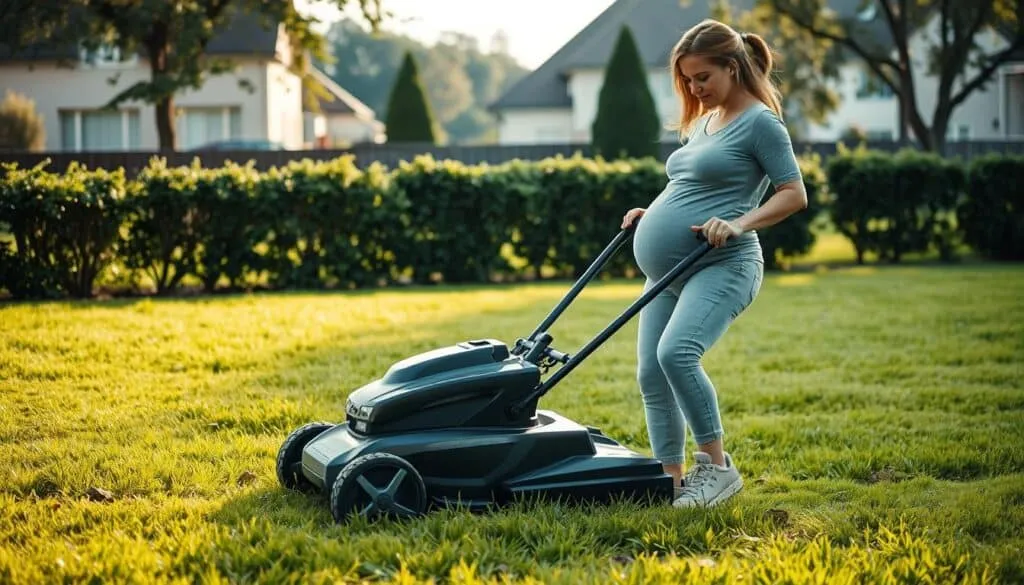
Choosing the Right Mower for Your Needs
Equipment type significantly impacts this task‘s difficulty. Heavy push mower models demand substantial effort that increases as pregnancy progresses. Electric options eliminate pull-cord starting that strains abdominal muscles.
A riding mower offers the simplest solution for mowing lawn areas. This equipment removes pushing exertion entirely. Consider grass collection systems carefully—frequent heavy bag lifting poses risks.
Techniques to Protect Your Body
Implement proper precautions like wearing traction footwear and avoiding wet grass. Maintain upright posture without twisting motions. Adjust the mower handle height for comfortable operation.
Schedule frequent breaks and delegate bag-emptying duties. These techniques make lawn care manageable throughout different pregnancy stages. Listen to your body’s signals for optimal wellbeing.
can you mow while pregnant: Expert Insights
The type of mower selected plays a pivotal role in determining safe lawn care practices during gestation. Equipment choices directly impact physical exertion levels and overall safety.
Push Mower vs. Riding Mower: What’s Best?
A standard push mower demands significant effort with constant forward motion. This physical activity becomes increasingly challenging as pregnancy progresses.
In contrast, a riding mower eliminates most strenuous pushing requirements. This equipment allows for continued lawn maintenance with minimal physical strain.
When to Take Frequent Breaks
Regular breaks are essential during any lawn care session. Expectant mothers should pause every 15-20 minutes to rest and hydrate.
Double your normal water intake to prevent dehydration. Heat exhaustion risks increase significantly during pregnancy.
Schedule mowing lawn activities for cooler morning or evening hours. Avoid high humidity periods when possible for optimal safety.
Preparing Your Equipment for Safe Lawn Care
Before starting the engine, a thorough equipment check is your first line of defense. Proper preparation minimizes physical strain and prevents potential hazards during lawn care. This approach makes the entire process of lawn mowing significantly safer.
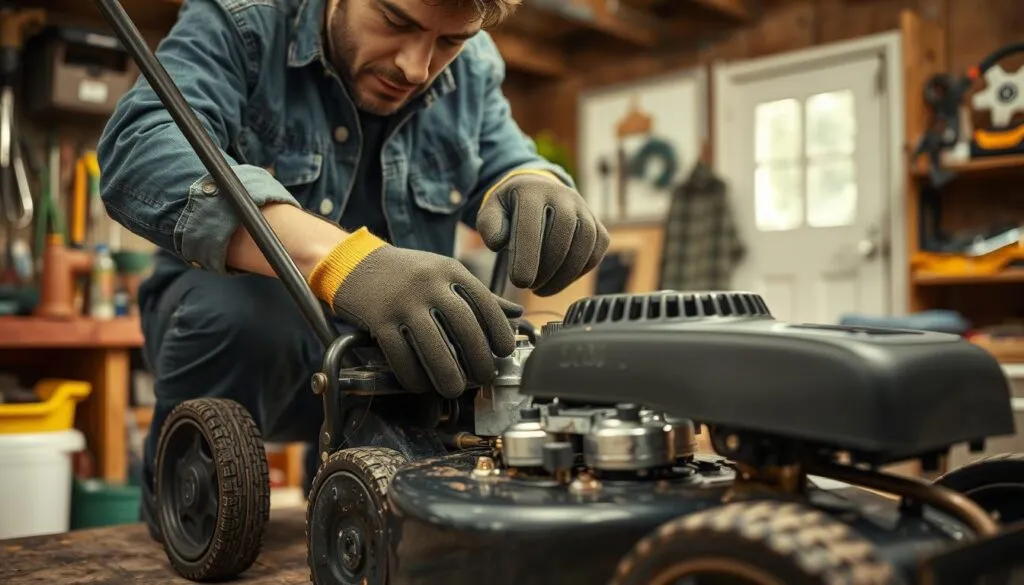
A well-maintained lawnmower operates smoothly and requires less effort. You should make sure your mower has been recently serviced. This ensures easy starting and efficient operation.
Maintenance and Safety Gear Essentials
Essential precautions begin with personal protective equipment. Sturdy shoes with excellent traction prevent slips on wet grass. Long pants protect legs from debris.
Sun protection is critical for garden work. Use broad-spectrum sunscreen, a wide-brimmed hat, and sunglasses. Sunburn adds unnecessary stress to the body.
Scan your garden for obstacles like toys or branches before beginning. Clear the area to prevent tripping or projectiles from the mower.
Setting Up Your Mower for Ergonomic Use
The type of terrain and grass affects the difficulty of the task. Assess your yard’s conditions before deciding to proceed on any given day.
Adjust your mower‘s handle to a comfortable height. This allows for an upright posture while you push. Proper setup prevents back strain and makes the chore more manageable.
Conclusion
Making an informed choice about lawn maintenance during pregnancy centers on personal health and comfort. This physical activity is often considered safe in the initial stages for many women.
As pregnancy advances, the task demands more from your changing body. Delegating mowing to someone else during later weeks is a wise choice to avoid strain.
Prioritizing well-being over a perfect garden is essential. Listening to your body and heeding medical advice ensures a healthy journey for you and your baby.
FAQ
Is it safe to mow the lawn during early pregnancy?
For many women, mowing the lawn in the first trimester is considered safe if you were physically active before. It’s vital to listen to your body and avoid overexertion. Always get clearance from your healthcare provider, as individual health conditions vary.
What are the main precautions for using a push mower when pregnant?
When operating a push mower, take regular breaks to prevent strain. Stay hydrated, wear supportive shoes, and avoid mowing during the hottest part of the day. The repetitive pushing motion can be taxing, so pace yourself carefully.
Is a riding mower a better option for lawn care while pregnant?
A riding mower can significantly reduce physical strain, making it a preferable choice, especially in later stages. However, you must still be cautious of bumps and jostling. Ensure the terrain is smooth to avoid unnecessary jolts.
How can I make this garden task less strenuous on my body?
A> To make mowing easier, break the work into smaller sessions over several days. Use proper body mechanics, engage your core lightly, and never twist your torso. Wearing a maternity support belt may also help alleviate back pressure.
At what point in pregnancy should I consider having someone else mow the lawn?
If you experience any pain, dizziness, or shortness of breath, stop immediately. Many women choose to hand off the task after the first trimester or if their doctor advises against it. Your and your baby’s health are the top priority.