
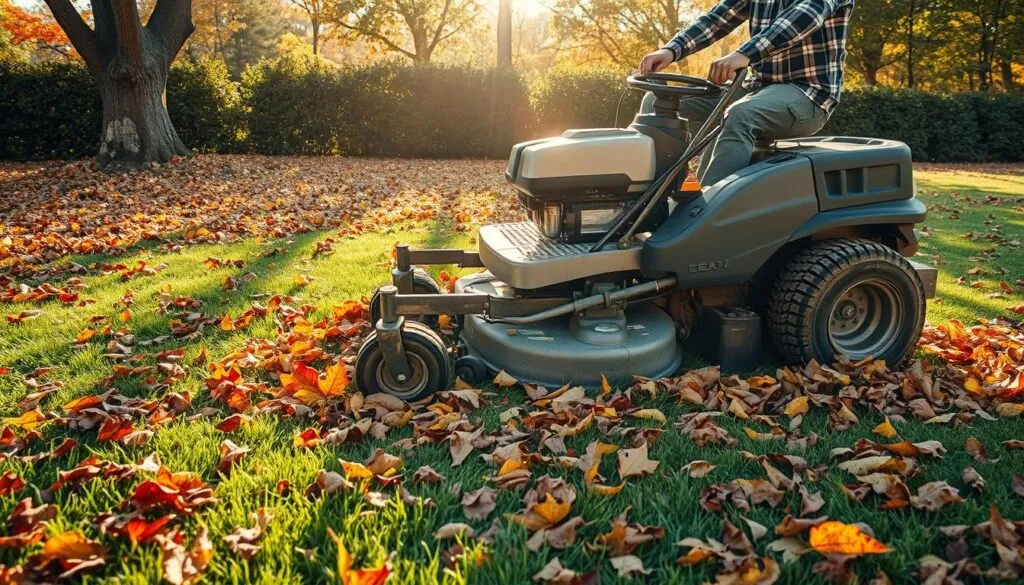
What if everything you thought about fall cleanup was wrong? Instead of spending hours raking and bagging, there’s a smarter approach that turns seasonal foliage into landscape gold.
Autumn brings colorful leaves to your property, but traditional removal methods waste valuable resources. Research from leading universities shows that mulching with a mower provides significant benefits. This technique transforms what many consider a nuisance into a natural fertilizer.
The process saves considerable time compared to conventional methods. Rather than hauling away organic matter, you’re feeding your grass with nutrient-rich mulch. This approach works with nature’s cycle instead of fighting against it.
Proper leaf management creates healthier turf while reducing environmental impact. With simple adjustments to your routine, fall maintenance becomes more efficient and eco-friendly. The traditional way of handling foliage often removes beneficial elements that could enhance soil quality.
Key Takeaways
- Mulching leaves with a mower saves time compared to raking and bagging
- This method transforms fallen foliage into natural fertilizer for your grass
- Research supports the environmental benefits of proper leaf management
- The technique works with seasonal cycles rather than against nature
- Traditional cleanup methods often waste valuable nutrients
- Simple adjustments make fall maintenance more efficient
- This approach reduces waste while improving landscape health
Understanding the Benefits of Mulching Leaves
The real value of autumn foliage lies not in its removal, but in its decomposition. This process recycles essential nutrients directly back into the soil, creating a natural fertilization system.
Decomposing leaf matter feeds beneficial earthworms and soil microbes. This activity establishes a healthy ecosystem that promotes long-term turf vitality.
Nutrient Recycling and Soil Health
This nutrient recycling process transforms fallen organic matter into food for your grass. It improves soil structure over time and can reduce the need for synthetic fertilizers.
Experts at Purdue University confirm that this practice does not increase thatch or disease. It also has no negative effect on soil pH.
Environmental and Ecosystem Advantages
Consistent mulching leaves for several years yields significant results. Research from Michigan State University demonstrated a dramatic reduction in weeds like dandelions and crabgrass.
The decomposing organic matter covers bare spots, preventing weed seeds from germinating. This creates a dense, healthy lawn that is your best defense against invasion.
This approach supports local wildlife and reduces landfill waste. It’s a win for your landscape and the environment.
Can You Mow Leaves? Exploring Mulching Techniques
Standard yard maintenance equipment holds the key to turning seasonal debris into valuable organic matter. This approach requires understanding how your machine processes foliage effectively.
How Mowing Transforms Leaves Into Mulch
The mechanical action of a lawn mower chops whole leaves into small pieces. This reduction in size accelerates decomposition significantly.
Properly shredded material should measure about half an inch. This ideal dimension allows the leaf fragments to settle between grass blades without smothering turf.
| Leaf Condition | Ideal Size | Decomposition Time | Turf Impact |
|---|---|---|---|
| Properly Mulched | ½ inch pieces | 2-4 weeks | Beneficial nutrient release |
| Whole Leaves | 3-6 inches | 6+ months | Grass smothering risk |
| Oversized Chunks | 1-2 inches | 2-3 months | Patchy decomposition |
Optimizing Mower Settings and Timing
Set your mower to the highest cutting position for mulching leaves. Remove the collection bag to allow material distribution across the lawn.
Time your activity when a thin layer of approximately one inch covers the grass. Dry conditions improve the shredding process dramatically.
Specialized blades enhance efficiency but standard equipment works effectively. The leaves lawn mower technique transforms autumn cleanup into landscape enrichment.
How to Mulch Leaves with Your Lawn Mower
The success of leaf mulching begins with strategic preparation of your lawn and equipment. Proper setup ensures efficient processing of autumn foliage into beneficial organic material.

Preparatory Steps for Effective Mulching
Start by distributing heavy accumulations evenly across your lawn. Use a rake to spread out deep piles, creating a uniform layer for consistent mulching.
Turfgrass specialists confirm that up to six inches of fallen leaves can be processed effectively. Verify your equipment’s capacity before tackling substantial accumulations.
Adjust your mower to the highest cutting position and detach the collection bag. This configuration allows proper redistribution of shredded material across the turf.
Multiple passes over the leaves lawn area ensure thorough chopping into small fragments. The ideal result shows visible grass blades through the mulched layer.
| Leaf Accumulation | Preparation Needed | Mower Passes Required | Expected Result |
|---|---|---|---|
| Light coverage (under 1 inch) | Minimal spreading | 1-2 passes | Fine mulch, visible grass |
| Moderate layer (1-3 inches) | Even distribution | 2-3 passes | Well-chopped fragments |
| Heavy accumulation (3-6 inches) | Thorough raking | 3-4 passes | Possible excess collection |
When the mulched leaves layer appears too dense, reattach the bag for one final collection pass. This prevents smothering while maintaining beneficial coverage.
Composting and Garden Uses for Mulched Leaves
When your lawn reaches its capacity for autumn foliage, composting offers an intelligent alternative. This process transforms excess material into rich compost for your landscape.
Balancing Carbon-Rich Leaves with Nitrogen Sources
Tree foliage serves as carbon-rich “brown” material in the compost pile. Combine it with nitrogen sources like grass clippings for optimal decomposition.
Whole leaves work better than finely shredded material for composting. They allow better oxygen flow through the pile. This prevents compression that slows decomposition.
If green materials are scarce, add fertilizer without weed killers. Use approximately 1/4 cup per 10 pounds of leaves. Maintain proper moisture like a damp sponge throughout the process.
Using Mulched Leaves in Your Garden Beds
Apply a six- to eight-inch layer of chopped leaves to your garden beds. Moisten the material and add nitrogen sources to accelerate breakdown.
Microorganisms work through winter to create enriched soil by spring. This organic matter improves structure and fertility for planting.
Properly managed mulched leaves become finished compost in just a few months. Your garden benefits from this nutrient-rich amendment.
Managing Excess Leaves and Mulching Challenges
When your property receives more than six inches of seasonal foliage, a specialized technique becomes essential. Heavy accumulations require strategic handling to prevent turf smothering while maximizing nutrient recycling benefits.
The Two-Step Mulch Mowing Process
Begin the operation by removing the collection bag from your equipment. This initial pass chops the material into fine fragments that settle between grass blades.
The shredded organic matter temporarily covers the turf but decomposes rapidly. This approach ensures proper cutting rather than whole-leaf collection.
| Process Step | Equipment Setup | Primary Objective | Resulting Material |
|---|---|---|---|
| First Pass | Bag removed | Thorough shredding | Finely chopped fragments |
| Second Pass | Bag attached | Efficient collection | Reduced-volume mulch |
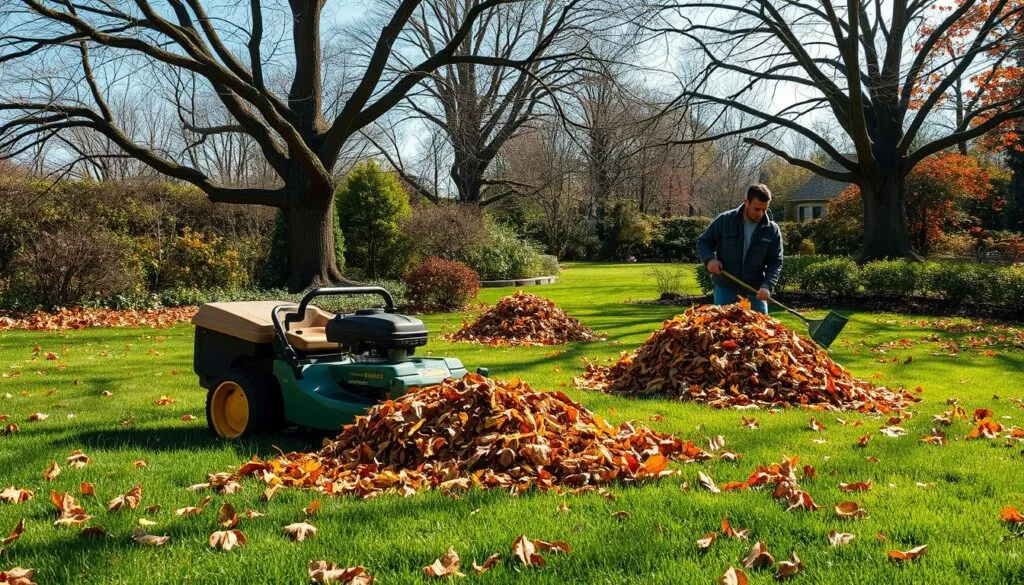
Reattach the collection bag for the second mowing operation. The pre-chopped material now occupies significantly less space—typically two to four times smaller volume.
This efficient method saves considerable effort compared to traditional approaches. The collected mulch works wonderfully around trees and shrubs, conserving moisture and suppressing weed growth.
Strategic management of heavy foliage accumulations benefits the entire landscape. This systematic approach maximizes what the turf absorbs while productively utilizing excess material.
Lawn Care Tips for a Healthy, Weed-Resistant Turf
Integrating fertilization with your leaf management strategy unlocks superior turf health. This combination creates optimal conditions for robust grass growth while naturally suppressing unwanted plants.
Fertilization and Moisture Management
Fall fertilization timing aligns perfectly with seasonal leaf drop. Applying nitrogen-rich fertilizer from September through November activates soil organisms.
These microorganisms rapidly decompose organic matter into valuable nutrients. Michigan State University research confirms this synergy enhances soil health dramatically.
Consistent practice over three years creates remarkably dense turf. This thick lawn leaves no place for weed seeds to establish.
Proper moisture levels support both decomposition and grass vitality. The nitrogen boost from decomposing material may reduce additional fertilization needs.
Combining this approach with regular grass clippings creates a self-reinforcing cycle. Your landscape becomes naturally resistant to invasion while maintaining vigorous growth.
Conclusion
Rather than viewing fallen leaves as a chore, consider them a valuable resource waiting to be utilized. This approach transforms seasonal cleanup into an opportunity for landscape enrichment. The techniques discussed save considerable time compared to traditional methods.
Properly sized pieces—roughly dime-sized—ensure successful decomposition without smothering turf. Mulched leaves work wonderfully in garden beds and around tree bases. They conserve moisture while adding nutrients to the soil.
Designating a place for undisturbed leaf litter supports native pollinators. This eco-friendly practice keeps organic matter on your property instead of landfills. Embrace fall leaf management as a sustainable choice for your home environment.
FAQ
What are the primary benefits of using a lawn mower for leaf cleanup?
Using your mower to mulch fallen leaves recycles valuable nutrients back into the soil, improving turf health. This process creates fine organic matter that decomposes quickly, enriching your yard naturally and reducing the need for synthetic fertilizer.
How does mulching leaves with a mower help suppress weed growth?
A thin layer of mulched leaf pieces acts as a natural barrier, blocking sunlight from reaching weed seeds in the soil. This organic layer also helps the soil retain moisture, giving your grass a competitive advantage over unwanted plants.
What is the best way to handle a thick layer of leaves, like six inches or more?
For a heavy accumulation, use a two-step process. Make the first pass with the mower at a higher setting to reduce the leaf volume. Then, lower the deck for a second pass to finely chop the remaining pieces into ideal mulch for your landscape.
Can mulched leaves be used in garden beds and for composting?
Absolutely. Finely shredded leaves are an excellent carbon-rich “brown” material for a compost pile. In garden beds, a layer of this leaf mulch helps regulate soil temperature, retain water, and slowly release nutrients as it breaks down over months.
What should I do with grass clippings when I mulch leaves in the fall?
Leave the grass clippings on the lawn. Combined with the mulched leaf litter, they create a powerful mixture of organic matter. This combination returns nitrogen and other essential nutrients to the soil, promoting strong root growth for the following season.
Are there any specific mower settings recommended by experts like those at Michigan State University?
Research from Michigan State University Extension confirms that standard mulching mowers or mulching kits are highly effective. Ensure your mower blade is sharp for a clean cut, which chops leaves into smaller pieces that decompose faster and won’t smother the grass.