
Have you ever wondered about the true cost of that perfectly manicured lawn? Beyond the initial price of your equipment, the ongoing expense of fuel can add up quickly throughout the season. Understanding this consumption is the first step toward smarter, more efficient lawn care.
Your choice of mower plays a huge role. Different types of machinery consume gas at vastly different rates. This knowledge empowers you to manage your budget effectively and spot potential mechanical problems before they become costly.
This guide provides a clear breakdown of what to expect. You will learn about average usage, factors that impact efficiency, and practical tips for conservation. We will also explore alternative options for maintaining your landscape with a smaller environmental footprint.
Key Takeaways
- Fuel consumption varies significantly between different types of lawn mowers.
- Understanding your mower’s fuel use helps with accurate seasonal budgeting.
- Proper maintenance is crucial for optimal gas efficiency and performance.
- Several factors, like lawn size and grass type, influence how much fuel you’ll need.
- Identifying unusual fuel consumption can be a sign of needed equipment repairs.
- Exploring alternative mowing methods can reduce both costs and environmental impact.
Understanding Lawn Mower Fuel Consumption
Grasping the typical fuel consumption rates for different mowers is essential for efficient lawn maintenance. This knowledge allows you to budget accurately and spot potential issues with your equipment.
Average Fuel Use Across Mower Types
The average fuel consumption varies significantly between models. A standard 21-inch push mower is highly efficient, typically using about 0.25 gallons per hour.
In contrast, a medium-sized riding mower might consume half a gallon to one gallon of gas each hour. Larger commercial mowers can use three to four gallons under heavy workloads.
Impact of Lawn Size and Grass Height on Gas Consumption
The size of your property directly impacts total fuel use. Maintaining a small lawn requires far less gas than caring for several acres.
Tall, thick grass forces the engine to work harder, increasing consumption. Regular mowing prevents this extra strain and keeps your fuel costs manageable.
Even your yard’s terrain plays a role. Hilly landscapes demand more power, leading to higher gas use compared to flat, level lawn areas.
Exploring how much petrol does a lawn mower use
The numbers behind residential lawn care fuel usage reveal some surprising environmental realities. Your personal consumption connects to a much larger national picture that affects both your wallet and the environment.
National Scale and Environmental Impact
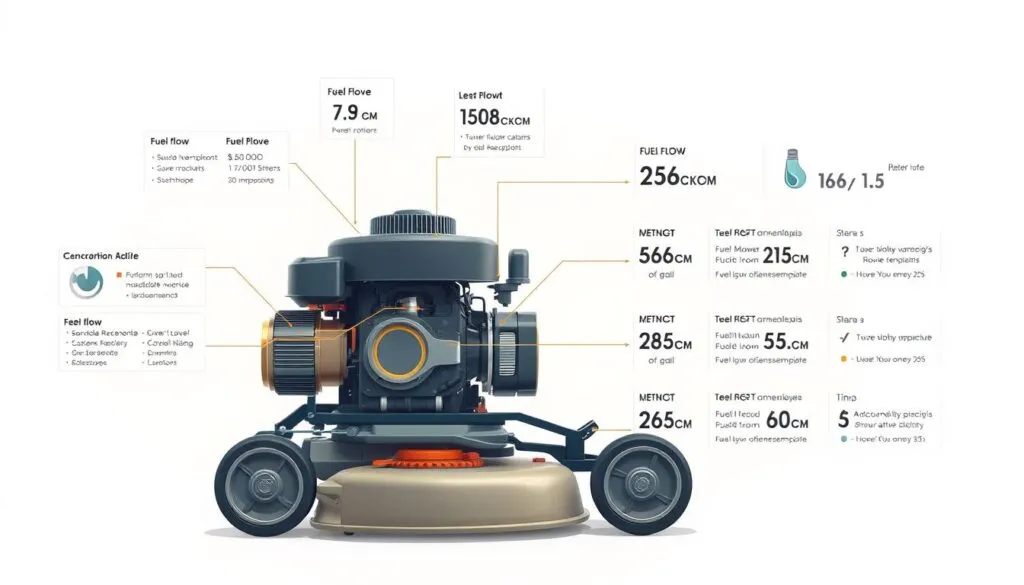
Americans collectively use approximately 600 million gallons of fuel annually for lawn equipment. This massive volume equals filling seven Rose Bowl stadiums to capacity each year.
During just one hour of operation, your equipment produces pollution equivalent to driving 40 miles in a car. This environmental impact highlights why understanding real-world consumption matters.
| Mower Type | Weekly Consumption | Annual Usage (30 weeks) | Environmental Impact |
|---|---|---|---|
| Small Push Mower | 0.25 gallons | 7.5 gallons | Lower emissions |
| Medium Riding Mower | 1-2 gallons | 30-60 gallons | Moderate impact |
| Large Commercial Mower | 4+ gallons | 120+ gallons | Highest emissions |
Tracking your fuel consumption over time provides valuable maintenance insights. Sudden increases in usage often signal developing mechanical issues.
Regular monitoring helps you spot problems early, saving on repair costs. It also ensures your equipment operates at peak efficiency throughout the season.
Factors Affecting Fuel Efficiency in Your Mower
Achieving peak fuel efficiency requires looking beyond the basic specifications of your mower. Your equipment’s design and your maintenance habits directly influence gas consumption.
Understanding these elements helps you maximize performance and minimize costs. It also extends the life of your machine.
Mower Type and Engine Capacity
The physical size and power of your mower are primary factors. Smaller engines, like those in push models (140cc-190cc), are inherently more efficient.
They consume less fuel for residential lawns. Larger engines in riding mowers (400cc-600cc) provide more power but operate with higher consumption rates.
Fuel Quality, Octane Ratings, and Maintenance
The quality of gasoline you use is critical. Fresh, high-quality fuel allows your engine to run cleaner and more efficiently.
For most small engines, 87 octane is the recommended standard. This rating provides optimal combustion without extra expense.
Using low-octane or stale fuel degrades performance. The engine must work harder, burning more fuel to produce the same result.
Regular maintenance is non-negotiable for efficiency. A clean air filter is vital, as a clogged one restricts airflow.
This forces a rich fuel mixture, wasting gas. Also, keep your tank maintained; use stabilizers for storage to preserve fuel quality.
Comparing Riding and Push Mower Gas Usage
The debate between riding and push mowers extends beyond convenience to fuel economics. Your equipment selection directly impacts operational costs and environmental footprint.
Fuel Consumption Differences Between Mower Types
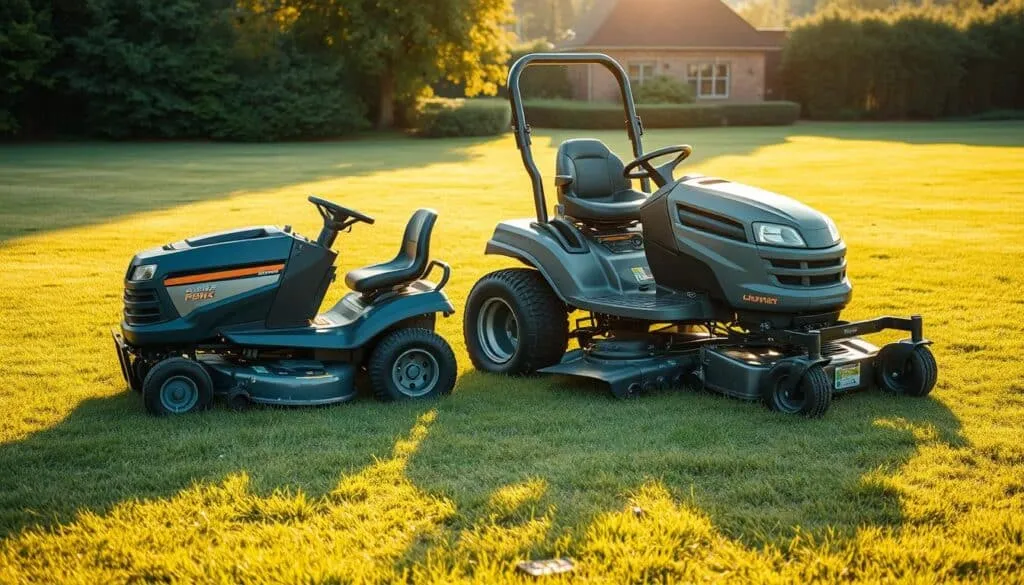
Riding mowers consistently consume more gas than push models. This results from larger engines, heavier weight, and dual power requirements.
A typical riding mower uses one to four gallons per hour. Push mowers generally consume just 0.25 to 0.5 gallons during normal operation.
The consumption gap widens significantly on large properties. A riding mower’s speed advantage comes with substantially higher fuel usage.
How Mowing Practices Impact Performance and Efficiency
Your mowing techniques significantly affect both performance and efficiency. Factors like cutting height and grass conditions matter greatly.
Mowing wet or tall grass forces engines to work harder. This can increase fuel consumption by 50% compared to optimal conditions.
Maintaining a consistent schedule prevents excessive growth. This reduces engine workload and improves fuel efficiency for any mower type.
The way you operate equipment also matters. Sharp turns, speed changes, and unnecessary full throttle all contribute to increased gas consumption.
Improve efficiency with straight, overlapping passes. Avoid wet grass and adjust speed to match grass density rather than running at maximum constantly.
Troubleshooting Excessive Fuel Use
A sudden spike in your equipment’s fuel consumption is more than just a nuisance; it’s a clear signal. Addressing these issues promptly can restore efficiency and prevent costly damage.
Identifying Mechanical Issues and Clogged Filters
Several common problems can drastically increase gas usage. A clogged air filter is a primary culprit, restricting airflow and forcing the engine to burn more fuel for power.
Dull blades create similar strain. They tear grass instead of cutting it cleanly, making the engine work harder. This significantly raises consumption.
Check the fuel filter and tank cap as well. A blocked filter restricts flow, while a faulty cap can allow air into the system. Both disrupt the optimal fuel-to-air ratio.
For riding mowers, low tire pressure adds rolling resistance. The engine must expend extra power to move, wasting fuel over time.
Optimizing Engine and Carburetor Settings
Proper adjustments are crucial for peak performance. A dirty spark plug fails to ignite fuel completely, leading to waste. Replacing this small part is a simple fix with a big impact.
The carburetor controls the fuel mixture. An incorrect setting, often from wear or debris, can cause the engine to run rich or lean. Both conditions increase consumption.
Regular maintenance is your best defense. Inspect key components like the air filter every 25 hours of operation. This proactive approach ensures your mower runs efficiently season after season.
Alternative Fuel Options and Eco-Friendly Mowing
The landscape of lawn care is evolving with cleaner, more efficient alternatives. These options reduce environmental impact while maintaining beautiful green spaces.
Electric, Propane, and Robotic Mowers
Electric mowers eliminate gas costs entirely. They produce zero direct emissions and require minimal maintenance.
Battery-powered models offer 30-60 minutes of runtime. This suits most residential lawn sizes perfectly.
Propane mowers provide similar power to gasoline models. They burn cleaner, reducing emissions significantly.
Robotic equipment represents the latest innovation. These autonomous mowers work on programmed schedules.
Benefits of Mulching and Sustainable Lawn Care
Mulching mowers improve efficiency dramatically. They return nutrients to your lawn while eliminating disposal needs.
Sustainable practices reduce fuel consumption over time. Planting low-maintenance grass varieties like Buffalo Grass cuts mowing frequency.
Raising cutting height to 3 inches promotes deeper root growth. This improves drought resistance and saves money.
Proper watering practices are crucial for care. Urban areas use up to 60% of water for lawn irrigation.
| Alternative Option | Fuel Type | Efficiency Rating | Best For |
|---|---|---|---|
| Electric Mower | Battery Power | Excellent | Small/Medium Yards |
| Propane Mower | Propane Gas | Very Good | Large Properties |
| Robotic Mower | Electric | Outstanding | Busy Homeowners |
| Mulching Mower | Various | Improved | All Lawn Types |
Combining efficient equipment with smart practices reduces environmental impact. You save money on fuel while enjoying a healthy yard. Consider overseeding timing as part of your sustainable approach.
Conclusion
Your journey to a cost-effective and efficient lawn is now complete with these key insights. You understand that fuel consumption varies greatly by equipment type and property size.
Proper maintenance and high-quality fuel are non-negotiable for peak efficiency. Your mowing habits, like cutting speed and height, also play a major role.
Remember, a sudden increase in gas consumption often signals a need for troubleshooting. Checking simple components can restore performance and save you money.
For the ultimate in efficiency, consider modern alternatives. Electric or robotic mowers can eliminate gas costs entirely while maintaining a beautiful yard.
Applying these strategies allows you to manage your lawn care intelligently. You will enjoy lower costs and a smaller environmental footprint for seasons to come.
FAQ
What is the average gas consumption for a push mower?
A standard walk-behind mower with a 21-inch deck typically uses between 0.5 and 0.75 gallons of fuel per hour. Your actual consumption will depend on your engine’s power and the thickness of your grass.
How much gas does a riding lawn mower use?
Riding mowers have larger engines and consume more fuel. On average, you can expect a riding mower to use between 0.75 and 1.5 gallons per hour. The size of your yard and your mowing speed are major factors.
Does the type of gas I use affect my mower’s performance?
Yes. Always use fresh, high-quality gasoline with the octane rating recommended in your owner’s manual, typically 87 octane or higher. Using stale or low-octane fuel can lead to poor engine performance and increased fuel consumption.
How can I make my lawn mower more fuel-efficient?
Regular maintenance is key. Keep the air filter clean, sharpen the mower blades at least once per season, and ensure the spark plug is in good condition. Mowing at a steady pace and not cutting the grass too short also improves efficiency.
What are common issues that cause a mower to use too much gas?
Excessive fuel use is often a sign of problems like a clogged air filter, a dirty carburetor, or an engine running too rich. A malfunctioning carburetor can flood the engine with gas, wasting fuel and reducing power.
Are there eco-friendly alternatives to gas-powered mowers?
Absolutely. Electric mowers, available in corded and battery-powered models, produce zero emissions at the point of use. Propane mowers offer a cleaner-burning fuel option, and robotic mowers provide a hands-free, efficient way to maintain your lawn.