
Have you ever wondered if the single most important decision for your lawn’s future happens before you even start the mower? The timing of that very first cut is a make-or-break moment for your entire landscape. Getting it right is the secret to a lush, green carpet that boosts your home’s curb appeal.
Patience truly is a virtue here. For a lawn grown from seed, you might wait up to two months. If you installed sod, you could be ready in just two to four weeks. Mowing too early is a common mistake. It can damage tender shoots before they develop strong roots, setting your progress back by weeks.
Your success depends on several factors. The type of turf, weather, and soil temperature all play a role. You need to recognize the visual signs that your young plants are strong enough. Following expert guidelines, like those for overseeding fescue lawns, helps you avoid pitfalls. This guide will give you the confidence to make the right call.
Key Takeaways
- The first mow is critical for establishing a healthy, resilient lawn.
- Timing varies dramatically between seeded lawns and sod.
- Cutting too soon can uproot seedlings and damage the root system.
- Grass type, weather, and establishment method influence the optimal time.
- Look for specific visual cues, like grass height, before mowing.
- Always follow the one-third rule: never remove more than one-third of the blade height.
Understanding the Growth Stages of New Grass
Different installation methods follow unique timelines, each with specific milestones that signal readiness for cutting. Your approach determines the establishment period and what to watch for during development.
Seeded Lawns vs. Sodded Lawns: What to Expect
A seeded lawn requires approximately eight weeks before the first trim. Seeds need four to thirty days to germinate, depending on turf type and soil conditions.
During this period, tender shoots develop strong root systems. Your patience ensures the plants anchor firmly in the soil.
In contrast, sod provides instant greenery but still needs two to four weeks for root establishment. The mature grass must bond with your existing soil.
Recognizing Signs of Healthy Grass Growth
Look for uniform green color and upright blades standing tall. Multiple blades per plant indicate vigorous development.
For sodded lawns, perform the simple tug test. Gently pull on a section; if it resists lifting, roots have anchored successfully.
Dense coverage across your property shows the establishment process is progressing well. These visual cues confirm your turf is strengthening.
When Can New Grass Be Mowed: Determining the Right Time
The timing of your turf’s debut mowing session sets the stage for long-term vitality. Getting this initial cut correct establishes a foundation for robust development. Your careful approach now pays dividends for seasons to come.
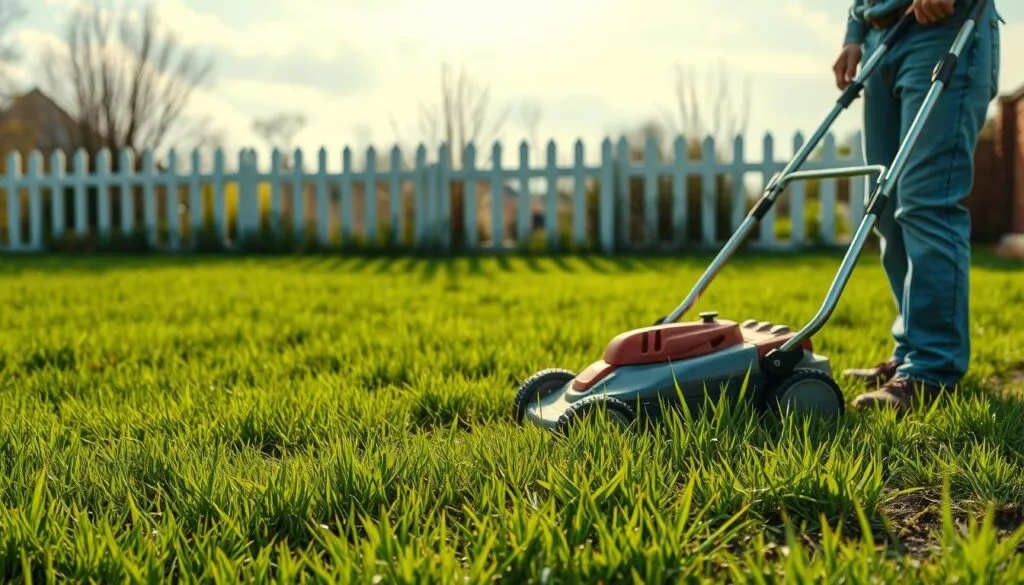
Checking Grass Height and Establishment
Most varieties need to reach 3 to 4 inches before their first mow. This height ensures plants develop strong root systems. They better withstand the stress of mowing at this stage.
Look for uniform blade development across your lawn. Each plant should have multiple upright blades. Dense coverage indicates successful establishment.
Perform the tug test to verify root strength. Gently pull on a section of grass. Resistance means your plants are securely anchored.
Applying the One-Third Rule for a Healthy Cut
The one-third rule governs proper cutting new grass practices. Never remove more than one-third of the grass blade in a single session. This prevents shocking tender plants.
For your first mow, allow growth to exceed the target height by one-third. If maintaining 3-inch grass, wait until it reaches 4 inches. Then apply the one-third rule.
This gradual approach encourages thicker growth and deeper roots. It protects your investment in a beautiful lawn.
Essential Preparation Steps Before Mowing Your New Lawn
Proper preparation transforms your first mowing session from a potential hazard into a growth-promoting event. These crucial steps protect tender plants and ensure clean, healthy cuts.
Attention to detail during setup prevents damage that could set back your lawn’s development. Each element works together to support strong establishment.
Mower Maintenance and Blade Sharpness
Sharp mower blades are non-negotiable for protecting young grass. Dull blades tear rather than cut, creating jagged edges that invite disease.
Always clean your equipment before use. Remove old clippings and debris that might harbor pathogens. This simple step prevents contamination while improving cutting efficiency.
Adjusting Mowing Height to Protect Young Grass
Set your cutting deck to approximately 3 inches for the initial sessions. This higher mowing height reduces stress on developing root systems.
The extra leaf surface supports photosynthesis and continued growth. You’ll want to make sure you follow the one-third rule consistently during this delicate period.
Timing Your Mow with Dry Weather Conditions
Choose a day when your turf is completely dry. Wet grass clumps unevenly and tears easily under mower blades.
Dry conditions ensure clean cuts and prevent soil compaction from equipment weight. Ideal timing occurs during mild weather periods for quick recovery.
A lightweight push mower is best for initial cuts. Heavy equipment can damage tender plants and soft soil beneath established sod.
Post-Mowing Care for a Thriving New Lawn
Post-mowing attention separates average lawns from truly exceptional green spaces. Your careful follow-up ensures the turf recovers properly and continues developing strong roots.
Watering and Nutrient Management After Mowing
Provide a thorough watering session immediately following cutting. This replenishes lost moisture and helps plants recover from the stress.
Early morning hours offer the ideal time for irrigation. Water penetrates deep into the soil with minimal evaporation.

Consider using your mower’s mulching feature if available. Grass clippings return valuable nutrients to the soil naturally.
Monitoring for Stress, Weeds, and Recovery
Watch for yellowing blades or brown patches in the following days. These signs indicate potential issues needing attention.
Regular inspection helps detect weeds early before they spread. Quick removal prevents competition for water and nutrients.
| Symptom | Possible Cause | Recommended Action |
|---|---|---|
| Yellowing blades | Nutrient deficiency or over-watering | Adjust fertilization or watering schedule |
| Brown patches | Disease or pest damage | Apply appropriate treatment promptly |
| Uneven growth | Compacted soil or inconsistent watering | Aerate soil and improve irrigation |
Plan subsequent sessions based on actual growth patterns rather than fixed schedules. This approach maintains turf health while encouraging dense coverage.
Conclusion
With the foundational knowledge you’ve gained, your lawn care efforts transition from establishment to long-term maintenance success. You now understand the critical timing differences between seeded and sodded turf. This awareness helps you avoid common pitfalls that could set back your progress.
Your success depends on multiple factors working together. Proper timing based on grass height, sharp mower blades, and favorable weather conditions all contribute to healthy development. Practical techniques like the tug test and visual inspections give you confidence in assessing readiness.
Remember that post-mowing care is equally important. Proper watering and vigilant monitoring help your turf recover quickly. Establishing a consistent routine following the one-third rule promotes thick, resilient growth.
Your careful approach now ensures a beautiful, durable lawn that enhances your property for years. These principles become your blueprint for ongoing maintenance success and lasting curb appeal.
FAQ
How long after planting seed can I mow my lawn?
You can typically perform the first mow on a newly seeded lawn about three to four weeks after germination. The key is to wait until the young grass has reached a mowing height of about 3 to 4 inches and is firmly rooted in the soil. Tug gently on a blade; if it resists, the root system is likely strong enough.
What is the one-third rule for cutting new grass?
The one-third rule is a crucial guideline for lawn health. It means you should never remove more than one-third of the grass blade’s height in a single mowing session. For a newly seeded lawn, this helps prevent stress, allowing the young roots to continue developing without being shocked by a severe cut.
When is it safe to mow newly installed sod?
You can usually mow new sod about two to three weeks after installation. Before you start, check that the sod has rooted firmly to the soil beneath. You can test this by gently lifting a corner of a sod piece. If it doesn’t lift easily, the roots have established, and it’s time for the first cut.
How do I prepare my mower for a new lawn’s first cut?
Proper mower maintenance is essential. Ensure your mower blades are sharp to create clean cuts instead of tearing the tender grass blades. Dull blades can damage young grass, making it vulnerable to disease. Also, adjust the deck to its highest setting to avoid cutting the grass too short.
What is the best mowing height for a newly seeded lawn?
For the first mow, set your mower to cut at a height of about 3 inches. This height is ideal for protecting the soil from sun exposure, encouraging deep root growth, and helping the lawn outcompete weeds. Always follow the one-third rule to determine the exact cutting height based on your grass’s current growth.
Should the grass be wet or dry for the first mowing?
You should always mow when the grass is completely dry. Mowing a wet lawn can lead to uneven cuts, clumping of clippings, and can spread lawn diseases. Dry blades are also easier for the mower to cut cleanly, which is vital for the health of your young turf.
How should I care for my lawn immediately after the first mow?
After mowing, water your lawn deeply but infrequently to encourage the roots to grow downward. Avoid applying fertilizer immediately after cutting to prevent burning the stressed grass. Instead, monitor the lawn for a few days for signs of stress or weed growth and address any issues promptly.