
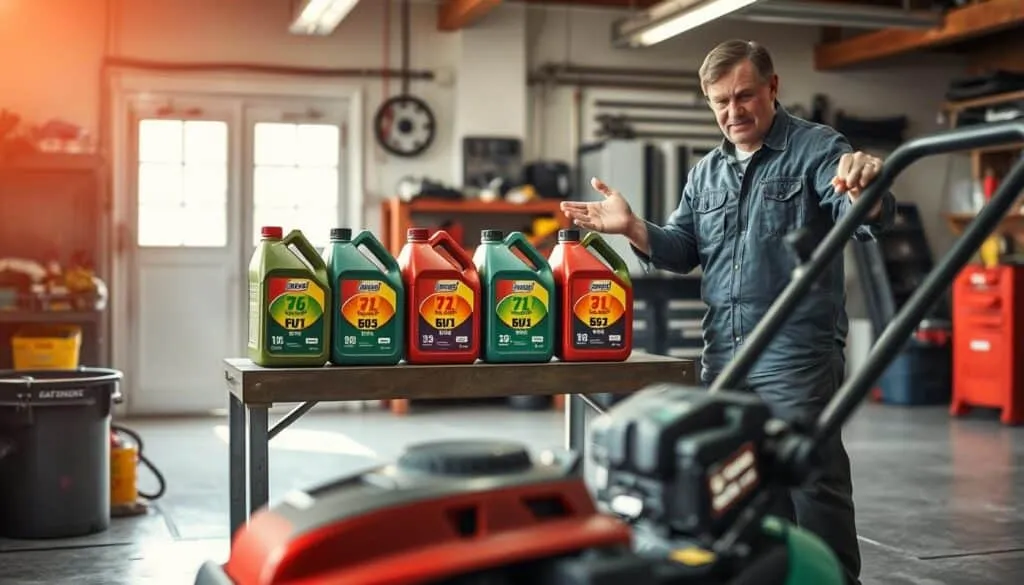
Have you ever wondered why your neighbor’s lawn mower starts on the first pull every single time, while yours sputters and struggles? The secret to that reliable performance might be simpler than you think, and it’s sitting right in your fuel can.
The fuel you select is one of the most critical choices for your equipment. It directly influences starting ease, engine longevity, and cutting power. Using the wrong type can lead to frustrating starting difficulties and even costly repairs.
Small engines, like those in your mower, are surprisingly sensitive. They operate at higher temperatures and have simpler fuel systems than car engines. They also sit unused for long periods, making them more vulnerable to fuel-related issues.
Understanding the correct fuel requirements protects your investment. It ensures your equipment runs smoothly season after season, saving you money and keeping your lawn looking its best. This knowledge empowers you to make smart maintenance decisions.
Key Takeaways
- The correct fuel type is vital for reliable starting and long engine life.
- Lawn mower engines are more sensitive to fuel quality than car engines.
- Using improper fuel can cause performance issues and expensive damage.
- Fuel choice impacts both immediate operation and long-term ownership costs.
- Simple knowledge about fuel can prevent most common mower problems.
Understanding Fuel Quality and Engine Needs
Your mower’s reliability depends heavily on understanding the specific fuel requirements of its engine. Small engines operate differently than automotive engines, making them more sensitive to fuel characteristics.
Fuel quality essentials for optimal performance
High-quality gasoline must meet three critical criteria. It should be clean, fresh, and unleaded. Contaminants or stale fuel can immediately affect your equipment’s operation.
Most engines require a minimum 87 octane rating. This prevents knocking while providing efficient combustion. Acceptable formulations include up to 10% ethanol or 15% MTBE.
If you experience starting issues, consider switching fuel providers. Not all gasoline brands maintain consistent quality standards.
How engine type influences your fuel choice
Your equipment’s engine design determines specific fuel needs. Four-stroke engines use straight gasoline, while two-stroke models require oil mixtures.
Engine factors like compression ratio and cooling efficiency interact with fuel quality. Proper matching ensures optimal combustion and extends component life.
The simpler fuel system in small engines lacks advanced filtration. This makes them more vulnerable to poor-quality gasoline effects.
What Kind of Gas for Lawn Mower: A Comprehensive Guide
Proper fuel selection ensures your cutting equipment runs smoothly season after season. Making informed choices prevents common engine problems and extends your machine’s lifespan.
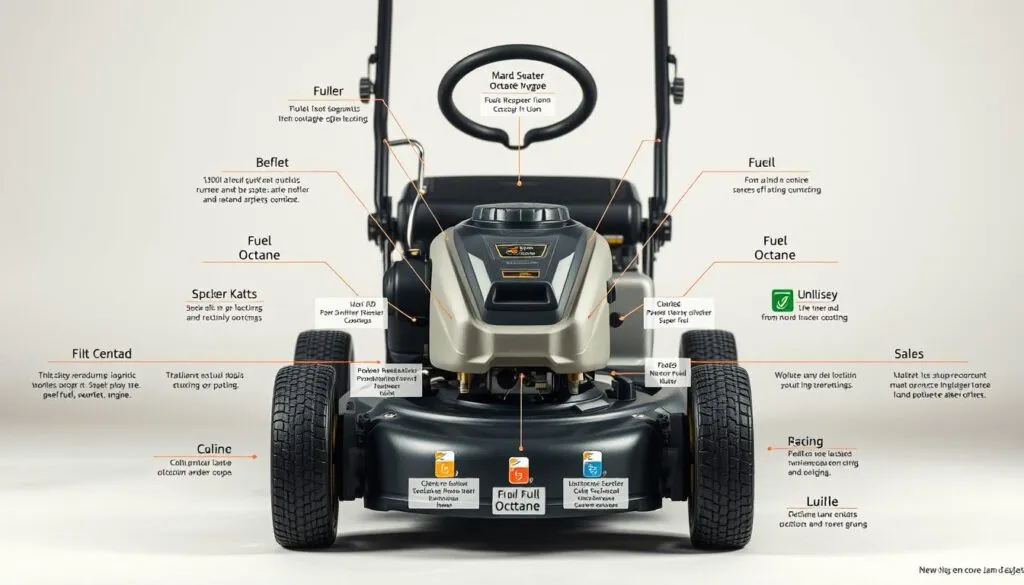
Manufacturer recommendations and fuel specifications
Always begin by checking your owner’s manual. This document contains specific requirements for your equipment’s engine.
Manufacturers specify minimum octane ratings and maximum ethanol content. Following these guidelines protects your warranty and prevents damage.
Most residential models work well with 87 octane gasoline containing up to 10% ethanol. This combination provides reliable performance without unnecessary expense.
Balancing performance, cost, and availability
Regular unleaded gasoline offers the best value for frequent users. It’s widely available and cost-effective for weekly mowing sessions.
Consider your usage patterns when selecting fuel. Equipment that sits unused may benefit from ethanol-free options or stabilizer additives.
Premium fuels cost more but may not provide additional benefits for standard equipment. Evaluate whether specialty gasoline justifies the higher price based on your specific needs.
Tips for Storing and Maintaining Lawn Mower Fuel
Many equipment failures occur not during operation but during storage periods when fuel degrades. Proper care during these times protects your investment and ensures reliable starting.
Gasoline begins deteriorating after just 30 days. Chemical changes create acids and gum that clog carburetors and damage fuel lines. This makes starting difficult or impossible.
Using fuel stabilizers to prolong fuel life
Fuel stabilizers are chemical additives that slow degradation. They prevent oxidation, inhibit gum formation, and protect against moisture. Properly treated fuel remains usable for up to 24 months.
Follow this simple process before storage. Add stabilizer to your tank according to instructions. Run the engine for two minutes to circulate treated fuel throughout the system.
Safe storage practices and routine maintenance
Store your equipment in a clean, dry location away from temperature extremes. This protects both the fuel and the machine itself.
If you forget stabilizer, drain all untreated gasoline into an approved container. Run the engine until it stops to prevent carburetor deposits.
| Storage Method | Fuel Lifespan | Required Action |
|---|---|---|
| With Stabilizer | Up to 24 months | Add treatment, run engine |
| Without Stabilizer | 30 days maximum | Drain tank completely |
| Partial Tank | Not recommended | Always fill or drain entirely |
Purchase gasoline in quantities you’ll use within 30 days. Mark purchase dates on containers and add stabilizer to stored fuel. These practices prevent costly repairs and extend your equipment’s service life.
Choosing the Right Fuel for Different Mower Engines
Before you pour any fuel into your machine, you must first identify its engine design. The fundamental difference between 4-stroke and 2-stroke engines determines your entire fuel preparation process.
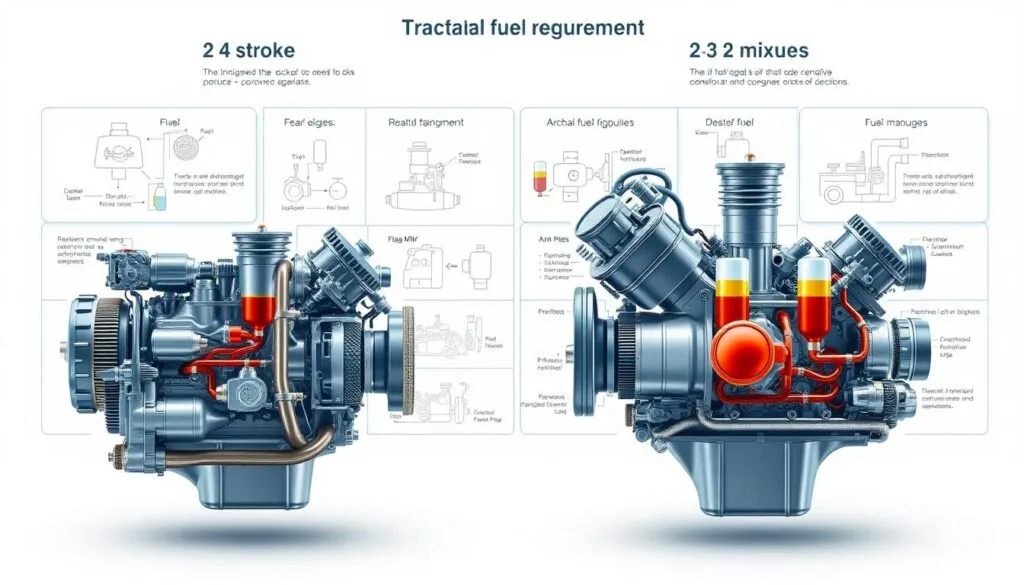
Most residential equipment today uses 4-stroke engines. These engines have separate compartments for gasoline and lubrication oil.
Fuel requirements for 4-stroke engines
Four-stroke engines require straight unleaded gasoline with no oil added. They feature a dedicated lubrication system similar to car engines.
Never mix oil into gasoline for these engines. This mistake causes excessive smoke, spark plug fouling, and immediate warranty voidance. The oil circulates separately through the engine’s internal components.
Proper oil-gas mixture for 2-stroke engines
Two-stroke engines lack separate lubrication systems. They require precise gasoline-oil mixtures for proper operation.
The typical ratio is 50:1 – fifty parts gasoline to one part oil. Use high-quality 2-cycle oil formulated for air-cooled engines. Incorrect ratios cause poor performance or engine damage.
Always consult your owner’s manual if uncertain about your engine type. Proper fuel preparation ensures optimal performance and maximum engine longevity.
Comparing Gasoline Options for Optimal Engine Performance
Choosing between different gasoline types can seem confusing. Understanding a few key differences simplifies the process for your equipment.
Your decision balances cost, performance, and protection against issues like corrosion.
Benefits of regular unleaded vs. premium gasoline
Regular unleaded gasoline with an 87 octane rating works perfectly for most mowers. This octane level prevents engine knocking efficiently.
Premium fuel with higher octane offers no benefit for standard residential engines. It is an unnecessary expense unless you operate at high altitudes.
The advantages of ethanol-free fuel
Ethanol-free gasoline (E0) contains zero ethanol. This eliminates moisture absorption that causes corrosion and fuel system damage.
It costs slightly more but is ideal for seasonal storage. The fuel remains stable for months without degrading.
Pre-mixed canned fuels offer supreme convenience with built-in stabilizers. They provide consistent quality but at a significantly higher price per gallon.
| Fuel Type | Octane Rating | Ethanol Content | Best Use Case |
|---|---|---|---|
| Regular Unleaded | 87 | Up to 10% (E10) | Frequent, immediate use |
| Premium Fuel | 89-93 | Up to 10% (E10) | High-altitude or high-compression engines |
| Ethanol-Free (E0) | 87-90+ | 0% | Infrequent use, long-term storage |
Conclusion
Understanding your equipment’s needs prevents common problems and extends service life. Smart fuel decisions protect your investment while ensuring reliable performance throughout each cutting season.
For routine mower use, regular unleaded with 87 octane rating offers the best value. This fuel provides excellent performance without unnecessary expense. Consider ethanol-free options for long storage periods between seasons.
Always consult your owner’s manual for specific requirements. Following manufacturer guidelines prevents damage to your fuel system and maintains warranty coverage.
Proper care extends your equipment’s working life. Use fresh fuels within 30 days and add stabilizer for storage. These simple tips ensure your engine delivers optimal power and trouble-free operation.
Your consistent attention to fuel quality pays dividends through reduced repair costs and extended equipment longevity.
FAQ
What type of gasoline should I use in my lawn mower?
Most modern lawn mowers with 4-stroke engines require fresh, unleaded gasoline with a minimum octane rating of 87. Always check your owner’s manual for the manufacturer’s specific fuel recommendation to ensure optimal performance and avoid damage.
Is it okay to use gasoline with ethanol in my mower?
While many engines can tolerate low ethanol blends like E10 (10% ethanol), it’s best to use ethanol-free fuel when possible. Ethanol can attract moisture, leading to corrosion in the fuel system and causing starting problems, especially during long-term storage.
Should I use premium or regular unleaded gasoline?
For most small engines, regular unleaded gasoline (87 octane) is perfectly adequate and recommended. Using premium fuel with a higher octane rating typically offers no performance benefit and is an unnecessary expense unless specifically required by your equipment’s manual.
How do I fuel a 2-stroke engine lawn mower?
2-stroke engines require a precise mixture of gasoline and 2-cycle oil. You must pre-mix the fuel and oil in the ratio specified by the manufacturer (e.g., 50:1 or 40:1) in a separate fuel can before pouring it into the tank. Never add straight gasoline.
How can I prevent fuel-related problems when storing my mower?
For storage longer than 30 days, add a fuel stabilizer to a full tank of gas and run the engine for a few minutes to circulate the treated fuel through the system. This practice helps prevent varnish and gum deposits from forming, protecting your engine’s fuel system.
What happens if I use old gas in my lawn mower?
Using stale gasoline that has degraded over time is a common cause of poor performance and starting failure. Old fuel loses its volatility and can leave sticky residues that clog the carburetor and fuel lines. Always use fresh fuel for reliable operation.