
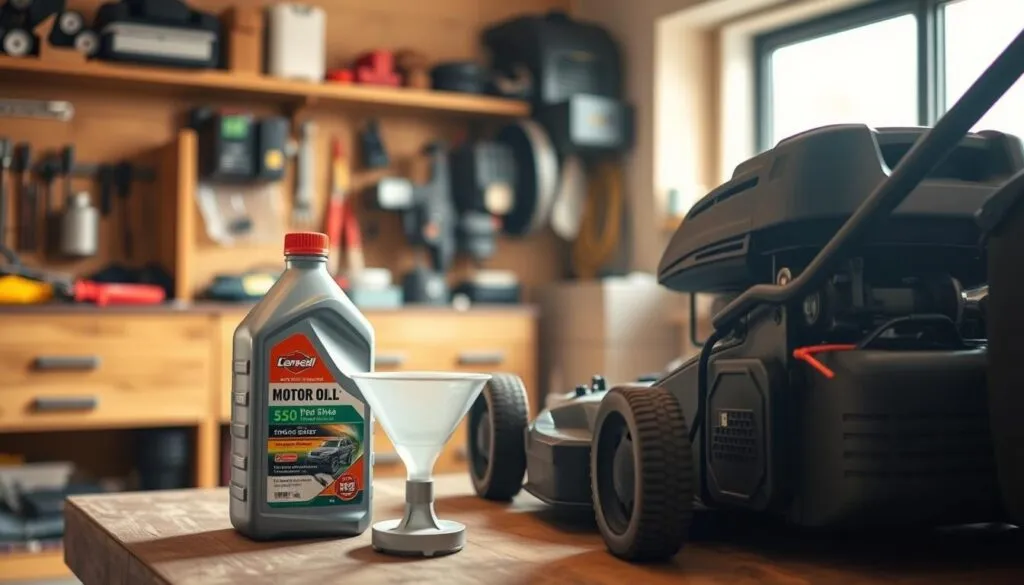
Many homeowners face this exact dilemma during routine yard maintenance. A bottle of automotive lubricant sits on the garage shelf, seeming like a convenient solution. But is this shortcut a smart move for your equipment’s health?
The engines in lawn care equipment operate under very different conditions than a car’s power plant. They run at higher temperatures and sustained high revolutions. Using the wrong lubricant can lead to serious performance issues.
Selecting the correct mower oil is not just about convenience. It is a critical decision for protecting your investment. Proper lubrication ensures a long service life and reliable operation season after season.
This guide will explore the key differences between automotive and small engine lubricants. You will learn about the potential risks of using the wrong product. We will also cover how to choose the best oil for your specific machine.
Key Takeaways
- Lawn mower engines have unique operational demands compared to car engines.
- Using incorrect oil can cause premature wear and engine damage.
- The right lubricant is vital for optimal performance and longevity.
- Understanding oil types helps you make an informed maintenance decision.
- Proper lubrication prevents costly repairs and downtime.
Understanding Lawn Mower Engine Types
Engine identification is a critical first step, as two-stroke and four-stroke designs require completely different oil application methods. This fundamental difference dictates your entire maintenance routine.
Two-Stroke vs. Four-Stroke Engines
Most modern lawn mowers utilize four-stroke engines. These engines have a dedicated oil reservoir that circulates lubricant separately from the fuel. This system provides continuous protection.
In contrast, two-stroke engines combine oil and gas. The lubricant burns during combustion to protect internal components. This design is simpler but requires precise fuel mixing.
“Using the correct oil for your engine type isn’t a suggestion—it’s a requirement for longevity.”
Engine Oil Requirements for Each Type
For a two-stroke engine, you must mix oil with gasoline. The specific ratio is vital, typically ranging from 30:1 to 50:1. Always consult your owner’s manual for the exact specification.
Four-stroke engines are more straightforward. You add gasoline to the fuel tank and pour engine oil into a separate crankcase fill port. The oil does not burn, allowing it to be formulated for extended lubrication.
| Feature | Two-Stroke Engine | Four-Stroke Engine |
|---|---|---|
| Lubrication Method | Oil mixed with gas | Separate oil reservoir |
| Common Mixing Ratio | 30:1 to 50:1 (oil:gas) | Not applicable |
| Maintenance Complexity | Requires precise mixing | Simpler, separate fills |
| Prevalence in Mowers | Less common (older models) | Standard in modern equipment |
You can identify your engine by checking for a separate oil fill cap. Its presence indicates a four-stroke design. Understanding this distinction prevents performance issues and potential damage.
Lawn Mower Oil Specifications and SAE Ratings
The cryptic codes on lubricant containers hold the key to engine protection. Understanding these specifications ensures optimal performance across varying conditions.
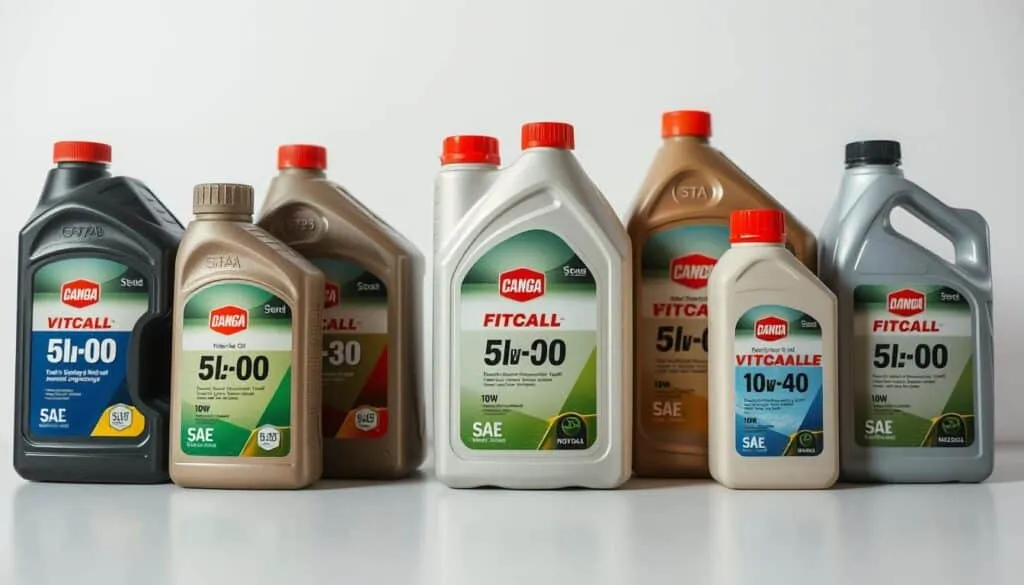
SAE ratings provide crucial information about viscosity characteristics. The Society of Automotive Engineers establishes these standards worldwide.
Interpreting SAE 10W-30, 5W-30, and 15W-50
The first number in ratings like SAE 10W-30 indicates cold-weather flow. Lower numbers mean better performance during startup in chilly conditions.
The second number represents viscosity at operating temperatures. Higher values maintain thicker protection under heat and heavy loads.
SAE 10W-30 works well for moderate climate ranges. SAE 5W-30 synthetic offers wider temperature flexibility with improved cold starting.
For extreme heat or commercial use, SAE 15W-50 provides superior protection. This grade handles high-temperature operation effectively.
Understanding API Classifications and Additives
API classifications indicate quality levels for gasoline engines. Look for “S” series ratings with later alphabet letters denoting higher standards.
Modern lubricants should meet at least SG classification. Many current products carry SJ, SL, or SN ratings for enhanced protection.
Synthetic options deliver better flow at low temperatures. They offer superior heat stability and more efficient engine safeguarding.
High-quality detergent oils contain necessary additives. Avoid adding special supplements to properly formulated products.
Using Motor Oil for Lawn Mower: Can You Use Motor Oil for Lawn Mower?
Lubricant selection requires careful evaluation of operational requirements specific to each engine type. The formulation differences between automotive and small engine products create significant performance variations.
Risks of Using Automotive Engine Oil in Mowers
Automotive lubricants typically feature multigrade formulations designed for year-round vehicle operation. Lawn equipment oils are often monograde, optimized for warmer seasonal use.
These different formulations affect engine protection. Multigrade automotive products may not provide optimal lubrication under sustained high-temperature mower operation.
Manufacturer Guidelines and Oil Alternatives
Your equipment manufacturer provides the most reliable lubrication specifications. Companies like Briggs & Stratton test extensively with specific formulations.
The owner’s manual contains vital information about approved viscosity grades and quality standards. Following these recommendations maintains warranty coverage and ensures proper performance.
High-quality detergent automotive oils with proper API ratings can work effectively in four-stroke engines. The key is selecting appropriate viscosity for your climate and verifying minimum quality standards.
How to Check and Change Your Lawn Mower Oil
Regular oil maintenance forms the foundation of your equipment’s longevity and performance. Proper lubrication checks prevent costly repairs and ensure smooth operation throughout the mowing season.
Step-by-Step Guide to Checking Oil Levels
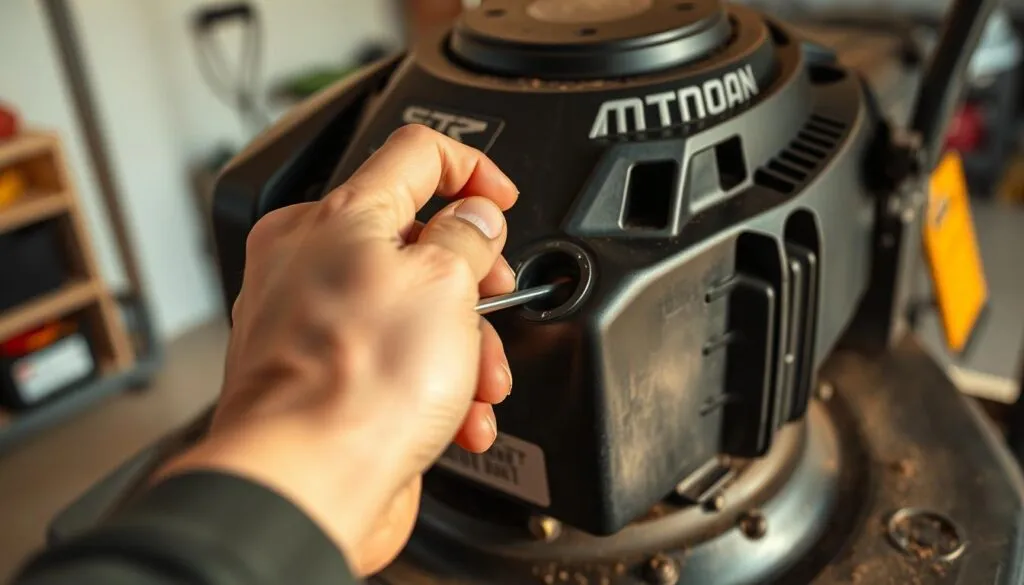
Begin by parking your equipment on a flat surface. Allow the engine to cool completely for an accurate reading. Clean the area around the oil cap to prevent contamination.
Remove the dipstick and wipe it clean with a cloth. Reinsert it fully, ensuring proper alignment with the tube grooves. Pull it out again to check the actual oil level.
The fluid should rest between the full and add marks. These indicators may appear as holes or cross-hatched patterns. Add small amounts gradually if the level is low.
Proper Procedures for Draining and Refilling
Change intervals depend on usage hours and equipment type. Walk-behind models typically require fresh lubricant every 50 hours or annually. Riding equipment needs replacement every 100 hours.
Locate the drain plug beneath the engine. Position a collection pan underneath before removal. Allow complete drainage before reinstalling the plug.
Consult your owner’s manual for exact capacity specifications. Most walk-behind units hold 15-18 ounces. Refill slowly, checking the dipstick frequently to avoid overfilling.
Dispose of used lubricant responsibly at recycling centers. Fresh fluid appears golden but darkens with use, signaling when replacement is necessary.
Tips for Maintaining Optimal Lawn Mower Performance
Developing a systematic maintenance approach ensures your equipment delivers peak performance season after season. Consistent care prevents unexpected breakdowns during critical mowing periods.
Regular Maintenance and Oil Change Intervals
Establishing a preventive schedule is essential for reliable operation. Most walk-behind models require fresh lubricant every 50 hours or annually. Riding equipment typically needs replacement every 100 hours.
Check fluid levels before each mowing session. This simple habit prevents catastrophic damage to internal components. Proper lubrication maintains smooth engine function.
Impact of Oil Condition on Engine Longevity
Fresh lubricant appears golden or amber in color. Dark, thick fluid indicates contamination and reduced protective properties. Immediate replacement restores proper engine safeguarding.
Unusual engine noises often signal lubrication breakdown. Metal parts create excessive friction without proper oil protection. This leads to premature wear and potential failure.
Overheating occurs when degraded fluid cannot transfer heat effectively. Abnormal temperatures during operation suggest immediate maintenance needs. Quality products create essential barriers between moving components.
Following manufacturer recommendations maximizes equipment lifespan. Seasonal tune-ups and proper intervals ensure dependable performance year after year. Consistent care protects your investment in outdoor power equipment.
Conclusion
The choice of lubricant directly influences your machine’s operational lifespan and performance consistency. Understanding your specific mower engine type and following manufacturer guidelines ensures proper protection.
While automotive lubricants may work in four-stroke lawn mower engines under certain conditions, specialized lawn mower oil formulations deliver optimal results. These products address the unique demands of small engines operating at sustained high temperatures.
Proper type oil selection involves matching SAE ratings to your climate and verifying API classifications. Whether choosing conventional or synthetic oil, consistent maintenance intervals prevent premature wear.
Regular checks before each lawn care session and seasonal changes protect your investment. This approach ensures reliable starting and efficient operation throughout the mower‘s service life.
Two-stroke designs require precise gas-to-oil ratios, while four-stroke models need separate reservoir maintenance. Following these protocols represents smart equipment stewardship for any property owner.
FAQ
What is the difference between two-stroke and four-stroke engines in lawn mowers?
Two-stroke engines require a gas and oil mixture for fuel and lubrication, while four-stroke engines have separate compartments for gasoline and lubrication oil. Using the correct type is critical for engine performance and longevity.
Can I use regular car engine oil in my lawn mower?
It is generally not recommended. Automotive oils often contain additives that can harm small engines, leading to poor performance and potential damage. Always check your owner’s manual for the manufacturer’s specified oil grade.
What do oil ratings like SAE 10W-30 mean?
The SAE rating indicates the oil’s viscosity, or thickness, at different temperatures. The first number (e.g., 10W) shows flow in cold weather, and the second number (e.g., 30) indicates viscosity at operating heat. Using the right grade ensures proper lubrication.
How often should I change the oil in my mower?
Most manufacturers recommend an oil change every 25 to 50 hours of operation or at least once per mowing season. Regular maintenance protects engine parts from wear and maintains optimal performance.
How do I check the oil level correctly?
A> Ensure the engine is on a level surface and cool. Remove the dipstick, wipe it clean, reinsert it fully, and then remove it again to check the level. The oil should be between the high and low marks on the dipstick.
Is synthetic oil better for my lawn mower engine?
Synthetic oils often provide superior protection against heat and wear, especially under tough conditions. They can be an excellent choice for extending engine life, but verify compatibility with your specific mower model first.
What happens if I use the wrong oil type?
Using an incorrect oil can lead to inadequate lubrication, increased engine heat, excessive wear on internal parts, and ultimately, engine failure. Always follow the guidelines in your owner’s manual for the correct capacity and type.