
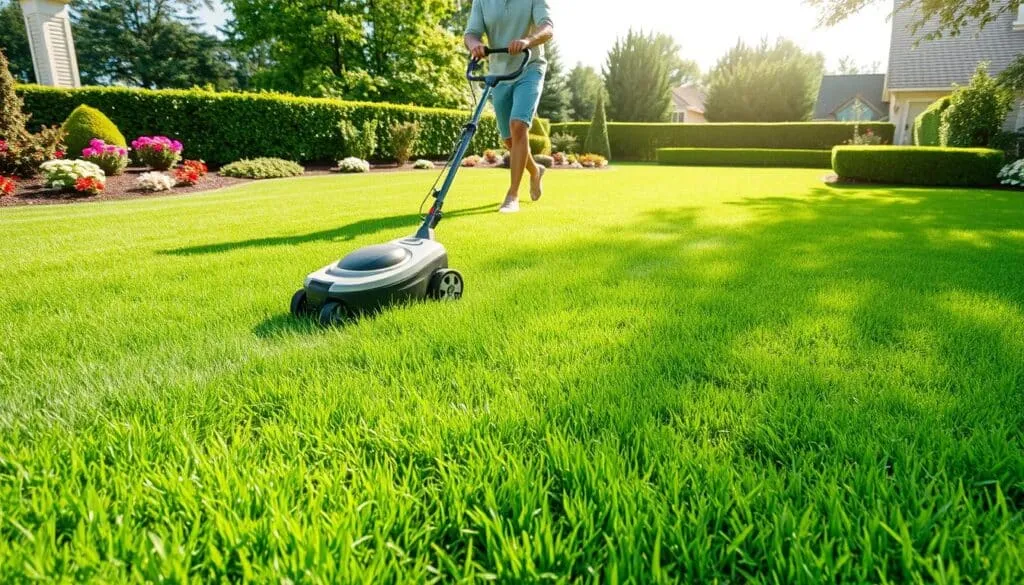
Is your weekly yard work actually harming your turf? Many homeowners follow a strict schedule, but the secret to a truly resilient lawn lies in a different approach.
Proper mowing is far more than just keeping your grass short. It is a core part of lawn care that directly impacts the health of your turf. When done correctly, it encourages thick, vigorous growth. This creates a dense carpet of grass that naturally fights off weeds and withstands dry spells.
The key is to base your routine on the plant’s growth rate, not the calendar. During peak growing seasons, this typically means cutting every 5 to 7 days. Your specific grass type, the current weather, and the season all play a role. For instance, after overseeding, timing is critical, as detailed in our guide on waiting to mow after overseeding a fescue.
This method makes maintenance easier. You work with your lawn’s natural rhythm, promoting a lush, healthy yard all season long.
Key Takeaways
- Mowing frequency should be based on grass growth, not a fixed calendar schedule.
- Proper cutting stimulates both shoot and root development for a thicker, healthier lawn.
- A well-maintained turf is more resilient to drought, weeds, and disease.
- Most lawns need mowing every 5 to 7 days during their active growing period.
- Your specific grass type, weather, and season are key factors in determining the right schedule.
- Mowing at the correct intervals simplifies your overall lawn care routine.
Understanding Lawn Growth and Mowing Fundamentals
The secret to vibrant turf lies in working with nature’s growth patterns. Your grass develops at different rates throughout the year. Understanding these fundamentals transforms your approach to lawn care.
The Science Behind Turf Growth
Turfgrass growth varies significantly based on multiple factors. Temperature, moisture, and sunlight directly impact development rates. Nutrient availability in the soil also plays a crucial role.
These conditions change weekly, affecting your grass’s health. Proper mowing timing responds to these natural fluctuations. This approach supports strong root systems and vigorous turf.
| Growth Factor | Impact on Turf | Seasonal Variation |
|---|---|---|
| Temperature | Controls metabolic rate | High in spring/fall |
| Moisture | Affects nutrient uptake | Varies with rainfall |
| Sunlight | Drives photosynthesis | Changes with season |
| Soil Nutrients | Supports cellular growth | Consistent with care |
The Rule of One-Third Explained
The one-third rule is critical for healthy lawn maintenance. Never remove more than one-third of grass height in a single session. This practice preserves the plant’s energy production capacity.
Cutting too much leaf surface reduces photosynthesis. This weakens both top growth and root development. Following this rule maintains turf resilience against environmental stress.
Factors Influencing How Often You Mow Your Lawn
Your turf’s growth patterns are shaped by both its genetic makeup and the environment it lives in. Understanding these factors helps you create a smarter maintenance schedule.
Grass Types and Their Growth Cycles
Different grass varieties have distinct growth habits. Cool-season types like Kentucky bluegrass and fescue thrive in spring and fall. They may slow down during summer heat.
Warm-season grasses follow the opposite pattern. Zoysia and Bermudagrass grow actively through summer. These lawns remain dormant during colder winter months.
Impact of Weather and Seasonal Changes
Weather conditions dramatically affect your turf’s development. Rainy spring periods typically accelerate growth. This requires more frequent attention to your lawn.
Drought conditions slow growth significantly. During dry spells, raise your mower height. This protects roots and conserves precious soil moisture.
Seasonal temperature fluctuations guide your approach. Adjust your schedule as conditions change throughout the year.
How Often Should I Mow My Lawn: A Detailed Analysis
The connection between your preferred turf height and maintenance frequency reveals a simple mathematical relationship. This approach moves beyond calendar-based scheduling to a more precise, growth-focused method.
By measuring actual development rather than counting days, you achieve optimal timing for each session. This precision leads to healthier turf and reduced overall maintenance time.
Measuring Growth and Timing Your Mows
The one-third rule creates a direct correlation between target grass height and cutting frequency. Maintaining shorter turf requires more attention than taller varieties.
Consider a bermudagrass lawn kept at 1 inch. You would cut when it reaches 1.5 inches. The same turf maintained at 3 inches waits until 4.5 inches—an extra inch of growth.
Lawns at the taller end of their recommended height range typically need cutting every seven to ten days during active growth. Shorter lawns may require attention every few days.
Warm-season grasses during peak summer may demand cutting every 3-5 days. Cool-season varieties in spring and fall generally need attention every 5-7 days based on growth rates.
This growth-based timing produces healthier results. It actually reduces your total maintenance time over the long term.
Tips for Optimal Mowing Techniques and Practices
Mastering your mower’s mechanics transforms routine cutting into a health-boosting ritual for your turf. Superior techniques protect grass plants and enhance their natural resilience.
These practices ensure every session contributes to a thicker, greener lawn.
Maintaining Sharp Mower Blades
Sharp mower blades are non-negotiable for a clean cut. Dull blades tear grass instead of slicing it cleanly.
This tearing creates ragged, open wounds on each blade of grass. These damaged tips brown quickly and become entry points for disease.
Sharpen your blades two to three times per season. This simple maintenance prevents stress and keeps your turf looking its best.
Proper Mowing Patterns and Clipping Management
What you do with grass clippings matters greatly. Leaving short clippings on the lawn returns valuable nutrients to the soil.
They decompose quickly, acting as a natural fertilizer. This practice feeds your garden without added chemicals.
Always avoid mowing wet grass. Damp blades cling to the mower’s deck and clump on the lawn surface.
This leads to an uneven cut and can spread disease. Change your mowing direction each week to prevent soil compaction and ruts.
| Practice | Benefit | Frequency |
|---|---|---|
| Sharpening Blades | Clean cuts, reduces disease risk | 2-3 times per year |
| Leaving Clippings | Returns nutrients, natural fertilizer | Every mow |
| Varying Pattern | Prevents soil compaction | Weekly |
| Avoiding Wet Grass | Better cut quality, less clumping | As needed |
Seasonal Mowing Strategies for a Lush, Vibrant Lawn
Each season presents unique challenges that require tailored mowing approaches for optimal lawn health. Your strategy should adapt to natural growth cycles and weather patterns throughout the year.
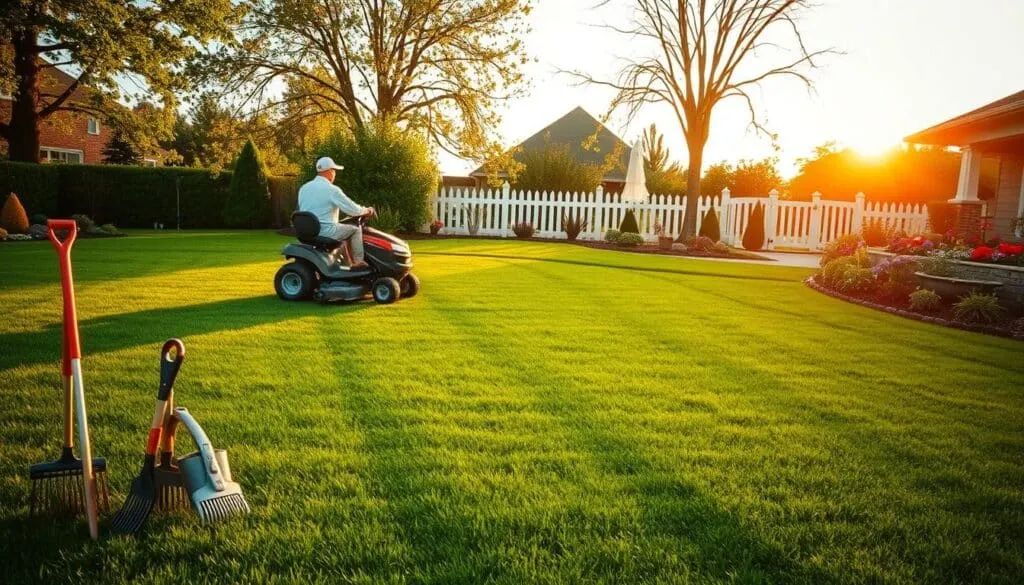
This seasonal approach protects your turf from stress while promoting vigorous growth. It creates resilient lawns that withstand environmental challenges.
Spring and Fall: Maximizing Growth
Cool-season grasses experience peak growth during spring and fall. Begin cutting every two weeks as your lawn greens up.
Transition to weekly sessions once active growth begins. This frequency maintains optimal height while preventing weeds from establishing.
Regular attention during these seasons supports strong root development. Your turf builds reserves for upcoming weather extremes.
Summer and Winter: Adjusting for Weather Extremes
Summer heat demands protective strategies. Raise mowing height to conserve soil moisture and insulate roots.
Schedule cutting during cooler morning or evening hours when the sun is less intense. This avoids additional stress during drought conditions.
Winter approaches vary by grass type. Warm-season lawns benefit from raised height in fall for root insulation. Reduce frequency as growth slows with cooling weather.
In colder regions, mowing may stop completely during dormancy. Mild climates might require attention every three to six weeks.
Innovative Tools and Technologies in Lawn Mowing
Robotic mowers represent the latest advancement in turf management, offering consistent care without manual effort. These intelligent devices transform lawn maintenance from a weekly chore into an automated process.
Modern technology brings precision to cutting grass that manual methods cannot match. Smart mowers like the Mammotion LUBA 2 AWD operate on a “little and often” principle.
Advantages of Robotic and Smart Mowers
These automated systems trim small amounts daily or every few days. This approach maintains ideal grass height consistently. Your turf receives gentle, frequent attention without stress.
Traditional mowers struggle with long grass between sessions. Robot mowers prevent this problem entirely. They handle uneven terrain and sloped areas with advanced traction systems.
The benefits include no clumping clippings and reduced thatch buildup. Your lawn develops denser, healthier growth patterns. Automatic scheduling eliminates guesswork about timing.
Different mower types serve various needs. Manual reel mowers require frequent mowing to perform effectively. Ride-on mowers can handle taller growth but still cause stress if waiting too long.
Investing in smart technology reduces hands-on care time significantly. It simultaneously improves lawn quality through optimized cutting frequency.
Conclusion
Achieving a resilient, beautiful lawn comes down to understanding the natural rhythm of your grass rather than following a rigid schedule. Your turf’s health depends on multiple factors including seasonal growth patterns, weather conditions, and the specific type of grass in your garden.
The one-third rule remains the foundation of proper lawn care. Never remove more than one-third of the grass height in a single session. This practice protects root systems and prevents stress.
Proper techniques extend beyond just cutting frequency. Sharp mower blades create clean cuts that heal quickly. Leaving clippings returns valuable nutrients to the soil. These tips help your lawn resist weeds and disease.
Modern technology like robotic mowers simplifies maintenance while improving results. They provide gentle, frequent attention that prevents long grass between sessions. This approach saves time while promoting healthier turf.
By watching your grass growth and adapting to current conditions, you’ll maintain a vibrant lawn that thrives throughout the seasons. This flexible strategy creates a lush, resilient outdoor area with less overall effort.
FAQ
What is the most important rule for cutting grass?
The golden rule is to never remove more than one-third of the grass blade in a single session. This practice prevents stress, encourages deep root development, and helps your turf resist disease and weeds.
How does the type of grass affect mowing frequency?
Different grasses have unique growth cycles. Cool-season varieties like Kentucky bluegrass grow fastest in spring and fall, requiring more frequent attention. Warm-season types like Bermuda grass peak in summer. Knowing your turf type is key to timing your cuts.
Why is it crucial to keep mower blades sharp?
Sharp blades create a clean cut that heals quickly. Dull mower blades tear grass, leaving ragged edges that turn brown and become vulnerable to pests and lawn disease. A clean slice maintains plant health and a vibrant appearance.
How should I adjust my mowing schedule during a drought?
During dry spells, raise your mower’s cutting height. Longer grass provides shade for the soil, conserving moisture and protecting roots from the intense sun. You’ll also mow less often as growth naturally slows.
What is the benefit of leaving grass clippings on the lawn?
This practice, known as grasscycling, returns valuable nutrients like nitrogen to the soil. These clippings act as a natural fertilizer, reducing the need for additional feeding and promoting a healthier garden.
Are robotic mowers a good investment for lawn care?
Robotic mowers offer significant advantages. They maintain a consistently ideal grass height through frequent, small trims. This mimics the “one-third” rule perfectly, leading to a lush, well-manicured turf with minimal effort on your part.