
Have you ever stood at the fuel pump, wondering if the expensive option is the right choice for your yard equipment? Many homeowners face this exact dilemma when maintaining their property.
That higher-octane gasoline might seem like a simple upgrade. But engines in outdoor power tools operate on different principles than high-performance car motors. Understanding this distinction is crucial.
Choosing the correct fuel type protects your investment and ensures reliable operation. This decision impacts engine longevity and performance for your home lawn care.
This guide provides a clear breakdown of fuel requirements. You will learn how to make an informed choice that saves money and keeps your equipment running smoothly.
Key Takeaways
- Lawn mower engines are designed differently than automotive engines.
- Higher octane fuel does not always mean better performance.
- Using the manufacturer’s recommended fuel is essential for engine health.
- Proper fuel storage is just as important as fuel selection.
- Understanding your equipment’s needs prevents unnecessary expenses.
- The right fuel choice protects your investment and ensures optimal operation.
Understanding Fuel Options for Your Lawn Mower
Selecting the proper gasoline involves more than just choosing between price points. Different fuel types offer distinct characteristics that affect engine performance and longevity.
Regular Unleaded vs Premium Gasoline
Most lawn mowers operate efficiently on regular unleaded gasoline with an 87 octane rating. This fuel type provides sufficient power without causing engine damage.
Premium options feature higher octane ratings from 91 to 94. These fuels resist knocking in high-compression engines. However, most mower engines don’t require this level of protection.
How Ethanol Content Impacts Performance
Ethanol content represents a critical consideration for small engines. Most manufacturers design equipment to handle E10 gasoline containing 10% ethanol.
Higher ethanol blends like E15 or E85 can damage fuel system components. They may cause corrosion and performance issues. Ethanol-free gasoline offers the safest option for infrequent use.
Manufacturer Guidelines on Fuel Use
Always consult your equipment’s manual for specific fuel recommendations. Manufacturer guidelines provide the most reliable information for optimal performance.
Following these recommendations ensures warranty coverage and prevents unnecessary expenses. The right fuel choice protects your investment in outdoor power equipment.
Can You Put Premium Gas in a Lawn Mower?
When maintaining yard tools, fuel selection becomes a critical consideration for long-term engine health. The choice between regular and premium options directly impacts equipment reliability and operating costs.
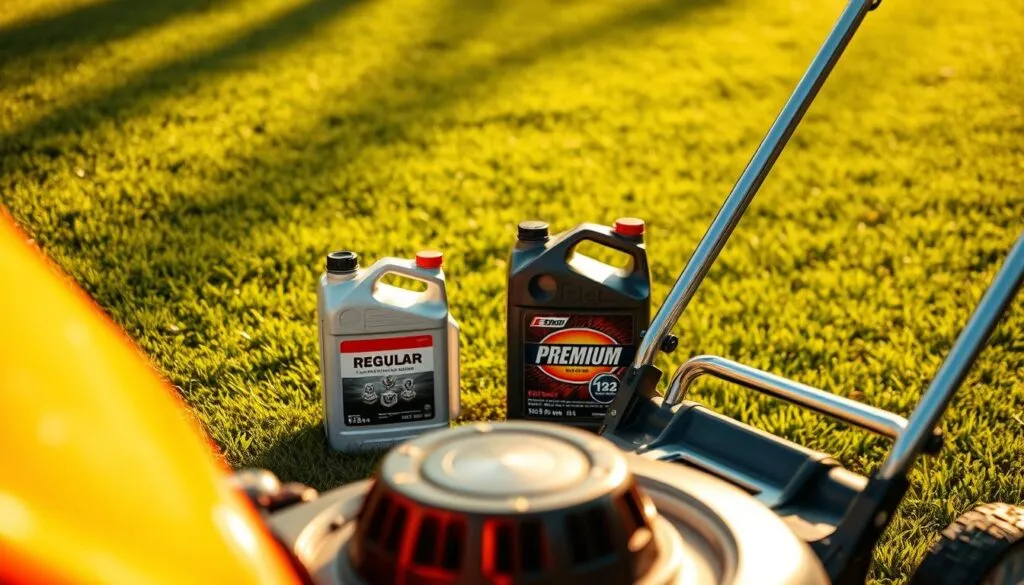
Why Premium Fuel May Not Benefit Most Mowers
Standard residential equipment operates efficiently on regular unleaded gasoline. These engines lack the sophisticated systems needed to utilize higher octane ratings effectively.
Premium gasoline contains no additional energy content compared to regular fuel. The motor’s design determines whether it can benefit from knock-resistant properties.
Spending extra on premium fuel typically provides no performance advantage. The additional cost represents unnecessary expense without corresponding benefits.
Caveats When Manufacturer Recommends Premium
In rare instances, specific high-performance models may require premium gasoline. Commercial-grade equipment sometimes features higher compression ratios demanding superior knock resistance.
Always consult your owner’s manual for precise fuel recommendations. Following manufacturer guidelines ensures warranty protection and prevents potential damage.
| Fuel Characteristic | Regular Unleaded | Premium Gasoline | Impact on Lawn Equipment |
|---|---|---|---|
| Octane Rating | 87 | 91-94 | Only beneficial for high-compression engines |
| Energy Content | Standard | Identical to regular | No performance increase for standard mowers |
| Cost Difference | Base price | 5-20% higher | Significant unnecessary expense over season |
| Manufacturer Recommendation | Typically recommended | Rarely required | Follow specific equipment guidelines |
Understanding these fuel characteristics helps make economical choices. Proper selection maintains equipment performance while controlling maintenance expenses.
Tips for Fuel Maintenance and Storage
Beyond selecting the correct fuel type, how you store and manage gasoline directly impacts your mower’s reliability. Proper care prevents starting issues and protects expensive components.
Best Practices for Fresh Gas and Fuel Stabilizers
Gasoline begins to degrade in as little as 30 days. Old fuel forms varnish that clogs the fuel system. Using fresh, unleaded gasoline is crucial for performance.
Fuel stabilizers are essential for storage. These additives extend fuel life up to 12 months. They prevent the chemical breakdown that causes starting problems.
Always use fuel with appropriate ethanol content. E10 or less is typically recommended. Higher blends attract moisture and cause corrosion.
Steps to Prevent Corrosion and Engine Damage
Winter storage requires specific steps. Either run the engine until the fuel tank is empty or add a stabilizer. This prevents fuel degradation during months of inactivity.
Ethanol-blended fuel poses a corrosion risk. Moisture can separate and settle in the tank. This damages metal components like the carburetor and fuel lines.
Understanding your engine type is vital. Four-stroke engines use straight gasoline. Two-stroke engines require a specific gas-to-oil mix.
| Maintenance Task | Frequency | Key Benefit | Prevents |
|---|---|---|---|
| Use Fresh Gasoline | Every 30 days | Optimal engine performance | Clogged filters, hard starting |
| Add Fuel Stabilizer | Before storage | Extends fuel life to 12 months | Fuel breakdown, varnish |
| Empty or Stabilize Tank | End of season | Protects during inactivity | Corrosion, system damage |
| Check Engine Type | Before refueling | Correct fuel/oil mixture | Engine seizure, poor run quality |
Following these maintenance tips extends the life of your equipment. Proper care ensures reliable operation for many seasons.
Conclusion
Ultimately, the most effective approach to fueling your yard tools prioritizes maintenance over premium options. Residential equipment operates perfectly on regular unleaded gasoline without performance benefits from costly alternatives.
What truly extends equipment lifespan involves consistent care practices. Fresh fuel, proper ethanol content limits, and seasonal stabilizers matter far more than octane ratings. Following manufacturer guidelines ensures optimal operation.
Smart fuel selection protects your investment while maintaining a pristine home lawn. Focus on proper storage and maintenance rather than unnecessary upgrades. This approach maximizes value from every gallon while keeping equipment reliable for years.
FAQ
What type of gasoline is best for my lawn mower?
Most small engines perform perfectly with regular 87-octane unleaded fuel. Using a higher octane rating typically offers no benefit and is an unnecessary expense. Always check your owner’s manual for the manufacturer’s specific fuel recommendations.
Does ethanol-free gas make a difference for my equipment?
Yes, ethanol-free gasoline is highly recommended. Ethanol can attract moisture, leading to corrosion in the fuel system and potential starting issues. Using fuel with no ethanol content, especially for seasonal storage, helps protect your engine’s internal components.
Should I add a fuel stabilizer to the tank?
Absolutely. A quality fuel stabilizer is essential if gasoline will sit in the tank for more than 30 days. It prevents the fuel from breaking down and forming gums and varnishes that can clog the carburetor and cause significant engine damage.
How long can gas sit in my mower before it goes bad?
Fresh gasoline begins to degrade after about one month. For optimal performance and to avoid maintenance problems, try not to leave fuel in the tank for extended periods. If storing your mower for the season, either run the tank dry or add a stabilizer.
What happens if I accidentally use premium gas?
Using premium fuel in a mower designed for regular unleaded will not harm the engine. However, it provides no performance or efficiency gains. You are simply paying more for a product your machine cannot utilize, making it an inefficient choice for your lawn care routine.