
What if the single most important maintenance task for your yard equipment is also the easiest to get wrong? Getting the lubrication level correct in your outdoor power equipment isn’t just about following instructions—it’s about protecting your investment.
Using the proper lubricant quantity ensures your machine runs smoothly and lasts for years. When you add too much or too little, serious problems can occur. Your power plant may overheat, suffer premature wear, or even sustain permanent damage.
This comprehensive guide provides exact specifications for various Toro models. Whether you own a walk-behind unit or a riding machine, you’ll find the precise measurements needed. We cover everything from capacity details to viscosity recommendations.
You’ll also learn step-by-step procedures for checking and changing fluids properly. Understanding your specific model’s requirements helps maintain warranty coverage and ensures peak performance. Different engine types have varying needs, from compact walk-behind units to larger riding equipment.
By the end of this guide, you’ll know exactly what your equipment requires. You’ll gain confidence in maintaining your machine properly, saving money on repairs and extending its lifespan significantly.
Key Takeaways
- Proper lubrication levels are critical for engine performance and longevity
- Incorrect amounts can cause overheating and expensive damage
- Different Toro models require specific oil capacities
- Walk-behind mowers typically need 15-18 ounces
- Riding mowers generally require 48-64 ounces
- Using the right oil type and viscosity is equally important
- Regular maintenance preserves warranty coverage and ensures reliability
Understanding Your Toro Lawn Mower’s Oil Needs
Engine protection begins with understanding your specific machine’s lubrication requirements. Different models have varying capacity needs based on their engine size and configuration. Knowing your exact specifications prevents both underfilling and overfilling scenarios.
Engine Oil Capacity and Manufacturer Recommendations
Walk-behind units typically need approximately 18 fluid ounces. Some compact models may require slightly less, around 15 ounces. Always verify your particular model’s specifications.
Riding mowers and zero-turn models demand significantly more fluid. These larger engines generally need between 48 and 64 ounces. This equals roughly 1.5 to 2 quarts for complete changes.
Popular 24.5 HP engines have specific requirements. The Confidant ZT740 needs 2.0 quarts when replacing the filter. Without filter replacement, it requires 1.8 quarts.
The Kawasaki FR730V engine requires 2.1 quarts with filter changes. TimeCutter models need 2.0 quarts with filter replacement. Without filter changes, they require 1.7 quarts.
| Engine Model | Capacity With Filter | Capacity Without Filter |
|---|---|---|
| Confidant ZT740 | 2.0 qt (1.9 L) | 1.8 qt (1.7 L) |
| Kawasaki FR730V | 2.1 qt (2.0 L) | 1.9 qt (1.8 L) |
| TimeCutter 24.5 HP | 2.0 qt (1.9 L) | 1.7 qt (1.6 L) |
Benefits of Using the Correct Oil Amount
Proper lubrication reduces friction between moving parts. This prevents overheating during extended operation. Your equipment runs smoother and more efficiently.
Correct amounts extend engine life significantly. They maintain optimal fuel efficiency and performance. Regular maintenance preserves your warranty coverage.
Underfilling causes inadequate lubrication. This can lead to engine seizure and permanent damage. Overfilling increases crankcase pressure excessively.
Excess pressure may blow oil seals and cause leaks. Always consult your owner’s manual for exact specifications. Your specific model may have unique requirements.
How Much Oil in Toro Lawn Mower: Step-by-Step Instructions
Proper maintenance begins with a systematic approach to fluid changes. Following these instructions ensures you achieve the correct lubricant level every time.
Step-by-Step Oil Check and Change Process
Begin by running your engine for five minutes to warm the fluid. Warm lubricant flows better and carries more contaminants out during the change process.
Always prioritize safety first. Shut off the engine and remove the electric-start button if your model has one. Wait for all moving parts to stop completely. Disconnect the spark-plug wire to prevent accidental starting.
- Move your equipment to a level surface for accurate measurements.
- Remove the dipstick by rotating the cap counterclockwise and pulling it out.
- Tip the machine onto its side with the air filter facing upward.
- Drain the used fluid from the fill tube into a suitable container.
- Return the machine to its operating position carefully.
- Pour approximately three-quarters of your engine’s capacity into the fill tube.
- Wait three minutes for the fluid to settle in the crankcase.
- Wipe the dipstick clean with a cloth and reinsert it fully.
- Remove the dipstick again to read the fluid level accurately.
If the level reads too low, add small amounts and recheck after three minutes. If the level is too high, drain excess fluid until it reaches the correct mark. Always recycle used lubricant properly at approved facilities.
Models with filters require replacement during this process. This typically increases the total capacity needed slightly. Following this step-by-step method prevents damage and ensures optimal performance.
Determining the Right Oil Viscosity and Type
Choosing the proper lubricant viscosity is as important as getting the quantity right. The correct oil type ensures your equipment operates smoothly in different weather conditions. Your engine’s protection and longevity depend on this selection.
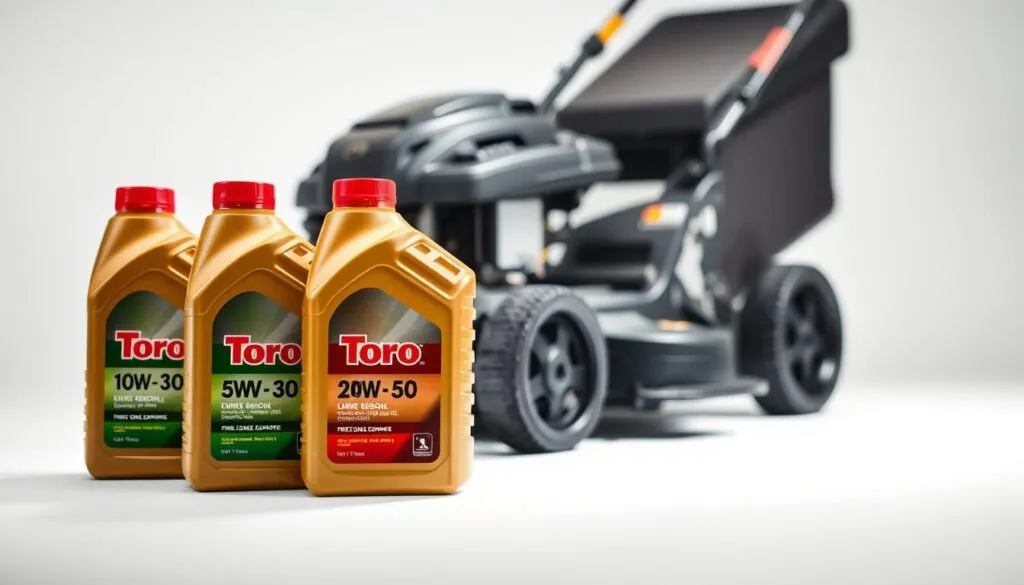
Temperature plays a critical role in determining which lubricant works best. You need different viscosity grades for various seasons and operating conditions.
SAE Oil Types and Recommendations
SAE 30 works well for warmer temperatures above 40°F. This common oil type provides excellent summer protection.
SAE 10W-30 offers versatility across varying temperature ranges. It improves cold-weather starting but may increase consumption in heat above 80°F.
Synthetic SAE 5W-30 delivers premium protection at all temperatures. This oil type reduces consumption and enhances starting performance.
| Oil Type | Best Temperature Range | Primary Benefits |
|---|---|---|
| SAE 30 | Above 40°F (4°C) | Summer protection, common for small engines |
| SAE 10W-30 | Varying temperatures | Versatile, improved cold starting |
| Synthetic 5W-30 | All temperatures | Premium protection, reduced consumption |
| SAE 20W-50 | Hot environments | Heavy-duty commercial use |
Impact on Engine Performance and Temperature Considerations
Using the wrong viscosity can cause starting difficulties. Below 40°F, SAE 30 may result in hard starting.
Above 80°F, monitor 10W-30 more frequently for consumption. Synthetic blends work best for extreme conditions.
Always select oils meeting API classification SJ or higher. Avoid special additives that can interfere with engine protection.
Routine Maintenance and Oil Change Frequency
A consistent maintenance schedule is your equipment’s best defense against premature wear. Following manufacturer recommendations ensures optimal performance throughout each cutting season.
New equipment requires special attention during the break-in period. Change the engine lubricant after the first five hours of operation. This removes manufacturing debris and metal particles.
Maintenance Schedule Overview
Daily checks are essential for proper operation. Verify fluid levels before each use to catch potential issues early. This simple habit prevents major problems.
Standard intervals vary by equipment type. Walk-behind models need fresh lubricant every fifty hours or annually. Riding equipment requires changes every one hundred hours or each season.
| Maintenance Task | Frequency | Notes |
|---|---|---|
| Check fluid levels | Before each use | Ensures proper lubrication |
| Replace lubricant (walk-behind) | 50 hours or annually | Whichever comes first |
| Replace lubricant (riding) | 100 hours or annually | More frequent for commercial use |
| Battery charging | Every 25 hours | Electric-start models only |
| Annual service | Each season | Includes filter and blade care |
Operating conditions affect service frequency. Dusty environments and high temperatures require more attention. Commercial applications may need additional maintenance.
Seasonal preparation protects your investment. Change fluids before long-term storage to remove contaminants. This prevents corrosion during dormant months.
Following this schedule maintains warranty coverage and ensures reliable performance. Your equipment will deliver consistent results season after season.
Effective Maintenance Practices for Optimal Engine Health
Many engine failures trace back to one preventable mistake: improper dipstick interpretation. Reading this simple tool correctly ensures your equipment receives proper lubrication. Accurate assessment prevents both underfilling and overfilling scenarios.

Proper Dipstick Reading and Oil Level Adjustment
Always position your equipment on flat ground before checking. An uneven surface creates false readings that lead to incorrect adjustments. This fundamental step ensures measurement accuracy.
Remove the dipstick by turning the cap counterclockwise. Wipe the blade completely clean with a lint-free cloth. Reinsert it fully, making sure teeth align with tube grooves on threaded models.
Pull the dipstick out again to view the actual fluid level. The marks near the blade’s bottom indicate proper range. Your level should rest between the “full” and “add” indicators.
Add small amounts gradually if the reading shows low. Pour just a few ounces at a time, then wait three minutes for settling. Recheck the dipstick before adding more to prevent exceeding capacity.
Both insufficient and excessive amounts cause serious damage. Too little creates friction and overheating issues. Too much increases crankcase pressure, potentially blowing seals.
Consult your owner manual for model-specific instructions. Different designs may have unique marking systems. Regular checks before each use prevent catastrophic failures.
This simple maintenance routine takes minutes but significantly extends equipment life. Proper dipstick reading remains your first defense against engine problems.
Caring for Other Engine Components
Your equipment’s complete care routine extends beyond just fluid maintenance to include several critical components. These parts work together to ensure reliable performance throughout each cutting season.
Battery and Fuse Maintenance for Electric-Start Models
Electric-start models require specific battery care for consistent performance. Charge the battery for 24 hours initially, then monthly or every 25 starts. Room temperature charging maintains optimal starting reliability.
Monitor charging indicators carefully. A red light shows active charging, while green indicates full capacity. Alternating red and green flashing means the battery is nearly charged.
Fuse replacement is straightforward when the starter fails. Locate the 40 A plug-in fuse in the battery compartment. Your charger includes a spare fuse for quick replacement.
Blade Replacement Procedures and Safety Tips
Blade service demands strict safety practices. Always disconnect the spark plug wire before beginning any work. This prevents accidental starting and potential injury.
Wear gloves when handling sharp cutting edges. Tip your equipment with the air filter facing upward to prevent contamination. Position curved blade ends toward the housing during installation.
Use all original mounting hardware for secure attachment. Torque the blade bolt to exactly 82 N∙m (60 ft-lb) using a proper torque wrench. This ensures safe operation and optimal cutting performance.
Regular service of these components maintains your equipment’s reliability. Consult your owner’s manual for specific procedures for your particular model. Proper care extends the life of all engine parts.
Conclusion
Maintaining your outdoor power equipment at peak performance comes down to mastering one fundamental aspect. Knowing the precise lubricant requirements for your specific model ensures optimal operation and extended service life.
Using the correct quantity prevents both underfilling and overfilling scenarios that can lead to expensive repairs. Proper levels maintain ideal lubrication while avoiding excessive crankcase pressure.
Selecting the appropriate fluid type based on temperature conditions enhances engine protection. Following recommended service intervals preserves warranty coverage and ensures consistent results.
Regular dipstick checks before each use represent simple yet effective maintenance habits. Comprehensive care extends beyond fluid management to include air filters, spark plugs, and blade maintenance.
Always consult your owner’s manual for model-specific specifications across Toro’s diverse equipment lineup. Investing time in proper maintenance maximizes your equipment’s performance, efficiency, and longevity for seasons to come.
FAQ
What is the typical engine oil capacity for a Toro lawn mower?
Most Toro walk-behind mowers hold approximately 20 ounces (0.6 quarts) of oil. However, the exact capacity depends on your specific model. Always consult your owner’s manual for the precise amount to ensure proper lubrication and engine protection.
How do I check the oil level in my mower?
First, ensure the machine is on a level surface. Wipe the dipstick clean, reinsert it fully, and then remove it again to check. The oil should be between the “Full” and “Add” marks on the dipstick. This simple check is a vital part of your regular maintenance routine.
What type of oil should I use in my Toro engine?
Toro typically recommends using high-quality detergent oil classified as API service SG, SH, SJ, or higher. For most conditions, SAE 10W-30 is the preferred viscosity. Using the correct oil type is crucial for optimal engine performance and longevity.
How often should I change the oil in my lawn mower?
You should replace the oil after the first five hours of operation for a new engine. After that, change it every 50 hours or at least once per mowing season. Frequent oil changes are one of the best things you can do for your engine’s health.
Are there other important maintenance tasks I should perform?
Yes. Alongside checking and changing the oil, you should regularly service the air filter, sharpen or replace the mower blade, and inspect the spark plug. For electric-start models, also check the battery and fuse. Following a comprehensive maintenance schedule keeps your equipment running smoothly.
What safety steps should I take before changing the oil?
A> Always disconnect the spark plug wire to prevent accidental starting. Let the engine cool completely. Draining the oil while the engine is warm can make the process easier, but you must avoid burns from hot engine parts.