
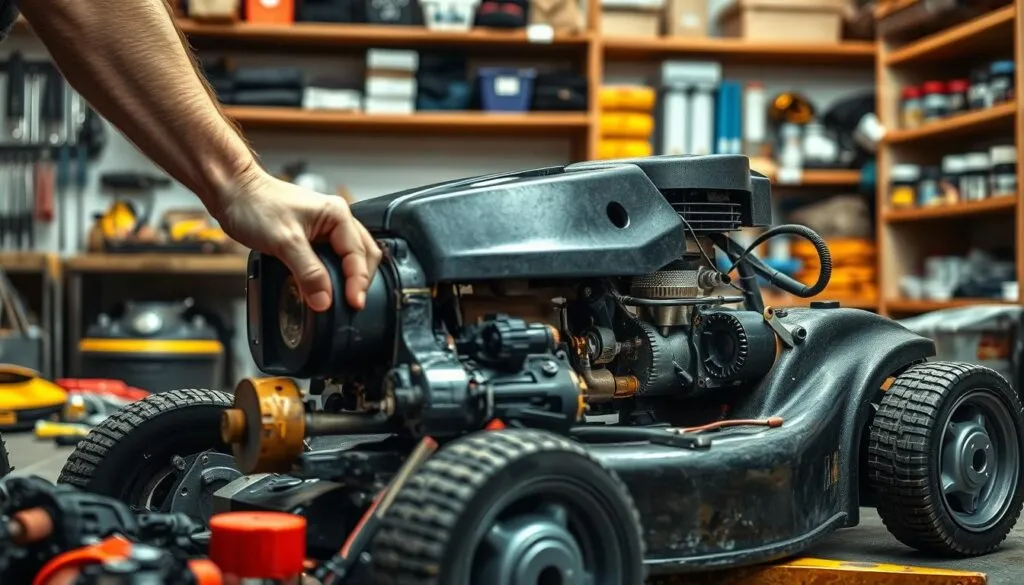
What if that leftover automotive lubricant sitting in your garage could serve double duty for your yard equipment? Many homeowners face this exact dilemma when maintaining their outdoor power tools.
With automotive fluids readily available, the temptation to use them across different machines is understandable. However, the compatibility between various engine types requires careful consideration.
The decision involves more than just convenience. Proper lubrication affects both immediate performance and long-term equipment durability. Understanding the technical specifications becomes crucial for protecting your investment.
This guide explores the critical factors that determine whether automotive and small engine lubricants are interchangeable. We’ll examine viscosity requirements, manufacturer recommendations, and engine design differences.
The answer isn’t always straightforward. It depends on specific equipment needs and operating conditions. Our goal is to provide clear, actionable information for making informed maintenance choices.
Key Takeaways
- Engine type and design significantly impact oil compatibility requirements
- Viscosity ratings must match manufacturer specifications for optimal performance
- Using incorrect lubricants can reduce equipment lifespan and efficiency
- Always consult your equipment manual before selecting maintenance fluids
- Proper lubrication affects both short-term operation and long-term reliability
- Environmental factors and operating conditions influence oil selection
Understanding Lawn Mower Engine Oil Needs
The heart of your outdoor power equipment relies on specialized fluid protection. Proper lubrication ensures all moving components work together seamlessly under demanding conditions.
Role of Oil in Engine Protection
Small engines in lawn equipment operate as internal combustion systems. Pistons, gears, and other parts move at high speeds while generating substantial heat.
Quality fluid serves multiple critical functions. It provides lubrication to reduce friction between moving parts. The fluid also cools components by dissipating heat during operation.
Additional benefits include cleaning debris from the system and protecting against corrosion. Without adequate protection, engines face overheating and accelerated wear.
Engine Types: Two-Stroke vs. Four-Stroke
Understanding your equipment’s engine type is essential for proper maintenance. Four-stroke engines have separate compartments for oil and gasoline.
These systems require adding fluid to a dedicated crankcase where it circulates without burning. Two-stroke engines operate differently by mixing oil with gasoline.
Typical mixing ratios range between 30:1 and 50:1 as specified in owner manuals. Each engine type has completely different lubrication requirements.
Selecting the correct fluid characteristics depends on your specific equipment design. Proper identification prevents costly repairs and equipment failure.
Can you use car engine oil in a lawn mower
The straightforward answer is yes, automotive lubricant is compatible with most four-stroke lawn equipment. High-quality standard motor oil designed for automobiles typically offers excellent performance.
These products provide proper lubrication for the majority of four-stroke engines. Reputable brands include both a viscosity rating and a crucial service rating.
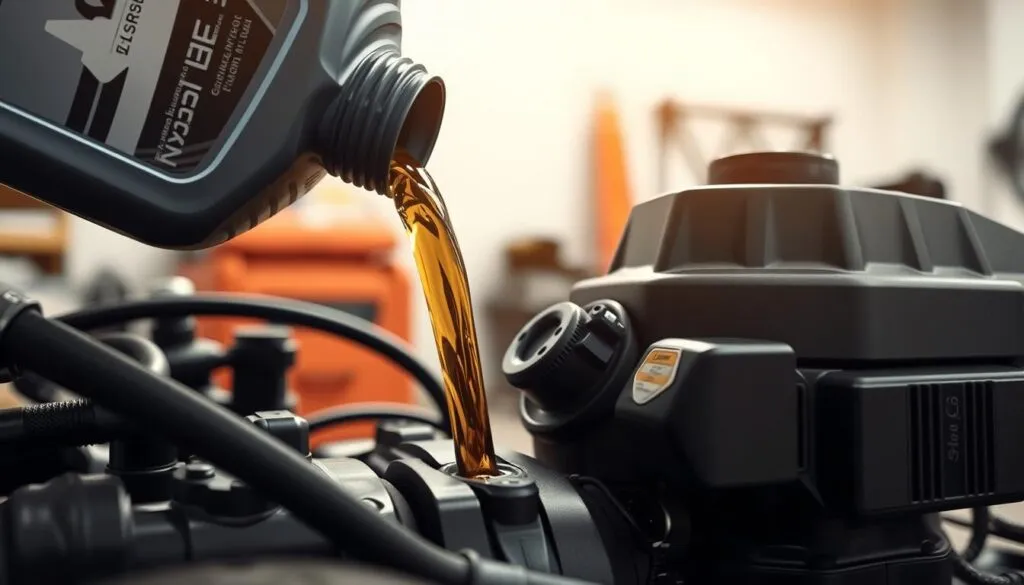
Look for designations like SF, SG, SH, SJ, or higher on the container. This indicates the oil meets standards suitable for small engine applications.
However, a distinction is critical for two-stroke engines. Never pour standard automotive fluid into these systems.
Two-stroke power tools require a specially formulated lubricant that mixes with gasoline. Using the wrong type can cause severe damage.
For four-stroke models, automotive oils will allow normal function. Yet, long-term considerations exist regarding potential wear patterns.
Vehicle lubricants are often multigrade, designed for year-round use. Lawn mower-specific oils are frequently monograde, optimized for seasonal operation.
The heavier lubrication characteristics of some automotive formulas might affect small engine performance differently. This could potentially accelerate component wear over many years.
Consulting your owner’s manual remains the most reliable approach. This ensures the optimal choice for your specific equipment.
Using automotive oil represents a practical and generally safe option. Purpose-formulated mower oil may offer marginal benefits for maximizing equipment lifespan.
Differences Between Car Oil and Lawn Mower Oil
The formulation differences between automotive and small engine oils reflect their specific performance demands. These lubricants share fundamental purposes but address distinct operational requirements.
Viscosity Ratings and Additives
Viscosity measures how thick or thin fluid flows at different temperatures. This characteristic directly affects protection during cold starts and hot operation.
Automotive formulations typically contain complex additive packages. These include detergents, dispersants, and viscosity modifiers designed for extended drain intervals.
Lawn equipment lubricants often feature simpler formulations. They’re optimized for seasonal use patterns and shorter operating cycles.
| Characteristic | Automotive Oil | Lawn Mower Oil |
|---|---|---|
| Viscosity Type | Multi-grade (e.g., 10W-30) | Often single-grade (e.g., SAE 30) |
| Additive Package | Complex with detergents | Simpler formulation |
| Temperature Range | Wide year-round operation | Seasonal performance |
| API Service Rating | SN (current standard) | SG minimum acceptable |
SAE Classifications Explained
The SAE system uses number ranges to indicate temperature performance. The number before “W” shows cold-weather fluidity characteristics.
Lower numbers mean better cold-weather performance. The number after “W” indicates high-temperature viscosity protection.
Higher numbers provide thicker protection under heat stress. Common grades include SAE 10W-30 and SAE 5W-30 synthetic formulations.
Understanding these technical specifications helps make informed lubrication decisions. Proper selection ensures optimal equipment performance and longevity.
Choosing the Right Oil for Your Lawn Mower
Selecting the optimal lubricant for your yard equipment begins with understanding manufacturer specifications. This decision directly influences performance and protects your investment over many years.
Consulting your owner’s manual represents the single most critical step. Manufacturers provide exact viscosity grades and quality standards for optimal protection.
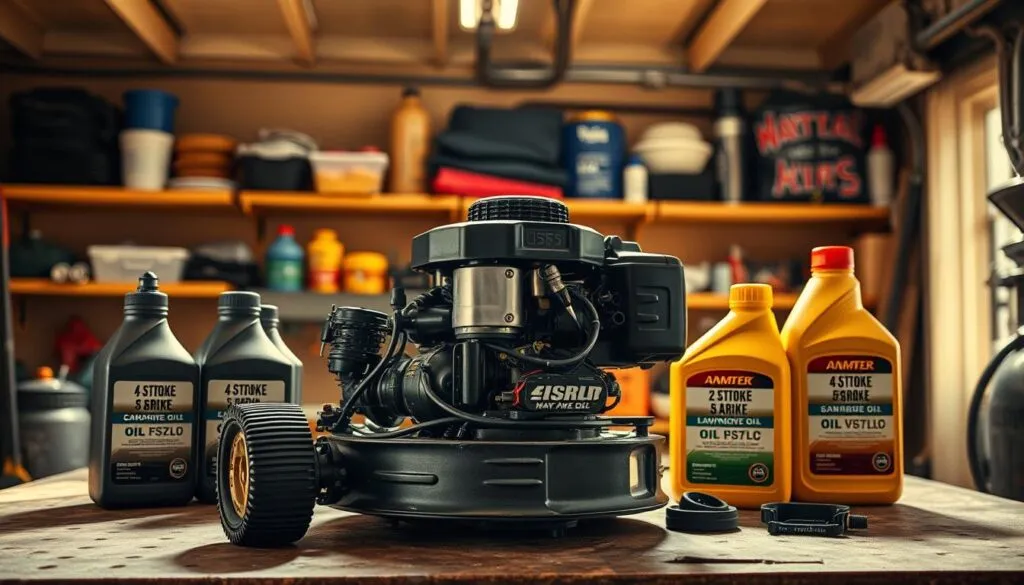
Consulting the Owner’s Manual
Always prioritize the guidance found in your equipment’s documentation. It contains the precise requirements for your specific model’s engine.
This ensures the selected fluid matches the design parameters. Proper lubrication prevents unnecessary wear and potential repair issues.
Recommended Oil Grades for Different Engines
For most four-stroke mowers, SAE 10W-30 serves as a reliable, versatile choice. It performs well across typical seasonal temperature ranges.
High-quality standard motor oil designed for automobiles usually provides excellent performance. Expensive specialty “small engine oil” is not always necessary.
Matching the grade to your local climate optimizes starting performance and protection. Consider the average operating temperatures in your area.
| Climate Condition | Recommended Grade | Best For |
|---|---|---|
| Consistently Warm | SAE 30 | Simple lubrication in hot weather |
| Variable Conditions | SAE 5W-30 Synthetic | Superior cold starts and high-temperature protection |
| Cold-Weather Operation | SAE 10W-30 | Reliable performance in cooler seasons |
| High-Temperature Commercial Use | SAE 15W-50 | Heavy-duty equipment under stress |
For two-stroke engines, use only oil formulated for air-cooled engines. Never pour standard automotive fluid into these systems.
Follow the correct gas-to-oil mixing ratio specified in your manual. This ensures proper lubrication without fouling the engine.
Quality matters more than price. Look for oils meeting at least API service rating SG or higher for adequate additive packages and protection.
Maintaining Your Mower’s Small Engine>
Proper maintenance habits determine how many years your equipment will serve you reliably. Regular fluid checks and timely replacements form the foundation of effective small engine care throughout the operating season.
Before each cutting session, verify your fluid levels. Place the machine on level ground and allow it to sit idle for a few minutes so lubricant can settle.
Remove the fill cap, wipe the dipstick with a clean cloth, then reinsert it fully. Remove it again to read the level between the “full” and “add” marks.
This quick check takes only minutes but prevents catastrophic damage from low fluid levels that cause overheating and accelerated wear.
Regular Oil Checks and Levels
Consistent monitoring represents your first defense against premature engine failure. Develop the habit of checking levels before every mowing task.
Add fluid in small increments if needed, checking between additions. Overfilling can cause just as many problems as running too low.
Proper Oil Change Intervals
Replacement schedules vary by equipment type and usage patterns. Following manufacturer recommendations ensures optimal protection.
| Equipment Type | First Change | Regular Intervals |
|---|---|---|
| New Mowers | 3-5 hours | Removes break-in metal particles |
| Walk-Behind Models | After break-in | Every 50 hours or seasonally |
| Riding Mowers | After break-in | Every 100 hours or annually |
Watch for visual clues indicating needed service. Dark or gritty fluid instead of clean amber color signals replacement time. Increased noise and overheating also suggest reduced lubrication effectiveness.
Keep a simple maintenance log noting dates and hours of service. This tracking helps anticipate needs and provides valuable information if professional repair becomes necessary.
Advanced Oil Types and Their Benefits
The evolution of lubricant technology has produced advanced formulations that outperform traditional mineral-based products. Modern options include mineral, synthetic blend, and full synthetic varieties.
Synthetic Versus Mineral Oils
Synthetic lubricants represent chemical engineering achievements rather than petroleum refining results. They offer superior flow characteristics during cold starts.
Mineral varieties come from refined crude petroleum. Synthetic blends combine conventional and synthetic base stocks for improved performance.
Full synthetic formulations provide maximum protection for high-performance equipment. Their molecular structure maintains proper viscosity under extreme conditions.
Temperature Performance and Additives
Advanced additives serve specific purposes in modern lubricants. Detergents prevent harmful deposits from forming inside engines.
Anti-wear compounds protect components during operation. Viscosity modifiers enable multi-grade performance across different temperatures.
These sophisticated additive packages resist thermal breakdown. They maintain protection throughout the fluid’s service life.
For equipment operating in extreme climates, synthetic options deliver measurable benefits. They ensure reliable performance and extended equipment longevity.
Conclusion
Your final decision on lubrication comes down to balancing convenience with optimal equipment care. High-quality automotive oils provide effective protection for most four-stroke lawn mower engines.
Understanding your specific engine type remains essential. Always consult your owner’s manual for the proper viscosity grade matching local temperatures.
The debate between automotive and purpose-formulated oils often matters less than consistent maintenance. Regular fluid checks and timely replacements significantly impact equipment life.
View quality oil as inexpensive insurance for your mower. Proper selection prevents costly repairs and extends operational years.
Always prioritize manufacturer specifications when choosing fluids. Monitor your equipment’s performance for signs like deposits or unusual noise indicating needed service.
FAQ
Is it safe to pour automotive oil into my lawn mower?
For most modern four-stroke mowers, using a standard automotive oil in a pinch is generally acceptable, provided the viscosity grade matches your owner’s manual’s recommendation. However, for optimal performance and longevity, oils specifically designed for small engines offer superior protection against wear and deposits.
What happens if I use the wrong oil viscosity grade?
Using an incorrect viscosity can lead to serious issues. Oil that is too thick won’t circulate properly at startup, causing increased wear. Oil that is too thin may not maintain adequate lubrication under high operating temperatures, potentially leading to overheating and premature engine failure.
How often should I perform an oil change on my equipment?
Change intervals vary. A common guideline is every 25-50 hours of operation or at least once per mowing season. Always consult your specific model’s manual for the manufacturer’s precise maintenance schedule to ensure peak performance and extend your mower’s life.
What is the main difference between synthetic and mineral oils?
Synthetic oils provide better lubrication across a wider range of temperatures and offer enhanced protection against heat and deposits. They generally allow for longer change intervals. Mineral oils are a more traditional, budget-friendly option but may require more frequent changes.
Can I use the same oil in my riding mower and my push mower?
Often, yes, if both machines have four-stroke engines and the manufacturer recommends the same SAE grade. The critical factor is matching the oil type and viscosity to the engine’s requirements, not the mower’s size. Always double-check each equipment manual.
Why do small engine oils have different additives than automotive oils?
Small engine oils contain additives tailored to combat specific challenges, like higher operating temperatures and increased moisture from seasonal use. These special formulas help prevent corrosion and control soot, which are common issues in lawn mower engines that cars typically don’t face.