
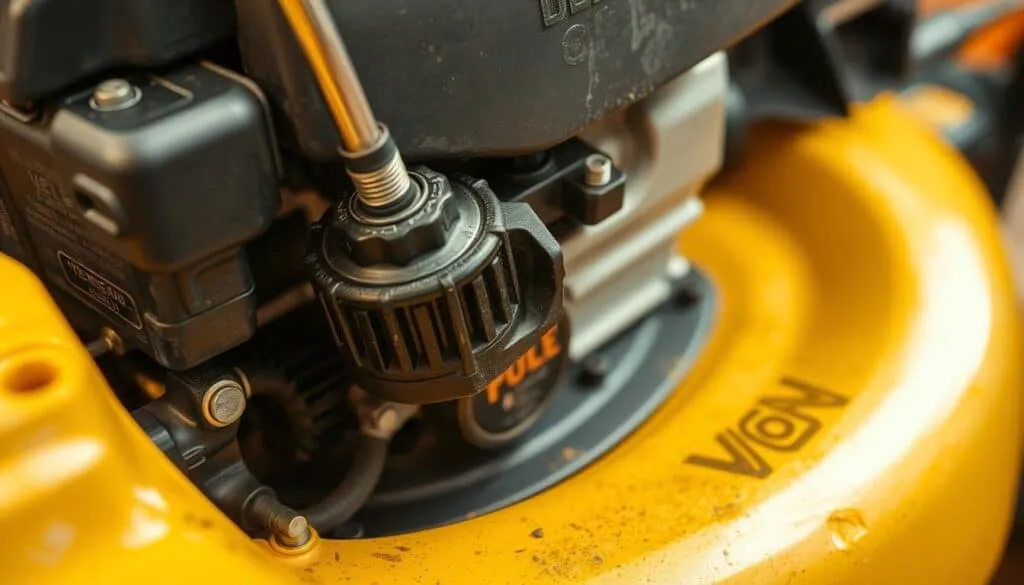
What if the secret to a longer-lasting yard machine is sitting in your garage right now? Many homeowners ponder this very question, looking for a simple solution for their outdoor power equipment.
Your trusty lawn maintenance tool is a crucial piece of equipment. Its heart, the motor, has specific lubrication needs that are vital for smooth operation and a long service life.
The fluid you select directly impacts performance and durability. It is essential to grasp the distinctions between standard automotive lubricants and those designed specifically for outdoor power tools.
While they might appear similar, the operating conditions for these motors differ greatly. This guide will clarify why using the proper type is so important.
You will discover the potential effects of an incorrect choice and learn how to make the best decision for your valuable equipment.
Key Takeaways
- Lawn mower engines have unique requirements compared to automobile engines.
- The correct oil is critical for optimal performance and engine longevity.
- Using automotive oil in lawn equipment can lead to specific problems.
- Understanding the differences helps you make an informed maintenance decision.
- Proper lubrication ensures your mower runs smoothly for years to come.
Understanding Lawn Mower Engines: Two-Stroke vs Four-Stroke
The type of motor in your outdoor power tool determines its specific lubrication requirements and maintenance schedule. Knowing which design powers your equipment is essential for proper care.
Engine Operation and Lubrication Methods
Two-stroke engines combine fuel and lubricant in a single mixture. This design requires oil that burns completely during combustion. The fluid enters the combustion chamber along with gasoline.
Four-stroke engines operate with separate systems for fuel and lubrication. Oil circulates through dedicated passages without entering the combustion process. This allows the lubricant to remain in the system longer.
Most modern lawn mowers utilize four-stroke designs. These engines need regular oil changes similar to automobiles. However, the specific requirements differ from standard automotive fluids.
Impact on Oil Selection
The operational differences directly affect lubricant choice. Two-stroke engines demand oils formulated for clean combustion. These special fluids must burn completely while providing adequate protection.
Four-stroke engines require oils designed for continuous circulation. These lubricants focus on heat dissipation and long-term component protection. They don’t need the clean-burning properties of two-stroke varieties.
Your equipment’s engine type dictates the proper fluid selection. Using the correct lubricant ensures optimal performance and longevity. Always consult your owner’s manual for specific recommendations.
Why Using the Right Oil Matters for Your Lawn Mower
Your lawn mower’s performance and longevity hinge on a single critical choice: the lubricant you select. This decision impacts everything from cutting efficiency to how many seasons your equipment will serve you.

Proper maintenance begins with understanding why specific formulations exist for different applications. The fluid designed for your equipment addresses unique operational demands.
Maintaining Engine Performance
Selecting the correct mower oil ensures all moving parts receive optimal lubrication. This reduces friction and allows your equipment to operate at peak efficiency.
The right formulation maintains consistent power output throughout the motor’s life. It also helps clean internal components, preventing deposit buildup that can degrade performance over time.
Prevention of Damage and Wear
Using inappropriate lubricants creates a false sense of security. Your equipment might seem to run normally initially, but internal wear accelerates silently.
Automotive oils create heavy lubrication that actually increases component wear in small engines. This occurs because they’re formulated for different temperature ranges and operational cycles.
- Gradual power loss and harder starting
- Increased oil consumption between changes
- Potential for costly repairs or premature replacement
Regular maintenance with proper oil protects your investment by creating a protective film between metal components. This prevents the cumulative damage that shortens equipment life.
can i use car engine oil in my lawn mower
Understanding the formulation differences between lubricants is key to protecting your equipment. Automotive fluids and those designed for outdoor power tools are engineered for distinct operating environments.
Standard car oil is typically a multigrade product. It must perform reliably in both freezing winter starts and scorching summer drives. This versatility is essential for vehicles used year-round.
In contrast, specialized mower oil is often a monograde formula. It is optimized for the warmer temperatures typical during the mowing season. Your outdoor equipment usually operates when conditions are above freezing.
Using a multigrade automotive lubricant in a small motor can be counterproductive. The heavier viscosity needed for a car‘s high-speed operation creates excessive drag. This actually accelerates internal wear in lawn mowers.
While your equipment may run initially, long-term damage is the real risk. The minimal cost saving is not worth the potential for premature failure. Proper engine oil for mowers is just as convenient to purchase from hardware or garden stores.
SAE Classification and Temperature Ratings for Lawn Mower Oils
Understanding viscosity ratings is essential for selecting the proper lubricant that matches your equipment’s needs. The SAE system provides standardized codes that reveal how fluids perform under different conditions.
Decoding SAE Numbers
The SAE designation consists of two numbers separated by a “W” for winter. The first number indicates cold-weather flow properties. Lower numbers mean thinner fluids that circulate quickly during startup.
The second number represents viscosity at operating temperatures. Higher values indicate thicker lubricants that maintain protective films under heat stress. This dual-rating system helps you choose the right grade for your climate.
Temperature Range and Viscosity Considerations
Different SAE grades perform optimally within specific temperature ranges. Your local climate determines which formulation works best for your equipment.
Thinner oils with lower first numbers flow easily in cold conditions. They provide immediate lubrication during startup. Thicker varieties with higher second numbers protect components in hot weather.
| SAE Grade | Temperature Range (°F) | Best For | Key Characteristics |
|---|---|---|---|
| 5W-30 | -22°F to 104°F | Cold climates | Easy cold starts, low consumption |
| 10W-30 | -0.4°F to 100.4°F | Moderate climates | Balanced performance |
| 15W-50 | 21.2°F to 131°F | Hot climates | High-temperature protection |
API specifications provide additional quality guidance. Look for “S” series oils with at least SG rating for optimal protection. Higher grades like SN offer superior performance.
Choosing Between Mineral and Synthetic Oils
Modern lubrication technology offers homeowners several distinct options for protecting their yard tools. You’ll typically encounter three main varieties when selecting fluids for your equipment.
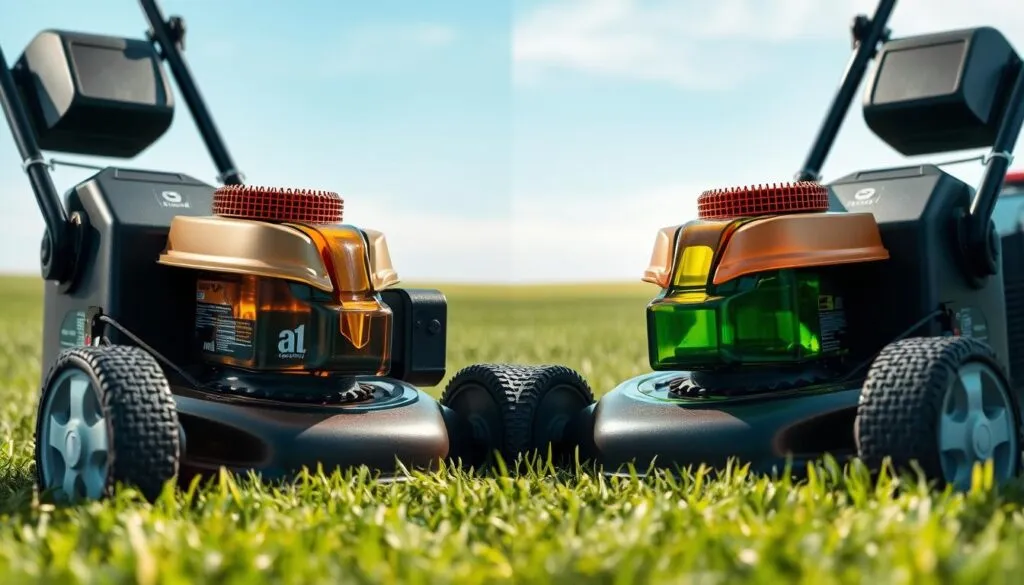
Conventional mineral formulations provide basic protection at an economical price point. Synthetic varieties deliver advanced performance through engineered molecular structures. Blended options offer a middle ground between these two extremes.
Benefits of Synthetic Oil in Lawn Mowers
Synthetic lubricants maintain consistent viscosity across temperature extremes. They flow easily during cold starts while providing robust protection in summer heat. This stability ensures reliable performance throughout the mowing season.
Advanced additives in synthetic formulations offer significant advantages. These components prevent sludge formation and keep internal parts clean. They also reduce wear on moving components, extending equipment life.
| Oil Type | Temperature Performance | Protection Level | Longevity |
|---|---|---|---|
| Mineral Oils | Moderate range | Basic protection | Standard duration |
| Synthetic Oils | Excellent stability | Superior protection | Extended duration |
| Synthetic Blends | Good performance | Enhanced protection | Improved duration |
The initial higher cost of synthetic engine oils often provides better value over time. Reduced wear and extended change intervals make them worthwhile for frequently used equipment. Your specific needs determine the ideal type for optimal results.
Routine Maintenance Tips for Your Lawn Mower’s Engine Oil
Simple checks performed before each mowing session can significantly extend equipment life. Consistent attention to your lubrication system prevents costly repairs and maintains peak performance throughout the season.
Checking Oil Levels and Signs of Contamination
Always verify fluid levels when the motor is completely cold. This ensures accurate measurement since all lubricant resides in the crankcase during storage.
Locate the dipstick attached to the filler cap. Clean the surrounding area thoroughly before removal. This prevents debris from entering the system during inspection.
Fresh fluid appears amber-colored and transparent. Darkening indicates normal wear particles and combustion byproducts. Severely dark or sludgy appearance signals immediate replacement needs.
Guidelines for Oil Changes Based on Operating Hours
Follow manufacturer recommendations for change intervals. Most residential equipment requires replacement after approximately 25 hours of operation.
New machines often need more frequent attention during break-in periods. Initial changes may be necessary after just 5 hours to remove wear particles.
| Equipment Type | Operating Hours | Change Frequency | Special Considerations |
|---|---|---|---|
| Standard Residential | 25 hours | Seasonal or hourly | Whichever comes first |
| New Equipment | 5-10 hours | Initial break-in | More frequent first change |
| Commercial Grade | 50-100 hours | Based on usage | Heavy-duty formulations |
Proper disposal of used fluid is essential for environmental protection. Many automotive stores accept spent lubricants for recycling. This completes the maintenance cycle responsibly.
Key Recommendations and Manufacturer Guidelines
Your equipment’s manufacturer provides the most reliable guidance for proper maintenance procedures. These specifications result from extensive testing with your specific model. Following these recommendations ensures optimal performance.
Following the Owner’s Manual
The owner’s manual contains precise oil selection criteria for your equipment. Manufacturers design specifications based on engine characteristics and operating conditions. This ensures proper lubrication for your particular model.
Consulting your manual protects warranty coverage and prevents damage. Using incorrect oil types can void protection agreements. Always verify the recommended viscosity grade and API rating.
Manufacturer guidelines consider factors like cooling systems and duty cycles. Different mowers have unique requirements based on their design. Your manual provides the exact capacity and change intervals.
| Manufacturer | Recommended Grade | API Rating | Change Interval |
|---|---|---|---|
| Brand A | SAE 10W-30 | SN | 25 hours |
| Brand B | SAE 5W-30 | SM | 50 hours |
| Brand C | SAE 30 | SJ | 20 hours |
If you’ve misplaced your manual, download a digital version from the manufacturer’s website. Search using your model number for accurate specifications. Proper oil selection extends equipment life and maintains performance.
Conclusion
Proper fluid selection represents a small investment with substantial long-term returns. Choosing the correct lubricant for your outdoor power tools ensures they operate at peak efficiency season after season.
The distinction between automotive and small engine formulations is critical. While some products might seem interchangeable, their performance characteristics differ significantly. Your equipment’s longevity depends on using fluids designed for its specific operating conditions.
Regular maintenance with appropriate grade lubricants prevents unnecessary wear. Synthetic options offer superior protection across temperature ranges. Their advanced additives maintain consistent viscosity during operation.
Always consult manufacturer specifications for optimal results. Following recommended change intervals protects your investment. This simple practice extends equipment life and maintains cutting performance.
Your attention to proper lubrication pays dividends through reliable service and reduced repair costs. Quality fluids protect against damage and ensure your tools ready when needed.
FAQ
What is the main difference between two-stroke and four-stroke lawn mower engines?
The primary distinction lies in lubrication. Two-stroke engines require a special oil mixed directly with the gasoline. Four-stroke engines have a separate oil reservoir, similar to a car, and use straight oil for lubrication.
Can using the wrong type of oil damage my lawn mower?
Yes, absolutely. Using car engine oil in a two-stroke mower can cause severe damage, as it’s not designed to be burned with fuel. Even in four-stroke mowers, incorrect viscosity or lacking specific additives can lead to increased wear, overheating, and poor performance.
How do I know which SAE grade of oil is right for my equipment?
Always consult your owner’s manual first. It specifies the correct viscosity, like SAE 30 or 10W-30, based on your local temperature range. Using the manufacturer’s recommended grade ensures optimal lubrication and protection for your mower’s engine.
What are the benefits of using synthetic oil in my lawn mower?
Synthetic oils offer superior performance. They provide better lubrication at extreme temperatures, reduce engine wear, and can extend the time between oil changes. This leads to improved engine life and reliability for your equipment.
How often should I check and change the oil in my mower?
Check the oil level before each use. For changes, a good rule is every 25-50 hours of operation or at least once per mowing season. Always check for signs of contamination, like a dark, gritty appearance, which indicates an immediate change is needed.
Why is the owner’s manual the best resource for oil selection?
The manual contains the manufacturer’s specific guidelines for your exact model. It details the precise oil type, viscosity, and change intervals required to maintain your equipment’s warranty and ensure peak performance and longevity.