
Have you ever wondered why your machine struggles to start or loses power halfway through cutting the grass? The answer often lies in a single, critical specification.
I’m here to introduce you to the fundamental concept of your equipment’s electrical heart. Grasping this detail is not just technical jargon; it’s essential for both your personal protection and your machine’s peak performance.
This electrical potential directly influences your equipment’s ability to crank the engine reliably. It powers all the electrical components and ensures consistent cutting performance from the first pass to the last.
The purpose of this comprehensive guide is simple: to empower you. I will help you identify the correct specification for your specific machine, teach you proper testing methods, and share maintenance tips for long life.
Knowing this number isn’t merely about buying a replacement. It’s about preventing damage to your investment, avoiding potential hazards, and ensuring you get the most value from your yard work.
Key Takeaways
- Battery voltage is a core specification critical for safe and efficient operation.
- The correct voltage ensures reliable starting and consistent power for cutting.
- Using the wrong battery can damage your equipment and create safety risks.
- This guide will help you identify, test, and maintain your power source correctly.
- Proper knowledge extends the life of your investment and protects you.
Introduction to Lawn Mower Batteries and Voltage Basics
Proper electrical specifications ensure your yard maintenance equipment functions reliably season after season. This measurement represents the electrical potential that drives your equipment’s starting system and accessories.
Why Battery Voltage Matters
The correct electrical level determines charger compatibility and influences your power source’s longevity. Using the proper specification prevents premature failure and maintains overall equipment reliability.
Incorrect levels can reduce efficiency and strain components like alternators. Operating within the recommended range ensures smooth operation and safety during use.
The Role of Voltage in Mower Performance
Adequate electrical potential ensures your engine cranks with sufficient force to start immediately. It powers all electrical components consistently throughout your cutting session.
This measurement impacts cutting capability in challenging conditions like thick or uneven terrain. Consistent power delivery prevents sluggish operation and maintains cutting quality.
| Voltage Level | Starting Performance | Cutting Performance |
|---|---|---|
| Optimal (12.6V+) | Instant starting | Consistent power in thick grass |
| Low (12.2V-12.5V) | Sluggish cranking | Reduced cutting efficiency |
| Critical ( | Starting failure | Poor performance under load |
Understanding these basics helps diagnose issues early and maintain optimal operation. It also guides proper replacement selection when needed.
What Volt Are Lawn Mower Batteries
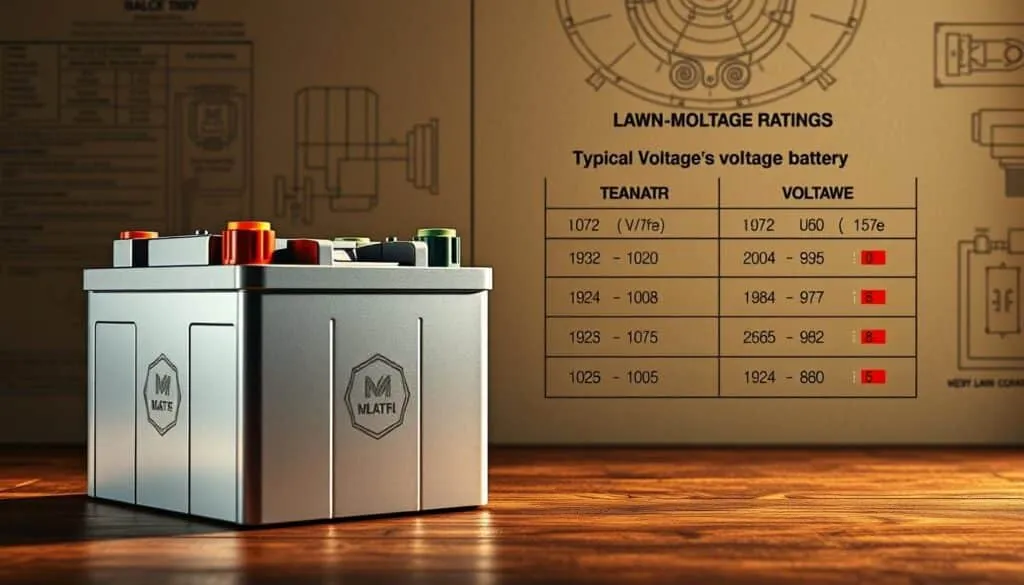
Gas-powered and electric machines operate on fundamentally different electrical principles. This distinction is crucial when identifying the correct power source.
For decades, the industry standard for gas-powered equipment has been the 12-volt system. This applies to most modern push mowers and riding models with electric start.
Some older or very compact gas models might still use a 6-volt power source. Always check your specific machine’s manual to be certain.
Industry Standards for Gas-Powered Mowers
Cordless electric mowers use lithium-ion technology. Their voltage varies significantly based on the machine’s size and power needs.
Small, lightweight mowers for tiny yards often use 20-volt systems. Medium-sized lawns typically require 40-volt power sources for adequate runtime.
Larger residential properties need more power. Systems rated at 56 to 60 volts handle thicker grass and larger areas effectively.
For professional use or very large properties, you will find equipment with 80 volts or higher. Some large riding mowers may even use 24-volt systems for increased performance.
| Mower Type | Typical Voltage | Best For |
|---|---|---|
| Small Electric | 20V | Tiny yards under 1/4 acre |
| Medium Electric | 40V | Lawns up to 1/2 acre |
| Large Electric | 56V-60V | Bigger lawns, thick grass |
| Commercial Electric | 80V+ | Professional landscaping |
Using the incorrect voltage can damage your equipment’s electrical system. Always verify your mower’s requirement before purchasing a replacement.
Different Types of Lawn Mower Batteries
Modern yard maintenance equipment offers several power storage options with distinct characteristics. I will explore the primary technologies available today, from traditional choices to advanced alternatives.
Lead-Acid Batteries Overview
Traditional power units remain popular due to their lower initial cost and proven reliability. These units provide adequate cold cranking amps, typically around 145 for riding models.
Larger equipment may require up to 300 CCA for proper starting power. A fully charged traditional unit typically reads between 12.6 and 12.8 volts.
These energy storage devices do have weight disadvantages and require regular maintenance. Flooded variants need periodic water level checks to prevent damage.
Lithium-Ion and LiFePO4 Alternatives
Advanced technologies offer significantly lighter weight and faster charging capabilities. They typically charge three to five times quicker than traditional options.
These modern units maintain steady voltage output throughout their discharge cycle. When fully charged, they reach between 13.2 and 13.4 volts.
Built-in protection systems prevent overcharge and temperature extremes. Their extended lifespan and minimal maintenance often provide better long-term value despite higher initial costs.
How to Test Your Lawn Mower Battery Voltage
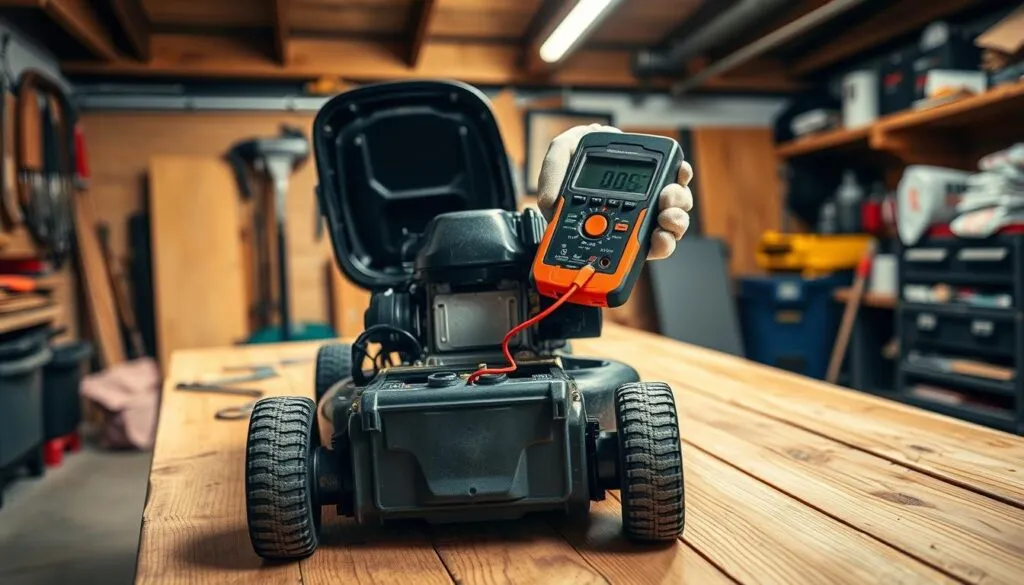
Accurate voltage measurement requires proper preparation and a simple tool. I will guide you through the entire process safely.
Preparing Your Multimeter and Safety Measures
Gather a digital multimeter for precise readings. Always turn off your equipment completely before beginning.
Allow the machine to rest for one hour after use. This prevents false readings from surface charge.
Wear safety gloves and goggles when handling terminals. Corrosion can be harmful if touched directly.
Step-by-Step Voltage Testing Process
Locate your power unit under the seat or near the engine. Clean any corrosion from the terminals using a wire brush.
Set your multimeter to DC voltage mode with a 20V range. Connect the red probe to the positive terminal marked “+”.
Attach the black probe to the negative terminal marked “-“. Ensure firm contact for an accurate reading.
Check the display for your voltage measurement. This number reveals the current state of charge.
| Battery Type | Fully Charged | Half-Charged | Needs Replacement |
|---|---|---|---|
| 12V Lead-Acid | 12.6-12.7V | 12.4V | Below 12.0V |
| Lithium-Ion | 13.2-13.4V | 12.8-13.1V | Below 12.0V |
Modern units with Bluetooth connectivity offer smartphone monitoring. This eliminates the need for physical testing tools.
Regular checks help maintain optimal performance throughout the season. Proper maintenance extends your investment’s lifespan significantly.
Interpreting Voltage Readings and Troubleshooting Issues
Knowing how to read and understand your power source’s electrical state helps avoid mid-task breakdowns. Proper interpretation separates temporary power dips from permanent component failure.
This knowledge empowers you to take corrective action before complete failure occurs. It also guides replacement decisions with confidence.
Normal Voltage Ranges for Healthy Batteries
Traditional lead-acid units show 12.6-12.8 volts when fully charged. Readings between 12.4-12.5 volts indicate partial depletion requiring recharge.
Modern lithium alternatives operate at higher levels. Their optimal range spans 13.2-13.4 volts when completely charged.
Values dropping to 12.2 volts or lower signal significant undercharge. Measurements below 11.5 volts typically indicate permanent damage.
Signs of a Low or Faulty Battery
Slow engine cranking or clicking sounds during startup reveal power deficiencies. Inconsistent performance across different days suggests deteriorating capacity.
Physical damage like bulging cases or terminal corrosion confirms replacement needs. Fluid leaks indicate seal failure requiring immediate attention.
When readings fall below normal, recharge completely and retest after 24 hours. Rapid voltage drop confirms the need for replacement.
Regular seasonal checks prevent unexpected failures. Test before spring use and winter storage for reliable operation.
Tips for Maintaining Your Lawn Mower Battery
Following a few simple practices ensures your power unit remains in optimal condition throughout its lifespan. Consistent attention prevents most common issues that shorten service life.
Regular charging after each use maintains peak performance. During heavy cutting seasons, this practice becomes especially important.
Avoid letting the charge drop below 12 volts. Deep discharge causes permanent damage to traditional power units.
Regular Charging and Cleaning Terminals
Inspect terminals monthly for white or bluish crusty buildup. Clean with a wire brush and baking soda solution when needed.
Apply terminal protector after cleaning to prevent future corrosion. Tight connections ensure efficient power transfer.
Check voltage every 2-4 weeks during active use. A fully charged unit should read 12.6-12.7 volts.
Proper Storage and Preventative Maintenance
Store in a cool, dry location between 50-70°F. Extreme temperatures significantly reduce battery life.
Use a trickle charger during extended storage periods. Smart chargers with automatic shutoff prevent overcharging.
Inspect the case regularly for cracks, leaks, or swelling. Replace immediately if you find damage.
| Maintenance Task | Frequency | Key Benefit |
|---|---|---|
| Terminal Cleaning | Monthly | Prevents power loss |
| Voltage Check | Every 2-4 weeks | Early problem detection |
| Full Charge | After each use | Maintains capacity |
| Storage Preparation | Before off-season | Extends lifespan |
Lithium units require minimal maintenance but still benefit from periodic inspections. Their charge retention is excellent during storage.
Establishing a consistent routine protects your investment for years. Proper care ensures reliable starting every time.
Comparing Battery Performance in Gas-Powered vs. Electric Mowers
Choosing between gas and electric equipment involves understanding their distinct power systems. Each type serves different property sizes and maintenance needs effectively.
Gas-powered models with electric start utilize compact 12-volt units primarily for ignition. The gasoline engine handles the demanding cutting work once started.
Voltage Requirements in Different Mower Types
Fully electric mowers depend entirely on their energy source for both operation and blade rotation. Their electrical specifications vary from 20 volts for small properties to 80+ volts for commercial use.
Higher-voltage systems deliver superior cutting performance in challenging conditions. They maintain consistent blade speed through thick grass without bogging down.
Capacity measurements in amp-hours determine runtime for cordless equipment. Smaller yards may need only 30 minutes, while larger properties require 90 minutes or more.
Traditional gasoline mowers excel for extensive properties where refueling convenience outweighs recharge waiting. Electric alternatives offer quieter operation with zero emissions for typical residential use.
Safety Considerations When Handling Mower Batteries
Handling electrical components requires careful attention to prevent accidents and ensure your wellbeing. I want to emphasize that proper procedures protect you from electrical shock, chemical exposure, and other potential hazards.
Always make sure your equipment is completely turned off before beginning any work. The engine should be fully cooled to avoid burns from hot components near the power source.
Proper Testing and Handling Procedures
Wear safety gloves and goggles when working with any energy storage device. This protection is especially important if corrosion is present on the terminals.
Different types present unique risks. Traditional lead-acid units contain sulfuric acid that can cause chemical burns. They also produce explosive hydrogen gas during charging.
Modern lithium alternatives are sealed and non-toxic but present fire risks if damaged. Never touch both terminals simultaneously with metal tools, as this can cause dangerous sparks.
When removing a power source, always disconnect the negative terminal first. Connect it last during installation. This sequence prevents accidental short circuits.
Visual inspection is crucial before handling. Look for cracks, leaks, swelling, or excessive corrosion. Replace immediately if you find any damage.
Using the correct electrical specification for your specific model is itself a safety issue. Incorrect levels can cause overheating or strain components.
Finally, dispose of old units properly through designated recycling programs. Both lead-acid and lithium technologies contain materials harmful to the environment.
Conclusion
The knowledge you’ve gained about power requirements empowers you to make confident decisions for your yard care equipment. Understanding these specifications is fundamental to maintaining safe, reliable operation.
Most gas-powered equipment uses standard 12-volt systems. Electric models employ a wider range from 20V to 80V+ based on property size and cutting demands.
You can now test electrical levels accurately and interpret readings to assess health. This skill helps determine when charging suffices versus when replacement becomes necessary.
Regular maintenance extends your power source’s useful life by several years. Proper care prevents frustrating mid-season failures and maintains optimal cutting performance.
Always apply safety procedures when handling any electrical component. This protects you from potential hazards while ensuring equipment operates within safe parameters.
Whether choosing traditional or modern technology, your understanding of specifications matches decisions to specific lawn care needs. Stay proactive with monitoring and care to enjoy reliable service for years to come.
FAQ
What is the most common voltage for a lawn mower battery?
I find that most gas-powered models use a 12-volt system. This has become the industry standard, providing enough power to reliably start the engine. Always check your owner’s manual to confirm the specific needs for your machine.
How can I check the voltage of my mower’s battery?
I use a digital multimeter for this task. After ensuring the engine is off, I connect the multimeter’s probes to the corresponding terminals. A fully charged battery should show a reading around 12.6 to 12.8 volts. This simple test gives a clear picture of its health.
What does it mean if my battery voltage is low?
A low reading, especially below 12.4 volts, often signals that the unit needs charging. It could also point to a deeper issue, like a failing cell or problems with the charging system. Consistent low performance usually means it’s time for a replacement.
Are there different types of batteries used in lawn mowers?
Yes, there are. Traditional lead-acid batteries are common, but many newer models, especially electric mowers, use advanced lithium-ion or LiFePO4 options. These alternatives often offer a longer lifespan and require less maintenance, though they come at a higher initial cost.
What maintenance can extend my battery’s life?
From my experience, keeping the terminals clean and free of corrosion is crucial. I also recommend using a smart charger for off-season storage and avoiding completely draining the power source. These simple steps can significantly improve its performance and longevity.
Is battery voltage the same for electric and gas mowers?
No, the requirements differ. While gas mowers typically use a 12-volt battery just for starting, electric models rely on a battery pack to power the entire machine. These packs often have a much higher total voltage, sometimes ranging from 36V to 80V, to provide sufficient runtime.