
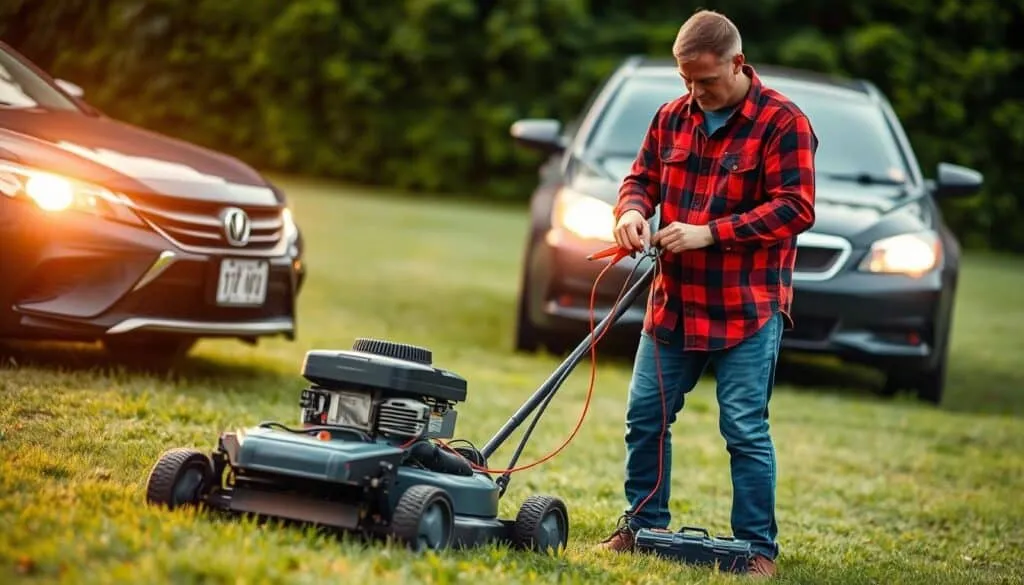
Have you ever faced that frustrating moment when your lawn equipment refuses to start right when you need it most? I certainly have. One sunny Saturday morning, my riding mower sat completely silent despite my repeated attempts to get it going.
The culprit was obvious – a dead power source. With grass growing taller by the minute, I wondered if my vehicle’s electrical system could provide the necessary boost. This led me down a path of discovery about cross-equipment starting procedures.
Through careful research and hands-on testing, I uncovered critical safety considerations that every equipment owner should understand. Voltage compatibility emerged as the most important factor. Most automotive systems operate around 12.6 volts, while lawn equipment has specific tolerance limits.
Exceeding 13 volts can cause permanent damage to your mower’s electrical components. I learned that checking specifications beforehand prevents costly repairs. Some models even use 14-volt systems, making verification essential.
My investigation revealed when temporary boosting makes sense versus when replacement becomes necessary. Understanding these differences saves time, money, and prevents repeated frustration. Proper knowledge ensures both personal safety and equipment protection.
Key Takeaways
- Voltage compatibility between automotive and lawn equipment systems is critical
- Exceeding 13 volts can damage mower electrical components permanently
- Always verify your specific equipment’s voltage requirements before attempting
- Some riding mowers use 14-volt systems requiring special consideration
- Frequent starting issues may indicate need for battery replacement rather than jumping
- Proper procedure knowledge ensures personal safety during the process
- Understanding these differences prevents equipment damage and saves time
Understanding the Basics of Mower and Car Batteries
The journey to safely connect two different power systems began with comprehending their basic electrical characteristics. My research revealed that voltage matching forms the foundation of any successful cross-equipment starting procedure.
Battery Voltage and Compatibility
I discovered that most automotive power sources operate between 12.6V and 12.9V when fully charged. Lawn equipment electrical systems tolerate slight variations but cannot exceed 13V without risking component damage.
Some riding mowers utilize 14V systems or higher, making verification essential before connection attempts. I learned that checking specifications prevents costly repairs to sensitive electrical components.
Differences Between Lawn Mower Batteries and Car Batteries
Automotive power units significantly outperform their lawn equipment counterparts in capacity and output. While mowers typically require 145-300 cold cranking amps, car batteries deliver substantially higher power.
Both systems commonly use wet cell or maintenance-free designs. Wet cell types need regular electrolyte checks, while sealed units require only proper charging.
| Battery Type | Typical Voltage | CCA Range | Maintenance Needs |
|---|---|---|---|
| Car Battery | 12.6V-12.9V | 400-800 CCA | Low (sealed) or Moderate (wet) |
| Lawn Mower Battery | 12V-14V | 145-300 CCA | Low (sealed) or Regular (wet) |
| Small Engine Battery | 6V | Under 100 CCA | Regular maintenance |
Understanding these differences helped me approach the connection process with appropriate caution and preparation.
Assessing Safety Precautions Before Jump-Starting
Safety preparation became my absolute priority before attempting any electrical connection between my vehicle and lawn equipment. I discovered that overlooking basic protocols could lead to serious injury or permanent equipment destruction.
Personal protective equipment proved essential for my protection. I always wear safety goggles and leather work gloves when handling electrical components. These items shield against battery acid leaks, sparks, and potential electrical hazards.
Personal Safety Gear and Protective Measures
Removing all metal jewelry is critical during the process. Any metal object can cause dangerous short circuits when contacting terminal connections. This simple precaution prevents accidental electrical discharges.
I learned to consult my equipment manual before proceeding. Some manufacturers specifically advise against this procedure due to potential system damage. Checking documentation first saved me from costly mistakes.
Clearing and Securing the Work Area
Workspace preparation requires removing all flammable materials from the immediate area. Dry grass, leaves, and debris pose significant fire risks during electrical connections. A clear space ensures safer operation.
Proper ventilation is equally important for personal safety. Batteries emit flammable hydrogen gas that can accumulate in enclosed spaces. Working outdoors or in well-ventilated areas prevents dangerous gas concentration.
These safety measures protect both the operator and the equipment. Taking extra minutes for preparation provides confidence throughout the entire procedure.
Inspecting and Preparing Your Lawn Mower Battery
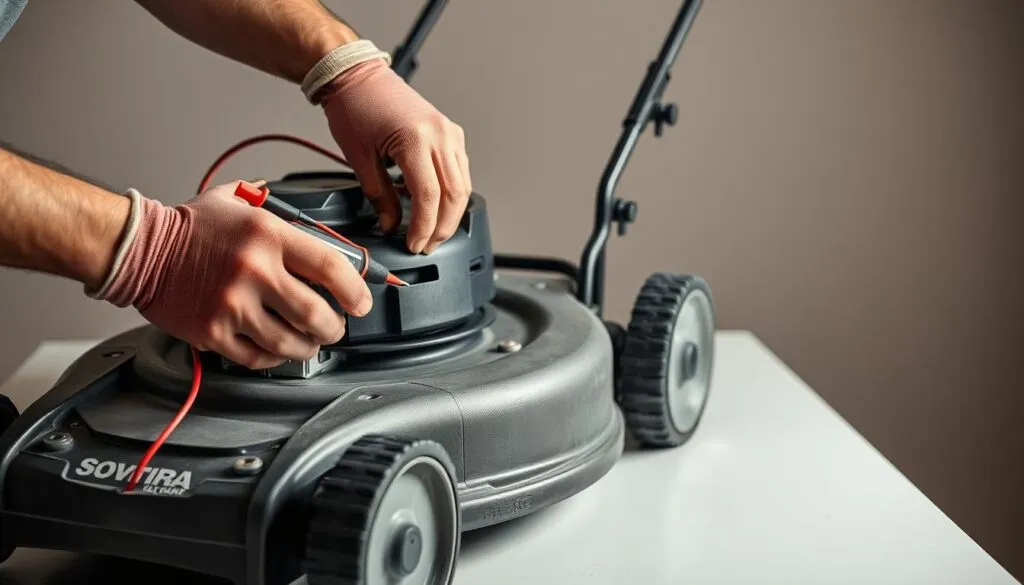
Before attempting any electrical connection, I learned that thorough inspection of my lawn equipment’s power source is absolutely essential. This critical step prevents dangerous situations and protects the equipment from further harm.
Identifying Signs of Battery Damage
My examination process begins with checking for visible damage. Cracks, swelling, or leaks indicate serious problems that require immediate attention. When I discover significant damage, I contact the manufacturer or consider replacement rather than proceeding.
The white powdery substance on terminals is corrosion that interferes with proper connection. I use a wire brush and baking soda solution to clean these contact points thoroughly. This ensures solid electrical contact and better charging performance.
Cleaning Terminals and Ensuring Proper Maintenance
Battery cable inspection is equally important. Frayed or loose cables create serious problems during electrical procedures. I make certain all connections are secure and undamaged before continuing.
Regular voltage checks with a multimeter provide valuable information about battery health. A fully charged unit should read around 12.6 volts. This verification step confirms compatibility before any connection attempts.
Proper maintenance extends beyond immediate needs. Keeping terminals clean and dry prevents rust formation. During off-season storage, I remove the power source and store it in a cool, dry location away from sunlight.
This routine maintenance saves time and money by identifying issues early. Regular care reduces the need for emergency procedures and extends the life of my lawn equipment’s electrical system.
Can You Jump a Mower Battery with a Car: A Step-by-Step Guide
The success of my cross-equipment starting attempt depended entirely on careful preliminary arrangements. Proper groundwork eliminated uncertainty when transferring power between different systems.
Initial Setup and Battery Compatibility Check
Positioning my vehicle within comfortable reach of the outdoor equipment proved crucial. I parked both units on level ground and engaged the parking brake securely.
Verifying voltage compatibility became my next priority. Most modern automobiles and riding equipment utilize 12-volt systems, but confirmation prevents potential damage.
Cooling time matters when the engine runs recently. I allowed thirty minutes for temperature reduction before handling electrical components. Safety gear including gloves and eye protection remained essential throughout the process.
Connecting Jumper Cables in the Correct Order
| Step | Action | Safety Consideration |
|---|---|---|
| 1 | Position vehicles appropriately | Prevent cable strain and disconnection |
| 2 | Verify system compatibility | Avoid electrical system damage |
| 3 | Clear debris from work area | Reduce fire hazards |
| 4 | Inspect cables for damage | Ensure proper conductivity |
| 5 | Maintain safe distance from power source | Prevent exposure to gases |
Methodical preparation gave me confidence throughout the procedure. Each step built upon the previous one, creating a safe and effective process.
Following these guidelines ensured my equipment received the necessary boost without risking damage. The systematic approach minimized hazards while maximizing success probability.
Proper Connection of Jumper Cables: Order and Technique
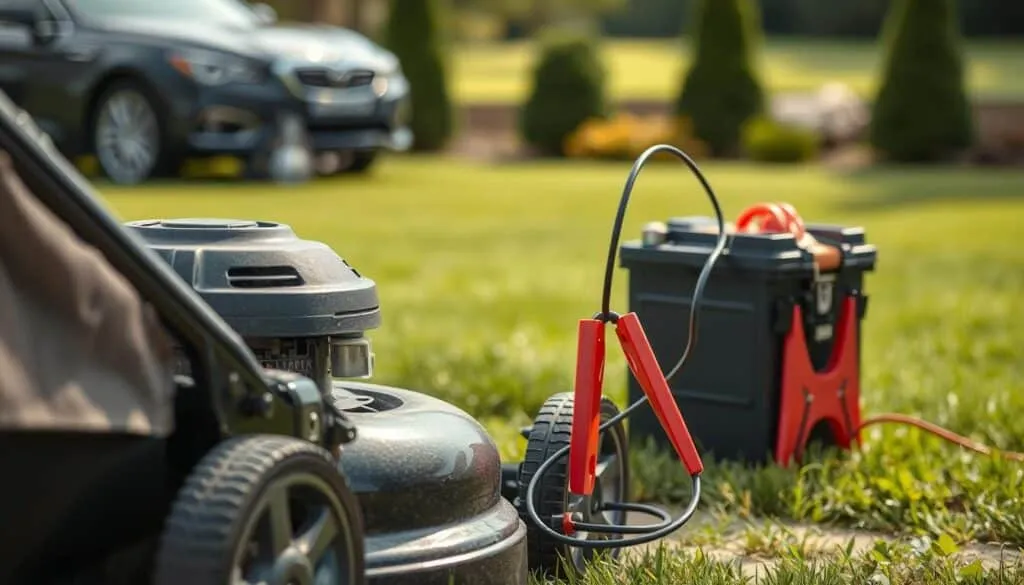
Mastering the precise sequence for connecting jumper cables proved vital for my success. Incorrect attachment can create sparks or damage electrical systems. Following the right order ensures a safe and effective power transfer.
The process requires careful attention to detail. I always begin with the positive connections to establish the main power pathway.
Guidelines for Attaching the Red (Positive) Cable
I attach one end of the red jumper cable to the positive terminal of my lawn equipment first. This terminal usually has a “+” sign or a red cover for identification.
Next, I connect the other end of the red cable to the positive terminal of the automobile’s power source. Firm connections at both ends prevent sparking and ensure efficient current flow.
Guidelines for Attaching the Black (Negative) Cable
The black cable requires a different approach. I connect one end to the negative terminal of the vehicle’s battery to complete the circuit.
The final connection is the most important safety step. I attach the remaining end to a clean, unpainted metal section on the lawn equipment’s frame or engine block. This grounding point should be away from fuel lines or other components.
| Connection Step | Cable Color | Attachment Point | Key Safety Note |
|---|---|---|---|
| 1 | Red | Lawn equipment positive terminal | Ensure firm contact |
| 2 | Red | Automobile positive terminal | Check for secure connection |
| 3 | Black | Automobile negative terminal | Complete the power circuit |
| 4 | Black | Metal frame/engine block | Avoid battery terminal; reduces spark risk |
Throughout the process, I prevent the clamps from touching each other. Consulting the equipment manual provides manufacturer-specific guidance for optimal connection points.
Post-Jump-Start Procedures and Battery Maintenance
Hearing the engine turn over brought relief, but I quickly learned the next steps were crucial for long-term equipment health. Proper disconnection and follow-up care prevent future starting issues.
Safely Disconnecting the Cables
Removing jumper cables requires the same care as connecting them. I follow the reverse sequence to ensure safety.
First, I detach the black cable from the mower’s frame. Next, I remove the same cable from the automobile. Then I disconnect the red cable from my lawn equipment, followed by the vehicle.
Preventing clamp contact is essential during this process. Even after starting, touching clamps can create dangerous sparks.
Charging and Long-Term Battery Care
After successful starting, I let the equipment run for thirty minutes. This allows the alternator to replenish power.
For a complete charge, I use a 6-amp charger. Full restoration typically takes three to ten hours. Regular voltage checks with a multimeter help monitor health.
Terminal maintenance prevents corrosion buildup. I clean connections with a wire brush and baking soda solution. Keeping terminals dry avoids rust formation.
During off-season storage, I remove the power source completely. A cool, dry location away from sunlight preserves battery life. A trickle charger maintains optimal charge during extended storage periods.
Exploring Alternative Solutions and Tools
Modern battery technology offers standalone solutions that bypass the need for cross-equipment power transfers. My research uncovered several reliable options that provide independence from traditional methods.
Using Battery Chargers and Maintainers
Battery chargers provide straightforward recharging for lawn equipment power sources. I found trickle chargers particularly effective for maintaining charge during storage periods.
These devices prevent power loss during seasonal downtime. A quality maintainer extends the lifespan of your equipment’s electrical system significantly.
The investment pays off through reduced replacement costs and consistent performance. Proper maintenance eliminates most starting issues before they develop.
Benefits of Portable Jump Starters
Portable jump starters deliver emergency power without vehicle assistance. These compact units provide quick boosts wherever your equipment is located.
I appreciate the safety advantages of self-contained power systems. There’s no risk of voltage mismatch or connection errors.
Modern units feature advanced monitoring and automatic shutoff functions. They simplify lawn care by eliminating cable management and positioning challenges.
Advanced battery systems represent the future of equipment power. Technologies like Ionic batteries incorporate built-in jump-start capabilities and health monitoring.
These innovations reduce maintenance time while improving reliability. The convenience of remote activation through smartphone apps transforms equipment starting experiences.
Conclusion
The knowledge gained from this electrical procedure extends far beyond simple starting solutions. My experience has shown that proper preparation and understanding are essential for success.
Following the correct sequence and safety measures ensures equipment protection during power transfer. Voltage compatibility remains the most critical consideration throughout the process.
Regular maintenance significantly reduces the need for emergency procedures. Alternative power solutions offer reliable options for consistent performance.
This comprehensive approach transforms occasional fixes into lasting equipment care strategies. Proper knowledge empowers confident handling of future challenges.
FAQ
Is it safe to use my car to start a lawn mower?
Yes, it is generally safe if you follow proper safety precautions. The key is ensuring both the car and mower batteries are the same voltage, which is typically 12 volts. I always wear safety gloves and glasses and make sure the work area is clear before connecting jumper cables.
What is the correct order for connecting jumper cables?
The correct sequence is vital to prevent sparks and damage. I first connect the red cable to the positive terminal on the mower battery. Next, I attach the other end of the red cable to the positive terminal on the car battery. Then, I connect the black cable to the negative terminal on the car battery. Finally, I attach the other end of the black cable to an unpainted metal part of the mower’s frame, away from the battery.
Can a car battery damage my lawn mower’s electrical system?
While a car battery has more power, it operates at the same voltage as most riding mower batteries. The risk of damage is low if the connection is made correctly. The main danger comes from reversing the positive and negative cables, which can cause serious electrical damage to the mower’s system.
What should I do after a successful jump-start?
Once the mower engine is running, I disconnect the cables in the reverse order of connection. It’s crucial to let the mower run for a while to allow its alternator to charge the lawn mower battery. For long-term health, I recommend using a dedicated battery maintainer like a Battery Tender to keep the charge optimal.
Are there better alternatives to using a car for a jump-start?
Absolutely. Using a portable jump starter pack is a much safer and more convenient option. These compact units, from brands like NOCO or DeWalt, are designed for small engines and eliminate the risk of power surge from a larger car battery. A simple battery charger is also a great tool for reviving a dead battery slowly and safely.