
Have you ever looked at your overgrown lawn after a rain shower and wondered if it’s a smart move to fire up your battery-powered machine? Many homeowners face this exact dilemma when their weekend landscaping plans get rained out.
I’ve been in that situation more times than I can count. Through extensive personal testing and research, I’ve uncovered the real story. It’s a topic filled with conflicting advice and potential risks for your equipment and turf health.
This guide dives deep into the challenges of dealing with damp turf. We’ll explore the safety aspects, how your equipment handles the stress, and the impact on your lawn’s vitality. My goal is to provide clear, actionable information so you can make the best choice for your property.
Understanding the interaction between moisture and your landscaping tools is crucial. I’ll share insights that help you navigate those less-than-ideal mowing conditions with confidence.
Key Takeaways
- Operating battery-powered equipment on damp turf presents unique challenges.
- Safety is a primary concern when dealing with electrical devices and moisture.
- The cutting process itself is less effective and can harm the turf’s health.
- Equipment longevity may be compromised by consistent use in these situations.
- There are specific techniques for those times when cutting is unavoidable.
- Preventative lawn care scheduling can help avoid this common problem.
Introduction
A frequent concern among homeowners involves the practicality of using electric landscaping tools on moisture-laden lawns. Maintaining a beautiful property requires careful consideration of both equipment selection and optimal timing.
Battery-powered models offer distinct safety advantages compared to corded electric equipment when dealing with damp conditions. However, the fundamental challenges presented by saturated turf remain consistent across power sources.
The ideal period for cutting occurs when the turf is completely dry but the sun isn’t at full intensity. Early mornings after dew evaporation or late afternoons typically provide these optimal conditions.
Through extensive research, I’ve discovered that moisture affects equipment performance in multiple ways. These impacts can lead to long-term damage to lawn health if proper precautions aren’t implemented.
Understanding these risks proves crucial for extending equipment lifespan and maintaining turf vitality throughout the growing season. This introduction sets the stage for exploring why mowing wet grass is generally discouraged.
My findings will help navigate lawn care complexities during various weather patterns. You’ll gain insights for making informed decisions about when to proceed and when to postpone your landscaping activities.
Understanding the Challenges of Mowing Wet Grass
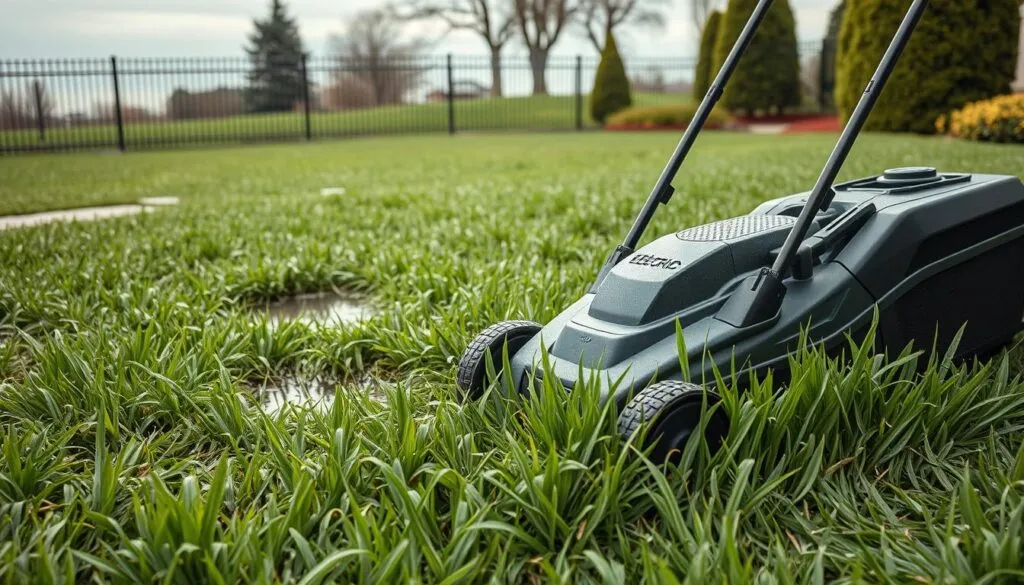
The presence of water on turf creates distinct challenges that impact cutting efficiency and equipment functionality. Moisture transforms the entire landscaping process, introducing complications that affect both immediate results and long-term lawn health.
Clumping, Sticking, and Reduced Blade Efficiency
Water causes vegetation to become sticky and compact. When cut, the material forms dense masses that adhere to equipment surfaces.
I’ve observed significant accumulation under the mower deck during damp conditions. This buildup blocks proper airflow and requires frequent cleaning interruptions. The cutting process becomes messy and inefficient.
Blades lose their sharp slicing action when dealing with moisture-heavy vegetation. Instead of clean cuts, the equipment often tears through the material. This tearing creates ragged edges that heal slowly.
Increased Resistance and Uneven Cuts
Water-saturated turf presents substantial physical resistance to cutting mechanisms. The added weight makes each pass more strenuous for the equipment.
Battery power drains rapidly as the machine works harder against the dense material. Motor strain increases significantly compared to dry conditions. This extra effort reduces overall runtime and equipment longevity.
The finished appearance suffers from inconsistent cutting heights. Moisture causes vegetation to bend rather than stand upright for even trimming. Results often show patchy areas and uneven texture.
| Factor | Dry Conditions | Wet Conditions |
|---|---|---|
| Grass Behavior | Stands upright for clean cuts | Bends flat, causing uneven trimming |
| Clipping Distribution | Spreads evenly as natural fertilizer | Forms clumps that smother healthy growth |
| Blade Efficiency | Sharp, clean slicing action | Tearing that damages plant health |
| Equipment Strain | Normal battery consumption | Rapid power drain and motor stress |
Health and Safety Risks When Mowing Damp Lawns
Operating equipment on saturated lawns presents dual threats: physical danger to the user and potential harm to the machine itself. These concerns deserve serious attention before attempting any landscaping work after rainfall.
Risk of Slippery Surfaces and Accidents
I’ve discovered that moisture creates dangerously slick conditions underfoot. The grass slippery surface significantly increases the risk of losing footing while handling heavy equipment.
Slopes become particularly hazardous when damp. Thousands of gardening injuries occur annually, many preventable by waiting for drier conditions. Maintaining stability proves challenging when the ground offers little traction.
Potential Electrical Hazards and Equipment Damage
While battery-powered models reduce electrocution risk, moisture penetration remains a serious concern. Water can infiltrate sensitive electrical components, causing internal damage.
I’ve found that water ingress leads to short circuits and component failure. This damage accumulates over time, reducing the machine’s lifespan significantly. Regular exposure to damp conditions accelerates corrosion of critical parts.
The combination of electrical systems and moisture requires extreme caution. Proper equipment maintenance becomes essential after any contact with wet vegetation.
Can You Mow Wet Grass with an Electric Mower?
Modern landscaping equipment faces unique tests when dealing with moisture-heavy vegetation. While battery-powered models technically operate in these situations, my findings reveal significant drawbacks.
Battery-operated equipment eliminates the electrocution risk present with corded electric models. However, performance challenges remain substantial.
Pros and Cons of Using Battery-Powered Mowers in Wet Conditions
The primary advantage involves safety improvements over corded alternatives. Battery systems contain no exposed electrical connections that could cause shock hazards.
Despite this benefit, operational difficulties become immediately apparent. The machinery struggles against the added weight of saturated turf. Battery life diminishes rapidly under increased strain.
Cutting quality suffers significantly in these circumstances. Clumping occurs more frequently, leaving unsightly piles across the lawn. These masses can smother healthy growth beneath them.
Equipment longevity may be compromised by consistent use in wet conditions. Moisture infiltration can damage internal components over time. The financial impact of potential repairs outweighs any temporary convenience.
My assessment concludes that specialized equipment better handles these challenging situations. Gas-powered alternatives or machines designed for damp turf provide more reliable performance. Adjusting your maintenance schedule remains the wisest approach for preserving both equipment and lawn health.
Tips and Best Practices for Mowing in Wet Conditions
Navigating challenging landscaping scenarios requires practical knowledge that minimizes potential damage to both equipment and turf. When circumstances demand immediate attention to your property despite moisture, these proven techniques deliver better outcomes.
Adjust Cutting Height and Mowing Technique
Raising the cutting height significantly reduces strain on the machinery. This adjustment prevents grass tearing and promotes healthier regrowth.
Moving slowly allows blades to process damp vegetation effectively. Overlapping passes ensures complete coverage of moisture-flattened areas.
Choosing the Right Time and Dry Spots First
The optimal waiting period after rainfall typically spans 2-5 hours. Begin with drier sections to assess performance before tackling challenging areas.
Sharp blades remain essential for efficient operation in these demanding situations. Regular cleaning prevents clumping and maintains cutting quality.
Maintaining Proper Mower Traction and Avoiding Overloading
Gentle turns preserve stability on slippery surfaces. Smaller passes prevent overloading and ensure consistent results throughout the job.
Monitoring battery usage becomes crucial since resistance drains power rapidly. These practical tips transform difficult mowing conditions into manageable tasks.
Maintaining Your Electric Mower After Mowing Wet Grass
The aftermath of working with moisture-heavy vegetation demands immediate attention to preserve your equipment’s longevity. Proper care following damp conditions prevents costly repairs and extends your tool’s service life significantly.
I’ve developed a systematic approach that protects against corrosion and electrical issues. This routine ensures reliable performance season after season.
Cleaning, Drying, and Inspecting for Damage
Safety begins with disconnecting the power source before any maintenance. I always remove the battery to prevent accidental startup during cleaning procedures.
Removing stubborn grass clippings from the mower deck requires thorough effort. A stiff brush and plastic scraper effectively clear accumulated debris from blades and surfaces.
Complete drying in a ventilated area prevents rust formation on metal components. I inspect all moving parts for wear while lubricating essential mechanisms.
| Maintenance Step | Primary Benefit | Frequency |
|---|---|---|
| Battery Disconnection | Prevents electrical hazards | After every use |
| Deck Cleaning | Eliminates rust-causing moisture | Following damp conditions |
| Component Inspection | Identifies early damage signs | Monthly during season |
| Blade Sharpening | Maintains cutting efficiency | Every 20-25 hours |
Battery Care and Proper Storage Practices
Electrical connections require meticulous drying before reassembly. I verify terminals are completely moisture-free to prevent short circuits.
Full recharging before storage maintains battery health and capacity. Cool, dry locations away from heat sources provide ideal storage conditions.
Regular inspection for water ingress ensures long-term reliability. These practices safeguard your investment against environmental damage.
The Impact of Mowing Wet Grass on Lawn Health
Your lawn’s resilience and appearance suffer dramatically when cutting occurs under less-than-ideal moisture conditions. I’ve researched how this practice fundamentally compromises turf vitality beyond surface-level concerns.
The consequences extend deep into the soil structure and plant foundation. Proper timing proves essential for maintaining long-term landscape health.
Effects on Soil Aeration and Grass Root Strength
Repeated activity on saturated ground leads to significant soil compaction. This compression prevents essential air and nutrients from reaching root systems effectively.
I’ve observed that compacted earth creates a cascade of problems for turf development. Root growth becomes stunted, resulting in weaker vegetation more susceptible to environmental stress.
| Condition | Soil Aeration | Root Development | Overall Lawn Health |
|---|---|---|---|
| Dry Cutting | Optimal oxygen flow | Strong, deep roots | Vibrant, resilient turf |
| Damp Cutting | Reduced air circulation | Shallow, weak roots | Stressed, vulnerable grass |
| Wet Cutting | Severely compacted | Damaged root systems | Declining lawn condition |
Risk of Disease and Pest Infestations
Moisture-heavy conditions create ideal environments for fungal infections and pest populations. Mower blades can spread pathogens across the property during damp operations.
Clippings that clump together block sunlight and trap moisture against healthy growth. This environment allows harmful microorganisms to multiply rapidly, leading to discoloration and dead patches.
The combined stress from improper cutting and disease pressure weakens the entire landscape system. Prevention through proper scheduling remains the most effective strategy for maintaining lawn vitality.
Recommended Gear and Equipment for Wet Lawn Mowing
The right combination of personal safety gear and properly designed machinery ensures successful outcomes in less-than-ideal mowing scenarios. My testing reveals that specialized equipment significantly reduces risks when landscaping must proceed despite moisture.
Protective Clothing and Footwear
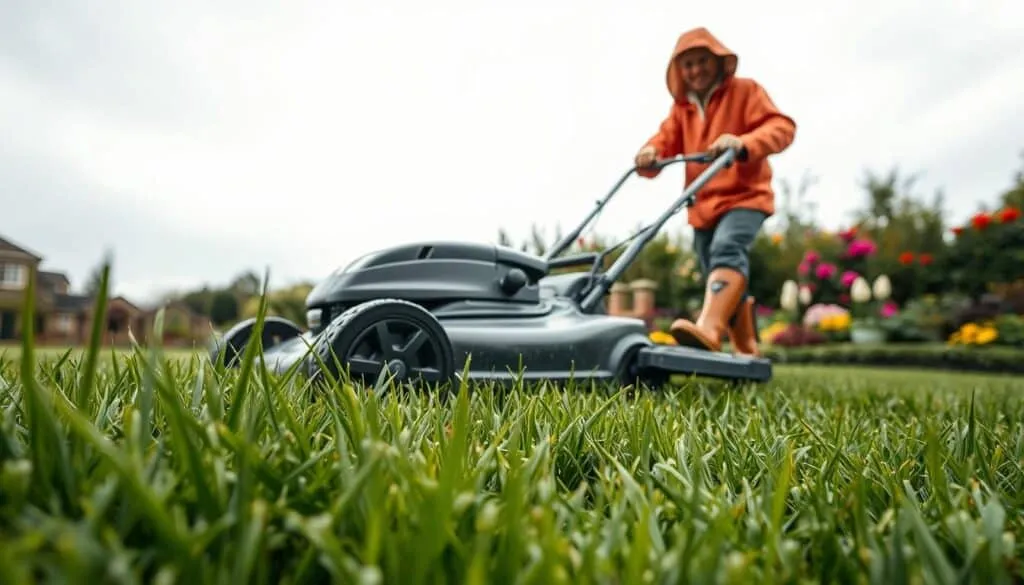
Quality rubber boots with excellent traction prevent slips on soggy ground. I always wear waterproof gloves and rain gear for complete protection.
Sturdy trousers and moisture-resistant clothing provide essential safety coverage. This gear maintains comfort throughout demanding landscaping tasks.
Choosing Mowers with Sealed Compartments and High-Performance Features
Models with sealed battery compartments protect against moisture ingress. High-voltage batteries and robust motors handle increased resistance effectively.
I recommend equipment with IP54 waterproof ratings for reliable operation. Advanced blade technology creates powerful suction for cleaner cuts.
These features make a significant difference in both safety and performance. Proper equipment selection transforms challenging conditions into manageable work.
Conclusion
Achieving optimal turf health often comes down to choosing the right moment for maintenance activities. My research consistently demonstrates that waiting for drier conditions produces superior results for both lawn vitality and equipment longevity.
The evidence strongly favors postponing cutting tasks until moisture evaporates. While techniques exist for managing damp vegetation, these represent damage-control measures rather than ideal practices. Proper timing remains the most effective strategy.
This guide serves as both cautionary advice and practical reference. Understanding the challenges helps make informed decisions that protect your landscape investment. Patience in scheduling maintenance consistently yields the healthiest, most vibrant turf.
Prioritizing optimal conditions ensures long-term success for your property’s appearance and resilience.
FAQ
Is it safe to use a corded electric mower on a damp lawn?
I strongly advise against it. A corded model poses a serious electrical hazard in wet conditions. Water can easily reach the cord or outlet, creating a significant risk of shock. Battery-powered options are safer, but still not ideal.
Why does my mower leave clumps of wet grass on the lawn?
This clumping happens because moisture makes grass blades heavy and sticky. Instead of being finely mulched and dispersed, the clippings cling together and get stuck under the mower deck. This can smother your lawn and leads to an uneven cut.
What’s the best way to clean my mower after cutting in wet conditions?
My post-mow routine is crucial. I always disconnect the power source first. Then, I tip the mower on its side to thoroughly scrape off clumped grass from the deck and blades. A final wipe-down with a dry cloth removes residual moisture to prevent rust on the steel components.
How does mowing a wet lawn affect the grass’s health?
It can cause several problems. Wet soil is soft, so the mower’s wheels can compact it, harming root growth. The torn, wet grass blades are also more susceptible to fungal diseases. I find it’s best to wait for a drier day to maintain lawn health.
Are there specific mower features that help with damp grass?
Absolutely. I look for mowers with sealed electrical components for safety. A high-lift blade design can improve suction and reduce clumping. Features like all-wheel drive also provide better traction on slippery surfaces, making the job slightly less hazardous.
If I absolutely must mow when the grass is wet, what should I do?
If waiting isn’t an option, I take extra precautions. I set the cutting height to its highest setting to reduce strain. I mow slowly, making partial passes to avoid overloading the deck. I also focus on cleaning the mower immediately afterward to prevent damage from moisture.