
What if a common lawn care habit is secretly harming your green space? Many homeowners wrestle with the timing of two essential tasks.
Maintaining a vibrant lawn involves understanding how mowing and watering interact. These practices must work together for optimal health.
This guide explores the benefits and risks of post-mowing hydration. The right approach depends on more than generic advice.
Factors like grass type, climate, and soil conditions play crucial roles. A personalized strategy leads to maximum lawn beauty and vitality.
Key Takeaways
- Timing between mowing and watering significantly impacts lawn health.
- A one-size-fits-all approach rarely works for effective lawn maintenance.
- Understanding your specific grass type is essential for proper care.
- Local climate conditions heavily influence your lawn care schedule.
- Soil quality determines how well your lawn absorbs moisture.
- This guide will help you create a personalized lawn care routine.
Understanding the Lawn Care Process
The foundation of any beautiful property begins with comprehending essential care routines. These practices work together to create an environment where outdoor spaces can truly flourish.
The Role of Mowing and Watering in Lawn Health
Proper hydration provides necessary moisture that helps vegetation withstand dry periods. This promotes robust development throughout the growing season.
Regular trimming maintains optimal height for turf, preventing weed infiltration. It encourages lateral spreading that results in a denser, more resilient surface over time.
Both maintenance activities function in tandem rather than as isolated tasks. Their interconnected relationship is fundamental to effective property management.
How Regular Maintenance Enhances Curb Appeal
A well-kept landscape creates an inviting outdoor space that adds aesthetic value. This makes a positive first impression for any property.
Often-overlooked benefits include minimizing insect populations around homes. Regular upkeep also reduces certain allergens that affect outdoor comfort.
Understanding these interconnected practices leads to sustainable landscape management. The right approach depends on specific conditions and consistent attention.
Should I Water Grass After Mowing?
Proper timing between trimming and irrigation plays a crucial role in maintaining a healthy landscape. Immediate hydration following cutting is typically unnecessary for most turf varieties.
Freshly cut blades become more vulnerable to potential stress and damage. This temporary sensitivity makes careful consideration essential before applying any moisture.
The standard recommendation involves completing your mowing session before irrigation. This sequence allows cut surfaces to dry slightly, reducing fungal disease risks from excess dampness.
Overhydration following cutting can lead to serious complications including pest infestations and various lawn diseases. These issues compromise overall turf health and vitality over time.
While the general guideline advises against immediate watering mowing activities, specific circumstances may warrant exceptions. Individual lawn conditions and environmental factors create unique situations that require personalized assessment.
Understanding when hydration after cutting becomes beneficial versus problematic requires evaluating multiple variables. The following sections will explore these factors in greater detail.
Preparing Your Lawn Before Mowing
Effective landscape maintenance starts with meticulous preparation that sets the stage for optimal results. Proper groundwork before any cutting activity ensures both equipment safety and turf health.
Cleaning, Raking, and Debris Removal
A thorough clearing of the landscape surface prevents potential hazards. Removing sticks, stones, and leaves protects mower components from damage.
Debris-free surfaces allow treatments to distribute evenly across the entire area. This promotes better absorption into the soil for maximum effectiveness.
Ensuring Your Mower Blades Are Sharp
Sharp cutting blades create clean, precise cuts that promote healthy regrowth. Dull equipment tears and shreds vegetation, causing unnecessary stress.
This damage increases vulnerability to mold and bacterial infections. Regular blade maintenance is essential for preserving turf vitality.
Always operate equipment on dry surfaces rather than wet grass conditions. Moisture causes clippings to adhere to wheels and creates slipping risks.
Dry cutting ensures smoother navigation and simpler cleanup operations. Proper preparation establishes the foundation for successful landscape management.
The Effects of Mowing on Grass Hydration
Mowing operations directly influence how your turf manages its moisture resources throughout the season. The cutting process creates immediate physiological changes that affect hydration needs.
Impact of Cutting Height on Moisture Loss
Each mowing session removes portions of leaf blades, reducing the surface area available for transpiration. This decreased surface area means less moisture escapes through evaporation.
The proper cutting height for specific turf varieties optimizes this water conservation effect. Maintaining recommended blade length helps the lawn retain precious moisture between irrigation sessions.
Grass Stress and Rehydration Needs
Cutting turf too short creates significant stress on the plant system. This practice, known as scalping, can trigger weed problems and disease development.
I follow the one-third rule to minimize stress during mowing activities. Removing no more than one-third of the blade height in a single session promotes healthier growth.
Understanding these hydration dynamics helps determine when irrigation becomes necessary. Proper cutting practices often reduce immediate rehydration requirements after mowing.
Benefits of Watering After Mowing
Strategic hydration following a trim offers distinct advantages under certain lawn conditions. These benefits become particularly valuable during periods of extreme heat or drought stress.
Rehydration and Cooling Effects on Grass Blades
Cutting creates temporary stress on vegetation, especially during hot weather. Immediate moisture application provides essential rehydration for recovery.
The cooling effect on grass blades helps prevent wilting and browning. This maintains vibrant color and promotes faster regrowth.
Enhanced Soil Moisture and Nutrient Absorption
Post-cutting irrigation helps replenish moisture content in the soil. This is crucial for sandy or fast-draining earth types.
Deeper water penetration carries essential nutrients to the root zone. Enhanced absorption supports healthier growth patterns over time.
| Benefit | Watering After Mowing | No Watering After Mowing |
|---|---|---|
| Blade Recovery | Faster rehydration | Slower stress recovery |
| Heat Protection | Immediate cooling effect | Increased wilting risk |
| Nutrient Delivery | Enhanced soil penetration | Reduced nutrient mobility |
| Root Development | Improved moisture access | Potential drought stress |
These advantages make post-mowing watering valuable for specific lawn needs. The practice supports overall turf vitality when applied correctly.
Potential Drawbacks of Watering After Mowing
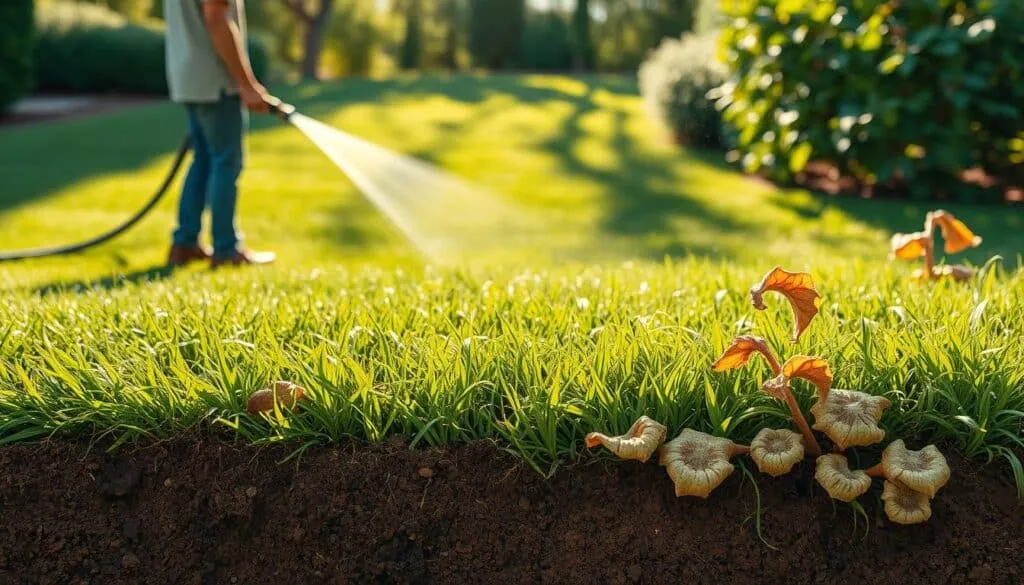
The practice of watering immediately following mowing carries specific risks that require careful consideration. These potential issues can undermine lawn health when not properly managed.
Excess moisture creates conditions that favor unwanted developments in turf. Understanding these challenges helps maintain optimal lawn conditions.
Risk of Fungal Diseases from Excess Moisture
Freshly cut blades become vulnerable to fungal infections when dampness persists. The thatch layer provides an ideal environment for spore germination.
Signs of fungal issues include discolored patches or unusual growth patterns. Lawns prone to these conditions benefit from adjusted hydration schedules.
Overwatering and Its Impact on Soil Health
Too much water leads to saturated soil conditions that restrict oxygen flow. Root systems struggle in waterlogged environments, affecting overall plant vitality.
Existing moisture levels determine whether additional irrigation becomes necessary. Recent rainfall often makes post-mowing watering counterproductive.
| Watering Timing | Soil Condition | Disease Risk | Root Health |
|---|---|---|---|
| Immediately After Mowing | Excess moisture | High fungal risk | Potential suffocation |
| Several Hours Later | Moderate dampness | Reduced risk | Improved oxygen access |
| Next Day | Optimal hydration | Minimal risk | Healthy development |
Balancing hydration needs with cutting schedules prevents these common problems. Proper timing supports long-term lawn vitality and reduces maintenance challenges.
How to Assess Your Lawn’s Water Needs
Accurate hydration timing depends on recognizing the subtle signals your turf provides about its water needs. This personalized approach prevents both underwatering and overwatering, leading to healthier outcomes.
My assessment begins with simple tools that reveal the true condition beneath the surface. These methods provide concrete data rather than relying on guesswork.
Checking Soil Moisture Levels
I use a straightforward technique to evaluate moisture content in the earth. Inserting a screwdriver or moisture meter into the ground gives immediate feedback.
Easy penetration with a damp tool indicates sufficient hydration. This means skipping irrigation after cutting becomes a safe choice.
Identifying Signs of Grass Dehydration
Visual indicators reveal when vegetation truly needs hydration. Yellowing or browning blades signal moisture stress that requires attention.
Dry, cracked earth and wilting turf demonstrate urgent hydration needs. These signs help determine whether post-cutting watering becomes necessary.
Well-established turf with deep roots accesses moisture stored deeper in the soil. Different species have varying requirements, and local climate plays a significant role in scheduling.
Optimizing Your Watering Routine
Morning hydration routines offer distinct advantages for both water conservation and plant health. The timing and method of irrigation significantly impact turf vitality and resource efficiency.
Watering Early in the Morning to Reduce Evaporation
Early morning sessions maximize moisture absorption while minimizing loss. Cooler temperatures during these hours create ideal conditions for hydration.
Evaporation rates remain lowest before daytime heat intensifies. This timing allows complete penetration without wasteful vapor escape.
The morning dew period provides nature’s perfect watering template.
Midday irrigation proves counterproductive for maintaining healthy turf. Strong sunlight causes rapid moisture loss through evaporation.
Deep, Infrequent Watering for Root Development
Deep irrigation encourages robust root systems that access subsurface moisture. This practice builds drought resistance into the lawn’s foundation.
Frequent shallow sessions keep roots near the surface where they remain vulnerable. Deep watering promotes exploration downward into nutrient-rich soil layers.
| Watering Time | Evaporation Rate | Root Benefit | Efficiency Score |
|---|---|---|---|
| Early Morning (5-8 AM) | Low (10-15%) | Excellent penetration | 95% |
| Midday (12-3 PM) | High (50-60%) | Poor absorption | 35% |
| Evening (6-8 PM) | Medium (20-30%) | Good penetration | 75% |
Post-mowing hydration works best when delayed until late afternoon or the following morning. This schedule allows cut blades to recover before moisture application.
Consistent deep watering creates self-sufficient turf that requires less frequent attention. The right schedule transforms maintenance from constant chore to occasional check-in.
Lawn Mowing and Watering Best Practices
Safety and efficiency in lawn maintenance begin with recognizing ideal working conditions. Proper techniques create healthier turf while reducing maintenance challenges.
Mowing on Dry Grass for Safety and Efficiency
Dry conditions make mowing lawn tasks much safer and more effective. Clippings distribute evenly without clumping on the equipment.
Operating a mower on wet grass creates multiple problems. Clippings stick to wheels and blades, requiring frequent cleaning.
Slipping hazards increase dramatically on moist surfaces. Hills and slopes become particularly dangerous when moisture is present.
Maintaining the Correct Grass Height
Each turf variety has specific height requirements for optimal health. Research helps determine the ideal cutting level.
Regular mowing lawn sessions prevent weed establishment. Weekly or bi-weekly schedules maintain pristine appearance.
| Mowing Condition | Clipping Distribution | Safety Level | Cleanup Effort |
|---|---|---|---|
| Dry Grass | Even and clean | High safety | Easy cleanup |
| Wet Grass | Clumping occurs | Slipping hazards | Difficult cleaning |
Consistent height maintenance supports vigorous growth patterns. The right approach creates lush, resilient turf.
Seasonal Considerations for Lawn Care
Seasonal shifts demand a flexible approach to lawn maintenance, especially during the hottest months. The same routine that works in spring might cause problems in summer.
My lawn care schedule changes with the weather. Understanding these variations keeps the turf healthy year-round.
Adapting Techniques for Hot Summer Conditions
Summer heat places maximum stress on turf. Scorching days can cause wilting or browning if hydration is not managed carefully.
During hot, dry periods, providing moisture following a trim offers immediate rehydration. This practice helps the turf recover from combined heat and cutting stress.
Different grass species have dramatically varying tolerance levels. Some types naturally handle drier conditions better than others.
Adjusting Watering Schedules in Different Climates
Local climate heavily influences the ideal schedule. What works in a humid region may not suit an arid zone.
I increase irrigation frequency during peak summer heat. Cooler or wetter seasons often require less frequent attention.
Successful care requires watching weather patterns and responding accordingly. This flexibility is key to long-term vitality.
| Season | Watering Frequency | Mowing Height | Primary Focus |
|---|---|---|---|
| Spring | Moderate | Standard | Growth stimulation |
| Summer | Increased | Slightly taller | Heat/Drought stress management |
| Fall | Reduced | Standard | Root strengthening |
| Winter | Minimal | Dormant | Protection |
This seasonal framework guides my decisions throughout the year. The right time and method make all the difference.
Advanced Lawn Care Tips and Time Management
Modern lawn management requires smart systems that save time and resources. Efficient approaches make lawn care more sustainable and effective for busy homeowners.
Integrating Efficient Irrigation Systems
Drip irrigation and adjustable sprinklers deliver moisture directly to target areas. These systems minimize wastage while maintaining optimal hydration levels.
Soil moisture meters provide data-driven decisions about watering needs. This eliminates guesswork from the lawn watering schedule.
Dividing the property into watering zones addresses different sun exposures. Sunny spots typically need more frequent attention than shaded areas.
| Irrigation System | Water Efficiency | Installation Time | Maintenance Level |
|---|---|---|---|
| Drip Irrigation | 90-95% | 4-6 hours | Low |
| Smart Sprinklers | 85-90% | 2-3 hours | Medium |
| Traditional Sprinklers | 60-70% | 1-2 hours | High |
Balancing Lawn Care with a Busy Lifestyle
Rain barrels collect natural precipitation for later use in watering lawn activities. This reduces reliance on municipal supplies and lowers costs.
Professional services with quality mower equipment can handle regular maintenance. This approach frees up personal time while ensuring proper care.
Prioritizing critical tasks helps keep lawn vitality during limited availability periods. A well-planned schedule makes efficient use of available time.
These advanced tips transform lawn care from constant chore to manageable routine. The right systems and strategies maintain beautiful results with less effort.
Conclusion
Successful lawn care emerges from personalized strategies rather than universal rules about post-cutting hydration. Every property has unique requirements based on soil composition and local climate conditions.
The decision to provide moisture following maintenance depends on multiple factors. Grass type, current soil moisture, and weather patterns all influence this choice. Understanding these variables leads to better lawn health outcomes.
Post-maintenance hydration offers benefits like rehydration and nutrient delivery when conditions warrant it. However, potential drawbacks include fungal risks from excess moisture. Balancing these considerations prevents long-term problems.
Following best practices creates resilient turf that thrives throughout the year. These lawn care tips empower homeowners to make informed decisions for their specific situation. The result is consistently beautiful green space.
FAQ
Is it okay to water my lawn immediately after cutting it?
I generally advise waiting. Watering right after mowing can increase the risk of fungal diseases because the freshly cut grass blades are open wounds. It’s better to mow when the turf is dry and then water deeply at a later time, ideally early the next morning.
What is the best time of day for lawn watering?
From my experience, the optimal time is early morning, between 6 AM and 10 AM. This timing allows moisture to penetrate the soil deeply before the sun causes high evaporation rates. It also gives the blades time to dry before nightfall, reducing disease risk.
How does mowing height affect my lawn’s water needs?
Keeping your grass at a taller height, around 3 to 4 inches for many cool-season types, provides natural shade for the soil. This shade reduces moisture loss from evaporation, meaning your lawn may require less frequent irrigation. Proper mowing practices are crucial for water conservation.
How can I tell if my lawn is dehydrated and needs irrigation?
I look for clear signs of stress. The grass blades may take on a bluish-gray tint, and footprints will remain visible on the turf instead of springing back. The soil itself will feel dry and hard when I probe it a few inches down. These are reliable indicators that it’s time to water.
Can overwatering harm my lawn after mowing?
Absolutely. Overwatering creates soggy soil conditions that suffocate root systems and prevent them from absorbing essential nutrients. This excess moisture, combined with fresh clippings, creates a perfect environment for harmful fungi and can lead to shallow, weak root growth.
Should I change my lawn care routine with the seasons?
Yes, seasonal adjustments are a key part of my routine. During hot summer months, I might mow a bit higher and water more deeply but less frequently to encourage drought tolerance. In cooler, wetter seasons, I reduce irrigation to match the lawn’s slower growth and natural rainfall.