
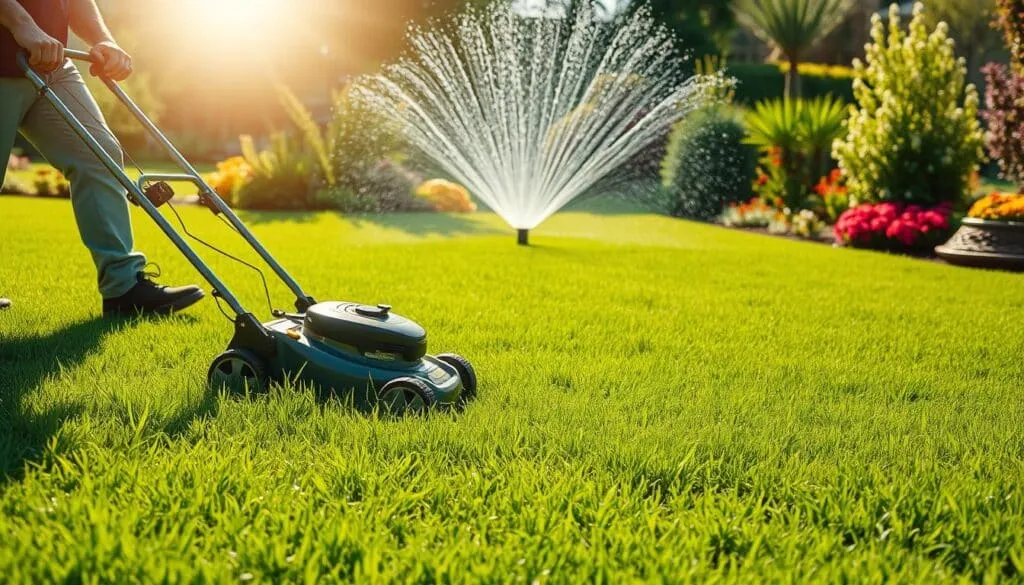
What if a common lawn care habit is secretly working against your yard’s health? Many homeowners wonder if hydrating their turf immediately following a cut is the secret to lush, green growth.
Both mowing and watering are fundamental to maintaining a vibrant outdoor space. These two practices work together to keep your grass healthy and strong. Understanding their relationship is key to making smart decisions for your property.
This guide explores the critical factors in this routine. Timing, grass species, soil type, and climate all play a role. There is no single answer that fits every situation.
Knowing the specific needs of your lawn helps determine the best approach. This comprehensive look covers the potential benefits and risks. The goal is to help you achieve the best possible growth results for your landscape.
Proper maintenance requires balancing many elements. Creating an environment where your turf can truly thrive throughout the season is the ultimate objective.
Key Takeaways
- Timing is a critical factor when combining mowing and watering routines.
- The specific type of grass in your yard influences the best care approach.
- Local soil conditions and climate directly impact your lawn’s needs.
- Understanding potential benefits and risks leads to smarter decisions.
- A tailored strategy, rather than a universal rule, promotes optimal health.
- Balancing multiple maintenance factors is essential for vibrant growth.
The Relationship Between Mowing and Watering: Lawn Health Basics
A thriving green space depends on a delicate balance between cutting and hydration practices. Establishing a consistent routine creates the foundation for optimal turf health. These two maintenance activities work together to support vigorous growth.
Importance of a Healthy Lawn Routine
Regular maintenance creates an environment where your turf can truly flourish. Both cutting and hydration support each other for better results. This tandem approach leads to a denser, more resilient landscape.
Proper care prevents weed growth and encourages lateral spread. The right routine makes your outdoor space more vibrant throughout the season.
How Mowing Affects Grass Hydration
Cutting grass blades reduces the surface area available for moisture escape. This means less water loss through evaporation after trimming. Understanding this relationship helps develop effective maintenance strategies.
The table below shows how these practices interact:
| Practice | Primary Benefit | Hydration Impact |
|---|---|---|
| Mowing | Maintains optimal height | Reduces transpiration surface |
| Watering | Provides essential hydration | Supports drought resistance |
| Combined Practice | Promotes dense growth | Optimizes moisture retention |
Cutting at recommended heights helps the turf retain moisture more efficiently. This knowledge allows for smarter scheduling of hydration sessions. The result is a healthier landscape that requires less intervention.
Benefits and Drawbacks of Watering After Mowing
Post-mowing hydration presents both opportunities for enhanced growth and potential challenges to consider. This practice requires careful evaluation of your specific turf conditions.
Key Benefits: Rehydration and Cooling
Immediate moisture application following cutting provides essential rehydration. Grass recovers more quickly from the stress of trimming, especially during hot periods.
The cooling effect on grass blades proves particularly valuable in summer heat. This prevents wilting and maintains vibrant color throughout challenging weather conditions.
Enhanced soil moisture content supports better nutrients absorption. Water carries essential elements deeper into the root zone for improved health.
Potential Risks: Fungal Diseases and Overwatering
Excess moisture lingering on cut blades creates ideal conditions for fungal diseases. Proper timing helps minimize this significant risk to turf health.
Overhydration can lead to waterlogged soil that actually harms rather than helps growth. Assessing existing moisture levels prevents unnecessary resource usage.
| Practice | Primary Benefits | Potential Risks |
|---|---|---|
| Watering Immediately | Rapid rehydration | Fungal development |
| Delayed Watering | Reduced disease risk | Extended recovery time |
| Condition-Based Approach | Optimized results | Requires monitoring |
“The most effective lawn care strategies balance immediate benefits with long-term health considerations.”
Understanding these factors helps create a maintenance routine that maximizes benefits while minimizing potential problems. Each property requires individual assessment for optimal results.
Understanding Grass, Soil, and Climate Interactions
Your property’s unique combination of turf variety, earth composition, and regional weather patterns creates a customized care equation. These three factors work together to determine hydration needs.
Soil Moisture and Nutrient Absorption
Testing earth dampness before hydration proves essential. Insert a screwdriver six inches deep. If it slides in easily and comes out damp, your soil has sufficient moisture.
Different earth compositions affect moisture retention dramatically. Sandy varieties drain quickly, while clay holds hydration longer. Proper dampness helps nutrients reach grass roots effectively.
| Soil Type | Moisture Retention | Watering Frequency |
|---|---|---|
| Sandy | Low | More frequent |
| Loamy | Moderate | Balanced |
| Clay | High | Less frequent |
Climate Considerations and Local Water Needs
Regional weather patterns significantly influence turf requirements. Hot, dry climates demand different approaches than humid regions. Established lawns with deep root systems access deeper moisture reserves.
Various grass types have natural drought tolerance. Understanding your specific turf variety helps create effective care routines. Local rainfall patterns complete the hydration picture.
These interactions guide smart maintenance decisions for any lawn environment.
Should I Water Lawn After Mowing? Best Practices
Many property owners question whether immediate moisture application after cutting yields the best results. Direct hydration following trimming is typically unnecessary. Freshly cut turf experiences temporary stress and needs recovery time.
| Timing Approach | Benefits | Considerations |
|---|---|---|
| Immediately After | Quick rehydration | Increased disease risk |
| 30-60 Minute Wait | Reduced stress | Balanced moisture absorption |
| Next Morning | Optimal drying time | Prevents fungal issues |
Look for specific signs before considering post-cutting hydration. Yellowing or browning blades indicate dehydration needs. Dry, cracked soil and wilting turf also signal necessary moisture application.
“Proper timing between maintenance activities prevents common turf problems and promotes sustainable growth.”
The general recommendation involves trimming before hydration sessions. This approach allows cut blades to dry slightly, reducing disease potential. Base your decisions on actual turf conditions rather than fixed schedules.
Consider recent rainfall, soil moisture levels, and environmental factors. Late afternoon or next morning applications work well for most situations. This strategy supports healthy growth while minimizing risks.
Timing Your Watering Routine for Optimal Growth
The clock plays a crucial role in determining how effectively moisture benefits your landscape. Proper scheduling maximizes absorption while minimizing waste and potential damage.
Watering Early Morning vs. Late Afternoon
Early morning hours offer the ideal time for hydration. Between 4 AM and 10 AM, temperatures remain cool and evaporation rates stay low.
This water early morning approach allows thorough moisture penetration before heat intensifies. Grass blades absorb hydration efficiently, directing it deep into the root system.
Late afternoon watering serves as a secondary option. While better than midday, it’s less effective than the early morning strategy.
Considerations for Evaporation and Stress
Midday hydration leads to significant evaporation loss. Water droplets can act like magnifying glasses under intense sunlight.
This creates stress rather than relief for your turf. Evening applications reduce evaporation but increase fungal risks overnight.
| Time of Day | Evaporation Level | Effectiveness |
|---|---|---|
| Early Morning | Low | Optimal |
| Midday | High | Poor |
| Late Afternoon | Moderate | Fair |
Schedule mowing and hydration sessions strategically. This approach minimizes stress while maximizing benefits for healthy growth throughout the season.
Water Conservation and Environmental Considerations
Smart water management transforms routine maintenance into an environmentally conscious practice. Thoughtful irrigation strategies benefit both your landscape and local resources.
Conserving this precious resource becomes particularly important during dry periods. Efficient practices help maintain vibrant green spaces while reducing environmental impact.
Efficient Irrigation Techniques
The “deep and infrequent” approach encourages roots to grow downward. This method creates more drought-resistant turf that needs less frequent attention.
Drip irrigation systems deliver moisture directly to root zones. Adjustable sprinklers prevent waste by targeting specific areas precisely.
Monitoring soil conditions helps determine actual hydration needs. Simple hand tests or moisture meters prevent using too much water unnecessarily.
Dividing your property into watering zones addresses varying sunlight exposure. Sunny areas often require different schedules than shaded sections.
Rain barrels collect natural precipitation for later irrigation use. This reduces dependence on municipal supplies while lowering utility costs.
These conservation methods support healthy growth while respecting environmental limits. Proper care balances aesthetic goals with sustainable practices for long-term success.
Customizing Your Lawn Care: Grass Species and Local Conditions
Grass species diversity means no single maintenance formula works for every landscape scenario. Each turf variety possesses unique characteristics that demand personalized attention.
Adapting to Different Grass Types
Cool-season grasses like Kentucky bluegrass and tall fescue thrive in northern climates. These varieties often need more frequent hydration during summer heat.
Warm-season types such as Bermuda and zoysia grass demonstrate excellent drought tolerance. Their deep root systems access moisture efficiently with less frequent attention.
Understanding your specific grass type determines whether post-mowing lawn hydration benefits growth. Some varieties recover better with immediate moisture, while others prefer drying time.
Tailoring Practices to Regional Weather Patterns
Humid regions present different challenges than arid climates. Fungal disease risks increase where moisture lingers on cut blades.
Adjust grass mowing height based on local conditions. Higher cuts in hot climates provide shade for roots and better moisture retention.
Successful lawn care requires adapting general practices to your specific situation. This customized approach yields healthier lawns throughout the season.
Practical Tips for Integrating Mowing and Watering
Transforming theoretical knowledge into actionable steps simplifies achieving a lush, green landscape. A logical routine combines cutting and hydration for the best possible outcome.
Step-by-Step Lawn Care Routine
Begin each season with thorough preparation. Clear debris like sticks and leaves for safer mowing and better treatment absorption.
Always use sharp mower blades. Dull blades tear grass blades, causing stress and raising disease risks.
Follow the one-third rule. Never cut more than one-third of the grass blade height at one time. This protects the root system.
Establish a regular schedule. Plan to mow lawn at least once per week during peak growth days.
After cutting, complete several key tasks. Control weeds and edge for a clean look. Use a leaf blower to remove debris and improve airflow.
Aerate compacted soil annually. This creates holes for air and nutrients to reach roots effectively. Fill bare spots with seed.
Finally, assess hydration needs. Check soil moisture before you water grass. Proper watering helps moisture reach roots without overdoing it.
This integrated approach makes lawn care efficient. These tips support robust growth throughout the season.
Conclusion
Customized approaches to yard maintenance yield better results than rigid, one-size-fits-all routines. The decision to provide moisture following cutting depends on several factors including turf variety, earth dampness, weather patterns, and current turf health.
While immediate hydration offers benefits like quick recovery and cooling, it’s not always necessary. Waiting 30-60 minutes reduces disease potential. Early morning applications work best for moisture absorption.
Assess actual conditions rather than following fixed schedules. Look for signs like yellowing blades or dry earth. Understanding your specific grass type and local climate guides smart decisions.
Adopt conservation practices like deep, infrequent applications. This encourages strong root development. Balance proper cutting techniques with tailored hydration strategies.
With attention to timing, soil health, and moisture management, you can maintain vibrant growth while minimizing risks.
FAQ
What is the best time to water my grass?
I find that watering early in the morning is ideal. This timing allows moisture to penetrate the soil effectively before the heat of the day increases evaporation. It also helps prevent fungal diseases by giving the blades time to dry.
Can mowing my lawn help it absorb water better?
Yes, regular mowing can promote healthier growth and improve water absorption. When I keep my grass at the recommended height, it encourages deeper root development, which helps the turf access nutrients and moisture more efficiently from the soil.
What are the risks of watering right after cutting the grass?
The main risk I avoid is creating an environment for fungal diseases. Freshly cut tips are vulnerable, and excess moisture can lead to stress and potential lawn problems. It’s often better to allow a brief period for the grass to recover before irrigation.
How does soil type affect my watering schedule?
Soil composition greatly influences moisture retention. In my experience, sandy soils drain quickly and may need more frequent watering, while clay soils hold moisture longer. Understanding my soil’s type helps me tailor my routine for optimal root health.
Are there benefits to watering before I mow?
There can be. I sometimes water a day or two before mowing to ensure the turf is not under stress. This practice results in a cleaner cut and reduces the risk of damaging dry, brittle blades during the mowing process.