
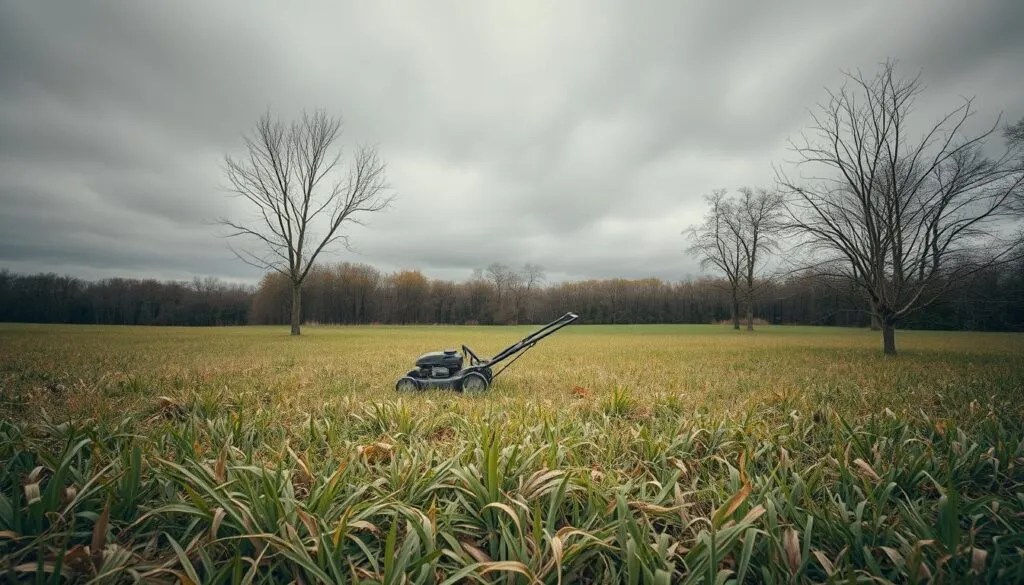
Have you ever looked at your yard after a long, cold winter and wondered if your basic equipment is up to the task? I faced this exact dilemma one early spring in the Great Lakes State. The snow melted away to reveal a thick, brown, matted layer smothering the soil.
This layer is called thatch. It is a natural buildup of old blades, roots, and stems. In regions with distinct seasons, snow cover actually protects the turf’s root system. However, it also creates the perfect conditions for this organic material to accumulate.
My initial frustration was real. I saw this dead grass preventing vibrant new growth from breaking through. This experience sparked a deep dive into finding a practical solution. I needed to know if a standard machine could handle this unique challenge effectively.
Through trial and error, I discovered what works and what doesn’t for revitalizing a yard. This article shares those hard-earned insights. You will learn about tool effectiveness, alternative methods, and a complete strategy for a healthier, greener landscape.
Key Takeaways
- Michigan’s four-season climate creates specific challenges for turf health.
- Thatch is a layer of decomposing organic matter that can hinder new growth.
- Spring reveals the accumulation of dead material after snow melts.
- Understanding the cause of the problem is the first step to a solution.
- Practical testing provides real-world answers about equipment capabilities.
- A comprehensive approach is often needed for best results.
Introduction: My Michigan Lawn Care Journey
Moving to Michigan introduced me to landscape challenges I’d never encountered in other states. The seasonal transitions here create unique conditions that demand specific approaches to turf management.
My Personal Observations
During my first spring in this region, I noticed how differently my yard behaved compared to previous homes. After the snow melted, I discovered extensive patches of matted, brown vegetation that initially worried me.
My early attempts at addressing this issue involved using only my standard rotary equipment. The results were inconsistent and prompted me to investigate more effective methods for revitalizing the turf.
The Importance of Proper Lawn Maintenance
I quickly learned that proper upkeep goes beyond simple aesthetics. It directly impacts the overall health of the entire turf ecosystem. In Michigan’s moist spring and fall seasons, damp ground conditions create particular challenges for vegetation management.
Neglecting appropriate care can lead to compounded issues. These include poor drainage, increased susceptibility to disease, and weakened turf that struggles to recover. Understanding these seasonal variations is crucial for effective landscape management in this climate.
Understanding Dead Grass and Its Causes in Michigan
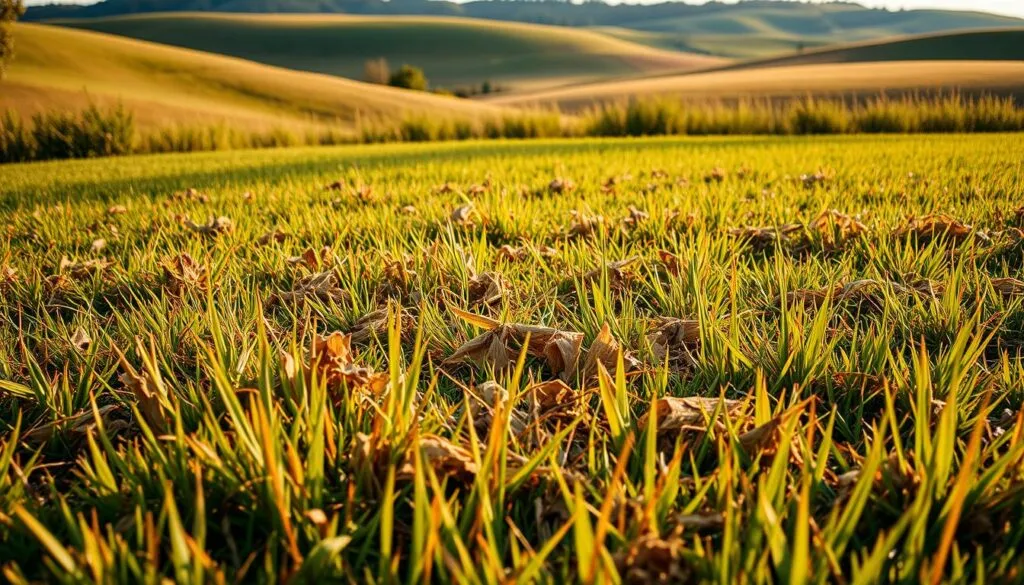
My investigation into the persistent brown areas uncovered several interconnected factors affecting turf health. Proper diagnosis requires understanding how climate, maintenance, and environmental conditions work together.
Impact of Michigan’s Four-Season Climate
Michigan’s distinct seasons create unique challenges for turf vitality. Winter dormancy is a natural process where vegetation enters a resting state. This results in accumulated organic material as the growing season approaches.
The region’s high moisture levels during spring and fall create ideal conditions for rapid thatch buildup. I observed how areas with heavy accumulation struggled to green up properly. New shoots couldn’t penetrate the dense layer of dead material.
Common Causes: Winter Dormancy, Overwatering, and Pest Damage
Overwatering during naturally moist seasons led to waterlogged root systems in my yard. Poorly drained sections developed distinct patches that required targeted approaches.
I learned that maintenance practices significantly contribute to the problem. Mowing too short or neglecting aeration created compounding issues. Pest damage from grubs and fungal diseases added to the challenge.
Excessive organic material acts as a physical barrier preventing essential elements from reaching the soil. This creates damp environments that encourage harmful fungi throughout the growing season.
| Cause | Primary Symptoms | Season Most Active | Recommended Action |
|---|---|---|---|
| Winter Dormancy | Uniform brown layer after snow melt | Late Winter/Early Spring | Gentle raking or dethatching |
| Overwatering | Spongy feel, moss growth | Spring and Fall | Adjust irrigation schedule |
| Pest Damage | Irregular dead patches | Summer and Fall | Targeted treatment and reseeding |
| Poor Maintenance | Thin, weak growth overall | All Seasons | Improved mowing and aeration |
Understanding these causes is essential for developing effective removal strategies. Each factor requires a different approach for optimal turf recovery and long-term health.
Can Lawn Mower Removes Dead Grass in Michigan: What I Discovered
Through hands-on experimentation, I uncovered the truth about standard equipment capabilities. My testing answered the central question driving my research.
When Mowers Work Best for Surface-Level Thatch
I discovered these machines excel at handling surface-level organic material. They effectively cut through upper layers that haven’t become densely compacted.
The equipment proved most useful during routine maintenance periods. With a collection bag attached, it gathered loose clippings efficiently.
Limitations and the Need for Dethatchers and Rakes
Significant limitations emerged when dealing with thicker accumulations. Standard equipment cannot penetrate dense layers effectively.
I experienced frequent clogging issues in areas with heavy buildup. This reduced efficiency and created frustrating work interruptions.
Specialized attachments offered some improvement for lifting compacted material. However, they cannot replace dedicated dethatching tools for serious problems.
These machines work best with relatively thin layers during regular care. Comprehensive removal requires supplementary approaches for optimal results.
Best Practices for Removing Dead Grass Effectively
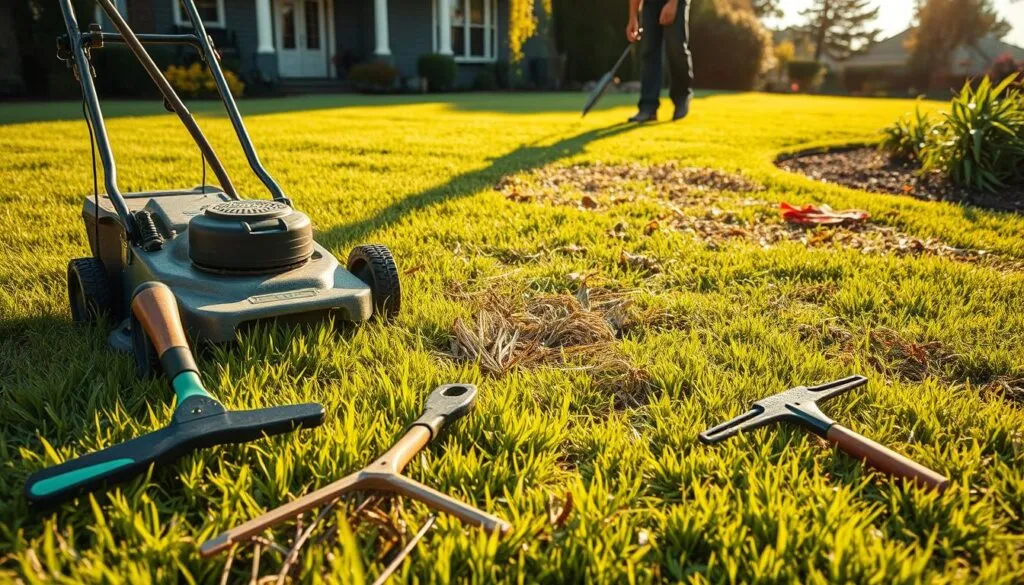
Developing an effective system for revitalizing my turf required a methodical approach. Success hinges on proper preparation and selecting the right technique for each specific area.
Preparation: Assessing the Lawn and Gathering Tools
My process always begins with a thorough evaluation. I walk the entire property to identify patches with heavy thatch accumulation versus lighter surface debris.
Next, I gather all necessary equipment. This includes my standard cutting machine for light work, a sturdy rake, and access to a dethatcher for problem spots. Timing is critical; I found early spring, after the ground thaws but before saturation, yields the best results.
Techniques: Mowing, Dethatching, and Raking Strategies
For light layers, I use my machine with a collection bag. Making several passes in different directions helps lift and gather material more effectively than a single pass.
Thicker accumulations demand a dethatcher. This specialized tool penetrates deep to break up compacted organic matter that surface equipment cannot handle.
After either process, vigorous raking in multiple directions ensures complete debris collection. I compost this material instead of disposing of it, creating nutrient-rich matter for my soil.
| Technique | Best For | Key Tool | Post-Action |
|---|---|---|---|
| Mowing | Light surface thatch | Standard machine with bag | Quick debris collection |
| Dethatching | Dense, matted layers | Power rake or dethatcher | Thorough raking required |
| Manual Raking | Final cleanup & small areas | Sturdy leaf rake | Direct composting |
This multi-step process, tailored to the severity of the problem, ensures water and nutrients can properly reach the root system.
Enhancing Lawn Health: Follow-Up Care and Natural Methods
After clearing away the winter debris, I realized the real work was just beginning for my yard’s recovery. Simply removing the dead material wasn’t enough to ensure lasting vitality. The exposed soil needed immediate attention to support new growth.
I discovered that proper follow-up care makes the difference between temporary improvement and sustainable health. This phase focuses on rebuilding rather than just cleaning.
Overseeding and Aeration to Promote New Growth
Bare patches left after removal became perfect spots for overseeding. I spread quality seed directly onto the soil, ensuring good contact for optimal germination. This technique filled thin areas with vigorous new growth.
Next, I aerated the entire area to relieve compaction. This process created small holes that allowed water, air, and nutrients to reach deeper root zones. The combination of seeding and aeration produced remarkable results within weeks.
For nutrition, I used organic fertilizer to replenish lost nutrients. This slow-release approach supported steady development without chemical concerns. The timing coincided with spring’s ideal growing conditions.
I also created compost from the removed organic matter. This natural recycling provided rich soil amendments for future care. These methods collectively transformed my landscape’s foundation.
Tools and Techniques: Mower Attachments and Manual Solutions
Finding the right tools transformed my approach to seasonal yard care. My experiments with specialized accessories revealed how equipment enhancements can significantly improve results.
Exploring Specialized Thatching Attachments
I tested various thatching blades designed to lift and break apart dense layers. These attachments proved more effective than standard blades for surface-level organic material.
Grass catchers became essential for collecting debris during routine maintenance. This accessory reduced the amount of material left behind after each session.
I discovered the importance of proper cutting height through the 1/3 rule. Removing more than one-third of blade length weakens turf structure and increases disease susceptibility.
Sharp blades create clean cuts that promote better vegetation health. Dull blades tear rather than slice, creating entry points for fungal issues.
Alternating patterns prevents soil compaction and rut formation. I use horizontal, vertical, and diagonal directions during weekly sessions.
Three-point turns protect the underlying turf from tire damage. This technique maintains overall health throughout the maintenance task.
Manual raking provides precision for areas where mechanical solutions fall short. Combining attachments with proper techniques creates a comprehensive approach.
Conclusion
After extensive testing and observation, I’ve concluded that addressing accumulated thatch requires understanding both limitations and opportunities. Standard equipment works well for surface-level material but struggles with dense layers that demand specialized tools.
Michigan’s seasonal patterns create unique challenges for turf vitality. Proper timing during early spring or fall yields the best results for organic material management. A comprehensive approach combining multiple techniques proves most effective.
Preventive care remains the foundation of sustainable landscape health. Regular maintenance, proper cutting heights, and seasonal adaptations prevent excessive buildup. View this process as part of an ongoing strategy rather than a one-time task.
The combination of removal with overseeding and aeration creates optimal conditions for recovery. This holistic approach ensures long-term vitality and reduces future challenges with organic accumulation.
FAQ
Will my regular mower effectively remove dead grass?
Standard lawn mowers can collect some surface-level thatch during a typical cut, but they are not designed for complete dead grass removal. For a deeper clean, you’ll need specialized tools like a dethatcher or a sturdy rake.
What is the best time of year for this task in Michigan?
I’ve found that early spring or early fall are the ideal seasons. This timing allows for recovery before summer’s heat or winter’s cold, promoting healthy new growth.
How does removing dead material improve my yard’s overall health?
Clearing away dead material allows essential elements like water, air, and fertilizer to reach the soil and root system. This prevents disease and encourages thicker, greener turf.
Should I bag the clippings when I mow to help?
Yes, using a bag attachment on your mower is an excellent first step. It collects the clippings and some loose thatch, which is a simple form of debris removal during routine maintenance.
What follow-up care is crucial after clearing the dead grass?
I always recommend overseeding bare areas and applying a balanced fertilizer. For compacted soil, core aeration is a vital process that greatly enhances root development.