
I stood in my backyard, staring at the damp turf after an unexpected morning shower. My weekend mowing schedule was now in jeopardy. Like many homeowners across the United States, I faced the dilemma of maintaining my lawn despite unpredictable weather patterns.
When I switched to a battery-operated electric mower, I assumed I’d gained ultimate flexibility. The environmental benefits and quiet operation convinced me this was the right choice. But reality soon challenged my assumptions about lawn care convenience.
Morning dew, sudden rain showers, and tight schedules often leave us with limited windows for maintenance. I discovered that working with damp turf requires different considerations than dry conditions. My experiences taught me valuable lessons about safety and equipment performance.
This article shares my journey and the practical insights I gained. I’ll explore the realities of maintaining your landscape when conditions are less than ideal. The goal is to help you make informed decisions for your own property care.
Key Takeaways
- Battery-powered electric mowers eliminate electrocution risks compared to corded models
- Dry conditions after dew evaporation provide optimal mowing results
- Unexpected weather often forces homeowners to consider damp lawn maintenance
- Personal experience reveals practical challenges with wet turf cutting
- Safety considerations should guide decisions about lawn care timing
- Environmental benefits and convenience drive electric mower popularity
- Proper technique can improve results when working with moist grass
Can You Cut Wet Grass with an Electric Mower?
Distinguishing between what is technically possible and what is practically advisable is the first step. Battery-powered models remove the danger of electrocution that corded units present. However, performance and lawn health remain significant concerns.
Understanding the Ideal Lawn Conditions
I discovered that the perfect time for mowing is when the turf is completely dry. Mornings after dew has evaporated offer the best conditions. The summer sun is not yet at full strength, which is ideal for both the lawn and the person operating the mower.
After a rainfall, patience is essential. A simple test involves walking on the grass. If no water marks your shoes, the lawn is likely ready. Drying time varies based on several factors.
Sunlight, wind, soil type, and grass length all influence how quickly moisture disappears. Well-draining soil and a breezy, sunny day speed up the process significantly.
Safety Considerations When Mowing Wet Grass
The primary safety risk involves electricity and water. Using a corded electric lawn mower on damp turf is extremely dangerous. Battery-operated mowers eliminate this specific hazard.
There are other important reasons to avoid mowing wet grass. Slippery surfaces increase the chance of personal injury. Understanding these safety and performance reasons helps in making smart decisions for your property.
Risks and Challenges of Mowing Wet Grass
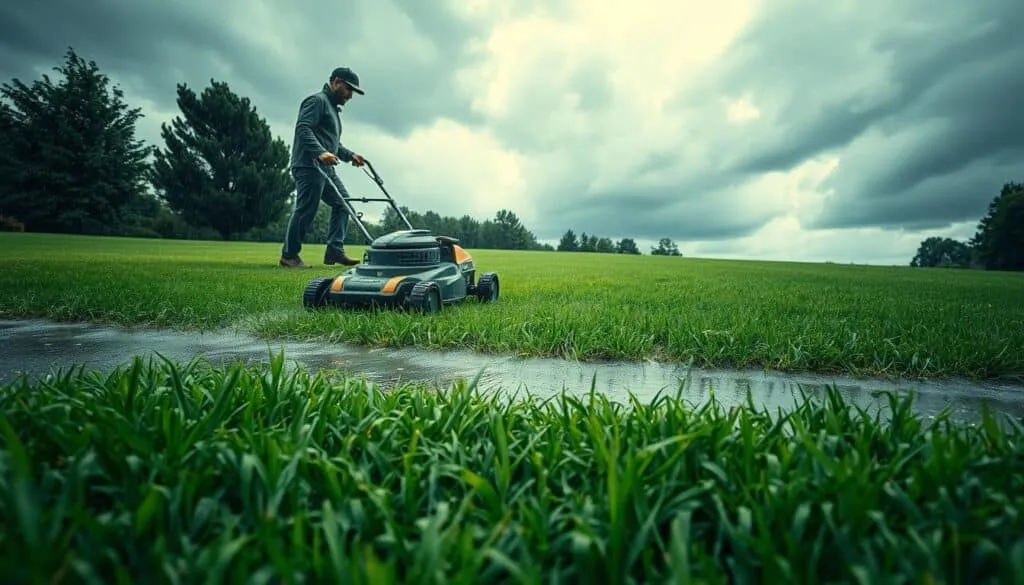
The morning after a heavy rainfall presented challenges that changed my lawn care approach. I discovered multiple hazards affecting both my equipment and property’s health.
Potential Damage to Equipment and Lawn
My battery-powered mower struggled immediately. Damp grass created extra resistance, draining power rapidly. This stress on the motor concerns me for long-term equipment damage.
Moisture also caused clumping under the deck. Blades couldn’t spin efficiently, tearing rather than cutting the grass. The result was an uneven lawn appearance.
Walking on saturated ground compacted the soil. This prevents air from reaching roots, weakening the lawn‘s overall health. I noticed thinning areas where roots suffered damage.
Personal Injury and Slipping Hazards
The physical risk became apparent on slight slopes. Wet turf creates slippery conditions where losing footing is easy. My footwear scraped the turf, requiring repair.
Thousands suffer gardening injuries annually from similar situations. Uneven ground increases this risk significantly. Safety should always guide your mowing decisions.
Fungal infections thrive in these conditions. Moisture spread by the lawn mower blades creates perfect breeding environments. I’ve seen costly treatments needed for recovery.
Best Practices for Mowing Wet Grass in Damp Conditions
Sometimes waiting for perfect conditions isn’t an option, and I found myself facing a damp lawn that needed attention. These essential tips represent compromise measures for unavoidable situations.
Waiting for dry turf remains the preferred approach. When circumstances demand action, proper technique makes a significant difference.
Adjusting Cutting Height and Mowing Speed
Raising the cutting height to at least 35mm reduces strain on the motor. This higher level prevents scalping and minimizes grass tearing.
Slowing your pace gives the blades more time to slice through resistant damp grass. I found overlapping passes more than usual ensures complete coverage.
Techniques to Prevent Clumping and Uneven Cuts
Frequent stops to clear the deck underside prevent clumping buildup. Sharp blades are essential for clean cutting rather than tearing.
Managing grass clippings requires different approaches. Side-discharge settings help distribute moisture evenly across the lawn.
These methods transformed my results when mowing wet grass became necessary. Proper preparation turns a challenging task into a manageable one.
My Personal Experience and Lessons Learned

That fateful Saturday morning revealed how unprepared I was for the challenges of moisture-laden turf maintenance. My assumptions about equipment capability quickly dissolved when facing reality.
Preparation and Precautionary Steps
I now follow a strict pre-mowing checklist. Weather forecasts receive careful attention before any lawn work. Moisture levels determine my schedule completely.
Equipment inspection became non-negotiable. I check my lawn mower and battery for water damage before each use. Proper storage prevents moisture issues between sessions.
Safety gear is essential regardless of conditions. Sturdy boots and protective trousers are my standard uniform. This practice protects me during all mowing activities.
How I Adapted My Mowing Routine
My approach to cut grass timing changed dramatically. I now wait longer between sessions when grass wet conditions persist. This flexibility benefits both equipment and landscape.
Less frequent mowing wet situations actually improved my lawn‘s health. The extended growth periods support local wildlife. My property thrives with this adjusted routine.
Equipment performance guides my decisions completely. Battery life and cutting efficiency determine optimal time for maintenance. Patience produces superior results every time.
Tips for Maintaining Your Electric Mower in Wet Conditions
Proper maintenance became my top priority after seeing how moisture affects equipment performance. Protecting your investment requires specific care techniques when working in damp environments.
I follow a strict cleaning routine after any exposure to moisture. Always disconnect the battery first to prevent accidental startup. Use a brush or cloth to remove grass clippings from the deck and blades.
Post-Mowing Cleaning and Battery Care
Cleaning the underside prevents clumps from causing damage. I wipe all surfaces with a damp cloth, avoiding excessive water near electrical components.
Thorough drying is essential for preventing rust. I store my equipment in a ventilated area until completely dry. Electrical connections must be moisture-free before reassembly.
| Maintenance Task | Dry Conditions | Wet Conditions |
|---|---|---|
| Cleaning Frequency | After 2-3 uses | After every use |
| Battery Storage | Cool, dry location | Moisture-free environment |
| Blade Inspection | Monthly | After each damp use |
Battery care deserves special attention. I recharge fully after each session and store in temperature-controlled spaces. Regular use maintains battery health throughout off-seasons.
Most warranties exclude water damage, making preventive maintenance crucial. Proper care extends your lawn mower‘s lifespan significantly.
Conclusion
The evolution of my approach to landscape maintenance reflects a deeper understanding of nature’s rhythms. My experiences have shown that patience often yields superior results compared to forcing schedules.
Safety considerations remain paramount when dealing with moist turf. Slippery ground and equipment stress present real hazards that deserve respect.
Lawn health benefits tremendously from proper timing. Compacted soil and torn blades demonstrate why ideal conditions matter for long-term vitality.
Modern equipment handles challenging situations better, but careful monitoring remains essential. Proper maintenance after exposure to moisture prevents potential damage.
I’ve learned that occasional delays in mowing actually support local ecosystems. A resilient lawn can recover from brief challenges when given proper care.
FAQ
Is it safe to use my electric lawn mower on damp grass?
I consider it a significant risk. Water and electricity are a dangerous combination. While modern mowers have safety features, moisture can compromise them, increasing the chance of shock. Slipping on the slick ground is also a major personal injury hazard.
What kind of damage can occur to my mower from mowing wet grass?
From my experience, the most immediate issue is clumping. Wet clippings stick to the underside of the mower deck, creating a heavy, wet mat. This can strain the motor, rust the deck, and clog the discharge chute. Over time, this moisture accelerates wear on the blades and other components.
How does mowing a lawn wet affect the health of the turf?
I’ve found it can harm the lawn’s health. Wet soil is soft, and the mower’s wheels can tear up the ground, damaging the root system. The heavy clumps of wet grass clippings can also smother the living grass underneath, blocking sunlight and promoting fungal diseases.
Are there any specific techniques for cutting grass after rain?
If I absolutely must mow, I adjust my approach. I set the cutting height higher to reduce stress on the grass and mower. I also move much slower to prevent clumping and ensure a more even cut. Making multiple passes at a higher setting can be more effective than one low cut.
What is the most important maintenance step after mowing in damp conditions?
Cleaning is non-negotiable. I immediately hose off the caked-on grass from the mower deck, blades, and underside. Letting it dry completely before storage is crucial to prevent rust. I also take extra care to dry the battery and its connections.
Should I mow on slopes when the grass is wet?
I strongly advise against it. Mowing on any incline with wet grass is extremely hazardous. The combination of wet footwear, slippery grass clippings, and a decline drastically increases the risk of losing footing and a serious accident.