

Have you ever considered that the single most important factor in choosing your next piece of lawn care equipment might not be horsepower or cutting width, but something far more fundamental?
I’ve spent considerable time researching this very topic. My goal was to move beyond basic specs and uncover the real-world implications of this equipment’s heft. The findings were eye-opening.
The mass of your machine is not just a number on a spec sheet. It directly influences your comfort, the health of your turf, and the quality of your cut. From lightweight models under 30 pounds to robust riders tipping the scales near 800, the range is vast.
In this article, I’ll share my comprehensive analysis. We’ll explore how deck material, engine type, and added features all contribute to the final figure. Understanding these details is the key to selecting a model that feels like an extension of yourself, not a burden.
Matching the right equipment to your specific lawn size, terrain, and physical ability transforms yard work from a chore into a satisfying activity. My investigation provides the clarity you need to make a confident and informed decision.
Key Takeaways
- Mower mass varies dramatically, from under 30 lbs for push models to over 800 lbs for riding versions.
- The weight of the equipment significantly impacts user comfort, maneuverability, and lawn health.
- Key factors like deck construction and power source are major contributors to the overall heft.
- Selecting the correct model depends on your yard’s size, landscape, and your personal strength.
- A well-chosen mower makes lawn maintenance easier and more effective.
- This guide provides detailed information to help you find the perfect balance for your needs.
Understanding Lawn Mower Weight Dynamics
During my research on turf care equipment, I discovered that the physical mass of these machines influences everything from handling to grass health. The variation across different models is truly remarkable.
Exploring Different Mower Types and Their Weight Ranges
I found that manual reel units represent the lightest category. They typically range from 22 to 150 pounds. These are perfect for small, flat yards where easy movement is essential.
Electric push versions offer excellent balance. They weigh between 15 and 80+ pounds. This provides both handling ease and cutting effectiveness for typical homes.
Gas-powered options carry more heft at 44 to 150 pounds. The extra mass comes from their engines. This added weight delivers better stability for challenging grass conditions.
Robotic models show incredible diversity. Personal units can be as light as 13 pounds. Commercial versions may reach 400 pounds. Riding and zero-turn equipment forms the heavyweight class. They range from 300 to 1,900 pounds for large properties.
Key Factors that Impact a Mower’s Weight
Several elements determine final mass. Deck material is crucial—steel, aluminum, or plastic choices affect pounds significantly. Deck size also plays a major role.
The power source contributes substantially. Engine or motor type adds considerable heft. Battery capacity influences electric model weight. Frame construction and extra features like bagging systems complete the picture.
These factors combine to create the total weight. They also affect performance and suitability for various lawn conditions.
How Much Does a Lawn Mower Weight? A Comprehensive Look
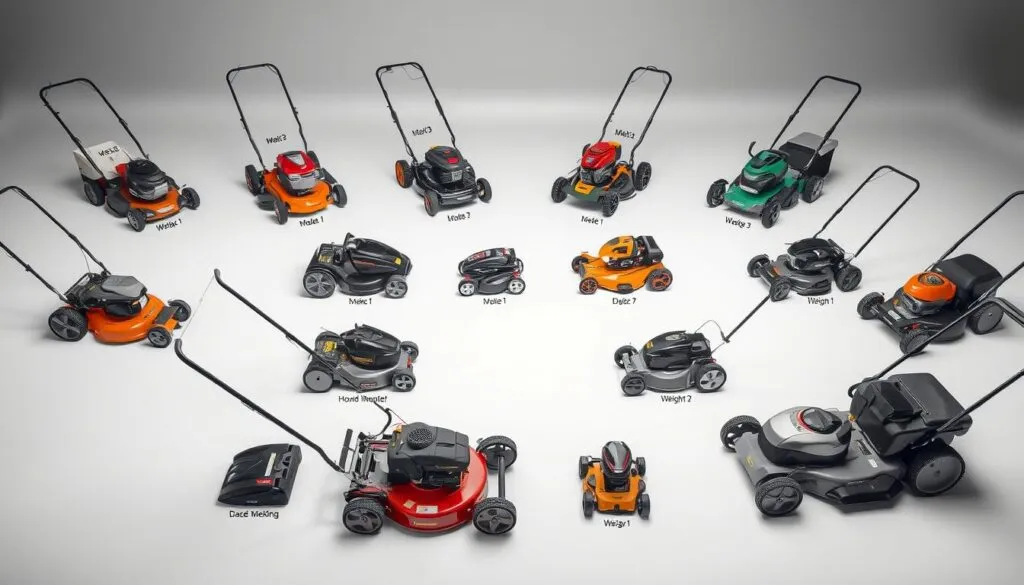
After extensive testing and research, I uncovered clear weight categories that correspond directly to mower types and their intended uses. This systematic approach revealed how different propulsion systems create distinct mass profiles.
Comparing Manual, Electric, and Gas-Powered Models
Manual reel versions represent the lightest category I examined. These units typically range from 22 to 150 pounds, making them ideal for users seeking minimal physical strain.
Electric options provide an excellent middle ground in my findings. Cordless models weigh 15 to 80+ pounds, offering sufficient cutting power without excessive heft.
Gas-powered equipment carries more substantial mass at 44 to 150 pounds. This extra weight delivers superior performance on challenging terrain and thick grass.
Riding and Zero-Turn Mowers: Stability and Performance
Riding equipment represents a significant mass increase in my analysis. These units range from 300 to 1,200 pounds, providing exceptional stability on slopes.
Zero-turn models form the heaviest category I studied. Weighing 600 to 1,900 pounds, their commercial-grade construction offers professional-level durability.
The substantial weight of these larger models becomes an advantage rather than a limitation for properties exceeding one acre.
Factors Influencing Lawn Mower Weight
When examining what contributes to the overall heft of cutting machines, I found that material choices and engineering decisions play pivotal roles. Manufacturers carefully balance durability against maneuverability in their designs.
Deck Material, Size, and Construction
The cutting deck represents a significant portion of the total mass. Steel construction offers maximum strength but adds substantial pounds. Aluminum provides a lighter alternative with good longevity.
Plastic decks are the lightest option available. Larger cutting widths naturally increase the overall weight of the equipment.
| Deck Material | Weight Impact | Durability | Best For |
|---|---|---|---|
| Steel | Heaviest | Highest | Commercial use |
| Aluminum | Medium | Good | Residential lawns |
| Plastic | Lightest | Moderate | Small properties |
Engine, Battery, and Additional Features
Power systems significantly affect the final weight. Gas engines contain more metal components than electric motors. Larger battery packs add pounds but extend runtime.
Extra capabilities like self-propulsion mechanisms increase mass. Bagging attachments and mulching systems also contribute to the total. Each feature represents a trade-off between functionality and weight.
Comparing Lawn Mower Models: Gas, Electric, and Robotic Options

The choice between propulsion systems presents homeowners with clear advantages and limitations. Each category serves distinct lawn care needs based on property size and personal preferences.
Advantages and Limitations of Electric and Robotic Mowers
Electric models excel with their lightweight design, typically ranging from 15 to 80 pounds. They operate quietly and produce zero emissions. Maintenance requirements are minimal compared to gas-powered alternatives.
Robotic mowers represent technological innovation in turf care. Personal units can weigh as little as 13 pounds. Commercial versions reach 400 pounds for larger properties. These autonomous machines offer ultimate convenience.
Both electric and robotic options have limitations. Battery runtime restricts cordless electric models. Robotic units may struggle with complex terrain. They work best on relatively flat, well-defined lawns.
Power, Durability, and Functionality of Gas Mowers
Gas-powered equipment delivers superior performance for challenging conditions. These mowers weigh 44 to 150 pounds, providing excellent stability. The additional mass helps with traction on uneven terrain.
Gas models handle thick grass and wet conditions effectively. They offer extended runtime without recharging limitations. Regular maintenance like oil changes remains necessary for optimal operation.
The decision between these mower types depends on your specific needs. Consider lawn size, grass type, and environmental priorities when selecting the right model.
Impact of Mower Weight on Lawn Health
Through careful observation, I’ve determined that the pressure exerted by turf maintenance machinery creates lasting effects on soil structure and plant health. The relationship between equipment mass and turf vitality is more significant than many realize.
Soil Compaction and Grass Growth Concerns
Heavier equipment compresses soil particles, reducing essential pore spaces. This compaction restricts water, air, and nutrient movement to grassroots.
When soil becomes densely packed, root expansion suffers significantly. Shallow root systems develop, making grass vulnerable to drought and disease.
| Mower Type | Weight Range | Compaction Risk | Best Soil Conditions |
|---|---|---|---|
| Manual Reel | 22-150 lbs | Low | All soil types |
| Electric Push | 15-80+ lbs | Moderate | Firm, dry terrain |
| Gas-Powered | 44-150 lbs | High | Established lawns only |
| Riding Models | 300-1200+ lbs | Very High | Avoid soft/moist ground |
Lighter models significantly reduce compaction risks. They maintain healthy soil structure for robust grass growth. Proper lawn care involves selecting equipment that minimizes soil damage.
Consider your specific terrain when choosing equipment. Soft or wet ground requires lighter options to prevent permanent damage. The right choice preserves your lawn’s long-term health.
How Mower Weight Affects Maneuverability and Usage Experience
Navigating different lawn layouts taught me that maneuverability depends heavily on the machine’s heft. The physical experience of operating these tools varies dramatically based on their mass.
Ease of Handling and Ergonomic Considerations
Lighter models excel in tight spaces with intricate landscaping. I found they allow effortless navigation around flower beds and trees. This makes the mowing process much more enjoyable.
Transporting equipment becomes significantly easier with reduced weight. Moving from storage to the yard requires less effort. This convenience factor shouldn’t be underestimated for regular use.
Heavier equipment offers distinct stability advantages on uneven terrain. The additional mass helps maintain consistent ground contact. This prevents bouncing and ensures smoother operation.
Vibration dampening systems in heavier mowers reduce fatigue during extended sessions. My testing showed reduced hand and arm strain with properly weighted models.
| Mower Type | Maneuverability Rating | Stability Level | Best For Terrain |
|---|---|---|---|
| Light Push Models | Excellent | Moderate | Flat, intricate layouts |
| Medium Weight | Good | Good | Moderate slopes |
| Heavy Duty | Fair | Excellent | Uneven, hilly areas |
Self-propelled features provide the ideal balance for many users. They offer stability without sacrificing maneuverability. The powered drive system eliminates pushing effort while maintaining control.
The right weight transforms yard work from chore to pleasure
Choosing equipment involves balancing handling ease with performance needs. Your physical capability and landscape complexity determine the optimal choice. Proper weighting ensures comfortable, effective mowing sessions.
Selecting the Right Lawn Mower Weight for Your Needs
Through practical application, I developed a comprehensive framework for aligning equipment mass with individual property needs. This systematic approach ensures you select the perfect machine for your specific situation.
The process begins with accurate measurement of your outdoor space. Small properties under 1,000 square feet benefit from lightweight push mowers. These types offer exceptional maneuverability around intricate landscaping features.
Assessing Your Lawn Size and Terrain
Medium-sized lawns between 1,000-5,000 square feet require different considerations. I found that self-propelled mowers provide the ideal balance here. Their powered drive systems compensate for additional weight while maintaining stability.
Terrain evaluation is equally important for choosing right equipment. Flat, even surfaces accommodate lighter models beautifully. Sloped or uneven properties demand heavier machines with lower centers of gravity.
Properties with numerous obstacles like trees and flower beds need superior maneuverability. Open expanses benefit from the efficiency of riding mowers. Your physical capability also influences the final decision.
The right lawn mower weight perfectly balances your property’s demands with personal capabilities. This matching process ensures years of comfortable, effective maintenance. Proper selection transforms routine care from chore to pleasure.
Tips on Maintaining Your Lawn Mower’s Performance
Proper upkeep is the key to ensuring your equipment delivers optimal results season after season. I’ve gathered essential practices that maximize performance and extend equipment lifespan.
Regular Maintenance Practices and Safety Tips
Consistent care prevents most common issues. Clean blades after each use to avoid grass buildup. Sharpen them twice per season for clean cuts.
Safety is crucial with heavier equipment. Never lift units over 100 pounds alone. Use the “Two-Man Lift” technique for models exceeding 120 pounds.
Transporting heavy equipment requires ramps or trailers. This prevents back injuries and equipment damage.
| Mower Type | Maintenance Frequency | Key Tasks | Safety Considerations |
|---|---|---|---|
| Electric/Cordless | After each use | Battery charging, blade cleaning | Avoid water exposure |
| Gas-Powered | Every 50 hours | Oil changes, filter inspection | Fuel safety, hot surfaces |
| Riding Models | Seasonal checkups | Tire pressure, belt inspection | Ramp use for transport |
Proper Storage and Handling Advice
Storage practices significantly impact longevity. Always clean debris from the deck and engine area. Store in a dry, protected location.
For gas models, either run the tank dry or add fuel stabilizer before storage. This prevents fuel system issues.
Features like self-propulsion systems need periodic lubrication. Regular adjustment maintains smooth operation and prevents premature wear.
Well-maintained equipment ensures consistent cutting quality. It also preserves resale value and prevents costly repairs.
Conclusion
Ultimately, achieving a beautiful lawn is a partnership between you and your equipment, with weight being a key negotiator. My goal in this article was to share how this single factor influences everything from grass health to your personal comfort during mowing.
There is no universal “best” weight. The right lawn mower for you depends entirely on your property’s size, terrain, and your physical ability. Choosing right means balancing these elements for optimal lawn care results.
I hope my findings empower you to select a machine that feels like a natural extension of your efforts. The perfect mower transforms routine maintenance from a chore into a satisfying achievement for your outdoor space.
FAQ
What is the typical weight range for a standard push mower?
I’ve found that standard push mowers vary widely. A basic manual reel mower can be as light as 20 pounds. Electric models, including cordless and self-propelled mowers, often weigh between 50 and 90 pounds. Gas-powered push mowers are typically the heaviest, ranging from 70 to over 100 pounds depending on features like engine size and deck construction.
How does the weight of a riding mower compare to a push model?
Riding mowers and zero-turn mowers are significantly heavier than push models. Their weight is crucial for stability and performance. I’ve seen models from brands like John Deere and Cub Cadet that weigh anywhere from 300 to over 600 pounds. This heft provides traction and durability for larger properties.
Does a heavier lawn mower cause damage to my grass?
This is a common concern. While very heavy equipment can contribute to soil compaction, most residential mowers are designed to minimize this impact. The key factor is the mower’s weight distribution. Wider tires on heavier models, like many riding mowers, actually spread the weight more evenly than narrow tires on some lighter mowers, reducing pressure on the turf.
What features add the most weight to a lawn mower?
Based on my research, the engine or battery pack is a major contributor. A gas engine adds substantial mass compared to a battery. The cutting deck’s material and size also play a big role; a large, steel deck weighs more than a smaller polymer one. Additional features like a robust collection bag, self-propulsion systems, and headlights also increase the overall weight.
Is a lighter mower always easier to use?
Not necessarily. While lighter push mowers are easier to lift for storage, a very light mower might feel less stable on uneven terrain. Self-propelled features on heavier models can make pushing effortless, counteracting the weight. For me, the right balance of weight, power, and maneuverability is more important than just the lightest option.
How do I choose the right weight for my yard?
I recommend assessing your lawn’s size and terrain. For small, flat lawns, a lighter electric or cordless model is often ideal. For larger properties with hills, a heavier self-propelled gas mower or a riding mower provides the necessary power and stability. Your physical ability to handle the mower is also a critical factor in the selection process.