
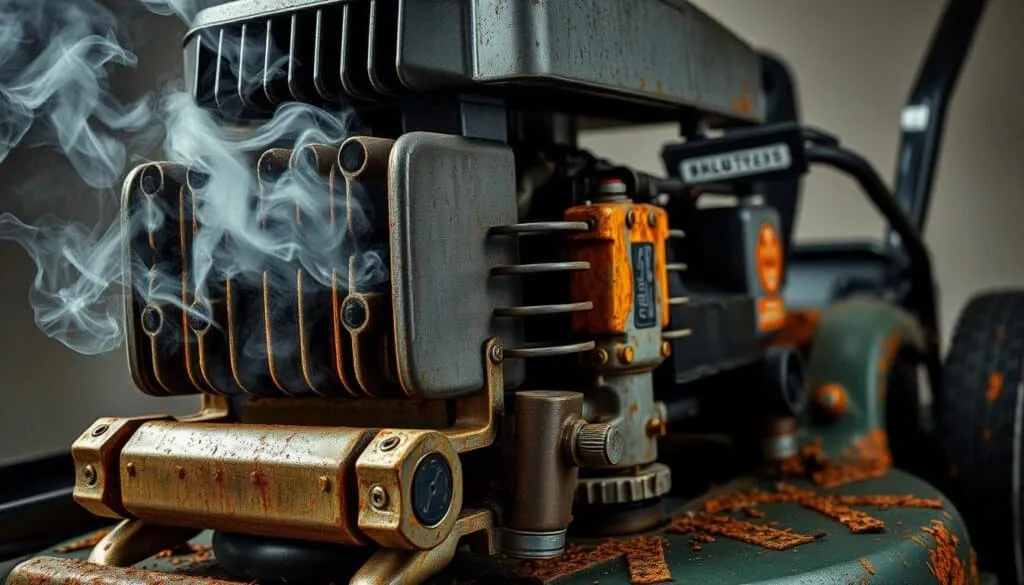
Have you ever pushed your machine across the yard on a hot day, only to notice something feels wrong? That sudden plume of smoke or an unfamiliar rattle can stop you in your tracks. It’s a moment every homeowner dreads.
I’ve been there, wondering if my equipment was truly in trouble. Through my own experiences, I’ve discovered that these overheating issues are more common than many realize. They don’t just happen with old or neglected tools.
Recognizing the early warnings is absolutely critical. I’ve learned to spot the signs: visible smoke, strange noises, and a clear drop in performance. Ignoring them can lead to severe internal damage.
My goal is to share the lessons I’ve gathered. This guide will help you understand the causes, identify symptoms early, and implement solutions to protect your investment.
Key Takeaways
- Lawn mowers are susceptible to overheating, even with regular maintenance.
- Early warning signs include visible smoke, unusual noises, and decreased power.
- Immediate shutdown is crucial when symptoms appear to prevent serious damage.
- Common causes range from clogged air filters to simple blockages in the cutting deck.
- Overheating can lead to melted components, blown gaskets, or complete engine failure.
- Allowing the machine to cool completely before inspection is a vital safety step.
Understanding the Overheating Issues: can a lawn mower overheat
Learning to recognize overheating symptoms early became essential for protecting my outdoor power tools. Through personal experience, I’ve identified specific warning signs that indicate potential temperature problems.
Identifying Common Overheating Symptoms
Visible smoke from the engine compartment serves as the most obvious indicator of overheating issues. This signals that internal components reach dangerously high temperatures.
When examining my equipment during these episodes, I noticed blackened spark plugs. This reveals combustion temperatures exceeding normal operating ranges.
Unusual rattling sounds and decreased cutting performance also serve as early warnings. The machine struggles under excessive stress when these symptoms appear.
Examining Engine Signs and Safety Concerns
Engine stalling or complete lockup represents one of the most severe overheating problems. Internal components expand from heat and seize, preventing immediate restart.
Continued operation during overheating creates serious safety risks. Permanent damage to critical parts becomes likely, including melted components and blown gaskets.
| Symptom | Risk Level | Immediate Action Required |
|---|---|---|
| Visible Smoke | High | Shutdown immediately |
| Unusual Noises | Medium | Inspect and cool down |
| Decreased Performance | Medium | Check for blockages |
| Engine Stalling | Critical | Professional inspection needed |
How Weather and Usage Affect Temperature
Weather conditions significantly impact equipment temperature. On particularly hot days, ambient heat increases the risk of overheating problems.
Operating patterns also influence temperature regulation. Pushing equipment through thick, wet grass or running continuously without breaks contributes to heat buildup.
Some modern machines feature built-in safety switches. These automatically shut down the engine to prevent damage from excessive temperatures.
Troubleshooting and Repair Strategies
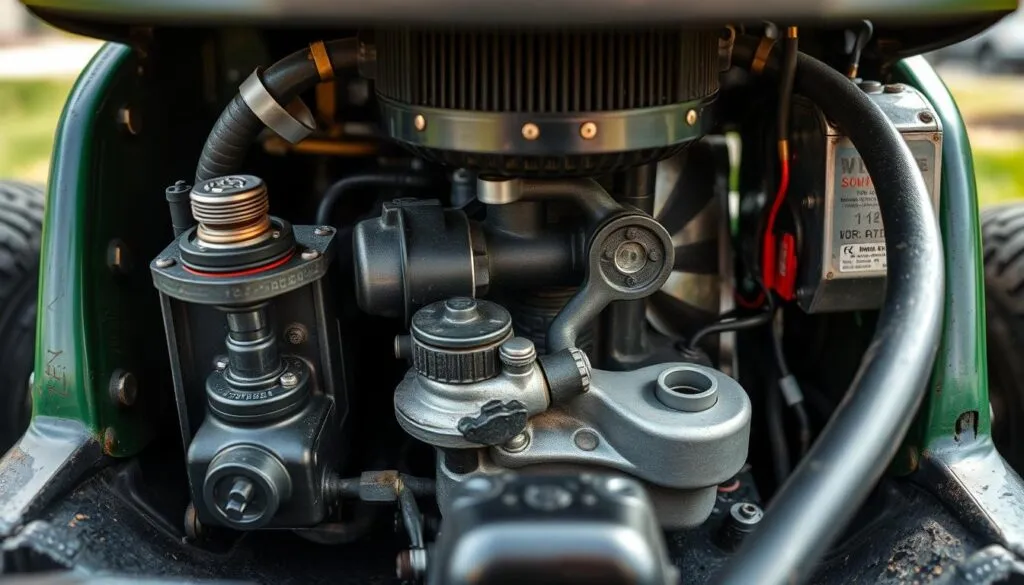
Through trial and error, I’ve established a reliable troubleshooting process for dealing with engine temperature concerns. This systematic approach helps me identify issues efficiently without wasting time on unnecessary repairs.
Assessing Air Filters and Cooling Fins
A clogged air filter restricts cool air flow into the engine. I inspect this component regularly, cleaning paper filters with a brush and washing foam types in soapy water.
Blocked cooling fins around the spark plug area trap heat instead of releasing it. Grass clippings and debris accumulation here causes rapid temperature increases during operation.
Clearing Blocked Cutting Decks and Debris
Excessive grass clippings in the cutting deck create significant strain. Wet conditions and dull blades contribute to this common blockage problem.
Checking Oil Levels and Engine Components
Proper lubrication prevents friction between moving parts. I verify oil levels before each use and change old engine oil according to maintenance schedules.
Addressing Cooling and Carburetor Issues
The cooling system requires multiple component checks. I examine the air filter, cooling fins, and air flow patterns to ensure proper heat dissipation.
Carburetor problems manifest differently. A rich mixture produces black smoke, while a lean condition causes backfiring and elevated temperatures.
Effective Maintenance and Preventative Measures
Developing consistent maintenance habits transformed how I care for my outdoor equipment. This proactive approach prevents most temperature issues before they develop into serious problems.
Regular Routine Checks and Seasonal Maintenance
I perform quick inspections before every mowing session. These brief checks include verifying engine oil levels and examining the air filter for debris accumulation.
Seasonal care protects equipment during storage periods. I thoroughly clean my machine after the final cut each year and winterize it properly.
Following the manufacturer’s maintenance schedule ensures optimal performance. I change the air filter every 300 operating hours and keep detailed service records.
Optimizing Cutting Height and Mower Speed
Setting the cutting deck to remove only one-third of the grass blade height reduces engine strain. This simple adjustment makes a significant difference in heat generation.
I maintain a steady, moderate pace when operating my equipment. Rushing through thick grass creates excessive workload and increases temperature risks.
Breaking larger lawns into multiple sessions gives the machine adequate rest. Mid-morning mowing after dew evaporation provides ideal operating conditions.
Conclusion
My experiences with power tool maintenance have taught me that proactive care prevents most temperature-related complications. Understanding the reasons behind overheating issues has transformed my approach to equipment care.
Regular maintenance and proper operating techniques make the biggest difference. Simple measures like cleaning air filters and clearing grass clippings protect critical engine parts from excessive heat buildup.
When troubleshooting fails, consulting a professional becomes essential. Serious damage often requires expert attention to avoid costly repairs and operational delays.
Always prioritize safety by allowing the machine to cool completely before inspection. This precaution protects both your equipment and personal well-being during lawn maintenance tasks.
FAQ
What are the most common reasons my mower engine overheats?
From my experience, the primary culprits are often blocked cooling fins, old engine oil, and a dirty air filter. Grass clippings and debris clogging the engine housing or cutting deck also cause overheating by restricting airflow essential for cooling.
How can I tell if my machine is overheating?
I look for clear signs like the engine housing becoming excessively hot to the touch, a noticeable loss of power, or the engine smoking. These symptoms indicate the machine is under severe stress and needs immediate attention to prevent damage.
What maintenance prevents overheating problems?
I make sure to perform regular maintenance. This includes cleaning grass clippings from the cutting deck after each use, checking oil levels frequently, and replacing the air filter as recommended. Keeping the cooling fins clear is absolutely critical for proper engine temperature regulation.
Can operating on a hot day cause overheating issues?
Yes, high ambient temperatures can contribute to the problem. On very hot days, I take breaks to let the engine cool down, especially during prolonged mowing sessions. This simple practice helps manage the extra heat load on the machine.
What should I do if my mower starts overheating?
My first step is always to turn off the engine immediately to avoid serious damage. After it cools, I inspect for blocked cooling fins, check the oil level and quality, and clear any debris from the deck and blades. For persistent issues, a professional repair might be necessary.