
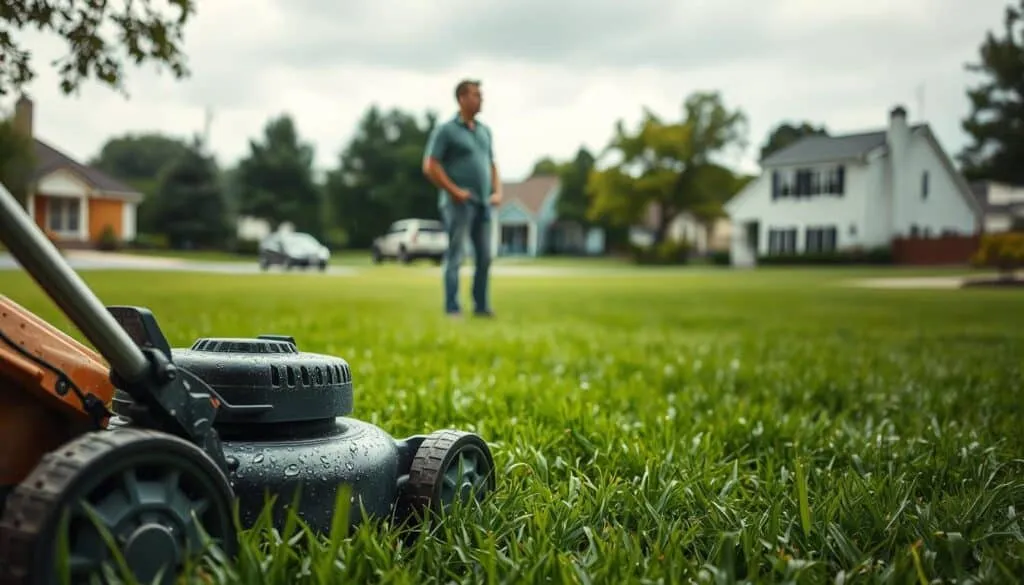
Have you ever stared at your overgrown grass right after a downpour, wondering if you should fire up the mower anyway? This common dilemma plagues homeowners across the country.
Through years of maintaining my own property, I’ve learned that timing your mowing following rainfall requires careful consideration. The answer isn’t simple and depends on multiple factors.
Different grass types and soil conditions dramatically affect how soon you can safely cut your lawn. Rushing this decision could damage your turf or even create safety hazards.
This guide shares hard-earned wisdom from personal experience. You’ll learn practical strategies that prioritize your lawn‘s health over convenience.
Key Takeaways
- Waiting periods vary based on grass type and soil drainage
- Wet grass clippings can clog your mower and create uneven cuts
- Soil compaction becomes a significant risk on damp ground
- Safety concerns increase with slippery conditions and electrical hazards
- Alternative maintenance tasks exist for rainy days
- Proper timing preserves both your lawn’s health and equipment longevity
Why I Always Think Twice Before Mowing Wet Grass
My lawn maintenance journey taught me that wet grass presents unique challenges. These immediate visual and structural effects convinced me to reconsider my timing.
The Immediate Visual Impact on Your Lawn
Water transforms your turf’s appearance dramatically. Droplets weigh down individual blades, causing them to lie flat instead of standing upright.
This flattened state creates mowing difficulties. The mower deck passes over bent grass without making proper contact. You end up with uneven cutting and missed patches throughout your property.
I’ve observed my own results side by side. Dry conditions produce clean, uniform cuts. Damp turf leaves behind a ragged, messy appearance that disappoints every time.
Torn blades develop brown tips within hours. These damaged areas stand out against healthy green growth. The overall effect resembles a patchwork quilt rather than a manicured lawn.
| Condition | Blade Appearance | Cut Quality | Recovery Time |
|---|---|---|---|
| Dry Grass | Upright and firm | Clean and even | Immediate |
| Damp Grass | Slightly bent | Mostly even | 1-2 days |
| Wet Grass | Flattened and clumped | Ragged and uneven | 3-5 days |
| Soaked Grass | Completely matted | Extremely poor | 5-7 days |
How Moisture Affects Grass Blade Integrity
Water fundamentally changes grass blade structure. Cellular walls become engorged and less rigid. This flexibility makes clean slicing nearly impossible.
Mower blades tear through waterlogged tissue instead of cutting crisply. These ragged edges lose moisture faster than clean cuts. They turn brown and become entry points for disease.
Different turf varieties handle moisture differently. Bermuda grass recovers faster than fescue. St. Augustine shows immediate stress signs when cut damp.
The true extent of damage reveals itself later. Once grass dries completely and stands upright, uneven cutting becomes obvious. This often requires a second mowing to correct.
These immediate effects represent just the beginning. Additional problems develop beneath the surface and within your equipment.
The Real Risks: Damage That Goes Beyond Appearance
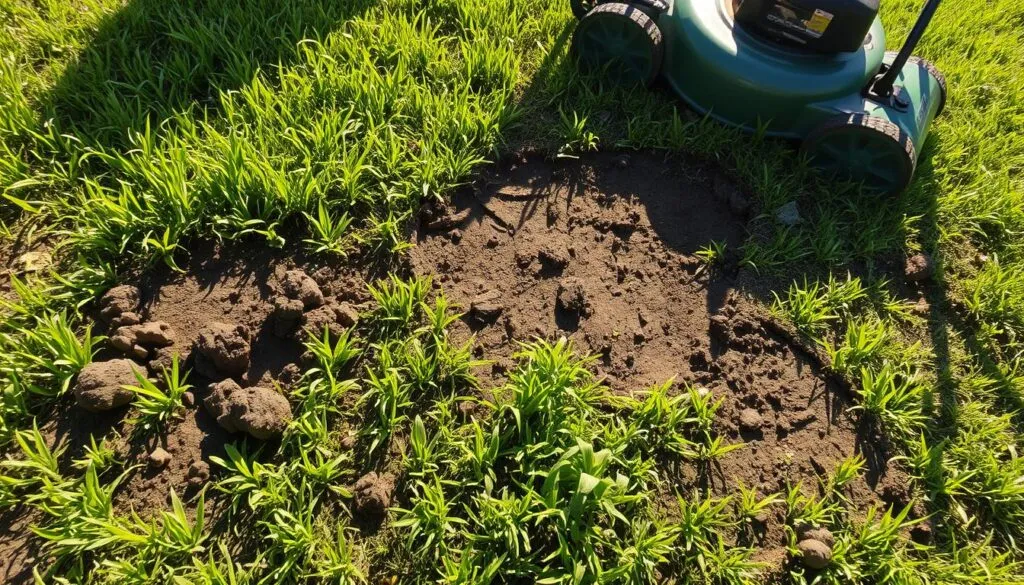
Many homeowners focus only on surface-level results when cutting their turf. The hidden dangers beneath the surface create lasting problems for your property’s health.
Waterlogged earth transforms into a vulnerable surface under pressure. Heavy equipment causes immediate and long-term damage to your lawn‘s foundation.
Soil Compaction and Rut Creation
Saturated soil loses its structural integrity when bearing weight. The mower‘s pressure squeezes out air pockets between soil particles.
This compression creates dense, hard layers beneath the surface. Grass roots struggle to penetrate this compacted barrier.
My riding mower left visible depressions in damp clay soil. These ruts became permanent features that collected standing water.
Different soil types respond uniquely to wet conditions. Clay soils compact more severely than sandy varieties. Both types suffer from reduced pore space for root development.
Root System Stress From Heavy Equipment
Compacted earth chokes root systems through oxygen deprivation. Grass roots require air exchange just like the blades above ground.
The weight distribution of machinery causes unseen stress patterns. Root networks become distorted and stunted under constant pressure.
I noticed thinning patches in areas where I previously mowed damp turf. The recovery process required months of aeration and specialized treatment.
Repeated compaction creates cumulative damage over time. Each pass with heavy equipment further degrades soil structure. The long-term consequences include reduced drought tolerance and increased disease susceptibility.
Proper timing preserves your investment in both turf quality and equipment longevity. Patience prevents these subsurface issues from developing.
Lawn Disease Concerns I’ve Learned to Respect
Fungal infections represent the most serious consequence of poor timing decisions. Moisture combined with damaged turf creates perfect breeding grounds for destructive pathogens.
My property suffered multiple outbreaks before understanding this connection. Each incident taught valuable lessons about prevention and recovery.
Common Fungal Diseases That Thrive in Wet Conditions
Several turf diseases flourish when moisture persists. These pathogens exploit weakened grass defenses.
Dollar spot appears as small silver-dollar-sized patches. The grass turns straw-colored and dies rapidly.
Brown patch creates irregular circles of brown turf. This disease spreads quickly in humid weather.
Rust disease shows orange or yellowish spots on blades. The powder rubs off easily when touched.
Anthracnose forms reddish-brown patches throughout the lawn. It often follows stressful conditions.
Leaf spot creates small brown spots with darker borders. These lesions expand under continued moisture.
Red thread produces reddish fungal threads on grass tips. The affected areas appear pink from distance.
How Torn Grass Blades Become Infection Points
Ragged edges from damp cutting provide ideal entry points. Fungal spores penetrate these damaged areas easily.
The infection process begins immediately after mowing. Spores germinate within hours on moist surfaces.
Clumped grass clippings create additional problems. These mats trap moisture against healthy blades.
Equipment itself can spread pathogens between areas. Wet grass sticking to the mower deck carries fungi to new locations.
Pythium blight spreads particularly well this way. Hot, humid mornings accelerate this transmission.
Recovery from these outbreaks requires significant effort. Fungicide applications become necessary in severe cases.
Some turf varieties offer natural resistance to common diseases. Bermuda grass handles moisture better than fescue.
Preventive measures reduce risks when cutting damp turf. Sharp blades create cleaner cuts that heal faster.
Timing remains the most effective prevention strategy. Waiting for proper drying conditions prevents most disease issues.
My Experience With Mower Damage From Wet Grass
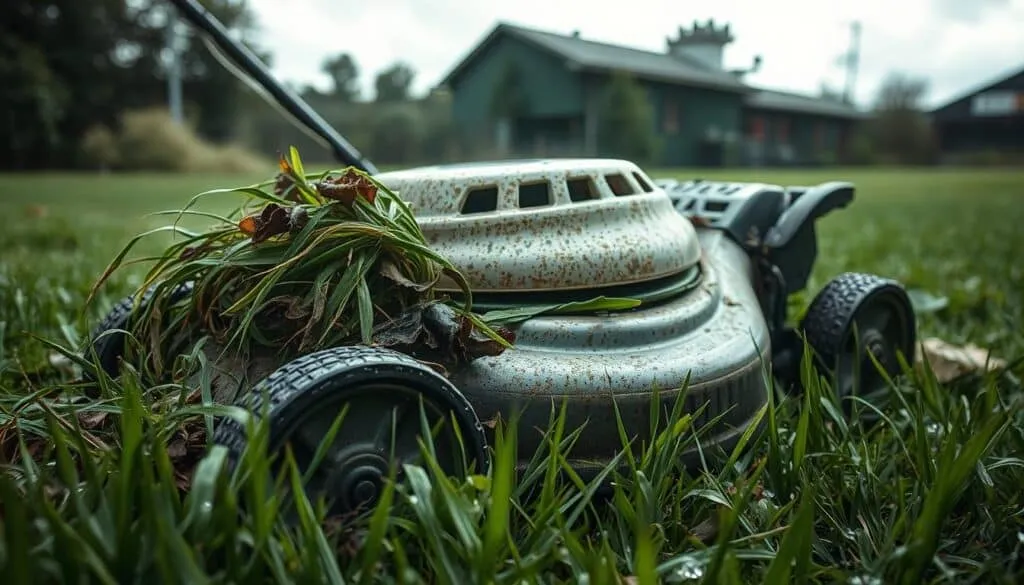
Operating machinery on damp turf creates mechanical stress that shortens equipment lifespan. Through trial and error, I discovered how moisture accelerates wear on critical components.
These lessons came through costly repairs and frustrating breakdowns. Understanding these risks helps preserve your investment.
Engine Strain and Overheating Issues
Wet grass creates tremendous resistance against cutting blades. The engine must work harder to maintain proper rotation speed.
My gas-powered mower once stalled completely in thick morning dew. Clumped grass jammed the blade assembly, overwhelming the motor.
Overheating becomes common during extended use. The temperature gauge climbed dangerously high on multiple occasions. I noticed excessive smoke from the exhaust during these episodes.
Electric models face similar challenges with reduced torque. Battery life diminishes rapidly when cutting damp turf.
Blade Dulling and Deck Clogging Problems
Wet grass blades act like abrasive paper against cutting edges. Sharpness deteriorates faster than during dry conditions.
The mower deck accumulates clumps that restrict airflow. This buildup creates unbalanced operation and vibration.
Frequent cleaning becomes essential for prevention. I now stop every fifteen minutes to clear accumulated debris.
Clippings form dense mats underneath the deck. These masses eventually harden into concrete-like formations.
The Rust and Corrosion I’ve Encountered
Moisture from grass clippings accelerates metal degradation. I discovered rust patches on the blade housing after just one season.
Electrical components suffer from water exposure. Connections corrode and create starting problems.
Fuel systems can become contaminated through improper handling. Water infiltration causes engine sputtering and performance issues.
Regular maintenance becomes more demanding and expensive. Replacement parts add significant costs over time.
Prevention involves thorough cleaning after each use. Applying protective coatings helps shield metal surfaces from moisture damage.
Safety Hazards I Never Ignore
Personal experience taught me that wet turf creates serious safety concerns many homeowners overlook. These conditions transform routine maintenance into potential risk scenarios requiring extreme caution.
Statistics reveal the scale of this issue. Over 250,000 people received treatment for lawn mower injuries in 2010 alone. The US Consumer Product Safety Commission estimates 80,000 emergency room visits occur yearly from these accidents.
Slippery Conditions and Footing Risks
Wet grass becomes incredibly slippery underfoot. My push mower once slid sideways on a gentle slope, nearly pulling me down with it.
The physics behind reduced traction involves water acting as a lubricant. Footwear loses grip on damp blades, making balance difficult to maintain.
Different mowers behave uniquely on wet terrain. Riding models can lose traction completely, potentially throwing the operator. Push models become harder to control on inclines.
Proper footwear makes a significant difference. I now wear shoes with deep treads specifically designed for wet yard work. This simple change prevented several potential falls.
| Surface Condition | Traction Level | Recommended Footwear | Risk Assessment |
|---|---|---|---|
| Dry Grass | Excellent | Standard athletic shoes | Low risk |
| Damp Grass | Moderate | Hiking shoes | Moderate risk |
| Wet Grass | Poor | Waterproof boots with deep tread | High risk |
| Soaked Grass | Dangerous | Specialized cleats | Extreme risk |
Electrical Dangers With Wet Equipment
Water and electricity create a dangerous combination that demands respect. Corded electric mowers present particular hazards in damp conditions.
Frayed cords touching wet turf can deliver severe shocks. I witnessed a neighbor’s mower short-circuit after contacting morning dew. The incident destroyed the equipment but fortunately caused no injury.
Battery-powered models offer somewhat safer operation. They still require careful handling to prevent water intrusion into electrical components.
Safety precautions include inspecting cords before each use. I also avoid mowing when standing water is present on the surface. These simple steps prevent most electrical problems.
Reduced Visibility of Hidden Obstacles
Damp grass conceals numerous hazards that become invisible threats. My mower once launched a buried dog toy that struck a fence with alarming force.
Sprinkler heads, rocks, and debris hide effectively in wet turf. These objects can become dangerous projectiles when struck by spinning blades.
I developed a careful inspection routine before any mowing session. Walking the area first helps identify potential hazards. This extra step prevents most unexpected encounters.
Emergency procedures for slip incidents involve immediately releasing the mower’s handle. Modern models include safety shutoff features for such situations. Knowing these functions beforehand proves crucial.
No lawn maintenance task justifies serious injury. Understanding these risks helps make informed decisions about when to cut wet grass.
When Can I Mow After It Rains? My Waiting Strategy
Determining the right moment to resume yard work requires careful observation. Through years of experience, I developed reliable methods for assessing turf readiness.
My 24-hour Rule of Thumb
I typically wait a full day following precipitation. This timeframe allows adequate drying for most turf types.
The reasoning involves both surface and subsurface moisture. Grass blades may appear dry while soil remains saturated below.
Twenty-four hours provides sufficient time for proper evaporation. This prevents the common mistake of cutting too soon.
The Footprint Test I Always Use
This simple evaluation never fails me. Walk across your property wearing ordinary shoes.
Visible footprints indicate excessive moisture. The turf needs more drying time before any activity.
Spring-back grass means conditions are improving. No footprint marks signal readiness for maintenance.
Check multiple areas since drainage varies. Low spots often retain moisture longer than sloped sections.
Different Waiting Times for Light vs Heavy Rain
Light showers require shorter recovery periods. Two to five hours often suffice for morning dew or brief sprinkles.
Heavy downpours demand extended patience. Full-day waits become necessary for thorough drying.
My personal experiences confirm these differences. A sudden summer storm required 36 hours for complete drying.
Gentle spring rain only needed an afternoon wait. The variation depends on multiple factors.
Several elements influence drying speed. Grass type determines moisture retention capabilities.
Soil composition affects drainage rates. Sandy soils dry faster than clay-based earth.
Sunlight exposure accelerates evaporation. Shaded areas need additional waiting time.
Wind conditions promote moisture removal. Breezy days reduce necessary waiting periods.
Temperature plays a crucial role too. Warm weather speeds the entire process considerably.
Assess moisture at root level for accuracy. Surface appearance can be misleading sometimes.
Insert a screwdriver into the soil. Resistance indicates adequate drying for activity.
Easy penetration suggests continued saturation. Wait longer until the ground firms up properly.
Visual cues help determine readiness. Dry grass blades stand upright without water droplets.
Morning is ideal for evaluation. Dew evaporates by mid-day under normal conditions.
Seasonal changes affect timing strategies. Spring growth requires different approaches than fall maintenance.
Exceptions exist to standard rules. Extreme heat may reduce waiting periods significantly.
High winds can accelerate drying unexpectedly. Adjust your schedule based on actual conditions observed.
Coordinate activities with weather forecasts. Plan around predicted dry spells for best results.
Unpredictable patterns require flexibility. Have backup plans for sudden weather changes.
These tips help maintain turf health while ensuring personal safety. Proper timing preserves your lawn‘s beauty and longevity.
When You Absolutely Must Mow: My Emergency Approach
Sometimes waiting simply isn’t an option. Weather patterns shift unexpectedly, and circumstances demand immediate action despite less-than-ideal conditions.
Through years of lawn care, I’ve faced situations requiring urgent attention. An approaching vacation or important event might force your hand when turf remains damp.
These scenarios demand specialized preparation and technique. Proper execution minimizes damage while addressing the immediate need.
Equipment Preparation Tips
Thorough preparation becomes crucial when cutting damp turf. My checklist ensures optimal performance under challenging circumstances.
Begin with mower blades inspection. Sharp edges create cleaner cuts that heal faster. Dull blade surfaces tear grass tissue, increasing disease risks.
Clean the mower deck thoroughly before starting. Residual clippings from previous sessions complicate wet operation. A spotless interior prevents immediate clogging issues.
Verify all safety features function properly. Wet conditions amplify hazards, making functional brakes and shutoff switches essential.
Check tire pressure for optimal traction. Proper inflation improves stability on slippery surfaces. This simple step prevents many potential accidents.
Mowing Technique Adjustments
Standard cutting methods fail miserably on damp turf. Adjustments to speed and height make significant differences in results.
Reduce pace considerably compared to dry conditions. Slower movement allows mower blades to process grass more effectively. This prevents clogging and improves cut quality.
Raise cutting height to the highest setting. Longer grass blades resist matting and clumping. They also recover faster from stress.
Use overlapping patterns to ensure complete coverage. Wet grass tends to lay flat, missing some areas without careful attention.
Employ side discharge instead of bagging or mulching. Wet clippings form dense mats that smother healthy turf. Dispersing them thinly reduces this risk.
As noted in my fescue overseeding guide, removing more than one-third of blade height stresses grass unnecessarily. This becomes especially important during emergency sessions.
Cleanup and Maintenance Afterward
Post-mowing procedures become more critical after cutting damp turf. Thorough attention prevents long-term equipment damage.
Clean the mower deck immediately after finishing. Hose away all grass residue before it dries and hardens. Pay special attention to blade areas where clumps accumulate.
Inspect blades for grass buildup underneath. Wet clippings stick tenaciously to metal surfaces. Remove all debris to prevent corrosion.
Apply protective spray to metal components. This creates a barrier against moisture damage between uses.
Allow the mower to dry completely before storage. Moisture trapped in enclosed spaces accelerates rust formation.
Monitor your lawn closely in subsequent days. Look for signs of stress or disease development. Early intervention prevents minor issues from becoming major problems.
These emergency tips help manage unavoidable situations. Remember that cut wet grass operations should remain exceptional rather than routine.
What I’ve Learned About Morning Dew Mowing
Dawn’s moisture presents a deceptive challenge many property owners underestimate. That glistening layer appears harmless yet creates identical complications to light precipitation.
Through repeated morning sessions, I discovered dew’s impact rivals rainfall. The same physical principles apply despite different moisture origins.
Why Dew Creates Similar Problems to Rain
Condensation saturates turf through overnight temperature changes. Water droplets accumulate on grass blades just like after showers.
This moisture alters blade structure identically to rainfall. Cellular walls swell and become less rigid.
My mower struggled identically with dew-drenched turf. Clippings clumped beneath the deck, straining the engine.
Cutting quality suffered the same deterioration. Torn edges appeared brown within hours.
Disease risks increase under these conditions. Fungal spores germinate rapidly on damp surfaces.
My Optimal Timing for Morning Mowing
Sunlight exposure determines evaporation rates significantly. I wait until dew completely disappears before starting.
Mid-morning typically provides ideal conditions. Most evaporation occurs between 8-10 AM during warmer months.
Temperature and humidity affect drying time dramatically. Cool, humid mornings require extended patience.
I conduct the footprint test before proceeding. No visible marks indicate readiness for activity.
Different turf varieties handle dew differently. Bermuda grass dries faster than fescue varieties.
Seasonal changes alter my schedule considerably. Autumn mornings demand later starts than summer sessions.
These adjustments preserve lawn health while ensuring personal safety. Proper timing prevents most wet grass complications.
Conclusion: My Final Advice on Mowing After Rainfall
Proper lawn care timing makes all the difference between vibrant turf and damaged property. Years of experience taught me that waiting for dry conditions prevents numerous lawn diseases and equipment issues.
Patience preserves your grass health and personal safety. Rushing the process risks soil compaction, uneven cuts, and potential mower damage.
Consider professional help for consistent results. Qualified yard maintenance services handle weather challenges effectively.
Always prioritize long-term lawn vitality over short-term convenience. Your turf will reward this approach with lush, healthy growth.
FAQ
How long should I wait to mow after it rains?
I generally wait at least 24 hours, but I always perform the footprint test first. If my steps leave no impression, the grass is dry enough to mow safely.
What are the main risks of cutting wet grass?
From my experience, mowing wet grass leads to clumping, soil compaction, increased disease risk, and potential damage to both the lawn and my mower’s engine and blades.
Can morning dew cause the same problems as rain?
Yes, morning dew creates similar wet conditions that can lead to uneven cuts, clumping, and disease spread. I wait until the dew evaporates, usually by mid-morning.
What safety hazards should I consider when mowing damp grass?
I’ve learned to respect slippery footing, reduced visibility of hidden obstacles, and electrical risks when dealing with wet conditions and equipment.
How does mowing wet grass affect my lawn mower?
Wet grass clippings clog the mower deck, strain the engine, accelerate blade dulling, and promote rust and corrosion on metal components.
What’s the best technique if I absolutely must mow wet grass?
I raise the cutting height, make slower passes, overlap less, and immediately clean the mower deck afterward to prevent damage and disease spread.
Does mowing wet grass really cause lawn diseases?
Absolutely. Torn, wet grass blades create perfect entry points for fungal diseases like brown patch and dollar spot that thrive in moist conditions.
How can I tell if my grass is too wet to mow?
I use the simple footprint test—if my shoes leave visible impressions or water squeezes up around them, the soil is too saturated for mowing.