

What if that leftover automotive engine oil in your garage could secretly destroy your lawn equipment? Many homeowners face this exact dilemma when maintaining their machinery.
While it might seem convenient, automotive lubricants aren’t designed for small engines. Your lawn mower requires specific formulations to handle unique operating conditions.
Using the wrong product can lead to poor performance and costly repairs. Proper lubrication affects both immediate operation and long-term engine health.
Throughout this guide, I’ll explain why specialized mower oil matters. We’ll explore the risks and considerations for keeping your equipment running smoothly.
Key Takeaways
- Automotive motor oil isn’t recommended for small engine applications
- Different engines have specific lubrication requirements
- Using proper lawn mower oil ensures optimal performance
- Incorrect oil selection can damage your equipment over time
- Specialized formulations protect against unique operating conditions
- Proper maintenance extends your mower’s lifespan significantly
Understanding the Risks of Using Motor Oil in Your Lawn Mower
Many homeowners discover automotive lubricants in their garage and wonder about alternative applications. This common question deserves careful examination before making any decisions.
Automotive and small engine lubricants differ fundamentally in their composition and purpose. These differences create significant risks when used interchangeably.
Why Automotive Oil Differs From Lawn Mower Oil
Automotive formulations typically feature multigrade properties for year-round vehicle operation. Small engine lubricants usually maintain monograde characteristics specific to seasonal conditions.
The additive packages vary significantly between these product categories. Automotive blends contain detergents and additives designed for car engines operating at consistent temperatures.
Small engine formulations address different combustion characteristics and operating patterns. They contain specialized additives that protect against the unique stresses of lawn equipment.
Potential Damage to Your Mower’s Engine
Improper lubricant selection accelerates wear in small engines. The viscosity mismatch causes inadequate protection during critical startup moments.
Increased friction leads to overheating and premature component failure. While complete engine failure might not occur immediately, lifespan reduction becomes inevitable.
Manufacturer warranties often become void when using incorrect products. This leaves owners responsible for expensive repairs that proper maintenance would prevent.
The Viscosity and Temperature Compatibility Issue
Viscosity characteristics represent perhaps the most critical difference. Automotive multigrade oils thin out excessively during small engine operation.
Temperature compatibility presents another major concern. Lawn equipment operates at higher temperatures than most automotive applications.
Cold weather starting becomes particularly problematic with wrong lubricants. The oil may not flow properly to protect components during initial operation.
Always consult your owner’s manual for specific instructions about the proper type oil use. Following manufacturer recommendations ensures optimal performance and longevity for your equipment.
Choosing the Right Oil for Your Lawn Mower

The SAE classification system holds the key to optimal small engine performance across seasons. Understanding these ratings ensures proper lubrication under various operating conditions.
Different mowers require specific formulations based on their design and typical usage patterns. The right choice protects against wear and maintains efficiency.
SAE Classifications and What They Mean
SAE numbers indicate viscosity characteristics that affect flow and protection. The first number before W shows cold weather performance.
Lower numbers flow better in cold temperatures. The number after W indicates viscosity at operating temperature.
Higher numbers mean thicker oil that maintains protection under heat. This classification type determines how well your engine starts and runs.
Temperature Considerations for Optimal Performance
Operating temperatures dramatically affect oil performance and engine protection. SAE 30 works best in consistent warm conditions above 40°F.
Below this threshold, starting becomes difficult and protection decreases. SAE 10W-30 handles broader ranges from 0°F to 100°F.
In extreme heat above 80°F, consumption may increase with this formulation. Synthetic SAE 5W-30 offers superior performance across all temperatures.
It protects from -20°F to 120°F with improved cold starting and reduced consumption.
Mineral vs. Synthetic Oil Options
Mineral oils provide affordable basic protection for standard residential use. Synthetic formulations offer advanced flow properties and temperature stability.
Briggs & Stratton recommends synthetic for all temperature ranges and conditions. Their warranty-certified synthetic ensures optimal engine protection.
Always select high-quality detergent oil with API classification SF, SG, SH, SJ or higher. Avoid special additives that may disrupt the carefully balanced formulation.
For commercial applications, Vanguard 15W-50 handles continuous use between 20°F and 130°F.
Regular maintenance includes checking the dipstick to verify proper level before each use. Schedule routine change oil intervals based on your operating conditions and manufacturer recommendations.
Proper Lawn Mower Oil Maintenance Procedures
Maintaining proper lubrication represents the foundation of small engine longevity. I’ve developed these procedures through years of hands-on experience with various equipment types.
Following manufacturer guidelines ensures optimal performance and prevents unnecessary wear. Consistent maintenance routines protect your investment for seasons to come.
How to Check Your Oil Level Correctly
Always position your equipment on level ground before inspection. Ensure the engine cools completely to get accurate readings.
Remove the dipstick and wipe it thoroughly with a clean cloth. Reinsert it fully before removing again to check the level.
The oil should register between the full and add marks. Add small amounts if needed, allowing time for settling before rechecking.
Step-by-Step Oil Changing Process
Place a drain pan beneath the engine before removing the plug. Allow complete drainage to ensure all old lubricant evacuates.
Consult your manual for the exact capacity and viscosity grade. Most walk-behind units require about 20 ounces.
Refill slowly with fresh product, frequently checking the level. Overfilling can cause operational issues just like underfilling.
Proper disposal remains critical for environmental protection. Many automotive stores accept used oil for recycling at no charge.
When to Change Your Oil Based on Usage
Most manufacturers recommend change intervals based on operating hours. Walk-behind models typically need fresh lubricant every 50 hours.
Riding mowers often extend to 100 hours between changes. Annual replacement becomes necessary if you don’t reach these hour thresholds.
New engines might require more frequent changes during break-in periods. Always reference your owner’s manual for specific information.
Tracking usage time helps maintain optimal performance throughout the season. Consistent maintenance prevents most common engine problems.
Oil Capacity Guidelines for Different Mower Types
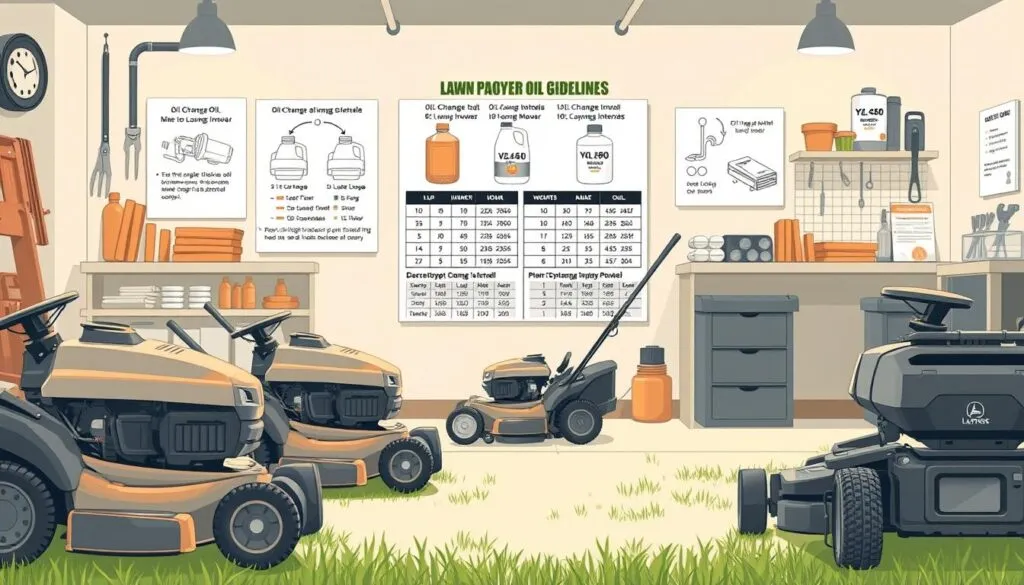
Getting the right amount of lubricant in your equipment makes a huge difference. Too much or too little can cause serious problems. I’ll guide you through the specific needs for various models.
Always check your operator’s manual first. Each engine has unique requirements based on its design. Following these guidelines protects your investment.
Walk-Behind Mower Oil Requirements
Most walk-behind models need between 15 and 18 ounces. This depends on the engine size and configuration. Single cylinder engines typically use less.
Smaller engines might require only 15 ounces. Larger models could need up to 18 ounces. Always verify with your specific manual.
Using the correct amount ensures proper lubrication. It also prevents pressure issues that damage components. Your equipment will last longer with proper care.
Riding Mower Oil Capacity Specifications
Riding mowers have larger engines that need more lubricant. Most require between 48 and 64 ounces. V-twin configurations often need the higher amount.
These engines work harder and generate more heat. Proper capacity maintains cooling and lubrication. It also ensures smooth operation across your lawn.
Briggs & Stratton offers an online Oil Finder tool. This provides exact recommendations for your model. It considers engine type and operating conditions.
Avoiding Overfilling and Underfilling
Overfilling causes the lubricant to foam. This reduces its ability to protect moving parts. It can also damage seals and gaskets.
Underfilling leads to insufficient lubrication. Increased friction causes premature wear. Both situations shorten your equipment’s lifespan.
Add lubricant gradually and check frequently. Allow time for it to settle in the crankcase. Recheck the level before starting the engine.
| Mower Type | Typical Capacity | Engine Configuration | Special Considerations |
|---|---|---|---|
| Walk-Behind | 15-18 ounces | Single cylinder | Check manual for exact amount |
| Riding Mower | 48-64 ounces | V-twin or single | Use Oil Finder for specific models |
| Commercial Units | 64-96 ounces | Multiple cylinders | May require synthetic formulations |
Proper maintenance includes regular level checks. Add small amounts as needed throughout the season. This keeps your equipment running smoothly.
Always dispose of used lubricant responsibly. Many automotive stores accept it for recycling. This protects the environment and your community.
Can I Use Synthetic Oil for My Lawn Mower?
Many equipment owners wonder about upgrading their lubrication strategy. Synthetic formulations represent a significant advancement in small engine protection technology.
These modern products offer distinct advantages over traditional mineral-based options. Understanding their benefits helps make informed maintenance decisions.
Benefits of Synthetic Oil in Small Engines
Synthetic lubricants provide superior protection across temperature extremes. They maintain consistent viscosity from freezing cold to scorching heat.
Cold weather starting becomes noticeably easier with these formulations. The improved flow properties ensure immediate protection upon startup.
Reduced consumption means less frequent top-ups between changes. This translates to better overall engine efficiency and performance.
Enhanced resistance to breakdown under heavy loads extends component life. Your equipment runs smoother and lasts longer with proper synthetic lubrication.
Briggs & Stratton’s Synthetic Oil Recommendations
Briggs & Stratton explicitly recommends synthetic for all their engines. Their warranty-certified 5W-30 and 15W-50 formulations cover all temperature ranges.
These products meet or exceed all manufacturer specifications. Using them ensures compliance with warranty requirements and optimal protection.
The company states synthetic provides “best protection at all temperatures.” This endorsement comes from extensive testing and engineering validation.
“Synthetic oil offers improved starting, less oil consumption, and superior protection across all operating conditions.”
Myths and Facts About Synthetic Oil Performance
Some believe synthetic requires different change intervals. This is completely false – follow your manufacturer’s recommended schedule.
Break-in procedures remain identical with synthetic formulations. New engines benefit equally from proper break-in regardless of lubricant type.
The higher initial cost often deters owners from considering synthetic. However, the extended protection and reduced consumption provide better long-term value.
Commercial applications particularly benefit from synthetic’s stability. Continuous operation in extreme conditions demands the best protection available.
Modern synthetic lubricants represent a smart investment for serious equipment owners. They deliver measurable performance improvements and extended engine life.
Conclusion: Best Practices for Lawn Mower Oil Maintenance
Proper lubrication stands as your equipment’s first defense against wear and failure. Following manufacturer instructions ensures optimal performance through every season.
Always verify the oil level before operation and adhere to recommended change intervals. Synthetic oil provides superior protection across all temperature ranges, especially in cold temperatures.
Consult your operator’s manual for specific recommendations regarding type and capacity. This simple maintenance routine significantly extends engine life while preventing costly repairs.
Investing in proper care today saves money tomorrow. Your equipment deserves the best protection available.
FAQ
What’s the difference between automotive oil and lawn mower oil?
Automotive oil often contains additives that can harm small engines, while mower oil is formulated specifically for high-RPM, air-cooled engines found in lawn equipment.
Can using the wrong oil damage my mower’s engine?
Yes. Incorrect viscosity or additives can lead to poor lubrication, overheating, and increased wear, potentially causing long-term engine failure.
How do I choose the right oil for my mower?
Check your owner’s manual for the recommended SAE grade. Most mowers use SAE 30, but 10W-30 is common in variable temperatures.
When should I change the oil in my lawn mower?
Change it every 25-50 hours of operation or at least once per mowing season, whichever comes first.
How do I check the oil level properly?
A> Ensure the mower is on a level surface, clean the dipstick, reinsert it fully, then remove it to check that the oil reaches the “full” mark.
What’s the oil capacity for a typical walk-behind mower?
Most require about 18-20 ounces, but always confirm in your manual since capacities vary by model.
Is synthetic oil good for lawn mowers?
Yes. Synthetic oil offers better performance in extreme temperatures and provides superior engine protection, as recommended by brands like Briggs & Stratton.
Can I use 10W-30 oil year-round?
In many climates, yes. 10W-30 works well across a range of temperatures, making it a versatile choice for seasonal use.