
That brown, matted layer covering your yard after Michigan’s harsh winter isn’t just unsightly – it’s a barrier to your lawn’s health. Many homeowners grab their most familiar tool, wondering if it can handle this seasonal challenge.
Our state’s unique climate creates specific conditions that affect turf recovery. The snow melt and moist spring weather lead to significant thatch buildup. This dense layer prevents water, nutrients, and sunlight from reaching the soil.
While your mower excels at routine maintenance, it often struggles with thick thatch removal. Using it improperly can actually damage healthy grass underneath or create bare patches.
This guide explores practical techniques and tool combinations that deliver the best results for Michigan lawns. You’ll discover climate-specific practices that promote vibrant growth throughout the season.
Key Takeaways
- Michigan’s seasonal changes create unique lawn care challenges
- Standard mowers have limitations for thick thatch removal
- Proper tool selection prevents damage to healthy turf
- Combination methods yield superior results for lawn health
- Climate-specific practices ensure optimal growth conditions
- Timing your maintenance affects overall recovery success
- Understanding your soil’s needs leads to better outcomes
Understanding Dead Grass and Michigan’s Unique Lawn Challenges
The aftermath of cold months leaves behind a problematic organic barrier that affects turf quality. This layer consists of decomposed plant material that accumulates over time.
Proper management requires understanding both the composition and regional factors influencing this buildup.
What Causes Dead Grass Buildup in Michigan?
Thatch forms naturally from deceased blades, roots, and stems. Excessive accumulation creates issues for property maintenance.
Winter dormancy contributes significantly to plant die-off in this region. The extended cold period stresses turf beyond its recovery capacity.
Overwatering during spring and autumn further compounds the problem. Saturated conditions prevent proper oxygen exchange at root level.
Inadequate maintenance practices accelerate organic matter accumulation. Infrequent aeration and improper mowing height contribute to the issue.
Pest damage from grubs and fungal infections also plays a role. These organisms attack weakened areas, creating additional decomposition.
The Negative Impact of Thatch on Your Lawn’s Health
Thick layers block essential elements from reaching soil. Water, nutrients, and air cannot penetrate effectively to support growth.
This barrier creates ideal conditions for disease development. The moist environment encourages fungal spores and bacterial growth.
Vitality decreases as the turf struggles to access resources. New shoots cannot establish strong root systems through the dense mat.
Visual indicators include patchy appearance and weak coloration. Properties may show uneven greening during recovery periods.
Michigan’s climate exacerbates these challenges through extended dampness. Spring melt and autumn rains maintain high moisture levels in the organic layer.
Addressing this issue early prevents long-term damage to your landscape. Understanding these factors leads to more effective revitalization strategies.
Proactive management significantly improves overall turf quality. The next sections explore practical approaches for dealing with this seasonal challenge.
What Is a Lawn Mower’s Primary Role in Lawn Maintenance?
Your turf equipment serves a specific purpose in landscape upkeep. These machines excel at maintaining visual appeal through consistent height management.
Their design focuses on surface-level maintenance rather than deep revitalization. Understanding this distinction helps property owners make informed decisions.
How Standard Mowing Affects Grass and Debris
Regular cutting creates a uniform appearance across your property. The blades slice through green growth and surface-level organic matter.
Light debris often gets collected in attached catchers during this process. Heavier accumulations typically remain undisturbed beneath the cutting deck.
Multiple passes might improve superficial cleanup in some situations. Damp conditions significantly reduce effectiveness for debris extraction.
The Functional Difference Between Cutting and Removing
Cutting involves slicing through materials at ground level. Removing requires extracting matter from the turf entirely.
Most standard equipment handles the first function exceptionally well. The second task demands different mechanisms and attachments.
This distinction becomes crucial when addressing thick layers thatch. Surface cutting leaves deeper accumulations unaffected.
| Function | Standard Mower Capability | Specialized Attachment Performance |
|---|---|---|
| Grass Cutting | Excellent | Excellent |
| Light Debris Collection | Good | Very Good |
| Thatch Penetration | Poor | Good with Dethatcher |
| Wet Conditions Performance | Fair | Good with High-Lift Blades |
Several attachments enhance basic equipment functionality. Thatching blades lift organic matter for better collection.
Specialized catchers improve debris removal during mowing sessions. The Mammotion YUKA robotic system offers optional sweeping kits for enhanced cleanup.
These additions help bridge the gap between cutting and extraction. They still work best for moderate accumulations rather than severe cases.
Routine maintenance benefits greatly from standard equipment use. Seasonal challenges often require supplemental approaches.
Integrated care practices yield the best outcomes for turf health. Understanding your equipment’s capabilities prevents disappointment and damage.
Can a Lawn Mower Remove Dead Grass in Michigan? The Direct Answer
Spring revitalization often begins with assessing what tools can handle winter’s aftermath. Your standard equipment offers partial solutions rather than complete answers for seasonal cleanup.
I find these machines work best for superficial organic matter rather than deep accumulations. Their effectiveness depends entirely on your specific situation and property condition.
When a Mower Is Effective for Dead Grass Removal
Light surface layers respond well to standard cutting with collection systems. Dry conditions significantly improve debris extraction during routine maintenance.
Multiple passes often yield better outcomes for moderate accumulations. The right attachments enhance basic functionality for seasonal cleanup.
- Post-winter cleanup of thin organic layers
- Regular maintenance with bagging systems engaged
- Dry conditions that prevent clumping and clogging
- Moderate accumulations that haven’t matted down
The Significant Limitations You Need to Know
Thick matted layers defy standard equipment capabilities. Wet environments common during Michigan springs reduce performance dramatically.
Improper use risks harming your turf’s foundation and creating bare areas. These machines simply lack the power and design for severe cases.
Clogging becomes frequent when dealing with dense organic matter. The cutting action leaves deeper accumulations completely unaffected.
Standard equipment serves maintenance needs rather than rehabilitation tasks. Understanding this distinction saves time and prevents frustration.
I recommend evaluating your property’s condition before deciding on approach. Light duties suit conventional equipment while heavier jobs demand specialized tools.
The next section explores practical techniques for those situations where your machine can contribute to the solution.
My Step-by-Step Guide to Removing Dead Grass with Your Mower
Proper technique transforms ordinary equipment into effective cleanup tools. I developed this approach through years of maintaining properties across various Michigan regions.
Following these steps maximizes your machine’s capabilities while protecting turf integrity. The method works particularly well for moderate organic accumulations.
Step 1: Preparing Your Michigan Lawn for the Task
Begin by walking your property to assess coverage density. Look for variations in thickness across different zones.
Clear all branches, toys, and decorative items from the work area. Mark sprinkler heads and fill any visible holes to prevent equipment damage.
Hydrate the turf thoroughly one to two days before scheduled work. Use a rain gauge to ensure approximately one inch of water penetration.
Early spring and autumn provide ideal conditions for this process. These seasons offer moderate temperatures and adequate moisture levels.
Step 2: Adjusting Your Mower Settings for Optimal Results
Set your cutting height between 2.5 and 3.5 inches based on turf variety. Kentucky Bluegrass performs best at 2.5 to 3 inches.
Ensure blades are sharpened recently for clean cuts. Dull edges tear rather than slice, causing stress to living plants.
Attach collection bags if dealing with significant debris accumulation. Empty catchers work more efficiently than full ones.
Step 3: Executing the Mowing Technique for Debris Removal
Work only when the turf is completely dry to prevent clumping. Morning dew evaporation typically indicates readiness.
Make your first pass in a north-south direction across the property. Follow with perpendicular east-west movements.
Add diagonal passes for stubborn areas needing extra attention. Multiple directions lift embedded matter effectively.
Avoid working during extreme heat to prevent plant stress. Mid-morning or late afternoon sessions yield better outcomes.
Step 4: Deciding Between Collecting and Mulching
Choose collection for heavy thatch situations requiring extraction. Bagged material works well for composting initiatives.
Opt for mulching when dealing with light organic layers. Finely chopped debris decomposes quickly, nourishing the soil underneath.
Consider your overall turf health when making this decision. Weakened areas benefit from removal rather than added organic matter.
Always clean your equipment thoroughly after completing the job. Proper maintenance ensures readiness for future sessions.
These techniques deliver excellent results for seasonal cleanup when applied correctly. They represent practical approaches for homeowners seeking efficient solutions.
Remember that severe cases might require additional tools and methods. The next section explores specialized equipment for challenging situations.
Essential Tools and Methods Beyond the Lawn Mower
Sometimes standard equipment reaches its limits with stubborn organic buildup. I discovered specialized approaches deliver superior outcomes for challenging turf situations.
These alternative methods address deep accumulations that resist conventional maintenance. They restore vitality to struggling landscapes through targeted intervention.
Power Dethatchers and Scarifiers for Heavy Thatch
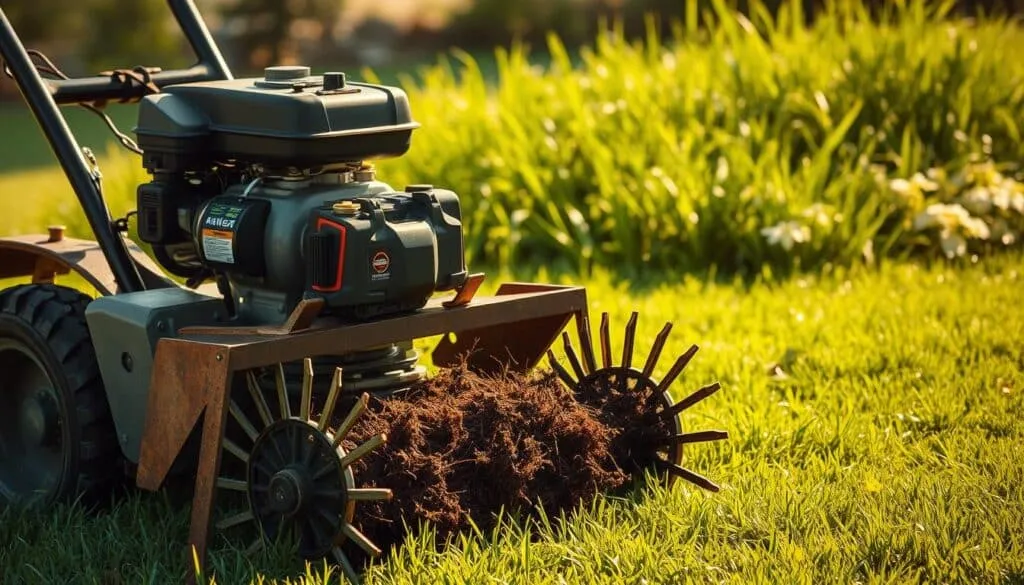
Motorized units tackle dense organic layers effectively. Their rotating blades slice through matted debris with impressive force.
These machines excel at penetrating thick accumulations that choke turf health. They create ideal conditions for recovery by opening the soil surface.
Large properties benefit greatly from their coverage capacity. The process typically requires follow-up cleanup after completion.
Consider rental options for occasional use on bigger jobs. Professional services offer another solution for severe cases.
Manual Tools: Rakes and Dethatching Rakes
Traditional implements provide excellent control for moderate issues. Standard models work well for surface-level debris collection.
Specialized versions feature sharp tines that dig deeper into problem zones. They demand physical effort but deliver precise results.
I recommend these for smaller spaces or spot treatment applications. Their affordability makes them accessible for most homeowners.
Proper technique prevents unnecessary strain during extended sessions. Alternate pulling motions with brief rest periods.
Natural Lawn Revitalization Techniques
Organic approaches build long-term resilience into your turf system. They work harmoniously with regional climate patterns.
Overseeding fills thin patches with vigorous cool-season varieties. Kentucky Bluegrass establishes well during cooler months.
Composting transforms organic matter into valuable soil amendments. This practice recycles nutrients back into the earth.
Core aeration relieves compaction from heavy clay soils. It improves water penetration and root development significantly.
Organic fertilizers support sustainable growth without chemical dependency. They release nutrients gradually over extended periods.
Combining these methods creates comprehensive renewal strategies. For example, overseeding works best following aeration for optimal seed-to-soil contact.
Each option serves specific purposes within overall property care. Power tools handle large areas efficiently despite higher costs.
Manual implements offer budget-friendly solutions for targeted applications. Natural techniques promote enduring health through ecological balance.
Integrating multiple approaches often yields the best outcomes. Start with dethatching followed by aeration and overseeding.
This layered strategy addresses immediate issues while building future resilience. Your turf deserves this comprehensive attention.
Tailoring Your Lawn Care Strategy for Michigan’s Climate
Adapting your approach to regional weather patterns makes all the difference. I learned this through years of maintaining properties across different zones.
Our state presents unique challenges that demand specific timing and methods. Getting this right prevents stress and promotes vigorous turf development.
The Best Seasons for Dead Grass Removal: Spring and Fall
Early spring offers ideal conditions after snow melts away. The moist earth allows easy penetration for dethatching tools.
Autumn brings cooler temperatures that reduce plant stress. These months provide perfect moisture levels for recovery work.
I always watch soil thermometers before starting major projects. Readings near 45°F signal go-time for spring revitalization.
Fall work prepares your turf for winter dormancy. Strong roots develop before freezing conditions arrive.
Integrated Lawn Care: Aeration, Overseeding, and Fertilizing
Core aeration relieves compaction from heavy clay soils. This process lets oxygen and water reach deep roots.
Overseeding fills thin patches with robust cool-season varieties. I prefer Kentucky Bluegrass for its durability.
Balanced nutrients support sustained development throughout the year. Nitrogen-rich formulas work well for our region’s needs.
These practices combine into powerful renewal strategies. Aerate first, then seed, and finally nourish.
| Practice | Best Timing | Key Benefit |
|---|---|---|
| Aeration | Early Spring or Fall | Reduces Soil Compaction |
| Overseeding | After Aeration | Fills Bare Spots |
| Fertilizing | When Grass Greens Up | Supports Growth |
| Dethatching | Dry Spring Days | Removes Thick Layers |
What to Avoid: Timing and Conditions That Cause Damage
Never work on saturated earth to prevent compaction issues. Wait until the surface feels firm underfoot.
Extreme heat causes unnecessary stress during recovery periods. Schedule tasks for cooler morning or evening hours.
Applying nutrients too early wastes resources and may cause burn. Wait until active development begins.
Summer brings drought risk that hinders establishment. Focus efforts on spring and autumn instead.
Using GDDTracker.net helps time pre-emergence applications correctly. This prevents herbicide damage to new shoots.
Proper timing transforms good intentions into great results. Your turf deserves this climate-smart approach.
Conclusion: Achieving a Healthy, Vibrant Michigan Lawn
Proper turf maintenance combines tools and timing for best results. I always assess the lawn condition first, then select the right tools.
For light dead grass, a standard machine works well. Thick thatch needs dethatchers or rakes.
Spring and fall offer ideal conditions for this process. Avoid wet soil and extreme heat.
Integrate aeration, overseeding, and fertilizer for long-term health. This prevents disease and fills bare spots.
With these best practices, your property will thrive through Michigan’s winters.
FAQ
What causes dead grass buildup in Michigan?
I find that Michigan’s harsh winters, summer heat stress, and disease are primary culprits. This climate creates thick layers of thatch, which is a mat of dead stems and roots that smothers healthy turf.
Can my mower handle thick thatch removal?
My experience shows that standard equipment is not designed for heavy-duty removal. It cuts living blades effectively but struggles with thick layers, often just shredding debris without clearing it.
When is using my mower for debris removal effective?
I recommend it only for light surface cleanup. If the layer is thin, a mulching blade can chop material finely, allowing it to decompose and nourish the soil without harming growth.
What are the best tools for severe thatch problems?
For serious issues, I use power dethatchers or scarifiers. These machines aggressively pull up matted layers. For smaller areas, a sturdy, manual dethatching rake gets the job done.
What is the best season for dethatching in Michigan?
I always target early fall or late spring. This timing gives turf optimal recovery conditions—moderate temperatures and adequate moisture—to heal and fill in bare spots quickly.
Should I bag or mulch the clippings during cleanup?
I bag the clippings when actively removing debris to prevent smothering. For general maintenance, I mulch, as it returns valuable nutrients to the soil and promotes lawn health.
What other care practices should I combine with dethatching?
I integrate core aeration, overseeding, and fertilizing. This holistic approach addresses soil compaction, fills patches, and provides essential food for vigorous, healthy grass regrowth.