
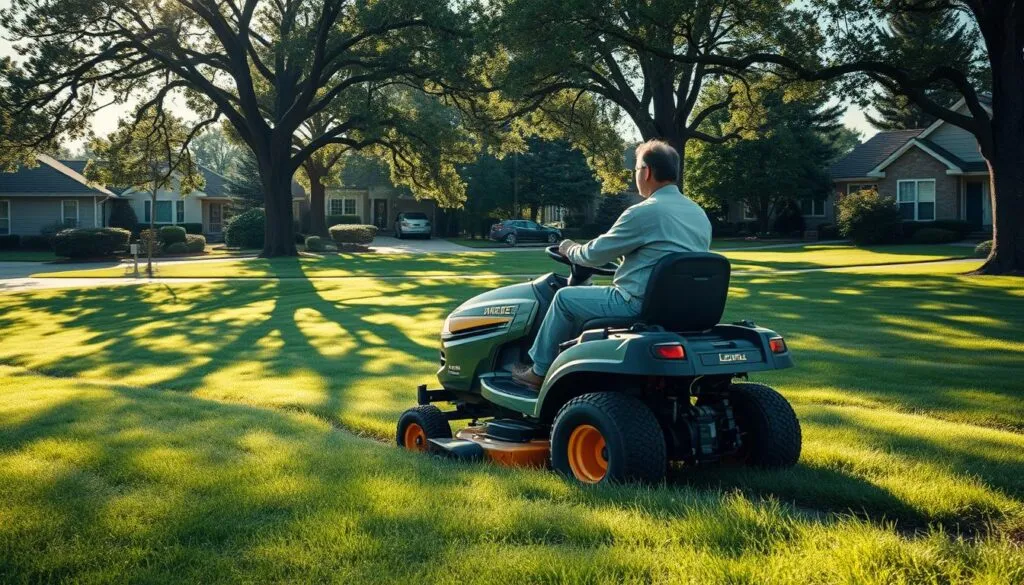
What if your weekend chore could lead to serious legal trouble? Many people assume operating a riding lawn mower is harmless, especially on private property. This belief, however, can be a dangerous misconception.
Driving under the influence laws often have a broad definition of what constitutes a “vehicle.” In many states, this definition is not limited to cars and trucks. It can include various motorized conveyances, even those used for yard work.
Real cases prove this point. For instance, a Pennsylvania man faced arrest for operating his mower with an open beer early one morning. Arizona’s strict stance on DUI offenses, with thousands of convictions annually, shows how seriously these charges are taken.
This blog explores the surprising legal landscape where a simple ride across the lawn can result in significant penalties. Understanding these laws is critical for everyone.
Key Takeaways
- DUI laws in many states have a broad definition of a “vehicle” that can include lawn mowers.
- Operating any motorized equipment under the influence poses significant risks.
- Legal consequences for a mower-related DUI can be as severe as those for a car.
- Your location, such as public roads versus private property, is a major factor.
- Real-world cases exist where individuals have faced charges for this exact situation.
Exploring the Legal Landscape for Lawn Mower DUI
State statutes often contain surprisingly broad definitions that encompass various motorized devices under DUI legislation. These legal frameworks extend beyond typical automobiles to include equipment like riding mowers.
Defining “Vehicle” Under DUI Laws
Arizona’s legal code provides a clear example of expansive vehicle definitions. The Arizona Revised Statutes §28-101 classifies any self-propelled device capable of transporting people or property as a vehicle.
This interpretation means riding lawn equipment could fall under DUI statutes. Courts have consistently applied this broad definition to unconventional transportation methods.
Previous cases involving golf carts and bicycles demonstrate this legal approach. The classification focuses on motorized capability rather than traditional vehicle appearance.
Understanding Public vs Private Property Considerations
The location of operation significantly impacts DUI enforcement. Arizona law specifically prohibits intoxicated vehicle operation on “public highways.”
This term includes any publicly maintained road, street, or way open to public use. Even private property without clear boundaries like fences may be subject to these laws.
Property accessibility to the public becomes the determining factor. Mowing while intoxicated could lead to charges if your yard meets certain public access criteria.
Can You Get a DUI on a Lawn Mower? Examining Real-life Cases and Legislation

Several high-profile cases have established precedent for DUI enforcement on non-traditional vehicles like riding mowers. These real-world examples demonstrate how broadly courts interpret vehicle operation laws.
Case Studies and Unconventional DUI Incidents
A Pennsylvania incident involved a 55-year-old man operating his lawn equipment with an open beer during early morning hours. Police reported detecting alcohol odor and discovered an empty container in the machine’s storage compartment.
The individual claimed he was traveling six miles to his residence. This situation illustrates how people sometimes use riding mowers for transportation beyond yard work.
In California, a 60-year-old man faced similar charges while driving a golf cart at a resort. Officers pulled him over with a Coors beer visible in the cupholder.
This resulted in DUI charges requiring substance abuse education to regain driving privileges. The consequences highlight the seriousness of these violations.
Legal Interpretations Across Different States
Wisconsin legislation explicitly prohibits operating any vehicle while intoxicated on public roads. This includes motorized and non-motorized conveyances.
State approaches vary significantly in their DUI standards. While Arizona and Wisconsin employ broad interpretations, other jurisdictions maintain different criteria.
These documented cases prove that law enforcement actively pursues charges for unconventional vehicle operation. The legal risk is genuine and substantiated by court outcomes.
Penalties and Consequences of Operating a Mower Under the Influence
Facing charges for impaired operation of a riding lawnmower brings consequences that extend far beyond the courtroom. Arizona’s legal framework treats these offenses with the same severity as traditional automobile violations.
Potential Jail Time, Fines, and License Suspension
According to Arizona Revised Statutes §28-1381, mandatory incarceration ranges from one day to six months. A minimum ten-day sentence applies, though nine days may be suspended with alcohol education completion.
Financial penalties start at $1,250 for first-time regular offenses. Extreme cases carry fines exceeding $2,500. License suspension lasts at least ninety days, with maximum periods reaching one year.
Additional requirements include probation up to five years and mandatory substance screening. Community service and ignition interlock devices represent further obligations.
Impact on Personal and Legal Standing
The repercussions stretch well beyond legal penalties. Employment prospects often suffer significantly after any conviction involving motor vehicles.
Professional licenses and security clearances may face review. Personal reputation damage creates lasting challenges in various life aspects.
Seeking experienced legal consultation becomes crucial when confronting these charges. Proper defense strategies help navigate the complex legal landscape effectively.
Conclusion
Operating machinery after consuming alcohol carries significant legal risks that extend beyond traditional vehicles. The possibility of facing charges for impaired operation of a riding lawnmower is not theoretical but supported by documented cases and convictions.
State laws frequently employ broad definitions of what constitutes a “vehicle” and “public highway.” This legal interpretation means riding equipment falls under DUI statutes, especially when used on property accessible to the public.
The penalties for such offenses mirror those for conventional automobile violations. Jail time, substantial fines, and license suspension represent serious consequences that impact personal and professional standing.
Understanding these regulations helps prevent life-altering legal situations. Anyone confronting charges related to motorized equipment operation should seek professional legal consultation immediately to explore defense options.
FAQ
What is the legal definition of a motor vehicle in DUI laws?
The legal definition of a motor vehicle often includes any self-propelled device not operating on rails. This broad definition can encompass riding lawnmowers, golf carts, and even motorized bar stools if operated on public roads or areas.
Does it matter if I’m on my own property or a public street?
Yes, location is a critical factor. Police typically have jurisdiction on public roads, streets, and highways. Operating a mower under the influence on private property is less likely to lead to charges, but it is not an absolute guarantee against a DUI arrest.
Have there been real incidents where someone received a DUI on a lawnmower?
Absolutely. There are documented cases across the United States. Individuals have been arrested for DUI while riding lawnmowers on public roads, often while attempting to travel short distances after consuming alcohol.
Are the DUI laws for a lawnmower the same in every state?
No, state laws vary significantly. Some states have specific statutes that include lawn and garden equipment, while others rely on broader interpretations of “vehicle.” Consulting with a local attorney is essential to understand your specific state’s legislation.
What are the potential penalties for a lawn mower DUI conviction?
Penalties can be severe and mirror those for a standard automobile DUI. They may include jail time, substantial fines, mandatory alcohol education programs, and a suspension of your driver’s license, impacting your personal and legal standing.
Can my driver’s license be suspended for a lawnmower DUI?
In many jurisdictions, yes. A conviction for driving under the influence, even on a riding lawn mower, can lead to the suspension of your driving privileges for operating conventional motor vehicles.