
What if everything you thought about lawn maintenance timing was wrong? Many homeowners face this dilemma when rainfall complicates their yard care schedule.
Wet conditions present unique challenges for property maintenance. Understanding moisture levels becomes critical for protecting your landscape investment.
Proper timing affects both turf health and equipment performance. Various factors influence whether cutting damp vegetation serves your landscape’s best interests.
This guide explores the considerations that determine optimal maintenance windows. You’ll discover practical approaches for managing your property following precipitation events.
The right techniques preserve your yard’s appearance while extending your equipment’s lifespan. Smart practices ensure your outdoor space remains healthy and attractive throughout the season.
Key Takeaways
- Moisture levels significantly impact cutting quality and turf recovery
- Equipment performance varies dramatically in wet conditions
- Timing decisions affect long-term lawn health
- Different grass types respond uniquely to post-rain maintenance
- Proper techniques prevent soil compaction and turf damage
- Weather patterns should guide your maintenance schedule
- Equipment maintenance becomes more critical after wet use
Understanding the Challenges of Mowing Wet Grass
Working with damp vegetation creates mechanical challenges that compromise cutting precision. Moisture fundamentally changes how your equipment interacts with turf.
How Wet Conditions Affect Grass Blade Health
Water weight causes individual blades to bend and clump together. This positioning prevents clean cutting action from your mower.
The result is tearing rather than slicing. Damaged blades develop brown tips and become vulnerable to disease.
The Impact on Lawn Appearance and Uniformity
Uneven cutting creates a patchy, choppy landscape appearance. Your mower misses bent blades while tearing others.
Once vegetation dries and stands upright, the unevenness becomes obvious. This often requires a second cutting session to restore proper appearance.
Proper blade position is essential for uniform height. Moisture disrupts this fundamental requirement for quality maintenance.
Risks Involved in Mowing Wet Grass
Operating lawn equipment on saturated turf introduces significant hazards beyond simple inconvenience. These dangers affect both your landscape’s health and your equipment’s longevity.
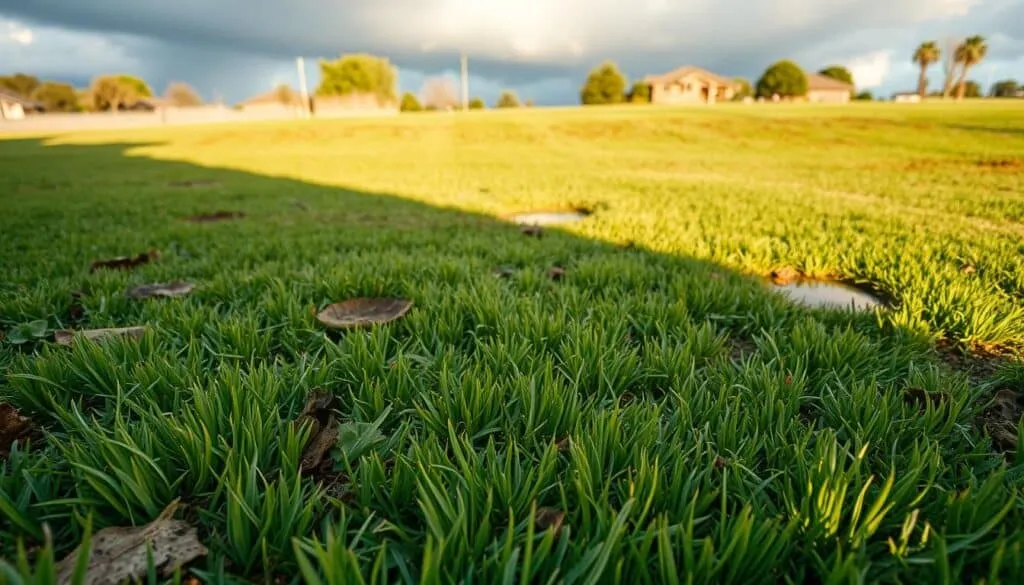
Cutting wet grass creates perfect conditions for fungal diseases to establish footholds. Torn blades provide entry points for pathogens while moisture helps them spread rapidly.
Increased Risk of Lawn Diseases
Various fungal infections thrive in damp environments with damaged vegetation. Your mower can inadvertently distribute spores across the entire property.
Common diseases that flourish after cutting wet grass include:
| Disease Name | Visual Symptoms | Spread Mechanism |
|---|---|---|
| Brown Patch | Irregular brown circles | Spores travel on wet clippings |
| Dollar Spot | Silver-dollar-sized bleached areas | Fungi grow in clumped grass |
| Red Thread | Pinkish-red dead patches | Moisture enables rapid colonization |
| Rust Disease | Orange spots on blades | Spreads through blade-to-blade contact |
Potential Damage to Your Mower
Wet conditions strain mechanical components beyond normal operating parameters. Clippings clump underneath the deck, blocking proper airflow and movement.
This accumulation forces the engine to work harder, potentially causing overheating. Moisture exposure also accelerates corrosion on blades and metal surfaces.
Electrical equipment faces additional hazards in damp environments. Proper maintenance becomes critical following exposure to wet conditions.
Best Time to Mow: Timing and Moisture Check
Proper timing decisions rely on understanding how quickly your landscape dries after rainfall. Different precipitation levels create varying drying timelines that affect maintenance schedules.
Light showers typically require a 2 to 5 hour waiting period before vegetation becomes manageable. Heavy downpours demand at least 24 hours for sufficient drying. These intervals protect both turf health and equipment performance.
How to Test Your Lawn’s Dryness
Simple field tests provide reliable moisture indicators before starting your mower. The shoe test involves walking across the property to check for dampness.
If footwear becomes moist during this walk, postpone the cutting session. Another effective method is the footprint examination. Visible impressions left in the turf signal excessive moisture levels.
Grass that springs back immediately after foot pressure indicates ideal cutting conditions. This resilience demonstrates sufficient dryness for maintenance activities. Patience during this assessment phase prevents long-term landscape damage.
Environmental factors like temperature and sunlight exposure influence drying rates. Understanding these variables helps property owners make informed decisions about the optimal maintenance window.
Can you mow grass after rain: Techniques for Optimal Lawn Care
When rainfall disrupts your regular cutting schedule, smart adjustments preserve turf health. Sometimes waiting for perfect drying conditions isn’t practical. Strategic approaches balance maintenance needs with landscape protection.
Adjusting Your Mowing Schedule
Monitor weather forecasts to plan cutting sessions around dry periods. During rainy seasons, extend intervals between maintenance. This flexibility prevents rushed decisions in damp conditions.
Proper timing reduces stress on both vegetation and equipment. Your mower performs better on dry turf.
Benefits of Waiting for the Grass to Dry
Patience yields cleaner cuts and healthier growth patterns. Dry blades stand upright for uniform trimming. This approach minimizes disease risks and equipment strain.
The result is a more attractive landscape with reduced maintenance needs.
Seasonal and Climate Considerations
Different regions require unique strategies. Humid areas may need more frequent attention with careful timing. Understanding local patterns helps optimize your approach.
| Grass Type | Wet Tolerance | Recovery Time | Recommended Approach |
|---|---|---|---|
| Cool-Season | Moderate | 2-3 days | Wait for partial drying |
| Warm-Season | Lower | 3-5 days | Complete drying preferred |
| Mixed Lawns | Variable | 2-4 days | Conservative timing |
Tailor your strategy based on vegetation type and local climate patterns. This ensures optimal results throughout the year.
Tips for Mowing Wet Grass if You Must
When circumstances force action on damp turf, specific techniques can minimize potential damage. Consult your equipment manual for proper maintenance procedures and safety gear recommendations.
Setting a Higher Mower Height
Adjust your cutting deck to the highest setting available. This approach reduces strain on the engine and prevents severe tearing of moisture-laden vegetation.
Cutting too short creates clumping and uneven results. Higher settings allow cleaner cuts despite challenging conditions.
Mowing Slowly for an Even Cut
Reduce your pace significantly when working with damp turf. Slow movement enables blades to cut more effectively.
This technique produces uniform results and minimizes clumping. Patient operation yields better appearance and reduces equipment stress.
| Adjustment | Benefit | Risk Reduction |
|---|---|---|
| Higher Cutting Height | Less engine strain | Prevents blade damage |
| Slower Operation Pace | Even cutting action | Reduces clumping issues |
| Sharp Blade Maintenance | Cleaner cuts | Minimizes disease entry |
| Side Discharge Mode | Prevents clogging | Avoids deck buildup |
Exercise extra caution on slopes where wet conditions increase slipping hazards. Regular cleaning breaks prevent grass accumulation under the deck.
While these strategies help manage difficult situations, waiting for drier conditions remains the safest approach for lawn health.
Choosing the Right Mower for Wet Conditions
Different mower types offer varying advantages for managing landscapes during periods of high humidity and precipitation. Equipment selection significantly influences how your property handles moisture-laden vegetation.
Understanding equipment capabilities helps minimize problems when dealing with damp turf. The right choice preserves lawn health while maintaining appearance.
Comparing Self-Propelled and Robotic Mowers
Self-propelled mowers provide independent forward movement that reduces physical effort. This feature delivers steadier cutting action on challenging terrain.
These mowers work well for medium-sized properties with moderate slopes. Heavier models, however, risk soil compaction in saturated conditions.
Robotic options like Husqvarna Automower® maintain consistent schedules that prevent overgrowth during wet periods. Automated systems reduce the need for manual intervention.
No equipment completely eliminates wet grass challenges. Proper selection based on your specific landscape characteristics minimizes potential damage.
Optimizing Mower Settings and Maintenance
Your mower’s performance during wet conditions depends heavily on two key factors: blade sharpness and deck cleanliness. These elements work together to determine cutting quality and equipment longevity.
Maintaining Sharp Blades for Clean Cuts
Sharp mower blades create clean slices rather than tearing vegetation. This precision becomes especially important when handling damp turf.
Dull blades rip through moisture-laden grass blades, leaving ragged edges. These torn surfaces invite disease and slow recovery.
Working with wet conditions accelerates blade dulling. Expect to sharpen or replace cutting edges more frequently during rainy periods.
Cleaning the Mower Deck to Prevent Clumps
Wet grass clippings tend to stick inside the mower deck. This accumulation restricts airflow and movement.
Built-up clippings force the engine to work harder, creating unnecessary strain. Regular cleaning breaks prevent overheating and potential stalling.
Never allow damp clippings to dry inside your equipment. Moisture trapped against metal surfaces promotes rust formation.
Always disconnect the spark plug before deck maintenance. Use appropriate tools to safely remove stuck vegetation without damaging components.
Proper height adjustment reduces clumping issues. Higher settings help manage challenging conditions more effectively.
Additional Lawn Care Tips to Avoid Future Issues
Long-term lawn health requires proactive strategies that prevent issues before they develop. Smart practices protect your landscape investment and reduce maintenance challenges.
Heavy equipment on saturated ground creates lasting damage. Understanding these risks helps maintain turf vitality throughout the season.
Preventing Soil Compaction and Ruts
Machine weight pressing on moist earth squeezes out essential air pockets. This soil compaction suffocates root systems by blocking oxygen flow.
Deep impressions left by tires become permanent ruts over time. These depressions collect standing water and create mosquito breeding sites.
Core aeration reverses compaction damage by creating channels for air and nutrients. This process revitalizes struggling turf areas effectively.
| Problem | Cause | Solution |
|---|---|---|
| Soil Compaction | Heavy equipment on wet soil | Regular aeration |
| Rut Formation | Mower wheels on soft ground | Leveling and reseeding |
| Poor Drainage | Compacted soil layers | Deep tine aeration |
Using Grasscycling Effectively on Dry Grass
Dry clippings naturally decompose into nutrient-rich fertilizer. This grasscycling technique returns valuable elements to the soil.
Moisture causes clippings to clump instead of spreading evenly. Wet masses block sunlight and create thatch buildup problems.
Double-cutting distributes excess clippings more uniformly. Bagging surplus material for compost prevents overwhelming the turf.
Proper management maintains healthy decomposition rates. This approach supports vigorous growth without chemical additives.
Conclusion
Making smart decisions about your lawn maintenance schedule pays lasting dividends for your property’s health and value. While tackling wet grass is sometimes necessary, waiting for drier conditions consistently delivers superior results.
Patience protects your lawn from disease and your mower from strain. This approach leads to a healthier, more attractive landscape.
Apply the techniques discussed, from testing moisture to adjusting equipment settings. These practices minimize problems when perfect conditions aren’t available.
Understanding these principles turns lawn care into a valuable investment. Consistent application ensures long-term success for your outdoor space.
FAQ
Is it safe to operate a lawn mower on wet soil?
Operating machinery on wet soil is hazardous. The added weight can cause the mower to sink, leading to ruts and significant soil compaction. This is especially risky on slopes where slipping becomes a serious safety concern.
What lawn diseases are encouraged by cutting wet grass?
Mowing when the lawn is damp can spread fungal diseases like brown patch. The moisture helps pathogens move from blade to blade, increasing the risk of an outbreak that can damage your turf.
How does wet grass affect the mower’s engine?
Wet conditions put extra strain on the engine. The heavy, water-laden grass is harder to cut, forcing the motor to work harder. This can lead to overheating and potential long-term damage to your equipment.
What is the best way to test if my lawn is dry enough?
Walk across the area in clean shoes. If no water marks appear on your footwear and the grass blades spring back up, it is likely dry enough. Also, check that the soil underneath is not soggy.
Why should I set a higher cutting height in damp conditions?
Raising the mower deck reduces strain on the machine. It also leaves more leaf surface, which helps the turf recover faster and reduces stress on the individual grass blades after a trim.
How can I prevent clumping when I must cut wet grass?
Always ensure your mower blades are sharp for a clean cut. After finishing, thoroughly clean the mower deck to remove all wet clippings. This prevents mold and keeps your equipment in good working order.
Are self-propelled mowers better for wet lawns than robotic models?
Self-propelled mowers offer more control and power, which can be helpful in tough conditions. Most robotic mowers are not designed for wet lawns and can get stuck or spread disease, making them a poor choice after rain.