
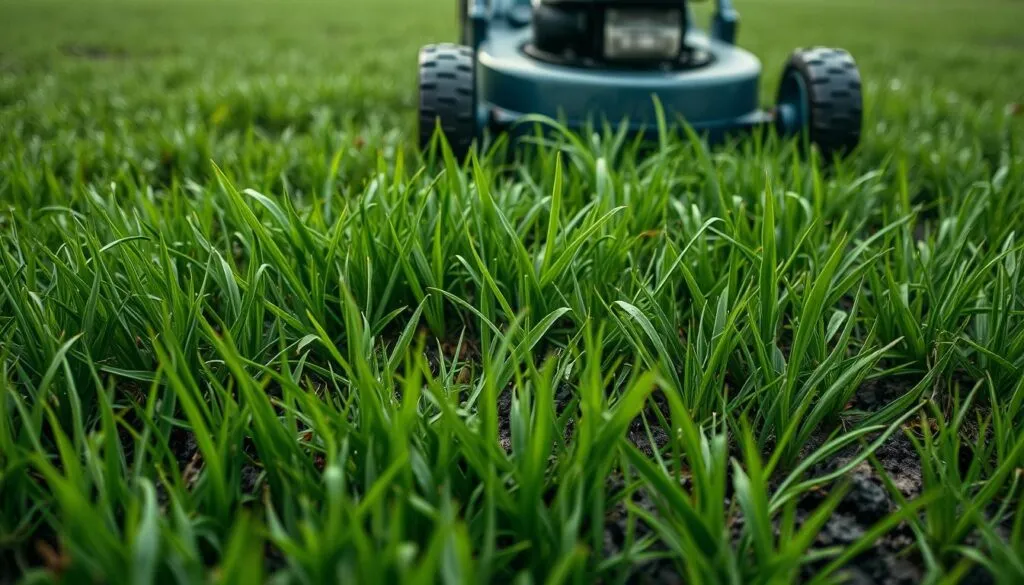
Have you ever wondered if the common advice to avoid cutting a damp lawn is just an old myth? Many homeowners face this exact puzzle after a rain shower. Your green space needs attention, but the weather hasn’t cooperated.
This situation creates a real challenge for your yard maintenance routine. Deciding to proceed or wait involves weighing several important factors. The health of your turf, the performance of your equipment, and your personal safety are all on the line.
According to university extensions and professional landscapers, patience is the best policy. They generally suggest waiting a few hours after a light rain. For heavier downpours, a full day of drying is often recommended.
This guide explores the science behind these recommendations. You will learn the risks involved and discover practical techniques for unavoidable situations. The goal is to provide evidence-based guidance for informed decisions about your property’s care.
Key Takeaways
- Cutting damp turf presents significant risks to lawn health and mower performance.
- Expert advice strongly recommends waiting for the grass to dry completely.
- Patience after rainfall leads to a cleaner cut and a healthier yard.
- Understanding the proper timing can prevent damage and safety hazards.
- Specific techniques exist to minimize problems if mowing is absolutely necessary.
- Alternatives to immediate cutting can provide a solution during wet periods.
Understanding the Risks of Mowing Wet Grass
There are significant drawbacks to trimming moist vegetation that every property owner should recognize. The decision to proceed with cutting damp turf carries consequences affecting both equipment performance and landscape health.
Waterlogged conditions create multiple hazards that extend beyond surface appearance. Proper timing prevents long-term damage to your green space.
Lawn Damage and Tear Patterns
Moisture causes individual blades to bend rather than stand upright. This bending prevents clean cutting action from mower blades.
Instead of slicing neatly, equipment tears through saturated vegetation. Ragged edges result in brown tips and increased disease susceptibility.
The uneven appearance becomes more noticeable after drying occurs. Patches of torn grass create an unsightly landscape that requires additional maintenance.
Potential for Soil Compaction
Heavy equipment on saturated ground compresses soil particles dramatically. This compression reduces space for essential air and water movement.
Root systems struggle to access nutrients in compacted earth. The resulting stress weakens turf health for months following the incident.
Visible ruts may form, especially with riding mowers on soft ground. Recovery from compaction damage requires significant time and effort.
| Condition | Cutting Quality | Soil Impact | Equipment Performance |
|---|---|---|---|
| Dry Conditions | Clean, even cuts | Minimal compaction | Optimal operation |
| Wet Conditions | Ragged, torn edges | Significant compaction | Strained operation |
| Damp Conditions | Uneven results | Moderate compaction | Reduced efficiency |
Understanding these fundamental risks helps appreciate why professionals recommend waiting for dry conditions. The short-term convenience rarely outweighs the long-term damage potential.
Why Wet Grass Causes Uneven Cuts
Waterlogged turf presents a unique physical challenge that standard mowing equipment cannot overcome effectively. The weight of water droplets causes individual blades to bend and lie flat against the ground.
This horizontal positioning prevents proper engagement with mower blades. Instead of standing upright for clean slicing, moist vegetation gets pushed aside or torn.
Attempting to cut wet grass results in missed patches where blades escape contact entirely. The machine passes over flattened areas without making contact, creating inconsistent height patterns.
Moisture also reduces cutting friction needed for clean results. Blades tend to clump together during mowing, causing some areas to receive multiple passes while others get skipped.
The uneven appearance becomes dramatically more visible after drying occurs. Once vegetation returns to its natural upright position, the patchy cutting pattern stands out clearly.
This phenomenon occurs regardless of equipment type or blade sharpness. Cutting wet grass almost guarantees a striped, unprofessional appearance that often requires re-cutting within days.
Can You Mow the Lawn When It’s Wet
Physical possibility does not equate to horticultural wisdom when dealing with saturated turf. The machinery will operate, but the outcome is far from ideal. Experts consistently advise against this practice due to the significant risks involved.
The central question shifts from feasibility to justification. Is the potential harm to your landscape and equipment worth the immediate convenience? Professional landscapers and university extensions universally recommend patience, waiting for dry conditions.
Research from Purdue University offers a nuanced perspective. While mowing dry grass is the gold standard, allowing turf to become excessively tall during prolonged rainy spells is also detrimental. In these specific wet conditions, a trim of slightly damp grass becomes the lesser of two evils.
This action should be viewed strictly as an emergency measure. It is not a routine to incorporate into your care schedule. Evaluating your specific situation—grass height, soil saturation, and the weather forecast—is essential before proceeding.
The consensus is clear. Technically, one can mow wet grass. However, this should only be a last resort for unavoidable circumstances, not a standard practice.
Impact on Mower Performance and Safety
Damp conditions transform routine yard maintenance into a high-risk activity with serious consequences for equipment longevity. Moisture affects every component of your cutting system, from the engine to the cutting mechanism.
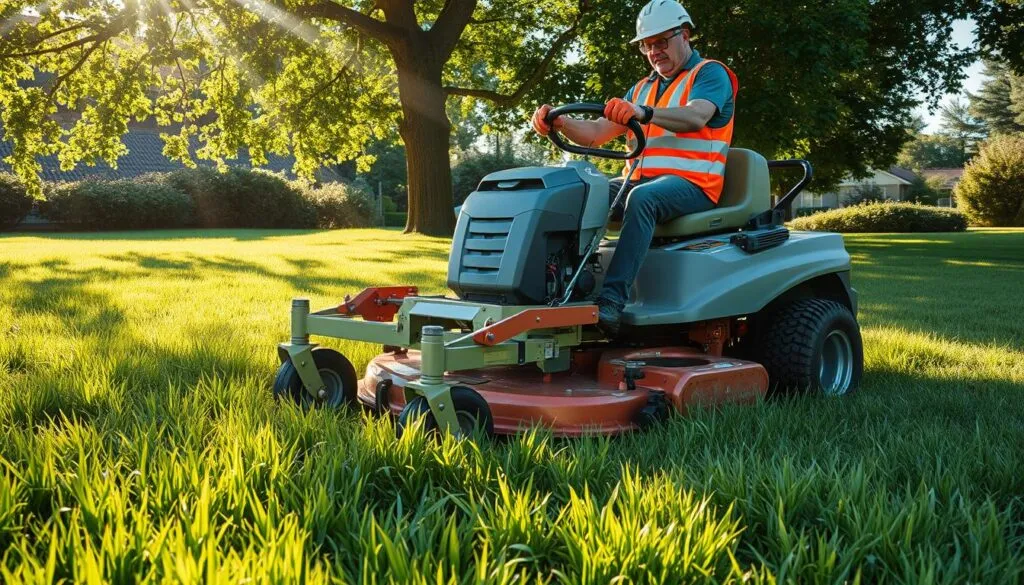
Understanding these impacts helps prevent costly repairs and dangerous situations. Proper timing protects both your investment and personal well-being.
Engine Strain and Blade Issues
Waterlogged vegetation places extraordinary stress on your mower’s mechanical systems. The engine works harder to process heavy, wet clippings that resist clean cutting.
Moisture causes rapid accumulation under the deck, blocking airflow and restricting blade rotation. This forced labor can lead to overheating, smoking, or complete engine failure.
Metal components face accelerated corrosion from constant moisture exposure. Rust develops on blades and engine parts, shortening equipment lifespan significantly.
Increased Safety Hazards for You
Slippery surfaces create falling risks, especially on slopes or uneven terrain. Losing footing around operating machinery presents serious injury potential.
Electrical equipment carries additional danger in moist conditions. Water and electricity create hazardous combinations that can result in shock or electrocution.
Hidden objects become invisible threats in wet vegetation. Toys, rocks, or sprinkler heads may launch as dangerous projectiles when struck by mower blades.
| Performance Factor | Dry Conditions | Wet Conditions |
|---|---|---|
| Engine Load | Normal operation | Significant strain |
| Blade Efficiency | Optimal cutting | Restricted rotation |
| Safety Risk | Minimal hazard | High danger level |
The U.S. Consumer Product Safety Commission documents approximately 80,000 emergency room visits annually related to lawn equipment injuries. Many occur during wet or slippery conditions, highlighting the importance of proper timing.
Mowing Wet Grass and Soil Compaction
Soil compaction represents a hidden danger that emerges from mowing operations on saturated ground. The weight of your equipment pressing on wet soil initiates underground damage that affects turf health for months.
Running machinery over damp earth compresses soil particles together. This creates a dense layer that prevents oxygen, water, and nutrients from reaching grass roots. The resulting compaction essentially suffocates the root system.
Heavier equipment like riding mower models create more severe soil compaction. Just one session on wet soil can cause lasting damage to your lawn‘s structure.
“Soil compaction from mowing wet grass is one of the most difficult problems to reverse in turf management.”
Visible ruts or depressions may appear in the lawn surface. These uneven areas persist for months and create tripping hazards. The weight distribution of the mower forces soil particles into tighter arrangements.
| Soil Condition | Root Oxygen Access | Water Penetration | Long-term Recovery |
|---|---|---|---|
| Dry, Uncompacted | Optimal | Excellent | Not needed |
| Wet, Compacted | Severely restricted | Poor | Aeration required |
| Damp, Partially Compacted | Reduced | Moderate | Possible self-recovery |
Areas affected by soil compaction become thin and patchy. Grass struggles to grow despite adequate care. Restoring proper air flow often requires additional aeration work.
Spreading Lawn Diseases in Wet Conditions
Operating a mower on damp turf transforms your equipment into a disease-spreading vehicle across your property. Moisture creates the perfect environment for fungal spores to hitch rides on cutting blades.
Torn grass edges provide entry points for pathogens that struggle with healthy tissue. The combination of moisture and damage creates ideal conditions for various diseases to establish.
Fungal Infections and Disease Spread
Common turf illnesses spread rapidly during mowing wet grass operations. Red thread disease creates reddish patches that transfer via contaminated equipment.
Dollar spot appears as silver-dollar-sized bleached areas. The pathogen proliferates when blade tissue tears during mowing wet sessions.
Rust disease manifests as orange spots on individual blades. Spores cling to wet grass clippings stuck under the mower deck.
| Disease Type | Visual Symptoms | Spread Mechanism | Prevention Strategy |
|---|---|---|---|
| Red Thread | Reddish pink patches | Fungal threads on equipment | Wait for dry conditions |
| Dollar Spot | Bleached circular spots | Pathogen in torn tissue | Sharp blades, dry grass |
| Rust Disease | Orange blade spots | Spores on wet surfaces | Avoid morning moisture |
Dr. Aaron J. Patton from Purdue University advises waiting until afternoon if active disease appears in morning conditions. Equipment can spread infections like Pythium blight when turf remains moist.
Clippings stuck to mower components distribute pathogens throughout the lawn. This converts localized issues into widespread diseases requiring treatment.
Managing Mower Blades and Equipment Care
Equipment preparation becomes paramount when dealing with moisture-laden turf cutting scenarios. Proper maintenance of your cutting tools significantly impacts performance outcomes.
Investing time in blade sharpness and deck cleanliness pays dividends during challenging conditions. This proactive approach protects your investment while improving cutting quality.
Importance of Sharpening Blades
Sharp mower blades create cleaner slices through moisture-heavy vegetation. Dull cutting edges tear and shred rather than cutting cleanly.
Regular blade maintenance reduces stress on your equipment during difficult operations. Sharpened blades require less engine power to process damp grass.
This care routine minimizes the ragged edges that invite turf diseases. Properly maintained cutting components extend your mower‘s operational lifespan.
Cleaning the Mower Deck
The mower deck requires thorough cleaning after working with saturated vegetation. Moist clippings accumulate rapidly under the cutting platform.
Built-up debris restricts airflow and promotes rust formation. Regular deck maintenance prevents corrosion damage to metal components.
This essential equipment care practice ensures optimal performance during future operations. A clean mower deck maintains proper blade rotation and cutting efficiency.
Tips for Mowing Wet Grass Safely
Proper preparation and technique modifications significantly improve outcomes during challenging cutting conditions. Implementing strategic adjustments helps minimize potential damage to both equipment and turf.
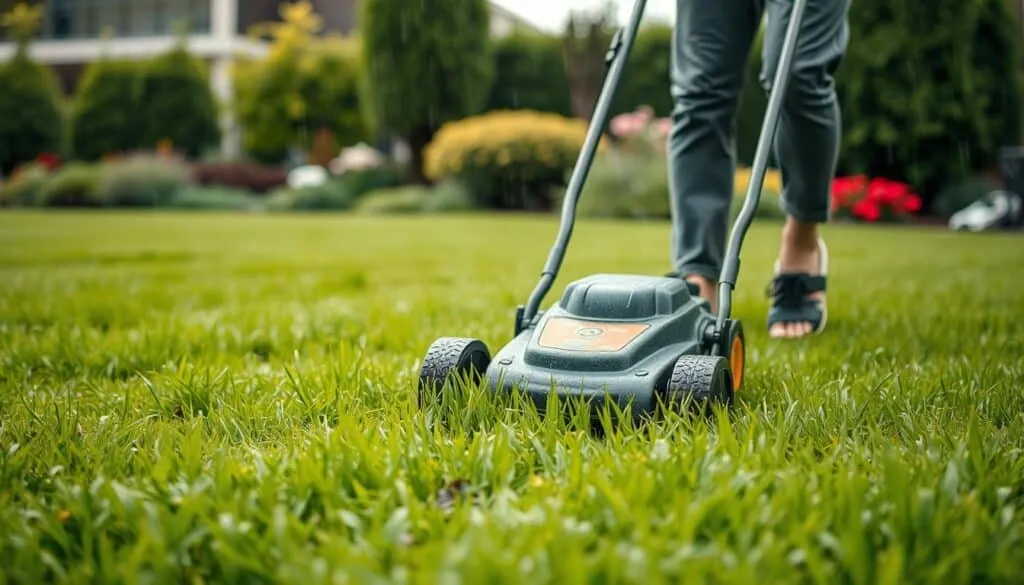
These essential tips provide practical solutions for unavoidable situations. Following expert recommendations ensures better results despite difficult circumstances.
Adjusting Mower Height and Speed
Setting your equipment to the highest cutting height represents the most critical adjustment. Kansas State University extension experts recommend this approach for cutting wet vegetation effectively.
Reducing your operating pace allows blades to process moisture-heavy grass more thoroughly. Slower movement decreases clumping and promotes more even results.
Using Side Discharge Techniques
The side discharge setting proves far superior to mulching or bagging during damp operations. This method immediately ejects clippings away from the equipment deck.
Preventing accumulation under the mower maintains proper airflow and cutting efficiency. The technique significantly reduces clogging issues common with wet vegetation.
| Technique | Effectiveness | Equipment Strain | Result Quality |
|---|---|---|---|
| Highest Height Setting | Excellent | Reduced | Improved |
| Slower Operating Speed | Very Good | Minimal | Even Cut |
| Side Discharge Method | Superior | Low | Clean Operation |
| Standard Mulching | Poor | High | Frequent Clogging |
Combining these tips creates a comprehensive approach to mowing wet grass situations. Each adjustment contributes to safer, more effective operations.
Choosing the Right Type of Mower
Equipment selection plays a crucial role in maintaining healthy turf during periods of high moisture. The proper choice significantly impacts cutting quality and soil preservation.
Different designs offer varying advantages for handling challenging conditions. Understanding these differences helps prevent damage to your landscape.
Self-Propelled vs. Regular Mowers
Self-propelled models provide consistent forward motion through heavy vegetation. This feature reduces physical effort while maintaining steady cutting power.
However, heavier self-propelled equipment increases soil compaction risk. Visible wheel ruts may form on saturated ground.
Cordless electric mowers present specific hazards in moist environments. Most manufacturers explicitly warn against their use on damp turf.
Brands like Stihl USA and LawnMaster state that wet grass cutting can cause electrical damage. Violating these guidelines may void warranties.
Gas-powered models often provide the best balance for occasional damp conditions. They offer adequate power with lighter weight to minimize soil impact.
Dealing with Clumping and Uneven Trim
Clumping grass clippings create an immediate and unsightly problem after mowing in damp conditions. These heavy, matted piles of cut grass block essential sunlight and airflow.
Left unattended, clumps decompose and kill the turf beneath. This process also contributes to thatch buildup, a dense layer that chokes soil and roots.
Preventing Clumping During Mowing
Effective prevention starts with equipment adjustments. Raise the mower to its highest setting and reduce your speed.
Using the side-discharge function is crucial. It ejects wet grass clippings away from the deck, preventing blockages.
For severe clumping, consider a double-cut strategy. Make a second pass perpendicular to the first to distribute cut grass more evenly.
Strategies for Even Cutting
Achieving a uniform look requires sharp blades and consistent technique. Dull blades tear vegetation, worsening clumping.
Overlap each mowing path slightly. This ensures no strips of uncut grass are missed, especially where clumps may have flattened the turf.
If cutting wet turf is unavoidable, bagging the clippings is the safest option. This removes the material entirely, preventing matted piles.
| Technique | Clumping Reduction | Evenness of Cut | Equipment Strain |
|---|---|---|---|
| Highest Mower Setting | Good | Improved | Reduced |
| Side Discharge | Excellent | Good | Low |
| Double-Cutting | Superior | Excellent | Moderate |
| Bagging Clippings | Eliminated | Very Good | Increased |
Purdue University’s Department of Horticulture supports these methods for managing mowing challenges. Proper technique protects your grass from damage.
Timing Your Mowing After Rain
Strategic timing after rainfall determines the success of your lawn maintenance efforts. Proper scheduling prevents the numerous problems associated with cutting saturated vegetation while maintaining a reasonable care schedule.
The recommended waiting period varies significantly based on precipitation intensity. Light showers typically require 2-5 hours of drying time, while heavy downpours need a full 24-hour cycle before mowing operations.
Assessing Grass Dryness Effectively
Simple field tests provide reliable indicators of moisture levels. Walk across your lawn and observe whether footwear picks up dampness or leaves visible footprints.
Persistent footprint impressions signal overly moist conditions. The vegetation remains too pliable for clean cutting when compressed tracks stay visible. Immediate spring-back after stepping indicates suitable dryness for cut grass operations.
Environmental factors dramatically influence drying time. Temperature, humidity, wind patterns, and sunlight exposure all affect how quickly grass recovers from rain saturation.
Humid days with minimal air movement extend the waiting period considerably. Morning dew creates similar moisture conditions to light rain, requiring afternoon timing for optimal mowing results.
Planning around weather forecasts helps avoid the dilemma between mowing wet grass and dealing with overgrowth. Mid-to-late afternoon typically offers the best window for dry lawn maintenance following morning moisture evaporation.
Weather Considerations and Planning Your Lawn Care
Your geographic location dramatically influences how you approach turf care throughout the year. Climate considerations determine whether strict drying periods are practical or impossible.
Monitoring weather forecasts becomes essential during active growing seasons. Identifying dry windows helps maintain proper grass height without compromising quality.
In regions with frequent precipitation, absolute rules about moisture become unrealistic. Purdue University research acknowledges that slightly damp grass may be preferable to excessive overgrowth during spring deluges.
Maintaining equipment readiness allows quick action when favorable conditions appear. Sharp blades and clean decks minimize problems during unavoidable damp sessions.
| Climate Type | Typical Challenge | Recommended Strategy | Flexibility Needed |
|---|---|---|---|
| Arid/Dry | Infrequent moisture | Standard drying periods | Minimal |
| Humid/Rainy | Constant dampness | Opportunistic mowing | Significant |
| Seasonal Wet | Spring growth surges | Balanced approach | Moderate |
| Coastal | Morning dew persistent | Afternoon scheduling | High |
Building flexibility into your maintenance schedule prevents rushed decisions. Rescheduling typically causes fewer problems than forcing operations during poor conditions.
Alternatives to Mowing in Wet Conditions
Delegating lawn maintenance to professionals offers a practical solution for homeowners facing persistent wet conditions. This approach eliminates the need for personal equipment and timing challenges.
Commercial services provide reliable care regardless of weather patterns in your area. Their expertise ensures proper handling of moisture-related challenges.
Hiring Lawn Care Professionals
Experienced technicians possess specialized equipment designed for difficult situations. They understand techniques that minimize damage to your grass.
Flexible scheduling allows companies to work during optimal dry periods. Multiple crews ensure timely service without weather compromises.
Comprehensive care packages often include fertilization and aeration services. These additional treatments maintain turf health between mowing sessions.
The investment in professional care prevents equipment damage and lawn disease costs. Establishing a relationship with a reliable service provider ensures consistent results.
This approach transforms lawn maintenance from a weather-dependent chore into a guaranteed service. Your property receives expert attention regardless of precipitation patterns.
Long-Term Effects on Your Lawn
Persistent moisture-related mowing practices gradually undermine your turf’s structural foundation. The cumulative impact manifests over multiple seasons, creating challenges that require extensive correction efforts.
Thatch Buildup and Soil Health
Damp grass clippings form dense clumps that resist proper decomposition. This material accumulates as thatch, creating a barrier between soil and atmosphere.
Thatch buildup prevents essential nutrients from reaching grass roots. Water penetration suffers dramatically, leaving vegetation thirsty despite irrigation.
Compacted soil compounds these problems by restricting oxygen flow. Root systems struggle to breathe in dense earth, leading to progressive thinning.
Each session on wet soil adds to the compaction damage. The cumulative effect creates patchy areas where grass establishment becomes difficult.
Correcting these issues demands intensive renovation work. Core aeration relieves soil compaction while dethatching removes organic barriers.
Prevention remains the most effective strategy for maintaining lawn health. Avoiding frequent mowing wet conditions protects your investment for years.
Conclusion
Establishing a clear rule for turf maintenance timing prevents numerous complications. This guide detailed the significant risks of trimming saturated vegetation.
Attempting to cut wet grass leads to torn blades, soil compaction, and disease spread. Equipment suffers from clogging and excessive strain under these wet conditions.
University research consistently supports waiting for completely dry grass. Patience ensures a clean cut and protects your lawn‘s long-term health.
For unavoidable situations, specific techniques minimize damage. Raising the mower height and using side discharge help manage difficult conditions.
Planning around weather forecasts remains the optimal strategy. Professional services offer a reliable alternative for homeowners facing persistent moisture challenges.
Adhering to dry cut grass operations preserves your landscape’s beauty and equipment functionality. This approach guarantees superior results throughout the growing season.
FAQ
What are the main risks of cutting wet grass?
The primary risks include tearing the grass blades instead of cutting them cleanly, which can lead to brown, frayed tips. You also face significant soil compaction from the mower’s weight on saturated ground, which harms root health. Additionally, wet clippings clump heavily, blocking sunlight and promoting fungal diseases.
Why does my mower leave an uneven trim on damp grass?
Wet grass blades are limp and tend to bend over under the mower deck rather than standing upright. This causes the spinning blades to miss some stems entirely or cut them at uneven heights. The result is a ragged, inconsistent appearance across your lawn.
How does mowing in wet conditions affect my equipment?
The extra moisture places considerable strain on your mower’s engine and can lead to premature wear. Wet grass clippings stick aggressively to the underside of the deck, creating a dense, pasty mat that can cause rust and impede blade rotation if not cleaned promptly.
Are there specific safety hazards to consider?
Yes, operating any mower on a wet, slippery surface increases your risk of losing footing and potential injury. There is also a heightened danger of electric shock if you are using a corded electric model. Always prioritize personal safety over finishing the task quickly.
What is the best way to handle clumping if I must mow wet grass?
To manage clumping, use your mower’s side discharge setting instead of mulching or bagging. Make multiple passes over the same area, cutting at a higher height setting to reduce the volume of clippings. Afterwards, use a rake or a leaf blower to break up and disperse any remaining clumps.
When is it safe to mow after rainfall?
A good rule is to wait until the grass is dry to the touch and the soil is firm enough that your footprint does not sink deeply. This typically requires at least 24 to 48 hours of sunny, breezy weather after the rain has stopped, depending on your local conditions.
Can a specific type of mower handle wet conditions better?
Self-propelled mowers can be easier to maneuver on slippery terrain than push mowers. However, no standard residential mower is designed for optimal performance on wet grass. Commercial-grade equipment with more powerful engines may handle the strain slightly better, but the fundamental risks to your lawn remain.