
Have you ever faced that moment of frustration when your yard work grinds to a halt before it even begins? You’re ready to tackle the overgrown grass, but the starter rope on your machine refuses to budge. This common problem can stop your weekend plans in their tracks.
The good news is that this situation is rarely a death sentence for your equipment. In most cases, the resistance you feel points to a specific, solvable issue within the engine or starter system. Understanding the root cause is the first step toward a straightforward repair.
You don’t need to be a professional mechanic to get your machine running again. With some basic knowledge and a bit of determination, you can often diagnose and fix the problem yourself. This saves you time and money, getting you back to your outdoor chores quickly.
Common culprits range from simple fixes like clearing debris from the blade to addressing lubrication needs or internal mechanical snags. We will guide you through identifying the problem and applying the correct solution.
Key Takeaways
- A stuck starter rope is a frequent issue that usually indicates internal resistance, not a complete machine failure.
- Most problems can be resolved with do-it-yourself methods, avoiding costly professional repairs.
- Typical causes include jammed blades, lack of lubrication, rust, or a faulty recoil mechanism.
- Diagnosing the specific cause correctly is essential for an effective and permanent fix.
- Handling the repair yourself typically costs between $10 and $25 for parts.
- Professional service can increase the total cost to between $50 and $100.
Diagnosing the Issue with Your Lawn Mower
When your machine refuses to start, the diagnostic process begins with systematic safety checks. Always disconnect the spark plug wire on gasoline models or remove the battery on electric versions before inspection. This prevents accidental starting during your examination.
Checking for Debris, Grass, and Blade Obstructions
Begin by examining the cutting area for blockages. Grass clippings, mud, and foreign objects can jam the blades and drive shaft. Properly tip your equipment to access the underside—gasoline models backward with handles down, electric units sideways with air filter up.
Gently rock the blade while wearing protective gloves. This can free mildly stuck components. Look for bent crankshafts from impact damage that may need careful straightening.
Inspecting the Recoil Mechanism and Starter Assembly
Move to the starter system next. Check if the recoil spring functions correctly and the cord aligns properly in its housing. Mechanical issues here often cause resistance when trying to start the engine.
Evaluating Hydro-Locking and Engine Oil Signs
Remove the spark plug and feel the end. If damp, you have hydro-locking—oil has pooled in the cylinder from improper storage positioning. This prevents piston movement and requires cleaning before restart attempts.
Troubleshooting: When You Can’t Pull Lawn Mower Cord
Proper troubleshooting techniques help identify whether the problem is mechanical tension or electrical connection issues. Start with simple checks before moving to complex repairs.
Assessing Cord Tension and Recoil Spring Alignment
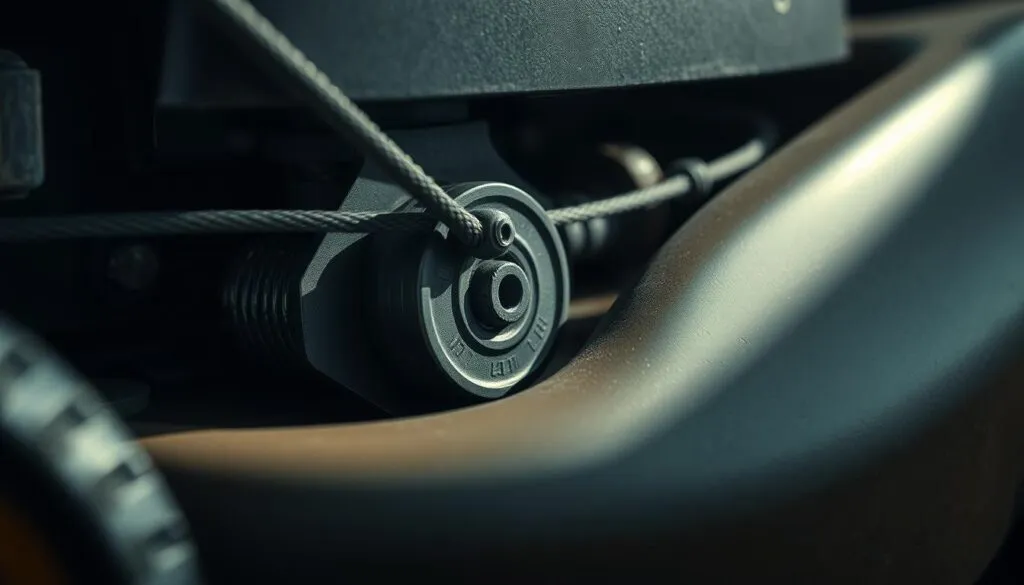
Inspect the recoil starter mechanism by removing the plastic cover. Look for tangled ropes inside the housing. A slack cord often feels stuck due to poor grip.
The recoil spring must align correctly for smooth operation. Check if the rope feeds tightly onto the spool. Proper tension prevents future starting problems.
Reviewing Spark Plug, Electrical, and Safety Disconnects
Verify all safety features are disengaged. Many users accidentally activate the brake lever. This mimics a mechanical jam but requires no repair.
Check the spark plug wire connection. A loose plug wire can prevent ignition. Ensure the electrical assembly has proper contact points.
| Problem Type | Common Symptoms | Quick Check | Likely Solution |
|---|---|---|---|
| Recoil Spring Issue | Rope doesn’t retract | Remove housing cover | Realign or replace spring |
| Cord Tension Problem | Slack feeling when pulling | Check spool winding | Rewind with proper tension |
| Safety Feature Engaged | Complete resistance | Verify brake position | Disengage safety lever |
| Electrical Disconnect | No ignition sound | Inspect spark plug wire | Reconnect securely |
DIY Fixes to Resolve Lawn Mower Cord Problems
Many common starting issues respond well to straightforward do-it-yourself solutions. These repairs often require basic tools and materials you may already have at home.
Applying Lubrication and Removing Rust from Key Components
Begin by removing the housing and spraying the starter assembly with lubricant like WD-40. This simple step can resolve friction problems from dried-out parts.
For rusted components, use fine steel wool to clean ball bearings and shafts. Apply a thin layer of lubricant to prevent future seizing.
Repairing or Replacing Faulty Parts and Assemblies
Inspect the starter spring and recoil mechanism for damage. You may need to rewind or replace these parts if they’re worn out.
Check the spark plug for oil contamination. If damp, remove it and clear the cylinder of excess fluid before reinstalling.
Realigning the Pulley and Recoil Mechanism
Ensure the rope winds correctly onto the spool with proper tension. Misalignment often causes starting resistance.
Verify all components move freely after cleaning. Proper alignment prevents future jamming issues.
Conclusion
Taking control of your outdoor power equipment maintenance leads to reliable performance season after season. Most starting resistance issues stem from preventable conditions that respond well to systematic diagnosis.
The financial advantage of DIY repairs is significant. You typically spend $10-$25 for replacement parts versus $50-$100 for professional service. This approach saves both money and time while building valuable repair skills.
Regular maintenance prevents future problems. Keep the cutting deck clean, maintain proper lubrication, and store your equipment correctly. These simple habits extend the life of all mechanical components.
Consult your owner’s manual for model-specific guidance. With patience and proper procedures, you can successfully resolve most starting issues and enjoy consistent equipment performance.
FAQ
What are the first things I should check if my lawn mower’s pull rope is stuck?
Begin by ensuring the machine is off. Check around the mower blades for any wrapped grass or debris causing a blockage. Also, look at the spark plug wire to confirm it’s properly connected. A simple obstruction is often the root of the problem.
Why does my starter rope not retract back into the housing after I pull it?
This usually points to an issue with the recoil spring inside the starter assembly. The spring may be broken, misaligned, or lacking proper lubrication. You might need to open the housing to inspect and potentially replace this component.
My engine feels locked up and the cord won’t budge. What does this mean?
This is a serious sign, often indicating hydro-locking. This happens when too much oil or fuel floods the engine cylinder, preventing the piston from moving. Remove the spark plug to relieve the pressure and check your oil level to ensure it’s not overfilled.
How can I tell if the recoil mechanism itself is broken?
If the pulley inside the starter assembly doesn’t spin freely or the rope pulls out with no resistance, the internal mechanism is likely damaged. Listen for unusual grinding sounds, which can suggest broken parts or a failed spring that needs replacement.
When is it better to replace the entire starter assembly instead of fixing individual parts?
If multiple components like the pulley, spring, and housing are worn or damaged, a full assembly replacement is often more cost-effective and reliable. This is common with older machines where wear on ball bearings and other parts is widespread.