

Are you using the right engine oil for your lawn mower? Selecting the correct oil is crucial for optimal performance and the longevity of your equipment. Using the wrong lawn mower oil can lead to increased wear and potential damage to the engine.
Proper maintenance is key to extending the life of your lawn mower. We will explore the importance of choosing the right oil and provide guidance on how to select the best engine oil for your specific mower model.
Key Takeaways
- Understand the importance of selecting the correct oil for your lawn mower.
- Learn how different engine types require specific oil formulations.
- Discover the differences between conventional and synthetic oils.
- Find out how to properly maintain your lawn mower’s engine.
- Gain confidence in selecting the right oil for your lawn mower model.
Understanding Lawn Mower Engine Types
To choose the right oil for your lawn mower, it’s essential to understand the type of engine it has. Lawn mowers typically use either two-stroke or four-stroke engines, each with distinct characteristics that affect oil usage.
Two-Stroke vs. Four-Stroke Engines
Two-stroke engines require oil to be mixed with fuel, as they don’t have a separate lubrication system. In contrast, four-stroke engines have a dedicated oil tank and circulation system, keeping the oil separate from the fuel. This fundamental difference impacts how you maintain your lawn mower and the type of oil you should use.
How Engine Type Affects Oil Selection
The design of your lawn mower’s engine dictates the type of oil required. For two-stroke engines, the oil is designed to burn cleanly with the fuel, while four-stroke engines need oil that provides long-term lubrication without degrading. Understanding your engine type is crucial for selecting the right oil to ensure optimal performance and longevity.
What Type Oil in Lawn Mower Is Best
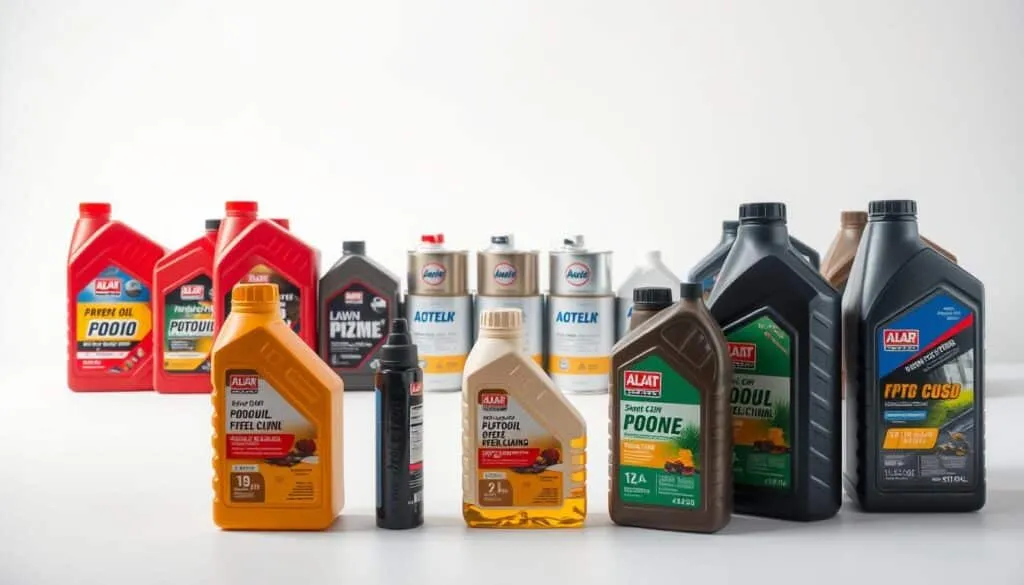
The right oil for your lawn mower is key to optimizing its performance and extending its lifespan. Lawn mower engines require oil that can handle varying temperatures and operational demands.
SAE Oil Classifications Explained
The Society of Automotive Engineers (SAE) has developed a classification system for motor oils based on viscosity and temperature range. For instance, SAE 30 is suitable for warmer temperatures above 40°F, while SAE 10W-30 is versatile for temperatures between 0 to 100°F, improving cold weather starting.
Temperature Considerations for Oil Selection
Temperature plays a crucial role in oil selection. Multi-viscosity oils like 10W-30 provide protection across a range of temperatures. Synthetic oils, such as SAE 5W-30, offer superior performance in extreme temperatures, from -20 to 120°F.
Recommended Oil Types for Different Conditions
For varying conditions, different oil types are recommended. For continuous use, like commercial lawn cutting, Vanguard 15W-50 Oil is suggested for temperatures between 20°F to 130°F. A table summarizing the recommended oil types for different temperature ranges is provided below.
| Temperature Range | Recommended Oil Type |
|---|---|
| Above 40°F | SAE 30 |
| 0 to 100°F | SAE 10W-30 |
| -20 to 120°F | SAE 5W-30 (Synthetic) |
| 20°F to 130°F (Continuous Use) | Vanguard 15W-50 |
Synthetic vs. Conventional Lawn Mower Oil
Understanding the differences between synthetic and conventional oil is key to making an informed decision for your lawn mower. The debate between these two types of oil centers around their composition, performance, and benefits.
Benefits of Synthetic Oil
Synthetic oil offers several advantages, including better flow properties at extreme temperatures, improved engine protection, and reduced oil consumption. Its higher temperature stability makes it an excellent choice for lawn mowers operating in harsh conditions.
When to Choose Conventional Oil
Conventional oil is still a viable option for lawn mowers, especially for those with simpler engines or used in moderate temperatures. It’s generally more affordable than synthetic oil, making it a cost-effective choice for occasional use.
Myths About Synthetic Oil in Lawn Mowers
Some believe synthetic oil can cause leaks in older engines or is incompatible with certain mower models. However,
“Synthetic oil is designed to be compatible with most engine types, and when used correctly, it provides superior protection and performance.”
It’s essential to consult your mower’s manual to confirm compatibility.
| Oil Type | Temperature Stability | Engine Protection |
|---|---|---|
| Synthetic Oil | High | Excellent |
| Conventional Oil | Moderate | Good |
Oil Capacity and Maintenance Guidelines

To keep your lawn mower running smoothly, it’s vital to know the correct oil capacity and follow a regular maintenance routine. Proper maintenance not only extends the life of your mower but also ensures it performs optimally.
Oil Capacity for Walk-Behind Mowers
For walk-behind mowers, the oil capacity is typically between 15oz to 18oz. It’s recommended to check the oil level during the mowing season and add oil as necessary. Regular checks help prevent engine damage due to low oil levels.
Oil Capacity for Riding Mowers
Riding mowers have a larger oil capacity, usually between 48oz to 64oz. Similar to walk-behind mowers, it’s crucial to check the oil level before each use to ensure the engine is well-lubricated.
How to Check Oil Levels Properly
To check the oil level, ensure the mower is on a level surface and the engine is cold. Use the dipstick on the oil filler cap to determine the oil level. Clean the area around the cap before opening to prevent dirt from contaminating the oil.
Recommended Oil Change Intervals
For walk-behind mowers, change the oil every 50 hours or annually. Riding mowers require an oil change every 100 hours or at the end of the season. Regular oil changes are crucial for maintaining engine health.
Conclusion
By now, it’s clear that the right oil and regular maintenance are critical factors in ensuring your lawn mower operates at its best. We’ve covered the essential aspects of selecting the right oil, from understanding engine types to maintenance schedules and oil change intervals.
Proper oil selection and maintenance are crucial in extending the life of your lawn mower engines and ensuring consistent performance. Different mowers have different requirements, so always check your owner’s manual for specific instructions regarding oil types, capacity, and recommended change intervals for your model.
Regular oil checks before each use and timely oil changes based on operating hours or seasonal schedules will help prevent costly repairs and keep your mower running at peak performance. Whether you’re maintaining a simple walk-behind mower or a more complex riding model, applying the knowledge from this guide will help you make informed decisions about the right oil for your specific equipment and conditions.
FAQ
How often should we change the oil in our lawn mower?
We recommend changing the oil every 50 hours of use or at the end of the season, whichever comes first. However, it’s best to check our owner’s manual for specific recommendations.
What is the correct oil capacity for our walk-behind lawn mower?
The oil capacity varies depending on the model. Typically, walk-behind mowers require between 15 and 32 ounces of oil. We should check our owner’s manual for the exact capacity.
Can we use synthetic oil in our lawn mower?
Yes, we can use synthetic oil in our lawn mower. Synthetic oil provides better performance in extreme temperatures and can help extend the life of our engine.
How do we check the oil level in our lawn mower?
To check the oil level, we should ensure our lawn mower is on a level surface, then locate the oil dipstick. We pull out the dipstick, wipe it clean, and insert it back into the oil reservoir. The dipstick will indicate the current oil level.
What SAE oil classification is recommended for our lawn mower?
The recommended SAE oil classification depends on the temperature conditions we operate our lawn mower in. For most conditions, SAE 30 or SAE 10W-30 is recommended. We should check our owner’s manual for the recommended viscosity.
Can we use the same oil in our lawn mower as in our car?
No, we should not use the same oil in our lawn mower as in our car. Lawn mower engines require oil that is specifically designed for small engines, which may have different viscosity and additive requirements.