
What if the single most common mistake made with a fresh, green lawn could ruin your entire investment in mere minutes? Many homeowners are eager to enjoy their beautiful new turf immediately. However, rushing the next step is where disaster often strikes.
I understand the excitement of seeing that lush carpet of grass laid down. It transforms a property instantly. The urge to get the mower out is powerful, but patience here is not just a virtue—it’s a requirement for survival.
The establishment period for sod is a delicate dance happening beneath the surface. Strong roots must anchor themselves to the soil below. This process is invisible but absolutely critical for long-term health.
In this guide, I will walk you through the essential timeline. You’ll learn the science behind root development and the clear signs that indicate your grass is truly ready. We’ll cover the best practices for that inaugural cut to ensure your lawn thrives for years.
Key Takeaways
- Premature mowing can severely damage new sod and hinder root growth.
- Proper timing is essential for the long-term health of your lawn.
- Visible signs, not just a set number of days, indicate readiness for the first mow.
- Specific preparation steps are needed before and after the first cut.
- Avoiding common mistakes prevents patchy growth and establishment problems.
- Following expert guidelines takes the guesswork out of new sod care.
- A successful first mow sets the stage for a lush, resilient turf.
Understanding New Sod Installation and Root Establishment
Successful turf establishment relies on a critical partnership between properly prepared soil and developing root systems. This process begins long before the grass arrives at your property.
Importance of Proper Soil Preparation
The landscaping process for sod installation requires meticulous ground preparation. Remove all debris and level the area thoroughly. Ensure adequate drainage to prevent waterlogging.
Proper soil conditions create the ideal environment for root growth. This foundation determines how quickly roots can penetrate downward.
How Roots Develop in the Initial Weeks
After installation, roots need time to establish connection with your native soil. The initial phase involves light but frequent watering.
Michael Masucci from the University of Florida IFAS Extension recommends:
Provide light but frequent watering for the first 2 to 3 weeks so the soil stays moist but not overly wet.
Check root development after 7-10 days by gently tugging grass blades. Resistance indicates proper establishment.
| Development Phase | Timeline | Root Depth | Watering Frequency |
|---|---|---|---|
| Initial Contact | Days 1-3 | Surface Level | Twice Daily |
| Penetration | Weeks 1-2 | 2-4 Inches | Twice Daily |
| Establishment | Weeks 3-4 | 4-6 Inches | Reduce Frequency |
How Long Before You Can Mow New Sod: Expert Guidelines
Determining the optimal moment for the inaugural mow involves more than simple patience—it demands specific diagnostic checks. I’ve found that relying solely on calendar dates often leads to premature cutting. The true indicator lies in the turf’s physical readiness.
Waiting at Least Two Weeks
The initial two-week period after installation represents a critical development phase. During this time, root systems establish vital connections with your soil. This foundation period allows the turf to anchor securely.
Some grass varieties may require three to four weeks for proper establishment. Weather conditions and watering consistency significantly influence this timeline. Rushing this process risks damaging the entire lawn investment.
Checking for Root Resistance Before Mowing
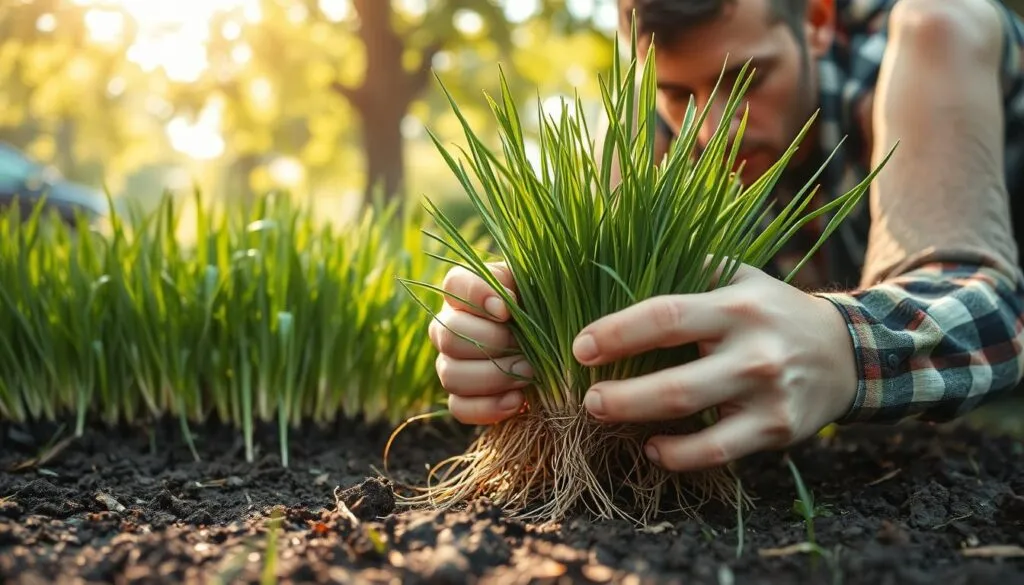
I recommend performing the simple tug test across multiple lawn areas. Gently pull upward on grass blades to assess resistance. Significant pulling force indicates successful root development.
Another reliable method involves carefully inspecting a corner section. Look for white, healthy roots extending into the soil beneath. The turf should resist lifting when properly established.
Between days 10 and 14, you’ll typically notice substantially more resistance. This confirms that the sod has bonded successfully with your soil. Always base your decision on the least-established areas of your lawn.
| Readiness Indicator | Signs of Proper Establishment | Warning Signs |
|---|---|---|
| Root Resistance | Firm anchoring, significant tug resistance | Easy lifting, minimal resistance |
| Visual Inspection | White roots visible at soil interface | No root penetration visible |
| Time Frame | 2-4 weeks depending on conditions | Less than 2 weeks since installation |
| Lawn Consistency | Uniform resistance across entire area | Patchy development, uneven readiness |
Proper Mowing Techniques for a New Lawn
Your inaugural mowing session sets the foundation for your lawn’s future health and appearance. The equipment and approach used during this critical first cut determine whether your turf thrives or struggles.
I always emphasize setting the mower blades to their highest position for the initial cutting. This protects developing root systems by leaving adequate leaf surface.
Setting Mower Blades to the Highest Setting
Different grass varieties have specific height recommendations, but newly installed sod requires special consideration. The highest blade setting minimizes stress on vulnerable plants.
This approach prioritizes root development over immediate aesthetics. Your grass needs maximum leaf area to photosynthesize effectively during establishment.
Following the 1/3 Rule for Clean Cuts
The fundamental 1/3 rule prevents damage during cutting grass operations. Never remove more than one-third of the blade length in a single session.
Allow your turf to grow about one-third taller than its recommended height before the first mow. For example, if the optimal height is 3 inches, wait until it reaches 4 inches.
Sharp mower blades are essential for clean cuts that heal quickly. Dull blades tear grass, creating entry points for disease.
| Mowing Factor | New Sod Requirement | Mature Lawn Standard | Reason for Difference |
|---|---|---|---|
| Blade Height | Highest setting | Type-specific height | Reduces establishment stress |
| Cutting Amount | Never exceed 1/3 | Can sometimes cut more | Protects energy reserves |
| Blade Sharpness | Essential | Important | Prevents turf pulling |
| Frequency | Based on growth | Regular schedule | Adapts to root development |
Proper technique during that first time with your lawn mower ensures strong, healthy growth. The combination of high blade settings and sharp blades creates ideal conditions.
Watering and Soil Care for Your Newly Installed Sod
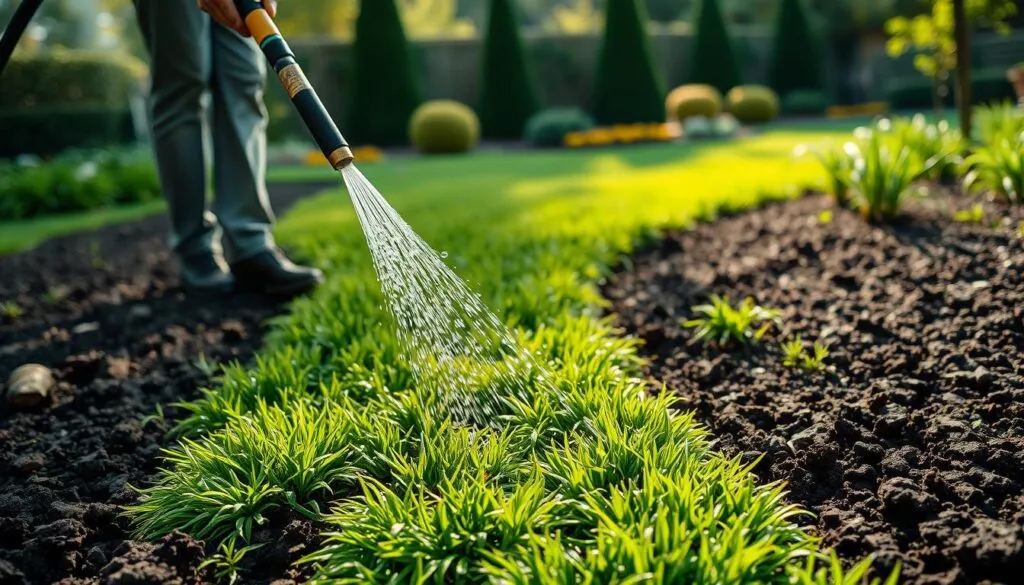
The vitality of your freshly laid turf depends heavily on a precise watering regimen. This stage is non-negotiable for success. Proper moisture management directly influences root development and overall lawn health.
I consider consistent watering the single most critical factor for establishment. A disciplined schedule during the initial phase determines if your turf thrives or struggles.
Establishing a Consistent Watering Schedule
For the first two weeks, your sod lawn needs watering twice daily. Each session should last 15-20 minutes. This keeps the soil moist to a depth of 4-6 inches.
Your schedule must adapt to daily conditions. Hot summer periods may require more frequent sessions to prevent the soil from drying out. Cooler or rainy days need adjustments to avoid oversaturation.
- Optimal Timing: Water in early morning and late afternoon to minimize evaporation.
- Avoid Night Watering: This keeps grass wet overnight, inviting fungal diseases.
- Deep Root Encouragement: Around day 14, reduce frequency to every other day but increase duration.
Adjusting Watering Before the First Mowing
A crucial step is modifying your routine before the inaugural cut. You must reduce watering the day prior. This allows the sod and soil to firm up.
If the ground is too soft, the mower’s weight can cause significant damage. Tire tracks and torn grass chunks are common results. Wet grass also clumps, leading to an uneven cut.
I recommend timing your first mowing for a day when the soil has had 24 hours to firm. The turf will be anchored firmly, and the blades will be dry for a clean cut. This simple adjustment protects your investment.
Avoiding Common Mistakes with New Sod
Many homeowners unknowingly sabotage their lawn’s establishment with simple daily habits. The most damaging error involves foot traffic during the critical rooting phase. This seemingly harmless activity creates lasting problems.
I must emphasize the importance of complete protection for your freshly installed turf. For the initial 14 days, treat your lawn as a restricted zone. Every step compresses the soil beneath your grass.
Preventing Excessive Foot Traffic and Soil Compaction
The sod installation process already places significant stress on the grass. Harvesting and transplanting shock the system. Additional pressure from walking hinders recovery.
Soil compaction occurs when particles are pressed together. This reduces air pockets that roots need to breathe. Water infiltration also suffers in compacted ground.
I recommend creating physical barriers around your lawn area. Use temporary fencing or signs to deter family members and pets. Even light recreational activity causes damage during establishment.
| Time Period | Recommended Traffic | Potential Damage | Protection Strategy |
|---|---|---|---|
| Days 1-14 | Absolute minimum | Severe root restriction | Complete barrier system |
| Weeks 3-4 | Light maintenance only | Moderate compaction risk | Designated walking paths |
| After first mow | Gradual increase | Minor wear patterns | Continued caution |
| Month 2+ | Normal use | Minimal if established | Regular maintenance |
If you must access the area for watering checks, choose dry conditions. Wet soil compresses more easily than dry ground. Your mower will eventually need access, but delay other traffic as long as possible.
This protective approach yields a stronger, more resilient turf. Your patience during establishment prevents permanent problem areas. The result is a uniform lawn that withstands normal use.
Essential Lawn Care Maintenance After the First Mow
The journey to a resilient lawn truly begins after that critical first cutting session. This phase establishes the foundation for ongoing turf health and vitality. Consistent practices now determine long-term success.
Your maintenance routine should focus on sustainable habits that promote dense, vibrant turf. I recommend establishing a systematic approach to lawn care that adapts to seasonal changes.
Maintaining Appropriate Grass Height and Health
Different grass varieties thrive at specific heights. Cool-season types like Kentucky bluegrass prefer 2.5-3.5 inches, while warm-season grasses like Bermuda do best at 1-2 inches. Maintaining proper height encourages deeper root systems.
Regular mowing follows the 1/3 rule—never remove more than one-third of blade length. This prevents stress and promotes healthy growth. Schedule cutting based on actual growth rather than calendar dates.
| Grass Type | Optimal Height | Mowing Frequency | Maintenance Notes |
|---|---|---|---|
| Kentucky Bluegrass | 2.5-3.5 inches | Weekly (peak season) | Cool-season, drought-tolerant |
| Tall Fescue | 3-4 inches | Weekly (spring) | Deep roots, heat-resistant |
| Bermuda Grass | 1-2 inches | 5-7 days | Warm-season, aggressive spreader |
| Zoysia Grass | 1-2.5 inches | 7-10 days | Slow growth, dense turf |
Fertilization requires careful timing. Wait 30-60 days after installation before applying nutrients. Early application can burn developing roots and waste resources.
After the waiting period, use a starter fertilizer based on soil test recommendations. This provides targeted nutrition for optimal growth. Continue deep, infrequent watering to encourage root development.
Additional Considerations for Sod, Weeds, and Pests
The success of your newly installed turf extends beyond initial establishment to ongoing protection against common threats. Vigilant monitoring during the first season prevents minor issues from becoming major problems.
Managing Weeds and Preventing Disease
Gaps between sod pieces create entry points for weeds and allow uneven drying. Address these immediately with topsoil or spare sod cuttings. This prevents weed establishment and maintains uniform moisture.
During the first 30-60 days after installation, avoid chemical treatments. Hand-pull any weeds gently to protect developing roots. Chemical herbicides can stress vulnerable turf.
Disease prevention requires smart watering practices. Fungal issues thrive in moist, stagnant conditions. Water in early morning to allow blades to dry before evening.
| Prevention Method | Timing | Effectiveness | Risk Level |
|---|---|---|---|
| Hand Weeding | First 4-6 weeks | High for small areas | Low |
| Cultural Practices | Ongoing | Excellent prevention | None |
| Selective Herbicides | After establishment | Targeted control | Moderate |
| Proper Watering | Always | Disease prevention | None |
Long-Term Tips for a Lush Lawn
Adjust your care routine based on seasonal changes. Hot summer days may require multiple watering sessions. Cooler periods need reduced frequency to avoid oversaturation.
Understanding your grass type’s natural growth patterns is crucial. Cool-season varieties thrive in spring and fall. Warm-season grasses prefer summer conditions.
Regular monitoring catches issues early. Walk your lawn weekly during the first season. Look for stress signs or areas where problems first appeared.
Landscaping professionals emphasize that proper early care pays dividends for years. Well-established turf with deep roots requires less maintenance. It better resists drought, disease, and weed invasion.
Conclusion
Your investment in sod pays dividends for years when you follow proper establishment protocols from day one. The patience demonstrated during those initial weeks installation directly translates to lawn resilience throughout the growing season.
Today, I’ve shared essential lawn care principles for success. Wait for proper root development before that first mowing session. Check for firm resistance when testing your sod ready status. Set mower blades to the highest height for the initial cut.
Your ongoing maintenance system should include proper watering schedules and sharp blades. This landscaping approach ensures healthy grass development. The care you provide first time establishes a foundation for lasting beauty.
FAQ
What is the most critical factor before the first mowing of my new sod?
The most critical factor is root establishment. I always check that the turf has firmly anchored itself to the ground. A simple test is to gently tug on a corner of the grass. If you feel resistance, the root system is developing well. Mowing too soon can cause severe damage and stress to the new lawn.
How should I adjust my watering schedule right before the first mow?
I recommend letting the soil dry out slightly about a day or two before you plan to cut the grass. The ground should be firm, not soggy, to support the weight of your lawn mower without causing ruts or soil compaction. This helps ensure a clean cut and prevents damage to the young roots.
What is the best mower blade setting for the first cut?
For the first mowing, I set my mower blades to the highest setting. You want to remove only the top third of the grass blades. This “1/3 Rule” is vital for reducing stress on the turf and encouraging healthy growth. A sharp blade is also essential for a clean cut that helps prevent disease.
Can weeds appear in my new sod lawn, and how should I manage them?
Yes, weeds can sometimes appear. I advise focusing on strong turf health through proper watering and maintenance. A thick, well-established lawn is the best defense. Avoid using herbicides until after the first few mows, as the young grass is very sensitive. Hand-pulling is the safest method initially.
What long-term maintenance tips ensure a lush lawn after installation?
After the first mow, consistency is key. I maintain a regular mowing schedule, never cutting more than one-third of the blade height. I also stick to a deep, infrequent watering routine to encourage deep root growth. Seasonal fertilization and aeration, based on your grass type, will keep your lawn thick and resilient against pests and damage.