
What if I told you that the single most critical decision for your lawn’s future happens in the weeks following overseeding? That moment when you’re tempted to fire up the mower could make or break your entire lawn renovation project.
Timing your first cut after overseeding is absolutely crucial. Mowing too early can destroy tender new grass seedlings before they establish strong roots. Waiting too long creates an overgrown mess that struggles to thrive. This delicate balance determines whether your lawn becomes the neighborhood showcase or remains patchy and thin.
Research from Oregon State University reveals fascinating insights about grass development. Roots actually grow 2-3 inches deep before shoots even emerge above soil. Within two weeks, they can reach 6 inches deep. This underground growth is invisible but essential for long-term lawn health.
Throughout this guide, I’ll share scientific insights and practical techniques from lawn care specialists. You’ll learn not just a timeline, but how to assess your specific grass type, weather conditions, and soil quality. Proper post-overseeding practices can transform your turf into a thick, vibrant carpet that becomes your outdoor pride.
Key Takeaways
- The timing of your first mow after overseeding is critical for lawn success
- Grass roots develop significantly before visible shoots emerge
- Most experts recommend waiting until new grass reaches 3-4 inches tall
- Weather conditions and grass type influence the ideal waiting period
- Proper timing protects delicate seedlings while preventing overgrowth
- University research provides scientific backing for timing recommendations
- Following correct procedures transforms thin lawns into lush turf
Introduction: The Essentials of Overseeding and Mowing
I remember staring at my thin, lackluster lawn, wondering if it could ever become the vibrant green carpet I envisioned. That moment sparked my journey into proper lawn maintenance.
My personal journey with lawn care
Early mistakes taught me valuable lessons about timing and patience. I once rushed the process and damaged tender seedlings.
This experience showed me the delicate balance required for success. Proper timing protects developing roots while preventing overgrowth.
Overview of overseeding benefits and challenges
Overseeding transforms thin turf into dense, healthy grass. It fills bare patches and introduces resilient varieties.
The benefits include improved density that crowds out weeds. Enhanced color and durability make the space more usable.
Challenges involve consistent watering and temporary lawn restrictions. Patience during germination is essential for good results.
Understanding both aspects sets realistic expectations. This knowledge leads to successful lawn transformation.
What is Overseeding? Understanding the Process
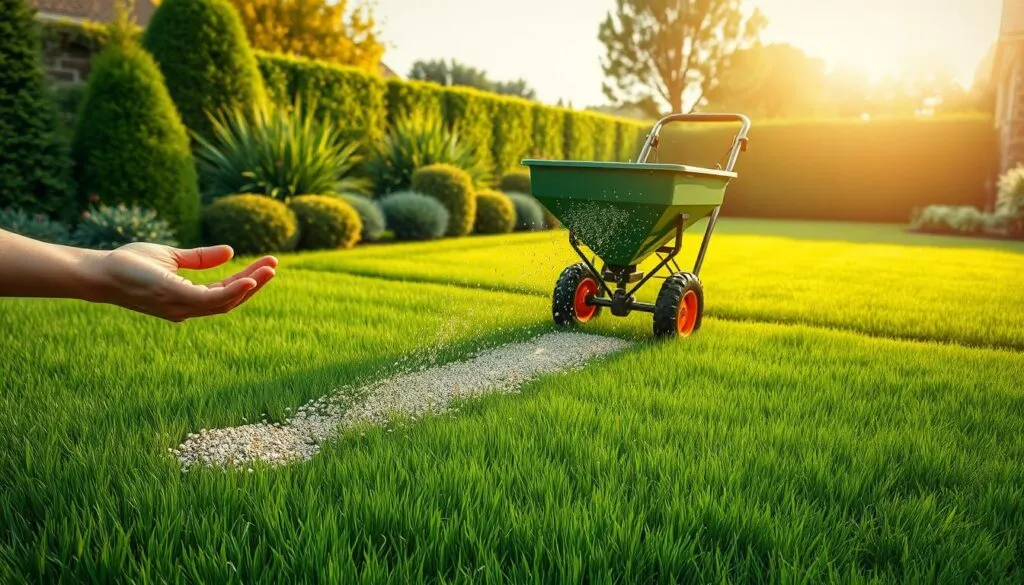
The secret to a lush, resilient lawn often lies in a simple yet strategic technique called overseeding. This method revitalizes existing turf without the disruption of complete lawn replacement.
Definition and Key Steps Involved
Overseeding involves spreading new grass seed directly over established turf. The process begins with careful preparation to ensure success.
First, eliminate weeds and remove thatch—the dead grass layer covering soil. Mow existing grass to 1.5-2 inches, as Iowa State University recommends. This prevents established grass from shading new seedlings.
Core aeration loosens compacted soil, allowing seeds to settle properly. Use a drop or broadcast spreader for even seed distribution. Light raking helps seeds make good contact with soil.
Benefits of a Thicker, Healthier Lawn
A properly overseeded lawn offers dramatic improvements in density and appearance. Thick turf naturally suppresses weed growth by leaving no space for invaders.
Newer grass varieties provide better color and disease resistance. They tolerate environmental stresses like drought and heavy foot traffic. This creates a self-reinforcing cycle of lawn health.
Enhanced turf protects soil and retains moisture better. It requires less chemical intervention for maintenance. The result is a vibrant, durable outdoor space.
how long should you wait to mow after overseeding
https://www.youtube.com/watch?v=wxwfJLbxV0k
Grass height, not days passed, serves as the most reliable indicator for initiating post-overseeding maintenance. I recommend waiting until seedlings reach 3 to 4 inches tall before that initial cutting. This typically translates to a two to four week timeframe for most turf varieties.
The critical need for this waiting period lies underground. Oregon State University research shows roots develop 2-3 inches deep before shoots emerge. Within two weeks, they may reach 6 inches. This underground anchor system must establish before facing mower blades.
Mow only after seedlings reach 3 to 4 inches tall.
Different grass species establish at varying paces. The table below illustrates how germination rates affect mowing timing:
| Grass Type | Germination Period | Typical First Mow Timeline |
|---|---|---|
| Kentucky Bluegrass | 10-30 days | 4-6 weeks |
| Ryegrass | 5 days | About 2 weeks |
| Buffalograss | 10-30 days | 4-6 weeks |
Weather conditions and seeding method further influence this schedule. Heat and drought slow growth, while mild weather accelerates it. Slice-seeded grass establishes faster than broadcast seeds.
Resist the temptation to cut too early. Premature mowing can uproot fragile seedlings. Allow enough time for strong root development to ensure your lawn renovation succeeds.
Factors Influencing Mowing Timing After Overseeding
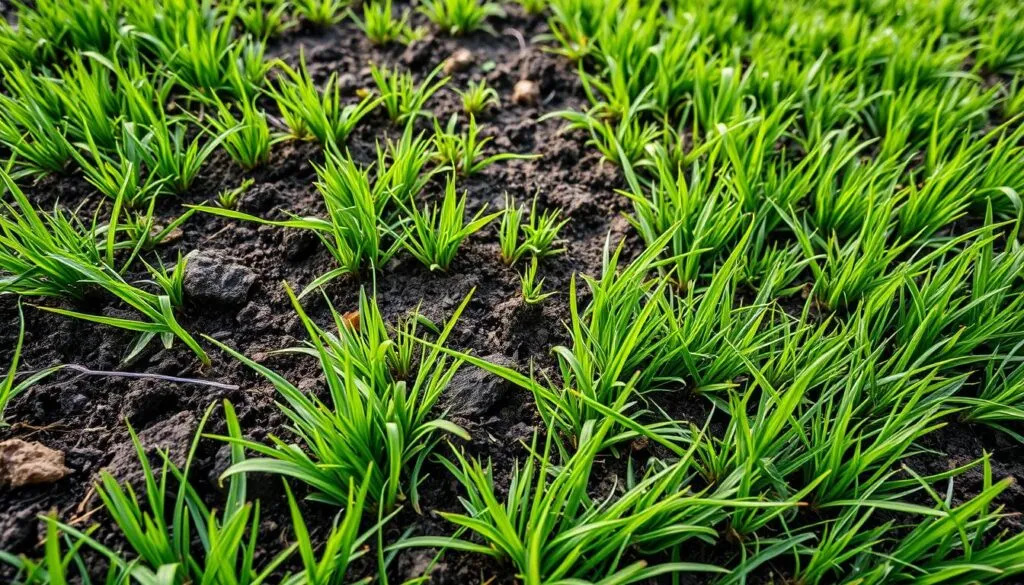
The interplay between grass variety, soil quality, and climate conditions creates a unique timeline for every lawn. Understanding these variables helps determine when new seedlings can handle their first trim.
Grass type, seed growth, and soil conditions
Different grass species establish at dramatically different rates. Ryegrass sprouts within five days, while Kentucky bluegrass takes 10-30 days to germinate. This variation directly affects when your lawn is ready for maintenance.
Soil quality plays an equally important role. Rich, well-aerated soil promotes faster seed germination and stronger root development. Compacted or nutrient-poor soil significantly delays seedling establishment.
Slice-seeding techniques push seeds directly into soil for faster results. Broadcast seeding takes longer due to less consistent soil contact. The method you choose impacts overall growth time.
Impact of weather and watering practices
Weather conditions profoundly influence seedling development. Hot, dry weather slows germination by stressing tender plants. Mild temperatures with consistent rainfall create ideal conditions for rapid growth.
Soil temperature matters greatly. Most grass seeds require temperatures above 50°F to germinate properly. Consistent watering keeps the top two inches of soil moist, accelerating the process.
Thin or bare areas may establish at different rates than thicker sections. Uniform growth across the entire turf indicates readiness for that first careful cut.
Proper Mowing Techniques and Equipment Preparation
Sharp blades and correct settings transform your lawn mower from a potential threat to a nurturing tool for new grass. Proper equipment preparation ensures tender seedlings survive their first cutting experience.
Importance of sharp mower blades and proper settings
Dull mower blades tear grass instead of cutting cleanly. This damage creates entry points for disease and stresses developing turf.
Always sharpen lawn mower blades before the first cut. Set the mower deck to its highest setting to avoid cutting new grass too short.
Recommended mowing patterns to protect new grass
Use simple back-and-forth patterns for initial mowing sessions. Avoid decorative patterns that increase foot traffic on vulnerable turf.
Move slowly and carefully when turning the equipment. Never cut wet grass, as moisture causes clumping and uneven cuts.
| Proper Technique | Improper Practice | Result |
|---|---|---|
| Sharp blades, high setting | Dull blades, low setting | Clean cuts vs. torn grass |
| Straight line pattern | Complex patterns | Minimal stress vs. damage risk |
| Dry conditions | Wet grass mowing | Healthy growth vs. fungal issues |
Proper technique protects your investment in overseeding. It allows seedlings to develop strong roots without mechanical setbacks.
Caring for Your Lawn After the First Mow
After that first careful trim, your lawn enters a critical phase of establishment. Proper care during this period ensures strong development.
Watering and fertilizing strategies for new seedlings
Maintain consistent moisture for optimal growth. Water twice daily in short 5-10 minute sessions. This keeps the top two inches of soil moist.
Once seedlings appear across the lawn, transition to deeper watering. Irrigate once weekly to moisten soil 6-8 inches down. This encourages deep root development.
| Watering Stage | Frequency | Depth Target | Purpose |
|---|---|---|---|
| Germination Phase | Twice daily | Top 2 inches | Seed hydration |
| Establishment Phase | Weekly | 6-8 inches | Root growth |
| Mature Phase | As needed | 6+ inches | Turf health |
Delay fertilization for about six weeks. Iowa State University recommends applying 1 pound of nitrogen per 1,000 square feet. Starter fertilizer provides initial nutrients.
Minimizing foot traffic and avoiding early stress
Protect tender seedlings from compaction. Keep all foot traffic off the lawn for one month. This includes pets, children, and outdoor furniture.
Postpone weed control for two to three months. University of Georgia advises waiting until after three to four mowings. Apply herbicides at half strength to protect new grass.
Patient care during this period yields lasting results. Your investment in proper maintenance creates resilient, healthy turf.
Expert Tips and Best Practices for Healthy Lawn Growth
The difference between mediocre and magnificent turf often comes down to understanding proper mowing principles. Implementing professional techniques ensures your investment in lawn overseeding pays dividends for seasons to come.
Adjusting mower height and following the 1/3 rule
Never remove more than one-third of the grass blade length in a single session. Cutting beyond this stresses the plant and slows recovery. Brown-tipped blades develop a straw-like appearance when cut too short.
Dr. James B. Beard of the International Sports Turf Institute explains the science behind proper cutting height. “The higher the cutting height, the greater the leaf area for photosynthetic activity,” he states. This produces more carbohydrates that support increased root growth.
If your grass grows taller than desired, use multiple sessions spaced days apart. Gradually bring the lawn back to preferred height without shocking plants. This approach maintains vibrant color and prevents weed invasion.
Mulching versus bagging grass clippings
The clippings debate depends on your specific conditions. During hot, dry weather, mulching helps retain soil moisture and protects roots. This is especially beneficial for lawns still filling in thin areas.
Conversely, bagging works better during cloudy, rainy periods. On shady lawns, collecting clippings gives seedlings better sun exposure. It also reduces fungal risks from excessive moisture.
Set your mower deck to the highest setting initially. Maintain blades around 3-4 inches tall for most grass types. This encourages deep root development and drought resistance for long-term turf health.
Conclusion
Your investment in overseeding yields maximum returns when you master the critical post-seeding period. The general guideline suggests allowing two to four weeks before that first cut, or until new grass reaches 3 to 4 inches tall.
Understanding your specific grass type, local weather, and soil conditions enables informed decisions rather than calendar-following. Proper lawn care techniques protect delicate seedlings during establishment.
Sharp mower blades, high cutting settings, and the one-third rule ensure clean cuts without stressing developing roots. Consistent watering and limited foot traffic support healthy growth during these crucial weeks.
Patience with timing transforms thin turf into a thick, vibrant lawn. Your disciplined approach creates lasting beauty and durability for your outdoor space.
FAQ
What is the general rule for mowing after overseeding?
I typically wait until the new grass seedlings are about 3 to 4 inches tall. This usually takes three to four weeks, giving the young plants enough time to establish their root systems. Mowing too soon can easily uproot the delicate new growth.
How does the type of grass seed affect the waiting period?
The grass type is a major factor. Cool-season varieties like Kentucky bluegrass and fescue establish roots more slowly than some warm-season turf. I always check the seed bag for specific germination timelines to plan my first mow accurately.
What is the safest mower height setting for the first cut?
For that crucial first mow, I set my lawn mower blades high. I never remove more than the top third of the grass blade. Cutting at a higher setting reduces stress on the new seedlings and helps the lawn retain moisture better.
Should I bag or mulch the grass clippings after overseeding?
I strongly recommend mulching with sharp mower blades. The fine clippings decompose quickly, returning valuable nutrients to the soil and acting as a natural fertilizer for the young grass, which promotes thicker growth.
How can I protect new seedlings during mowing?
I prepare my yard by ensuring the soil is relatively dry to avoid ruts. I also use a lightweight mower and change my mowing pattern each time to prevent compacting the soil and damaging the tender new roots.