

Is buying a lawn mower the only smart way to tackle your yard work? Many homeowners assume ownership is always the best financial move. But what if a simple rental could save you significant money and hassle?
The equipment rental market is booming for a reason. It offers incredible flexibility. You can get the perfect tool for your specific lawn care job without a long-term commitment.
Prices for a mower rental are not one-size-fits-all. They typically range from $20 to $100 per day. The final price depends on the machine’s size and type. Understanding these factors helps you budget accurately.
This guide breaks down the costs. You will learn what influences the price. We will also explore the pros and cons of renting versus buying your lawn equipment.
Key Takeaways
- Renting a mower provides flexibility for one-time or seasonal projects.
- Daily rental costs can vary widely based on equipment type and size.
- Renting avoids long-term costs like maintenance, storage, and depreciation.
- The rental market has grown, increasing availability and competitive pricing.
- Always ask about additional fees for fuel, delivery, or damage waivers.
- Researching your specific needs ensures you get the right equipment for the job.
- Renting can be a cost-effective alternative to purchasing a mower outright.
Overview of Lawn Mower Rental Options
Today’s homeowners have unprecedented access to professional-grade lawn care tools without the commitment of ownership. The equipment rental market continues expanding, offering flexible solutions for various yard maintenance needs.
Understanding the Rental Market in the United States
The lawn care equipment sector shows remarkable 15% annual growth. This expansion means more rental choices available in your area. You can find everything from basic push mowers to advanced zero-turn models.
National chains and local providers compete for your business. This competition drives better service and pricing. Online booking systems make reserving equipment quick and convenient.
Benefits of Renting vs. Buying Equipment
Renting eliminates long-term ownership costs like storage and maintenance. You avoid depreciation worries that come with purchased equipment. This approach makes financial sense for occasional projects.
You gain access to the latest technology without major investment. Rental companies maintain their fleets to high standards. This ensures reliable performance for your lawn care tasks.
Flexible rental periods match your project timeline perfectly. Choose from hourly, daily, or weekly options. You only pay for the time you actually need.
How Much Does It Cost to Rent a Lawn Mower: Factors and Considerations
The price you pay for temporary access to mowing equipment depends on multiple interconnected factors. Your total expenditure reflects more than just the basic rental rate.
Rental Duration and Its Impact on Rates
Your rental period directly influences the daily expense. Longer commitments typically offer better value through discounted rates.
Weekly and monthly agreements reduce your per-day costs significantly. This approach makes sense for extended lawn care projects.
Seasonal timing also affects availability and pricing. Spring and summer months often see higher demand and rates.
Local Availability and Equipment Conditions
Geographic location plays a crucial role in equipment selection. Urban areas typically offer more options than rural locations.
Newer, well-maintained mowers may command premium rates. Older models often provide budget-friendly alternatives for basic jobs.
Delivery services add convenience but increase your total expenditure. These fees typically range from $25 to $75 depending on distance.
Proper planning ensures you get the right equipment for your specific needs. Consider all variables before making your final decision.
Exploring Different Types of Lawn Mowers for Rent
Your choice of cutting equipment significantly impacts both the quality and speed of your grass maintenance. Rental yards stock various models designed for different property sizes and terrain challenges.
Push, Self-Propelled, and Riding Options
Basic push mowers offer economical solutions for small yards under 5,000 square feet. These manual models typically range from $20-40 daily.
Self-propelled units provide powered drive systems that reduce physical effort. They work well for sloped terrain and cost $30-60 per day.
Riding mowers transform large property maintenance into efficient tasks. Lawn tractors start around $110 daily for properties exceeding one acre.
Zero-Turn and Robotic Mowers Explained
Zero-turn models offer superior maneuverability around obstacles. These commercial-grade machines rent for $154-231 daily.
Robotic mowers represent cutting-edge technology with autonomous operation. Approximately 32% of landscapers plan to invest in this hands-free approach.
Matching Mower Type to Your Lawn Care Needs
Select equipment based on your property’s specific characteristics. Consider square footage, obstacle density, and terrain slope.
Premium brands like Husqvarna and John Deere ensure professional-grade performance. Your grass type influences which model delivers optimal results.
| Mower Type | Best For | Daily Rate | Key Features |
|---|---|---|---|
| Push Mower | Small yards ( | $20-40 | Economical, manual operation |
| Self-Propelled | Sloped terrain, medium yards | $30-60 | Powered drive, reduced effort |
| Riding Mower | Large properties (1+ acre) | $110-165 | Time-saving, comfortable |
| Zero-Turn | Complex landscapes | $154-231 | Superior maneuverability |
| Robotic | Hands-free maintenance | ~$100 | Autonomous operation |
Understanding Rental Pricing: Costs, Fees, and Extra Charges
Smart budgeting for your yard project requires understanding all potential charges beyond the basic rental fee. The advertised daily rate represents just one component of your total expenditure.
Careful review of rental agreements reveals multiple fee categories that impact your final costs. Proper planning ensures no surprises when completing your lawn care job.
Base Charges and Typical Daily Rates
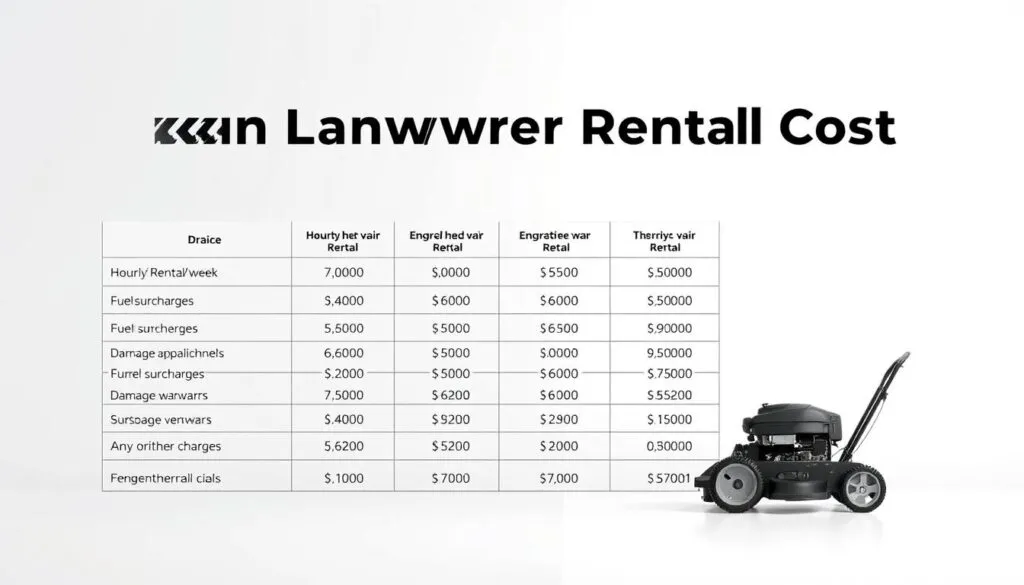
Base rental prices for equipment start around $20 daily for basic push models. Advanced riding mowers and specialty equipment can reach $100 or more per day.
These rates vary significantly based on machine type and capabilities. Weekly agreements often reduce your per-day costs by 30-50% compared to single-day rentals.
Additional Fees: Fuel, Damage Waivers, and Delivery
Fuel requirements add $5-15 to your total, as most companies expect a full gas tank upon return. Damage waiver fees provide financial protection for approximately $10-25 daily.
Delivery services typically range from $25-75 depending on distance from the rental yard. These transportation costs can equal or exceed the base rental rate for short-term equipment use.
Budgeting for Security Deposits and Maintenance
Security deposits between $50-200 are standard for most lawn equipment rentals. This amount returns to your account within 5-10 business days after proper equipment return.
Late fees and cleaning charges can substantially increase costs if you fail to meet agreement terms. Comparing total prices across providers helps identify the best value for your specific needs.
Expert Tips for Booking and Maximizing Your Rental Experience
Your rental experience begins long before you actually pick up the mower, with thorough research being the foundation. Proper planning ensures you get the right equipment for your specific lawn care needs.
Researching Local Rental Firms and Availability
Start by investigating local equipment providers through online platforms. Compare customer reviews and service ratings to identify reliable companies for your landscape project.
Verify availability for your desired rental dates, especially during peak seasons. Spring and summer see high demand for quality mowers and garden equipment.
Call companies directly with specific questions about machine specifications and fuel policies. This helps match the equipment to your particular job requirements.
Effective Strategies for Booking Ahead
Make reservations 1-2 weeks before your planned lawn care date. Early booking secures the exact mower type you need and prevents last-minute delays.
Carefully review rental agreements before signing. Pay close attention to fuel requirements, cleaning duties, and return deadlines.
During pickup, inspect the equipment for existing damage and test all functions. Document any issues with photos or written notes for protection.
Ask about policies for extending rental time or handling equipment malfunctions. Understanding these procedures improves your overall rental experience.
Conclusion
Armed with comprehensive rental knowledge, you’re ready to make an informed choice for your property. You understand the full cost structure and can select the perfect equipment for any lawn care project.
Your property’s size and terrain dictate the ideal mower type. Small gardens benefit from push models, while larger lawns may need riding equipment. Matching the machine to your specific job ensures efficient grass cutting.
Renting offers financial flexibility for seasonal needs. You avoid long-term costs while accessing professional-grade tools. This approach makes economic sense for occasional garden maintenance.
Your successful rental experience depends on proper planning and provider selection. With this knowledge, you can tackle any lawn project confidently and cost-effectively.
FAQ
What is the average price for a push mower rental?
For a standard push mower, you can expect daily rates to start around to . Self-propelled models often cost a bit more. The final price depends on your location and the rental company, such as The Home Depot or Sunbelt Rentals.
Are there extra fees beyond the base rental charge?
A>Yes, additional fees are common. These can include charges for fuel if the gas tank is not full upon return, a damage waiver for protection, and delivery if you need the equipment brought to your job site. Always ask for a full breakdown of costs.
How does renting a riding mower compare in cost?
A>Riding mowers and zero-turn models are more expensive to rent. Daily rates typically range from 0 to 0. The cost is higher due to the larger size and advanced features of the equipment, which are ideal for big lawns.
What should I check before I take the mower home?
A>Before you leave the rental yard, inspect the equipment carefully. Check the blades for sharpness, ensure the engine starts easily, and verify that the grass bag is intact. This quick check can prevent issues and extra charges later.
Can I rent a mower for just a few hours?
A>Many rental stores offer hourly rates for short garden projects, typically a 4-hour minimum. This can save you money if your landscape work can be completed quickly. Always confirm the minimum rental time with the company.
Is a security deposit required for lawn equipment rentals?
A>Most companies will require a refundable security deposit or a hold on your credit card. This deposit covers potential damage or late returns. The amount varies but is often around 0 to 0.