
What if everything you thought you knew about lawn care was wrong? That lush, green carpet of new sod in your yard represents a significant investment. The immediate urge is to maintain its pristine look. But acting too soon could undo all your hard work.
Proper care after sod installation is the single most critical factor for success. Your beautiful new lawn needs time to establish strong roots into the soil below. This guide provides the essential knowledge to protect your investment.
You will learn how to assess your landscape for readiness. We cover the science of root development and the perfect timing for that first cut. This advice applies whether you are a first-time homeowner or a seasoned gardener.
Avoiding common mistakes ensures your sod matures into a thick, healthy lawn. For related guidance on timing, our resource on overseeding fescue lawns offers additional insights. Let’s begin the journey to a thriving outdoor area.
Key Takeaways
- Patience is critical after a new sod installation to allow roots to establish firmly.
- Mowing too soon is a primary cause of damage to a young lawn.
- Proper assessment of root strength is more important than a calendar date.
- Correct mowing techniques protect the delicate grass and encourage healthy growth.
- A well-timed first mow sets the stage for a durable and beautiful landscape.
- Understanding the establishment process helps avoid costly and common mistakes.
Understanding New Sod Installation and Its Importance
Your investment in new sod brings instant gratification, but the true work begins beneath those lush green blades. The immediate beauty masks a critical establishment period where underground development determines long-term success.
What Makes New Sod Different from Established Lawns
Freshly installed sod arrives with pre-grown grass that creates an instant green landscape. However, this surface appearance differs dramatically from mature turf. The fundamental distinction lies in the root system development below ground level.
| Characteristic | New Sod | Established Lawn |
|---|---|---|
| Root Depth | Shallow, developing | Deep, mature network |
| Anchoring Strength | Weak connection to soil | Firmly established |
| Nutrient Access | Limited to sod layer | Deep soil resources |
| Stress Tolerance | Highly vulnerable | Resilient to pressure |
The Role of Roots in Establishing a Healthy Lawn
The root development process begins within two weeks after installation. Shallow roots start extending into the native ground. This initial growth represents the foundation for your new lawn‘s future health.
“Visible grass blades depend entirely on invisible root health. The underground network supports every aspect of lawn vitality.”
Achieving a strong root system takes approximately six weeks. During this time, the network grows deeper and more resilient. Understanding this timeline prevents disruption to delicate new roots taking hold.
Proper care during this establishment phase ensures your lawn area develops the anchoring needed for long-term success. The underground development supports the visible beauty above.
Assessing Sod Establishment: Tips to Check Root Development
Determining the right moment for that first mow depends entirely on how well your sod has anchored itself. Visual inspection alone cannot reveal the underground progress happening beneath your lawn’s surface.
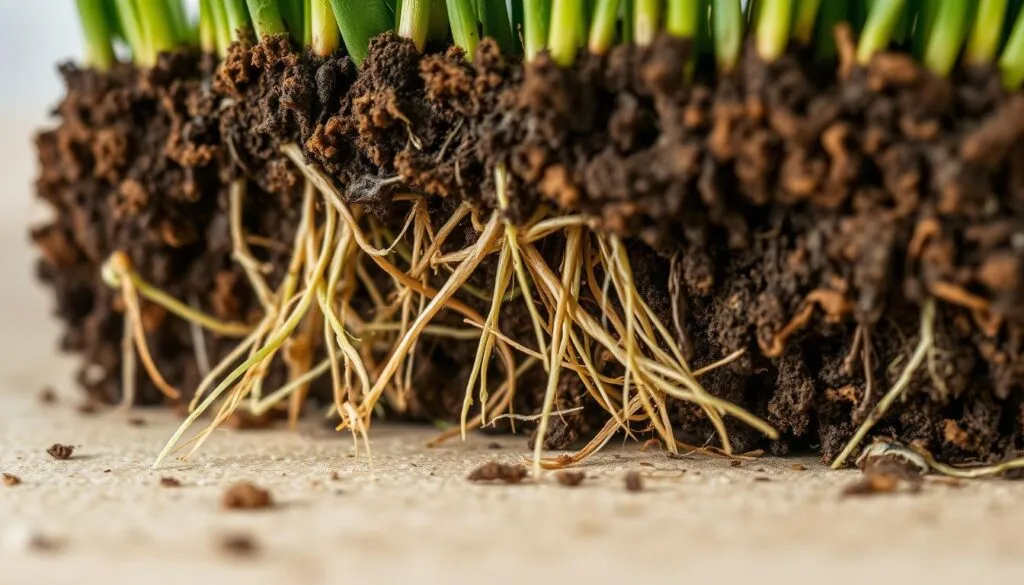
A proper assessment ensures your investment develops into a healthy, permanent landscape. The establishment phase requires patience and careful observation.
How to Gently Test if Your Sod is Rooted
After approximately two weeks following installation, perform a simple tug test. This hands-on method evaluates root development without causing harm.
Select a section of grass and apply light upward pressure. If the sod lifts easily, roots haven’t sufficiently penetrated the soil. Significant resistance indicates successful establishment.
Check multiple areas across your lawn since development rates vary. Different sections may root at different speeds due to soil conditions and sun exposure.
This test provides direct feedback about underground growth. It confirms whether your new sod can withstand mowing equipment stress.
If resistance is insufficient after two weeks, wait a few more days before retesting. Continue this process until you feel firm anchoring between grass and ground.
Expert Timing: When can you mow sod Safely
Establishing the perfect timing for that initial cut requires balancing patience with careful observation. Professional landscapers emphasize this critical decision impacts long-term turf health.
Ideal Waiting Periods and Influencing Factors
Most experts recommend a three-week waiting period after installation for the first mow. This timeframe allows new sod to develop sufficient root strength.
The minimum safe period is two weeks following installation. During these initial weeks, the turf establishes shallow anchoring systems. Always perform the tug test before proceeding.
Timing Adjustments Based on Weather and Soil Conditions
Environmental factors significantly alter the recommended time frame. Ideal growing conditions may permit earlier maintenance. Harsh weather often extends the waiting period.
Soil quality directly affects root development speed. Nutrient-rich earth accelerates establishment. Poor conditions demand additional patience before that initial mowing session.
Essential Preparation and Mowing Techniques for New Sod
Achieving a clean, healthy cut on fresh turf relies on two key factors: sharp mower blades and correct height. Proper preparation ensures your new sod receives the best possible care during its vulnerable establishment phase.
Importance of Sharpening Your Mower Blades
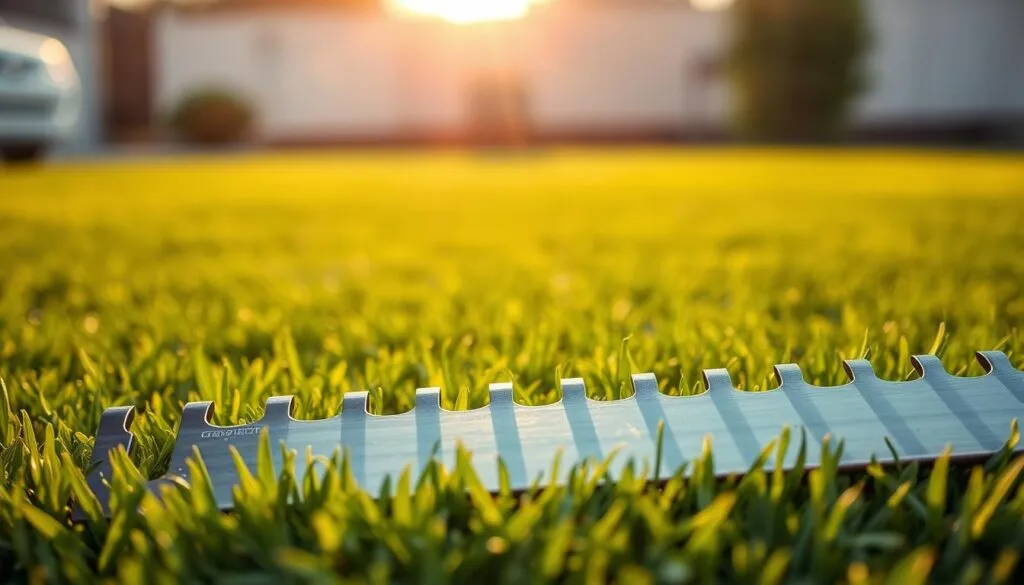
Dull blades tear and shred grass instead of cutting it cleanly. This damage stresses the plant and creates open wounds vulnerable to disease.
Sharp mower blades are essential for a pristine lawn. They make precise cuts that heal quickly. This minimizes stress on the developing root system.
If DIY sharpening isn’t an option, many repair shops offer this service. It’s a wise investment for your landscape’s long-term health.
Mowing Height and the One-Third Rule Explained
Set your mower to its highest setting for the first cut. A taller height, around three to four inches, reduces stress on the grass.
The extra blade length supports better photosynthesis. This process creates more energy for strong root development underground.
“Never remove more than one-third of the grass blade in a single session. This rule is non-negotiable for turf health.”
Cutting too much at once shocks the plant. It redirects energy to top growth instead of root development. For overgrown turf, mow high first and lower the blades gradually over subsequent sessions.
This patient approach provides necessary control. It allows your new sod to adapt without setback, ensuring a thick, resilient lawn.
Maintenance Tips for Long-Term Lawn Health
Proper irrigation timing before mowing sessions protects your lawn investment. Consistent maintenance routines establish the foundation for durable turf that withstands seasonal challenges.
Watering Practices Before Mowing
Strategic hydration management prevents damage during cutting operations. Stop all watering at least one day before planned maintenance. This allows the ground to firm up sufficiently.
Frequent irrigation keeps new sod soft for root development. Mowing on saturated soil creates ruts and depressions. These imperfections damage both surface grass and underground growth.
Adjust your watering schedule to skip irrigation before maintenance days. The extra drying time ensures safe equipment operation. It also promotes cleaner cuts and healthier grass.
| Practice | Proper Approach | Improper Approach |
|---|---|---|
| Pre-Mowing Hydration | Stop irrigation 24 hours prior | Water right before mowing |
| Timing | Cool morning or late afternoon | Midday heat periods |
| Condition | Dry grass blades | Wet from rain or dew |
| Clippings | Bag during first month | Leave clippings initially |
Choose cooler parts of the day for maintenance sessions. Early morning or late afternoon avoids heat stress. Never cut grass immediately after rainfall or heavy dew.
Bag clippings during the first month of establishment. This prevents smothering and improves air circulation. After six weeks, clippings can remain as natural fertilizer.
Establish a consistent maintenance schedule based on growth patterns. Professional lawn care service consultation provides customized guidance for your specific conditions.
Conclusion
The journey from freshly laid turf to a mature, resilient lawn culminates with proper establishment practices. Your patience during these critical weeks pays dividends for years of enjoyment.
Following the recommended timeline ensures strong root development. This underground strength supports visible grass health above ground. Proper maintenance routines establish lasting control over your landscape’s appearance.
Sharp equipment and correct cutting height protect delicate new growth. Strategic watering completes your comprehensive care approach. These practices work together for optimal results.
Your investment transforms into a beautiful, permanent landscape feature. Consistent attention during establishment creates a foundation for long-term success. Professional service consultation can provide customized guidance for specific conditions.
Implementing these principles ensures your outdoor space thrives day after day. The reward is a lush, healthy lawn that enhances your property’s overall appeal.
FAQ
How soon after installation can I mow my new lawn?
You should typically wait about two weeks after your sod installation before the first mow. This period allows the root system to establish into the soil. Always perform a gentle tug test to confirm the grass is firmly anchored before proceeding with lawn care.
What is the best way to check if my new sod is ready for mowing?
To check root development, gently lift a corner of the sod. If it resists being pulled up, the roots have taken hold. This simple test helps prevent damage to your new turf and ensures proper establishment before you begin your maintenance schedule.
Why is it crucial to use sharp mower blades on a new lawn?
Sharp mower blades create a clean cut, which is vital for the health of your young grass. Dull blades tear the grass blades, causing stress and making your new lawn more susceptible to disease. This is a key part of professional landscape maintenance.
How much should I water my new sod before the first mowing?
Maintain consistent moisture in the top inch of soil leading up to your first mow. Proper watering is essential for root growth. Ensure the ground is firm but not overly soggy on mowing day to support your equipment and protect the area.
What is the "one-third rule" for mowing new grass?
The one-third rule means you should never remove more than one-third of the grass blade height in a single mowing session. For your first time mowing new sod, this practice minimizes stress and encourages a thick, healthy lawn over time.
Can weather conditions change the ideal time to mow new sod?
Absolutely. Weather and soil conditions significantly influence the establishment time. Cool, moist conditions may speed up root growth, while hot, dry periods can delay it. Adjust your timing based on these factors to ensure your yard is truly ready.