
Have you ever wondered if that quick stop at the gas station could actually be harming your yard equipment? I asked myself this exact question when I noticed my machine struggling to start last spring.
Through extensive research, I discovered that choosing the right fuel is one of the most critical maintenance decisions for outdoor power equipment. The wrong selection can lead to expensive repairs and poor cutting performance that affects your entire yard care routine.
Most equipment owners ask about fuel types because they want to avoid costly mistakes that could damage their investment or void warranties. I found that the petroleum you select directly impacts starting reliability, engine longevity, and overall cutting quality.
I’ve seen firsthand how incorrect fuel choices cause problems ranging from difficult starting and rough operation to complete engine failure. That’s why I’m sharing my findings to help you make informed decisions that protect your equipment.
This guide will walk you through everything I learned about octane ratings, ethanol content, and proper storage practices. By the end, you’ll understand exactly what your equipment needs for optimal performance throughout the season.
Key Takeaways
- Fuel selection significantly impacts equipment performance and longevity
- Using incorrect petroleum can lead to costly repairs and voided warranties
- Proper fuel choice ensures reliable starting and smooth operation
- Ethanol content and octane ratings are critical factors to consider
- Correct storage practices maintain fuel quality between uses
- Manufacturer specifications provide the best guidance for fuel requirements
- Informed decisions protect your investment and maintain cutting quality
Understanding the Fuel Requirements for Lawn Mowers
Many equipment owners overlook how critical fuel selection is for their outdoor power tools. I learned this lesson through personal experience when my equipment started showing signs of trouble.
Fuel Quality and Engine Protection
Small engines operate at higher temperatures than automotive engines. They also have simpler fuel systems and sit unused for longer periods. This makes them more vulnerable to contamination.
Poor fuel quality can cause serious problems. These include carburetor damage, fuel system clogs, and engine component wear. Such issues may void your warranty if traced back to improper fuel use.
How Gas Type Affects Performance
The type of petroleum you choose directly impacts performance factors. Starting reliability, power output, and smooth operation all depend on fuel quality. Lower-quality fuel leads to rough running and difficulty starting.
Fuel-related issues are among the most common problems equipment owners face. Yet they’re also among the most preventable with proper fuel selection. Understanding this relationship helps avoid costly repairs.
Protecting your engine with the right fuel choice pays dividends in reliability and longevity. It’s an investment that maintains your equipment’s performance over time.
Does Lawn Mower Take Regular Gas? Exploring Fuel Types
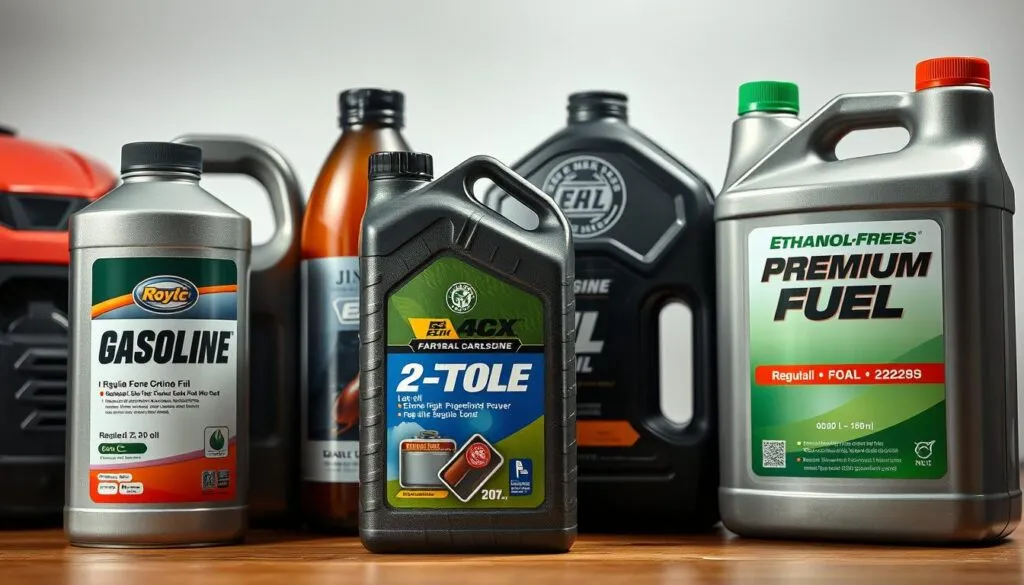
My investigation into proper fuel selection revealed that not all gasoline types are created equal for outdoor power tools. Understanding the differences between available options helps prevent costly mistakes.
Regular Unleaded Versus Ethanol-Free Options
Most equipment operates perfectly on standard regular unleaded gasoline with 87 octane rating. This fuel contains up to 10% ethanol content, which works well for frequent use.
Ethanol-free options provide better protection for seasonal equipment. These fuels prevent moisture absorption and corrosion during storage. They cost slightly more but offer extended shelf life.
Benefits of Premium Fuel in Specific Cases
Higher octane gasoline typically isn’t necessary for most residential mowers. The minimum octane requirement remains 87 for standard conditions.
Premium fuel becomes beneficial at high altitudes above 5,000 feet. Thinner air requires different combustion characteristics. Commercial-grade equipment might also benefit from higher octane ratings.
Choosing the right fuel depends on your specific usage patterns and storage needs. Consider ethanol content and octane requirements for optimal performance.
Proper Fuel Storage and Maintenance Tips
What surprised me most in my investigation was how quickly untreated fuel deteriorates during storage periods. Gasoline begins to degrade after just 30 days, forming harmful deposits that can damage your equipment’s fuel system.
Using Fuel Stabilizer for Extended Storage
I discovered that a quality fuel stabilizer is essential for protecting your investment during seasonal storage. This treatment prevents acid and gum formation in the tank and fuel lines.
The right stabilizer allows you to keep fuel in your equipment for up to 24 months safely. This eliminates the need to drain expensive gasoline before each storage season.
Step-by-Step Storage Guidelines
My research revealed a simple three-step process for proper equipment care. First, add fuel stabilizer according to package instructions. Second, run the engine for two minutes to circulate the treatment throughout the system.
Finally, store your equipment in a clean, dry location. These storage tips ensure your machine will start reliably when you need it next season.
If you haven’t used a stabilizer, you must drain the tank completely. Run the engine until it stops to prevent damage from stale fuel.
I recommend purchasing fuel in quantities you can use within 30 days. This practice maintains freshness and saves time during your next maintenance session.
Engine Type Considerations and Fuel Mixture Advice
One of the most important discoveries I made was that different engine designs require completely different fueling approaches. Getting this wrong can cause serious damage to your equipment.
Before adding any petroleum to your machine, you must identify what type of engine it uses. This basic step prevents costly mistakes.
4-Stroke Versus 2-Stroke Engine Differences
Most modern lawn mower engines are 4-stroke designs. These systems have separate compartments for oil and fuel. They run on straight gasoline with no additives.
2-stroke engines are less common today. They need a precise mixture of gasoline and oil to function properly. The ratio is typically 50:1.
| Feature | 4-Stroke Engine | 2-Stroke Engine |
|---|---|---|
| Fuel Requirement | Straight gasoline only | Gas-oil mixture required |
| Oil System | Separate reservoir | Mixed with fuel |
| Common Ratio | N/A | 50:1 gas to oil |
| Modern Usage | Most common | Less frequent |
Mixing Oil and Fuel Safely
For 2-stroke engines, always use high-quality 2-cycle oil. Measure carefully to maintain the correct ratio. Too much or too little can harm the engine.
Never mix oil into the tank of a 4-stroke engine. This mistake will damage internal components. It also voids your warranty.
Your owner’s manual provides exact specifications. When in doubt, consult your local dealer. Proper fuel use protects your investment.
Fuel Optimization for Enhanced Mower Performance
Through practical experimentation, I found that precise fuel optimization significantly enhances cutting performance and engine longevity. The right combination of octane rating and ethanol content makes a noticeable difference in how equipment operates.
My testing revealed that matching fuel specifications to your usage patterns delivers the best results. Weekly users benefit from different formulations than occasional operators.
Maintaining the Right Octane and Ethanol Levels
I discovered that 87 octane provides the perfect balance for most residential equipment. This minimum octane prevents engine knock while remaining economical.
The maximum safe ethanol content is 10% (E10). Higher concentrations cause moisture absorption issues. This leads to corrosion and performance problems over time.
Ethanol-free gasoline eliminates moisture-related issues entirely. It offers better fuel efficiency and enhanced engine life. The trade-off is a slightly higher price per gallon.
For high-performance engines, premium fuel may improve power output. Commercial equipment with higher compression ratios benefits from this upgrade.
Pre-mixed canned products provide maximum convenience. They feature consistent octane rating, zero ethanol content, and built-in stabilizers.
Always check your owner’s manual for specific requirements. Choosing right ensures optimal performance and prevents costly issues.
Conclusion
My comprehensive research into proper fueling has revealed straightforward principles that ensure reliable equipment performance. Most outdoor power tools operate efficiently on standard unleaded petroleum with an 87 octane rating. Understanding your specific needs helps select the optimal fuel type.
Following manufacturer guidelines prevents most common issues. Proper storage practices with stabilizers maintain fuel quality between uses. These simple steps protect your investment and extend engine life significantly.
Applying these principles guarantees consistent starting and smooth operation. Your equipment will deliver peak performance season after season. Informed fuel choices make yard maintenance more efficient and cost-effective.
FAQ
What kind of fuel should I put in my lawn mower?
I always use fresh, unleaded gasoline with a minimum 87 octane rating for my equipment. The key is to check your owner’s manual, as some manufacturers recommend ethanol-free fuel to prevent damage to the fuel system and carburetor from ethanol’s moisture-attracting properties.
Is premium gasoline better for my mower’s engine?
In most cases, I stick with regular unleaded. High-octane premium fuel is typically unnecessary unless specified in your manual for high-performance engines. Using it when not required offers no benefit and is an extra expense.
How does ethanol in gasoline affect my equipment?
Ethanol can cause significant problems over time. It attracts moisture, which leads to corrosion in the fuel system and can clog the carburetor. For long-term engine health, I opt for ethanol-free fuel or use a quality fuel stabilizer with every tank.
What is the best way to store my mower and fuel at the end of the season?
Proper storage is critical. I add a fuel stabilizer to a full tank, run the engine for a few minutes to circulate the treated fuel through the system, and then drain or run the carburetor dry. This prevents stale gas from causing startup issues next season.
What’s the difference between 2-stroke and 4-stroke engine fuel needs?
My 4-stroke mower uses straight gasoline. However, if you have a 2-stroke engine, like on a trimmer, you must mix a specific ratio of 2-stroke oil with the gasoline. Always follow your equipment’s manual for the correct oil-to-fuel mixture to avoid engine damage.
Why is using a fuel stabilizer so important?
A stabilizer preserves fuel quality during storage, preventing it from breaking down and forming gums and varnishes that clog the fuel system. I use it for any gasoline that will sit for more than 30 days to ensure easy starts and optimal performance.