

As we enjoy our outdoor spaces, a pressing concern is the presence of ticks and the health risks they pose, including the transmission of Lyme disease. The question on many homeowners’ minds is whether maintaining a well-manicured lawn can help mitigate this issue.
Ticks thrive in tall grass and dense vegetation, using these areas as a habitat to wait for potential hosts. By understanding the relationship between lawn care and tick populations, we can take proactive steps to reduce the risk of tick encounters.
Key Takeaways
- Regular lawn mowing can disrupt tick habitats.
- Ticks are attracted to tall grass and dense vegetation.
- Maintaining a well-manicured lawn is a crucial step in reducing tick populations.
- Creating a tick-safe environment involves more than just mowing.
- Proper lawn care can be your first line of defense against tick-borne illnesses.
Understanding Tick Behavior in Your Yard
Ticks thrive in specific conditions found in many residential yards, and understanding these conditions is key to controlling their populations. Ticks are most active when the weather gets warmer, and they thrive in humid environments. Unlike mosquitoes that fly, ticks wait on the tips of grass or leaves for a host to pass by and then drop down and latch on.
Where Ticks Thrive in Residential Areas
Untended lawns, tall grasses, dense overgrowth along the edges of your property, and wooded areas are perfect examples of places where ticks are likely to be found. These areas provide the humid, shaded environments that ticks prefer, making them ideal tick habitats. For more information on maintaining your lawn and potentially reducing tick habitats, you can check out our guide on how long to wait to mow after overseeding a fescue.
The Tick Life Cycle and Seasonal Activity
The tick life cycle includes stages from egg to adult, with each stage interacting with your yard environment in different ways. Ticks are most active during spring and summer months when the weather is warmer and more humid. Understanding the tick life cycle and seasonal activity patterns can help you take targeted measures to control tick populations in your yard.
Does Mowing the Lawn Kill Ticks?
Mowing the lawn is a common practice, but its effect on tick populations is often misunderstood. While it’s not a foolproof method for eliminating ticks, regular lawn mowing can significantly reduce their presence.
The Direct Impact of Mowing on Tick Populations
Mowing the lawn directly impacts tick habitats by reducing tall grass and shady spots where ticks thrive. Regular mowing disrupts the tick life cycle by eliminating their hiding places, making it harder for them to survive and reproduce. By keeping your lawn trimmed, you’re creating an environment that’s less conducive to tick populations.
- Reduces tall grass where ticks hide
- Decreases shady spots that ticks prefer
- Disrupts tick life cycle by removing hiding places
How Short Grass Disrupts Tick Habitats
Short grass creates an inhospitable environment for ticks by reducing humidity and increasing sun exposure. Ticks rely on tall grass as a staging area to find hosts; keeping grass short disrupts this behavior. By maintaining a well-manicured lawn, you’re making it harder for ticks to latch onto hosts, thereby reducing the risk of tick-borne illnesses.
The Science Behind Lawn Maintenance and Tick Control
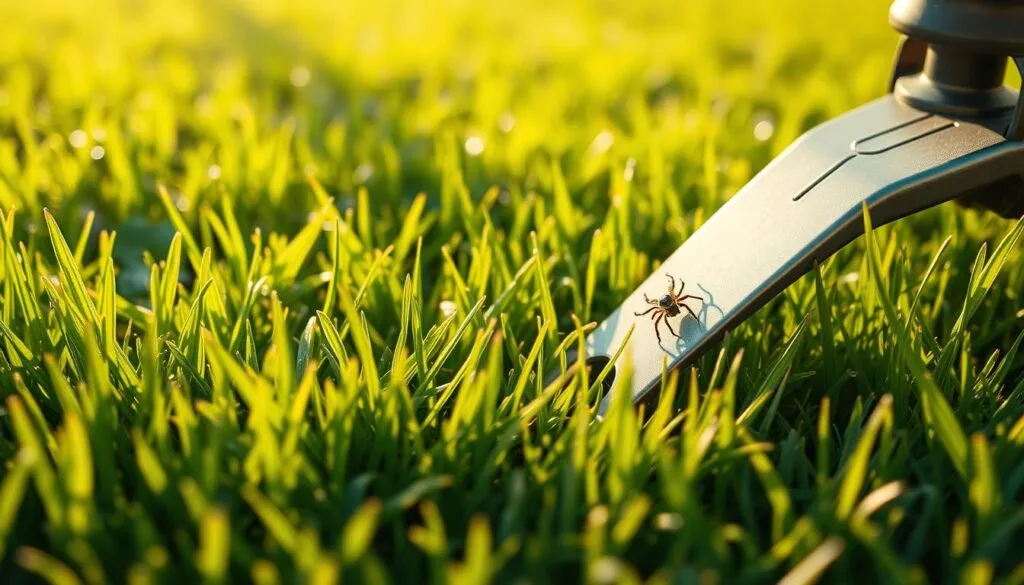
Understanding the science behind lawn maintenance is crucial for effective tick control. A well-maintained lawn is not just aesthetically pleasing; it also plays a significant role in reducing tick populations. Ticks thrive in environments with tall grass and shaded areas, making regular lawn mowing a critical component of tick prevention.
How Sunlight and Reduced Moisture Affect Ticks
Regular mowing allows more sunlight to reach the grass, reducing moisture and creating an environment that is less conducive to tick survival. “Ticks require a humid environment to survive,” says a recent study on tick behavior. By increasing sunlight exposure and reducing humidity, we can make our yards less inviting to ticks.
Optimal Grass Height for Tick Prevention
Maintaining an optimal grass height is crucial for tick prevention. Keeping grass at a height of 2.5 to 3 inches can help reduce tick habitats while also maintaining a visually appealing lawn. This height strikes a balance between aesthetic concerns and effective tick control, making it a practical recommendation for homeowners.
By understanding how lawn maintenance affects tick behavior and survival, we can take a proactive approach to tick control. Regular mowing, combined with other lawn care practices, can significantly reduce tick populations in our yards.
Creating a Tick-Safe Zone Through Landscaping
By implementing specific landscaping strategies, you can create a tick-safe zone that minimizes the risk of tick-borne diseases. To achieve this, we need to make our yard less hospitable to ticks and their hosts.
Strategic Lawn Design to Minimize Tick Habitats
A strategic lawn design is crucial in minimizing tick habitats. We can achieve this by keeping our grass mowed, clearing brush and weeds, and trimming bushes and trees to allow sunlight to penetrate. Reducing vegetation and raking leaves also contribute to making our yard less attractive to ticks. By implementing these measures, we can significantly reduce the presence of ticks in our yard.
| Lawn Design Element | Benefit |
|---|---|
| Keeping grass mowed | Reduces tick habitats |
| Clearing brush and weeds | Eliminates tick hiding spots |
| Trimming bushes and trees | Allows sunlight to penetrate, reducing tick habitats |
Barrier Methods to Keep Ticks at Bay
In addition to strategic lawn design, creating a barrier around our yard can help keep ticks at bay. A three-foot-wide barrier of dry material like wood chips or gravel between our lawn and the woods can be effective. This barrier prevents ticks from migrating into our recreational areas. We should also remove brush and leaves from around stone walls and keep play areas away from woods and tall grasses.
Beyond Mowing: Comprehensive Yard Maintenance for Tick Control

To effectively control ticks, comprehensive yard maintenance is crucial. Maintaining a yard that’s unfavorable to ticks involves several strategies beyond regular lawn mowing.
Clearing Leaf Litter and Yard Debris
Clearing leaf litter and yard debris is essential for tick control. Ticks thrive in piles of leaves and debris, which provide shelter and humidity. Regularly clearing these materials helps eliminate tick habitats. Proper disposal of leaves and debris is also crucial to prevent creating new tick habitats elsewhere.
Managing Vegetation and Wooded Areas
Managing vegetation and wooded areas around your yard is vital. Trimming trees and shrubs allows more sunlight to reach your lawn, making it less conducive to ticks. Managing vegetation along property edges and creating buffer zones can prevent ticks from migrating into your yard. Additionally, identifying areas where tick host animals frequent can help target tick control efforts.
- Regular yard clearing to eliminate tick habitats
- Proper leaf disposal to prevent new tick habitats
- Managing vegetation to allow more sunlight
- Creating buffer zones to prevent tick migration
Protecting Your Family and Pets from Ticks
As we enjoy our outdoor spaces, it’s crucial to protect our families and pets from tick bites. Ticks can transmit diseases to both humans and animals, making it essential to take preventive measures.
Strategic Placement of Play Areas and Outdoor Furniture
To minimize tick exposure, it’s vital to strategically place play areas and outdoor furniture. Keep these areas away from woods, leaf piles, and tall grasses. For instance, place sandbox and swing sets in sunny, open locations. Reducing vegetation and leaf litter around decks and patios also helps. Trim nearby trees to allow more sunlight, creating an environment less conducive to ticks.
Personal Protection Measures While Enjoying Your Yard
Personal protection is key when spending time outdoors. Wear appropriate clothing, such as long-sleeved shirts and pants, and apply tick repellents. Regularly check for ticks on both people and pets after outdoor activities. Prompt removal of attached ticks can significantly reduce the risk of disease transmission. Creating a routine for these checks can help prevent ticks from entering your home.
Chemical and Natural Treatments for Tick Control
To effectively manage tick populations, consider both chemical acaricides and natural alternatives. Chemical treatments can provide immediate results, while natural methods offer a more environmentally friendly approach.
Effective Acaricides and Application Methods
Acaricides are pesticides designed to kill ticks. You can apply these treatments yourself or hire a professional. Target areas include your lawn, woodland edges, and around tick habitats like brush and stone walls. Effective application is crucial for reducing tick populations. Spraying around the perimeter of areas where your family spends time, such as patios and gardens, can also help.
Natural and Pet-Safe Tick Control Alternatives
For those seeking alternatives to chemical treatments, options like essential oils These natural methods can be used in conjunction with other tick control strategies to create a comprehensive approach to managing ticks and preventing diseases like Lyme disease.
Conclusion
By combining regular lawn mowing with other prevention methods, homeowners can significantly reduce the risk of tick encounters. Effective tick control involves maintaining a well-manicured lawn, removing debris, and limiting shaded areas. We emphasize the importance of consistent yard maintenance throughout spring and summer. To protect your family and pets from tick bites and diseases like Lyme disease, implement a year-round tick control strategy.
Maintaining a balance between an aesthetically pleasing outdoor environment and effective tick prevention measures is key. While no single method provides 100% protection, a multi-faceted approach significantly reduces tick populations around your home.
FAQ
How often should we mow our lawn to prevent tick habitats?
We recommend maintaining our lawn at a height of 3 inches or less to disrupt tick habitats. The frequency of mowing depends on the growth rate of our grass, typically every 7-10 days during spring and summer.
Are there other yard maintenance tasks that can help control tick populations?
Yes, in addition to maintaining a short lawn, we can clear leaf litter and yard debris, manage vegetation and wooded areas around our yard, and create a barrier between our lawn and wooded areas to prevent tick migration.
Can we use natural methods to control ticks in our yard?
Yes, there are natural and pet-safe alternatives to chemical acaricides, such as using diatomaceous earth or essential oils like lemongrass or peppermint to repel ticks. We can also introduce beneficial nematodes to our soil to control tick populations.
How can we protect our pets from tick bites when they’re playing in the yard?
To protect our pets, we can use pet-safe tick control products, keep our yard free of debris and leaf litter, and create a tick-safe zone by maintaining a short lawn and using barrier methods.
What are some effective ways to prevent tick bites when we’re enjoying our yard?
We can prevent tick bites by wearing protective clothing, applying insect repellents, conducting regular tick checks, and creating a tick-safe zone around our outdoor furniture and play areas.
Can we use chemical treatments to control ticks in our yard?
Yes, chemical acaricides can be effective in controlling tick populations. However, we should always follow the product instructions, take necessary precautions to avoid exposure, and consider the potential environmental impact.
How can we minimize the risk of tick-borne diseases in our yard?
To minimize the risk of tick-borne diseases, we can maintain a tick-safe yard through regular maintenance, use personal protection measures, and educate our family about the risks associated with tick bites.