
Is your freshly watered lawn a green flag for mowing, or a giant red stop sign? Many homeowners face this dilemma after a downpour. Your schedule says it’s time for a trim, but the weather has other plans.
Timing your lawn care around rainfall is crucial. Cutting grass that is too wet can harm your turf and damage your equipment. It can lead to an uneven cut, clumping, and even disease.
Patience truly pays off. Rushing the process can create problems that take much longer to fix. The right time depends on several factors, like soil type and the intensity of the storm.
This guide will help you determine the perfect moment to get the job done. You will learn simple tests to check if your grass is ready. Proper timing keeps your lawn healthy and looking its best.
Key Takeaways
- Mowing a wet lawn can damage both the grass and your mower.
- Proper timing is essential for a clean cut and a healthy turf.
- Simple tests, like checking for footprints, can determine if the grass is dry enough.
- Heavy rain requires a longer waiting period than a light shower.
- Patience after rainfall prevents long-term lawn problems.
- Understanding your local climate is key to effective lawn maintenance.
Understanding the Risks of Mowing Wet Grass
Operating a mower on damp turf introduces a host of complications for your landscape and personal safety. The immediate desire for a neat lawn must be weighed against potential long-term damage and hazardous conditions.
Damage to Lawn Health and Soil Structure
Wet grass blades are limp and clump together. Your mower will tear them instead of making a clean cut. This ragged injury invites fungal problems like brown patch and dollar spot.
The heavy weight of the equipment compacts the soil. This compression reduces air pockets and nutrient flow to the roots. Your lawn struggles to thrive when the ground is too dense.
Wheels sink into soft ground, creating unsightly ruts. These depressions are tripping hazards and can pool water, attracting pests.
Safety and Mower Performance Concerns
Your personal safety is the primary risk. Wet surfaces are extremely slippery. Maintaining footing and controlling the mower becomes difficult, especially on slopes.
Hidden objects in tall, damp grass can become dangerous projectiles. Riding mowers may lose traction and skid. The U.S. Consumer Product Safety Commission reports thousands of annual injuries related to lawn mower use.
| Factor | Mowing Dry Grass | Mowing Wet Grass |
|---|---|---|
| Cut Quality | Clean, even cut | Ragged, torn blades |
| Lawn Health | Promotes strong growth | Invites disease and stress |
| Soil Impact | Minimal compaction | Significant compaction and ruts |
| Safety Level | Stable footing and control | High risk of slipping and accidents |
How Rain Impacts Your Lawn and Mower
When precipitation soaks your grass, it fundamentally alters how your mower interacts with the turf. Moisture creates a chain reaction of problems affecting both your lawn’s health and your equipment’s performance.
Effects on Grass Blades and Soil Conditions
Waterlogged grass blades become heavy and flexible. They bend rather than stand upright, changing how cutting occurs. The stickiness causes clumps that smother your lawn.
These wet clumps block oxygen from reaching soil. They create ideal conditions for fungal growth. Thatch buildup prevents nutrients from reaching roots.
Your mower faces significant strain from damp conditions. Wet grass is heavier to cut, putting stress on the motor. The abrasive nature accelerates blade dulling.
Clumps lodge in the mower deck, restricting airflow. This can jam cutting blades and strain the engine. Moisture retention leads to rust on metal components.
| Component | Dry Conditions | Wet Conditions |
|---|---|---|
| Cutting Blades | Normal wear pattern | Rapid dulling from abrasion |
| Engine | Standard operation | Overheating risk from clogs |
| Deck Interior | Clean, dry surface | Rust formation from moisture |
| Clipping Discharge | Even distribution | Clumping and blockage |
Understanding these effects helps protect your investment. Proper timing prevents equipment damage and maintains turf health.
How Long After Rain Can You Mow: Factors to Consider
Multiple variables influence when your turf becomes suitable for cutting following wet weather conditions. The standard guideline suggests waiting at least 24 hours. However, this timeframe adjusts based on specific circumstances.
Assessing Soil Moisture and Grass Texture
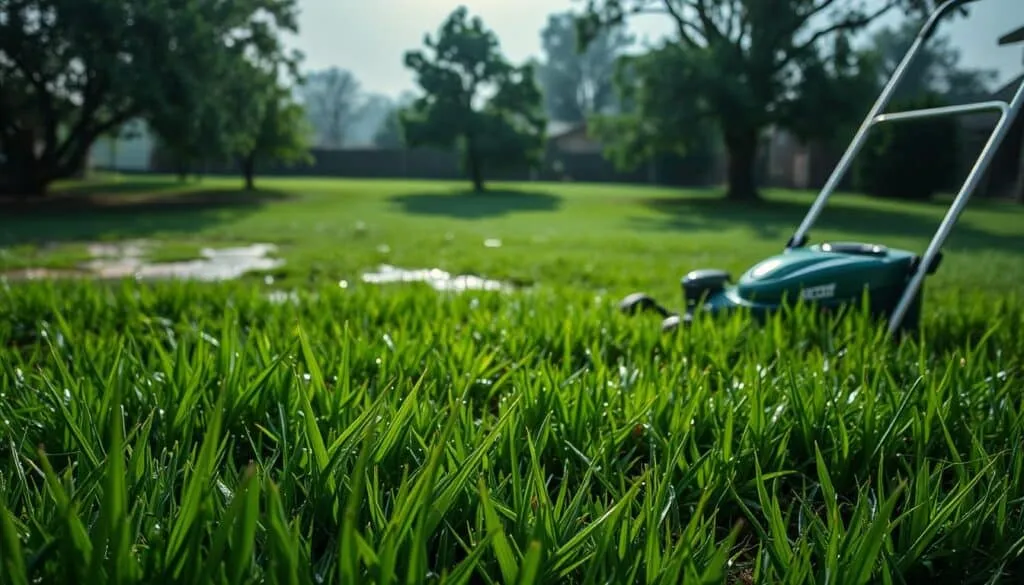
Simple tests help determine if your landscape is ready. Walk across the lawn and check for footprints. If impressions remain visible, the ground needs more time.
Touch the grass blades for dampness. Water droplets indicate continued wet conditions. Push a screwdriver into the soil to test moisture levels.
Easy penetration means the ground is too soft. Consider using a soil moisture meter for precise measurements. Optimal conditions occur when soil feels damp but not soggy.
Weather, Grass Type, and Rain Intensity
Rainfall intensity dramatically affects drying time. Light showers may only require 3-5 hours. Heavy storms often need two full days or more.
Soil composition plays a crucial role. Sandy soils drain quickly, while clay retains moisture longer. Your grass type also matters for resilience.
Weather conditions after precipitation impact evaporation rates. Warm, windy days accelerate drying. Cool, humid weather extends the waiting period.
These factors combine to create the ideal mowing window. Proper assessment ensures healthy turf and equipment protection.
Proper Mowing Techniques After Rain
Your lawn has finally dried, but your mowing approach needs thoughtful adjustments for the best results. Even when surfaces appear ready, recently watered turf requires special care to avoid stress.
Implementing proper techniques supports recovery and maintains your landscape’s health. These methods differ from standard dry-condition mowing.
Adjusting Mower Height and Speed
Set your cutting blades higher than usual for post-precipitation care. Taller grass minimizes clumping and reduces stress on recovering blades.
Reduce your mowing speed significantly. Slower movement allows the mower to handle grass more efficiently. This prevents tearing of blades that may retain residual moisture.
Optimal timing occurs during early morning or evening hours. Avoid the day’s hottest periods when grass is most vulnerable.
Clearing Clumped Grass and Debris
Purdue University experts recommend double-cutting areas with heavy growth. This technique breaks clippings into smaller pieces for even distribution.
When clipping volume is excessive, bagging becomes necessary. Collected material works well as compost or mulch for other garden areas.
Periodically stop to clear accumulated grass from the mower deck. This prevents buildup that strains engine performance and reduces cutting efficiency.
| Technique | Standard Mowing | Post-Rain Approach |
|---|---|---|
| Blade Height | Normal setting | Higher cut (1-2 inches more) |
| Mowing Speed | Standard pace | Reduced speed (50-75% slower) |
| Clipping Management | Mulching or side discharge | Double-cutting or bagging |
| Deck Maintenance | End-of-session cleaning | Frequent stops for clearing |
These adjustments ensure your first mowing session supports lawn recovery. Proper technique prevents additional stress to grass rebounding from saturated conditions.
Tips for Safely Mowing Wet Grass (If Necessary)
Sometimes weather patterns force your hand, making cutting damp turf unavoidable. Extended rainy periods might leave your lawn overgrown, requiring action despite moisture. These tips help minimize risks when mowing wet grass becomes necessary.
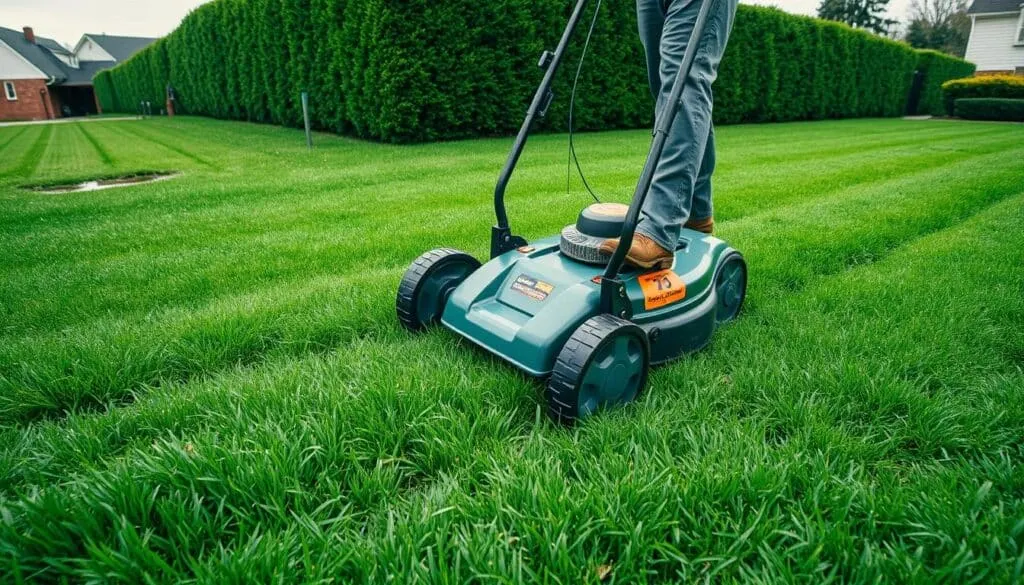
Your mower maintenance becomes critical in these conditions. Ensure blades are sharp to slice through moisture-heavy grass cleanly. Dull blades tear rather than cut, worsening damage to already stressed turf.
Mower Maintenance and Blade Sharpness
Adjust your approach significantly when dealing with damp conditions. Raise the cutting height to reduce clumping and stress on both grass and equipment. Move at a slower pace to help the machine process wet vegetation more effectively.
Side-discharge mowers work best for cutting wet grass since they expel clumps quickly. Avoid mulching attachments that can clog with sticky clippings. Stop frequently to clear accumulated grass from the deck.
Strategies to Reduce Slipping and Equipment Damage
Safety precautions are paramount when working with wet surfaces. Wear shoes with excellent traction and avoid obviously waterlogged areas. Be extra cautious on slopes where slipping risks increase dramatically.
Electric mowers present particular hazards. Most manufacturers explicitly warn against mow wet grass operations due to electrical shock risks. Water can damage batteries and cause short circuits in cordless models.
Remember these techniques reduce but don’t eliminate dangers. Cutting wet grass should remain a last resort for maintaining lawn health.
Alternatives to Mowing Wet Grass Immediately
A wet lawn presents the perfect opportunity to tackle maintenance tasks often overlooked during regular mowing sessions. While waiting for optimal conditions to mow grass, you can accomplish valuable lawn care work that enhances your landscape’s appearance.
Redirecting your efforts during damp periods makes practical sense. These alternative activities keep your property looking well-maintained without risking damage to turf or equipment.
Focusing on Weeding and Edge Trimming
Moist soil conditions actually benefit weed removal. Damp ground allows you to extract entire root systems rather than just breaking off tops. This thorough approach provides lasting results for your lawn health.
Edge trimming becomes particularly effective when the main turf area remains too wet. Defining crisp borders gives your property a polished, cared-for appearance. This visual improvement compensates for temporarily longer grass.
Establishing a consistent schedule for your lawn care routine prevents urgent situations. Regular maintenance during dry spells keeps grass at manageable lengths. This proactive approach offers multiple reasons to adopt strategic planning.
Early morning sessions during optimal weather conditions work best for routine care. Monitoring forecasts helps you cut grass before predicted precipitation arrives. This foresight eliminates the dilemma of needing to address overgrown turf after storms.
Conclusion
Mastering the timing of your lawn care after precipitation transforms good intentions into excellent results. The general 24-hour waiting period serves as a helpful baseline, but your specific conditions determine the ideal moment.
Attempting to mow grass when it’s still wet creates multiple problems. You risk tearing blades, compacting soil, and inviting disease. Your mower may clog with damp clippings.
Simple tests ensure your grass is ready. Check for footprints and feel for moisture. Waiting for grass to become sufficiently dry protects your lawn’s health and your personal safety.
Plan your mowing schedule around weather forecasts. Use damp days for edging or weeding instead. Patient, informed care delivers a healthier, more beautiful landscape.
FAQ
Why is it bad to mow a wet lawn?
Mowing wet grass can harm your lawn’s health and soil structure. The moisture makes grass blades tear instead of cut cleanly, leading to brown, ragged tips. It also compacts the soil, creates ruts, and causes clumping that can smother your turf.
What are the risks to my mower when cutting wet grass?
Mowing in wet conditions puts your equipment at risk. Wet grass clippings clump heavily, clogging the mower deck and potentially straining the engine. The slick ground also increases slipping hazards for you and can lead to damage from hidden objects.
How can I tell if my grass is dry enough to mow?
Check the soil moisture and grass texture. Walk across your lawn; if your footprints disappear quickly and the soil feels firm, it’s likely safe. The grass blades themselves should be dry to the touch and spring back up when you step on them.
What if I absolutely must mow wet grass?
If you have no choice, take extra precautions. Ensure your mower blades are sharp for a cleaner cut. Raise the cutting height, go slower, and make sure the mower deck is clean to prevent dangerous clumping and reduce stress on your equipment.
Are there other lawn care tasks I can do while waiting for the grass to dry?
Yes! Use this time for productive alternatives like weeding, trimming edges, or inspecting your irrigation system. This keeps your lawn care schedule on track without risking the damage that comes from mowing wet grass.