
What if the single most critical decision for your lawn’s future isn’t about fertilizer or watering, but about the timing of a simple cut? Many homeowners rush this step, unknowingly jeopardizing their entire investment in a beautiful landscape.
Establishing a vibrant, healthy lawn that enhances your home’s curb appeal requires patience and precision. The right moment for that first trim depends heavily on your establishment method. Seeding demands significant patience, while sod offers a quicker path to a mow-ready turf.
Getting this timing correct is fundamental. It allows tender young shoots to develop a strong root system, creating a resilient and lush carpet of green. Proper lawn care from the start sets the stage for long-term success and beauty.
This guide provides the expert insight you need to navigate this important phase. You will learn the specific timelines and key indicators that signal your lawn is truly ready.
Key Takeaways
- The waiting period for the first mow is crucial for the long-term health of your lawn.
- The method used to establish your lawn—seed or sod—directly impacts the timing.
- Proper timing encourages deep root growth and prevents damage to young grass.
- A well-timed first cut contributes to your home’s overall beauty and value.
- Understanding the correct schedule is essential for both new and experienced homeowners.
Understanding Lawn Establishment and Growth
Your lawn’s journey to maturity depends heavily on whether you start with seeds or pre-grown turf, each requiring distinct care approaches. The establishment method you choose directly impacts the waiting period for that important first trim.
Differences Between Seeded Lawns and Sod
Seeded lawns demand significant patience. Your grass seed needs approximately eight weeks to develop strong roots and sufficient growth. Germination alone can take from four to thirty days, influenced by soil temperature and weather conditions.
Sod provides instant visual appeal but still requires careful timing. The pre-grown turf needs two to four weeks for its roots to anchor firmly into your existing soil. A simple tug test helps determine readiness—if the sod stays firmly in place, it’s ready.
Why Timing Is Crucial for Grass Health
Proper timing protects tender young shoots from damage. Cutting too soon can tear developing roots and set back your lawn’s progress by weeks. This careful approach ensures uniform turf development across all areas.
Environmental factors like soil conditions and grass type affect establishment time. Monitoring your specific lawn’s progress proves more effective than following rigid schedules. Alternative methods like plugs typically need three to six weeks before their first trim.
Preparing Your Lawn and Mower for the First Cut
Proper preparation of your equipment and lawn is just as vital as the timing of the first cut itself. Taking these steps ensures a clean, healthy trim that supports your turf’s development.
Inspecting and Sharpening Your Mower Blade
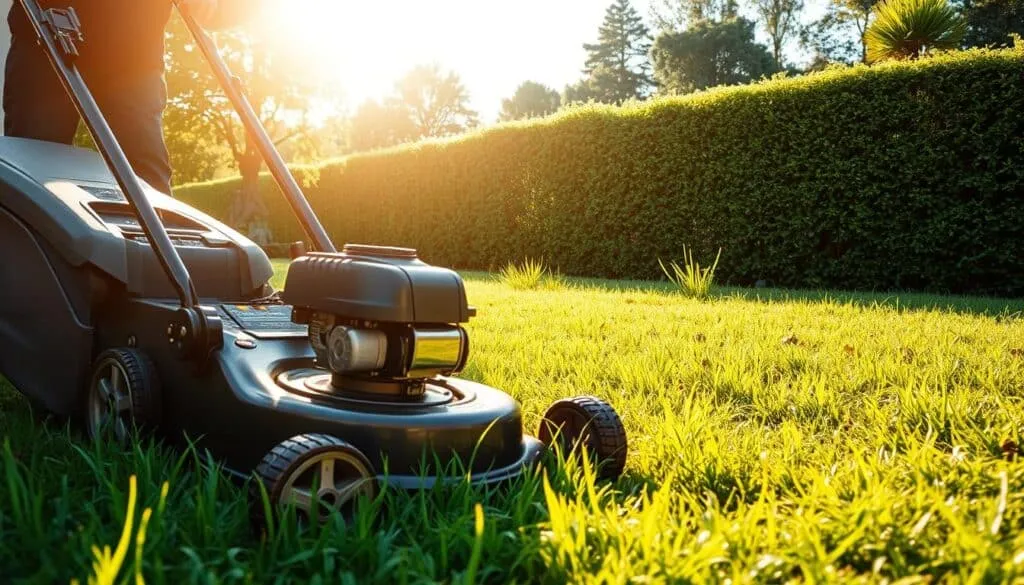
A sharp mower blade is non-negotiable. Dull blades tear the grass instead of slicing it cleanly. This causes stress, browning, and opens the door for disease in your young turf.
Before you start, give your mower a thorough cleaning. Remove old grass clippings and mud. This prevents spreading disease and helps the machine operate efficiently.
Setting the Right Mowing Height and Adjusting for Moisture
Set your mowing height higher than usual for an established lawn. This protects tender plants. Use the high end of the recommended range for your specific grass type.
The table below provides guidance for common varieties.
| Grass Type | Recommended Height (inches) |
|---|---|
| Tall Fescue | 2.5 – 5.25 |
| Kentucky Bluegrass | 2.0 – 3.5 |
| Perennial Ryegrass | 2.0 – 3.5 |
| Zoysiagrass | 1.25 – 3.25 |
| Bermudagrass | 1.5 – 2.5 |
Always make sure the grass is dry before you begin. Wet blades clump together, leading to an uneven cut. Dry conditions also prevent the mower from pulling up plants that lack deep roots.
For the best results, water your lawn early in the morning. This gives the blades time to dry thoroughly before you mow later in the day.
how long before mowing new grass: Timing, Techniques, and Essential Tips
Mastering the timing of your first cut separates amateur lawn care from professional results. This phase requires careful observation and understanding of key principles that protect your investment.
Expert Guidelines and the One-Third Rule
Follow specific timelines based on your establishment method. Seeded areas typically need approximately eight weeks to develop strong root systems. Sod installations often require two to four weeks for proper anchoring.
The one-third rule is critical for plant health. Never remove more than one-third of the blade height in a single session. This prevents stress and maintains energy reserves.
“The first cut should be a gentle introduction, not a harsh initiation. Patience here pays dividends in turf density and resilience.”
Calculate your target height carefully. If you want a final measurement of 3 inches, mow when plants reach 4 inches tall. This maintains the vital one-third ratio.
| Grass Variety | First Mow Height | Maintenance Height |
|---|---|---|
| Tall Fescue | 4 inches | 3 inches |
| Kentucky Bluegrass | 3.5 inches | 2.5 inches |
| Bermudagrass | 2.5 inches | 1.5 inches |
Managing Weather, Soil, and Traffic Considerations
Environmental conditions significantly impact your schedule. Warm, moist weather accelerates growth, potentially shortening waiting periods. Cool or dry conditions extend establishment time.
Check soil moisture before starting your equipment. Overly wet ground creates ruts and compacts earth. Ensure roots have penetrated deeply enough to anchor plants securely.
Limit foot traffic during establishment. Restrict movement for at least a month after seeding or until the area has been trimmed at least twice. This protects vulnerable root systems from damage.
For specialized situations like overseeding fescue lawns, additional considerations apply. Always assess your specific conditions rather than relying solely on calendar dates.
Conclusion
With the first cut complete, your focus shifts to nurturing a resilient and vibrant turf. Immediate care is crucial. Give your lawn a thorough drink after mowing. This watering helps the grass recover and encourages deep root development.
Leave the clippings on the soil. They act as a natural fertilizer, returning valuable nutrients. This simple step reduces your need for added products.
Watch for signs of stress like yellowing blades. Establish a regular schedule for future mow, always following the one-third rule. This promotes thick, healthy growth.
Wait several weeks before applying weed control to young lawns. For seeding or sod projects, delay fertilizer applications for 6-8 weeks. Adapt your strategy with the seasons for the best results. Consistent attention ensures your turf thrives for years.
FAQ
What is the ideal height for the first mow on a seeded lawn?
You should wait until your turf reaches about 3 to 4 inches tall. For the initial cut, set your mower blade to remove only the top third of the grass blade. This typically means cutting it down to approximately 2 to 2.5 inches.
How soon can I mow newly installed sod?
You can typically mow new sod about 10 to 14 days after installation. The key is to ensure the roots have firmly knit with the underlying soil. Gently tug on a corner of the turf; if it resists, it’s likely ready for its first mowed session.
Why is the one-third rule so important for lawn care?
The one-third rule—never removing more than one-third of the grass blade in a single mowing—is vital for plant health. Cutting too much at once stresses the turf, weakening the root system and making your lawn more susceptible to weeds and disease.
What is the best time of day to mow a new lawn?
The optimal time is in the late afternoon or early evening when the sun is less intense. This timing helps reduce moisture loss from the freshly cut tips. Always ensure the grass is dry to prevent clumping and to achieve a clean cut.
How does foot traffic affect a young lawn before the first mow?
Minimizing foot traffic is crucial. Walking on tender new grass or sod can damage the delicate blades and compact the soil, which hinders root growth. Keep activity on the lawn to an absolute minimum until it is well-established.
Should I apply fertilizer before or after the first mowing?
It’s generally best to wait until after you have mowed your new lawn at least two or three times before applying fertilizer. This allows the root system to strengthen first. Applying it too early can burn the young, tender blades of grass.