
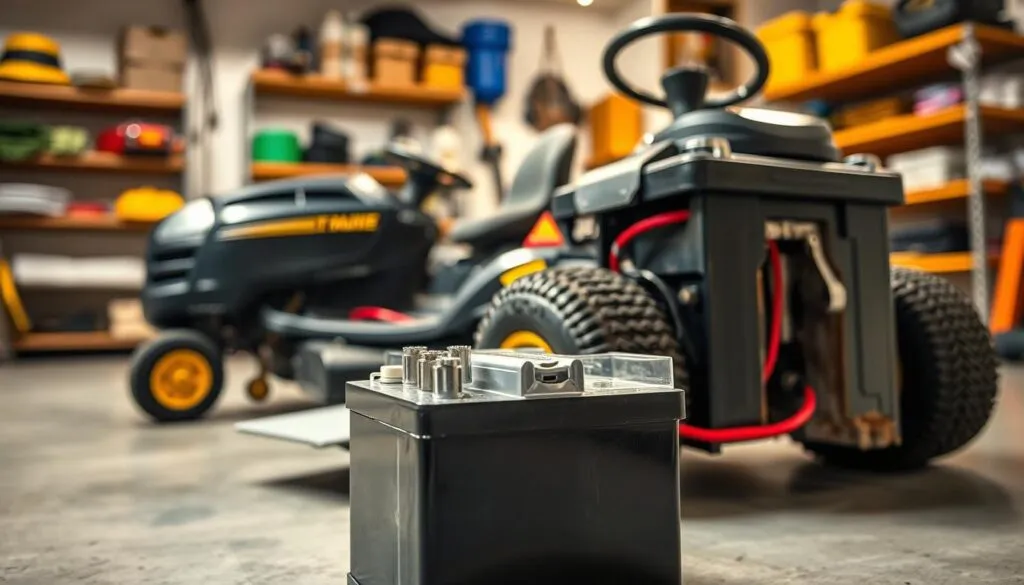
Is your riding mower’s power source on borrowed time? Many equipment owners wonder about the true service life of their machine’s electrical heart. Understanding this component’s durability is crucial for reliable performance.
Your equipment’s reliability throughout the mowing season depends on this vital part. Proper knowledge helps you plan maintenance and budget for replacements effectively.
Battery longevity is not a simple number. Several factors determine how many seasons you can expect from your lawn mower’s power unit. This guide explores those variables.
You’ll gain actionable insights to maximize performance and avoid unexpected failures. Learn how maintenance practices and usage patterns impact your equipment’s service life.
Discover how to make informed decisions about care and replacement timing. This knowledge ensures your investment in quality components pays off for years.
Key Takeaways
- Battery lifespan varies based on type, maintenance, and usage patterns.
- Proper care significantly extends your equipment’s operational life.
- Understanding replacement indicators prevents unexpected failures.
- Seasonal maintenance schedules optimize battery performance.
- Quality components offer better long-term value for your machine.
- Usage habits directly impact how many seasons your battery lasts.
Introduction to Riding Mower Batteries
Your mower’s starting capability relies entirely on one crucial component’s condition. This electrical unit provides the necessary energy to get your equipment running each time you need it.
The Importance of Battery Health
A well-maintained power source ensures consistent performance throughout the mowing season. When your equipment’s electrical heart functions properly, you avoid frustrating starting problems.
Healthy batteries deliver sufficient energy to operate all electrical components smoothly. Neglecting this vital part leads to premature failure and unexpected replacement costs.
Overview of Battery Lifespan
Most lawn mower batteries typically serve for three to five years under normal conditions. The actual timeframe depends heavily on maintenance practices and usage patterns.
Traditional lead-acid units generally provide two to four years of reliable service. Higher-quality lithium-ion alternatives can extend this period to five or even ten years.
Understanding these expectations helps you plan for replacement needs effectively. Your equipment may last a decade, but its power source will require periodic renewal.
Types of Riding Mower Batteries
Choosing the right power unit for your lawn tractor involves understanding key differences. Several technologies power modern equipment, each with distinct characteristics.
Your selection impacts maintenance requirements, performance, and long-term costs. Consider these options carefully before making your purchase.
Lead-Acid Battery Characteristics
Traditional lead-acid batteries remain common in many machines. These units typically serve for two to four years with proper care.
They offer affordable initial pricing and widespread availability. However, they demand more hands-on maintenance than modern alternatives.
Their considerable weight affects your equipment’s balance during operation. Regular water level checks and terminal cleaning are essential for optimal performance.
Lithium-Ion and LiFePO4 Advantages
Lithium-ion batteries provide superior energy efficiency and lighter construction. These modern power sources typically deliver five years of reliable service.
LiFePO4 technology represents the premium tier with exceptional durability. These advanced units can exceed ten years with proper care.
Both lithium options require minimal maintenance compared to traditional types. Their higher initial cost often proves economical over extended periods.
| Feature | Lead-Acid | Lithium-Ion | LiFePO4 |
|---|---|---|---|
| Average Lifespan | 2-4 years | 5 years | 10+ years |
| Maintenance Level | High | Low | Minimal |
| Weight | Heavy | Light | Light |
| Charging Cycles | 200-300 | 500-800 | 3000+ |
Your choice depends on budget, maintenance preferences, and performance expectations. Each technology offers distinct benefits for different usage scenarios.
how long does riding mower battery last
Multiple influences work together to either extend or shorten your equipment’s electrical life. Understanding these variables helps you maximize performance and avoid premature replacement costs.
Charging Habits and Usage Patterns
Your charging routine significantly impacts component longevity. Overcharging or deep discharges cause permanent damage to internal structures.
Lead-acid types suffer when drained excessively before recharging. Lithium options perform best when maintained between 20-80% capacity.
Frequent mowing sessions accumulate more charge cycles. Challenging conditions like thick grass increase strain on your power unit.
Environmental Conditions and Maintenance
Temperature extremes represent serious threats to your component’s health. Extreme cold reduces power capacity rapidly.
Excessive heat accelerates internal degradation. Proper storage conditions help mitigate these environmental factors.
Regular inspections and adherence to manufacturer guidelines extend service time. Your maintenance attention directly correlates with extended performance.
Maintenance Tips for Optimal Battery Performance
Implementing regular maintenance strategies ensures your machine’s energy unit operates at peak efficiency. Proper care extends service life and prevents unexpected failures during critical mowing seasons.
Consistent attention to three key areas delivers the best results for your equipment’s electrical system.
Cleaning and Terminal Care
Regular cleaning prevents performance issues with your power source. Use a dry cloth to remove dirt from the component’s surface.
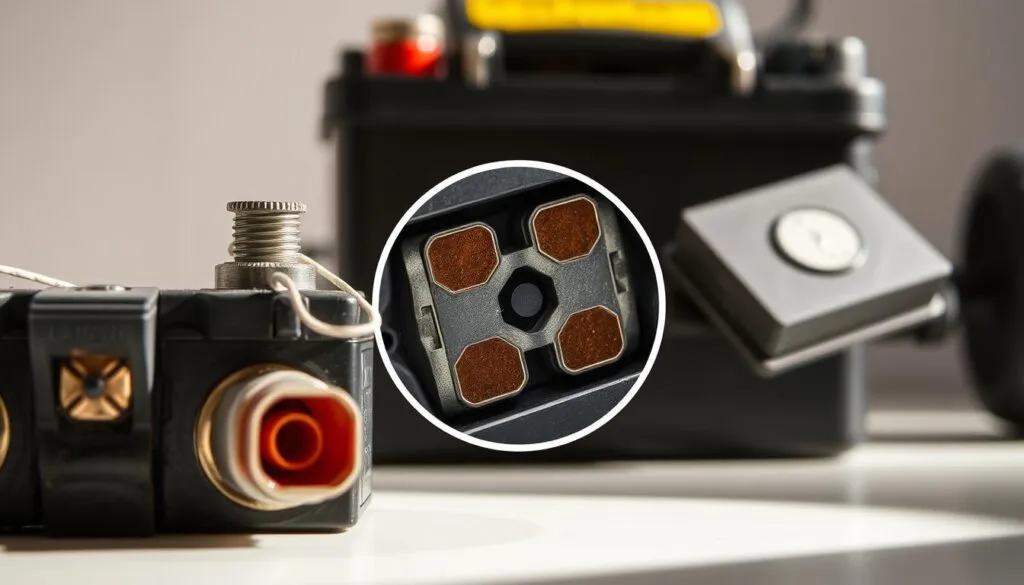
Pay special attention to the battery terminals where corrosion often develops. A baking soda and water mixture effectively cleans these terminals. After cleaning, apply petroleum jelly to prevent future corrosion.
Proper Storage Techniques
Correct storage during off-season periods preserves your component’s health. Always choose a cool, dry place away from temperature extremes.
Remove the unit from your equipment for extended storage. This simple step protects against environmental damage.
Charging Best Practices
Proper charging habits significantly impact longevity. Follow manufacturer guidelines when you charge battery units.
For traditional types, fully charge before storage. Modern alternatives perform better with partial charging. Avoid both overcharging and deep discharges.
Smart Charging and Battery Care Essentials
Advanced charging solutions can extend the service life of your lawn equipment’s energy unit. Modern technology offers significant improvements over traditional methods.
Intelligent systems provide better protection for your investment. They help maintain optimal performance throughout the seasons.
Utilizing Smart Chargers
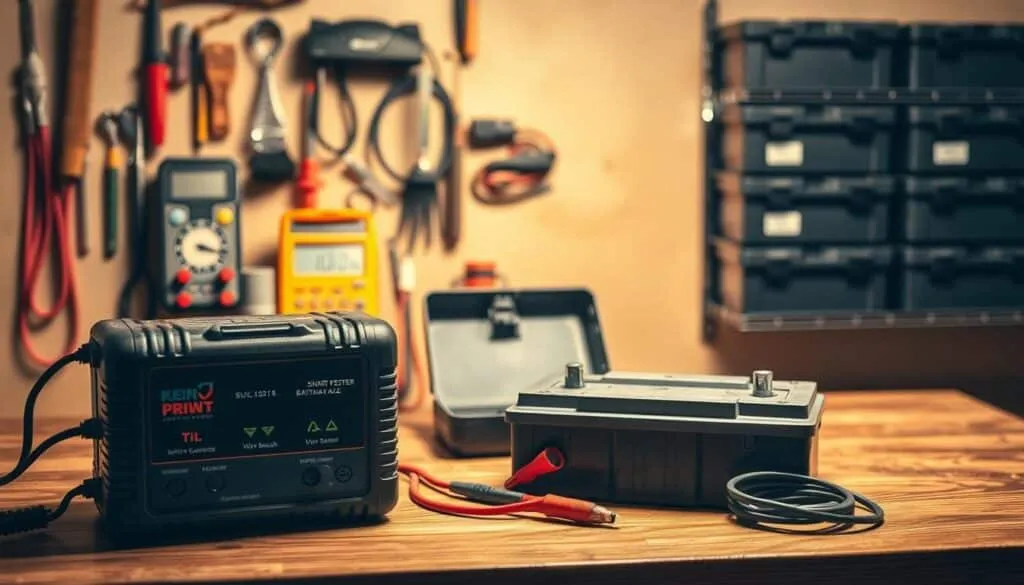
Smart chargers represent a major advancement in power management. These devices automatically monitor charge levels.
They stop charging when full capacity is reached. The system resumes when power drops below optimal levels.
Quality units feature float mode technology. This maintains ideal charge without overcharging damage.
Safe Charging Procedures
Always follow manufacturer guidelines when charging your equipment. Place the charger in well-ventilated areas.
Keep the unit away from flammable materials. This prevents heat buildup and potential hazards.
Remove batteries once fully charged. This practice provides additional safety margins.
| Charger Type | Safety Features | Best Use Case | Risk Level |
|---|---|---|---|
| Basic Charger | Manual monitoring | Short-term charging | High |
| Smart Charger | Auto shut-off, float mode | Seasonal maintenance | Low |
| Maintenance Charger | Trickle charge technology | Long-term storage | Medium |
Proper charging habits prevent terminal corrosion. They also maintain electrical connection efficiency.
Your attention to these details ensures reliable equipment operation. It also extends the functional time of your components.
Identifying Battery Deterioration and Replacement Signs
Spotting early decline signs in your equipment’s electrical component prevents mid-task breakdowns. Recognizing these indicators helps you plan replacements before complete failure occurs.
Your machine’s performance provides clear signals about its energy source condition. Paying attention to these warnings ensures uninterrupted operation.
Warning Signs of Battery Failure
Several symptoms indicate your power unit needs attention. Silent starting attempts or clicking noises suggest insufficient energy delivery.
A sluggish engine crank or complete failure to turn over signals weak capacity. Dim headlights on your equipment reveal declining voltage output.
Visible terminal corrosion often means the component nears its service end. Rapid corrosion return after cleaning confirms this assessment.
Reduced mowing duration between charges demonstrates poor charge retention. This capacity loss typically worsens over time.
How to Know When to Replace Your Battery
Voltage testing provides objective data about your component’s health. Use a multimeter to check actual power levels.
Readings below specific thresholds indicate replacement time. Different technologies have distinct minimum voltage requirements.
| Battery Type | Healthy Voltage | Replacement Threshold | Testing Frequency |
|---|---|---|---|
| Lead-Acid | 12.6V+ | Below 12.4V | Monthly |
| Lithium-Ion | 14V+ | Below 13.6V | Quarterly |
Most lawn mower batteries serve for three to five years with proper care. Premium options often deliver extended service life.
Planning replacement around this timeframe prevents unexpected failures. Quality components provide better value over their operational period.
Conclusion
Proper knowledge of battery maintenance transforms your lawn care experience from frustrating to efficient. Your understanding of power source fundamentals directly impacts equipment reliability and long-term value.
With attentive care, most lawn mower batteries deliver three to five years of dependable service. Lead-acid units offer budget-friendly entry points, while premium lithium options provide extended lifespan with minimal maintenance requirements.
Your proactive approach to mower maintenance prevents unexpected breakdowns during critical growing seasons. Regular inspections, proper storage, and smart charging practices maximize your investment’s return.
Ultimately, informed decisions about power sources ensure consistent performance and reduce long-term costs. Your commitment to proper care pays dividends through reliable operation and extended component life.
FAQ
What is the average lifespan of a riding lawn mower battery?
The typical lifespan for a riding mower battery is three to five years. This duration depends heavily on the battery type, your maintenance habits, and how often you use your equipment. Proper care can help you reach the upper end of that range.
How can I make my mower battery last longer?
You can extend your battery’s life by following a few key steps. Always keep the terminals clean and free of corrosion, store the machine in a cool, dry place during the off-season, and use a smart charger to maintain a full charge without overcharging.
What are the main types of batteries used in lawn mowers?
The two primary types are lead-acid and lithium-ion. Traditional lead-acid batteries are common and cost-effective. Lithium-ion options, including LiFePO4, are lighter, hold a charge longer, and generally have a greater lifespan, though they come at a higher initial cost.
What are the signs that my mower battery needs replacement?
Clear warning signs include the engine cranking slowly or failing to start, visible damage or swelling to the battery case, and the inability to hold a charge. If you notice these issues after checking the connections, it’s likely time for a new battery.
How should I store my riding mower battery for the winter?
For long-term storage, first fully charge the battery. Then, disconnect it and store it in a cool, dry place away from extreme temperatures. It’s best to use a maintenance charger to keep the voltage optimal throughout the storage period.
Does frequent use affect my battery’s lifespan?
Regular use is actually beneficial for lead-acid batteries, as it keeps them actively charged. Infrequent use can lead to sulfation, which damages the battery’s capacity and power output over time.