
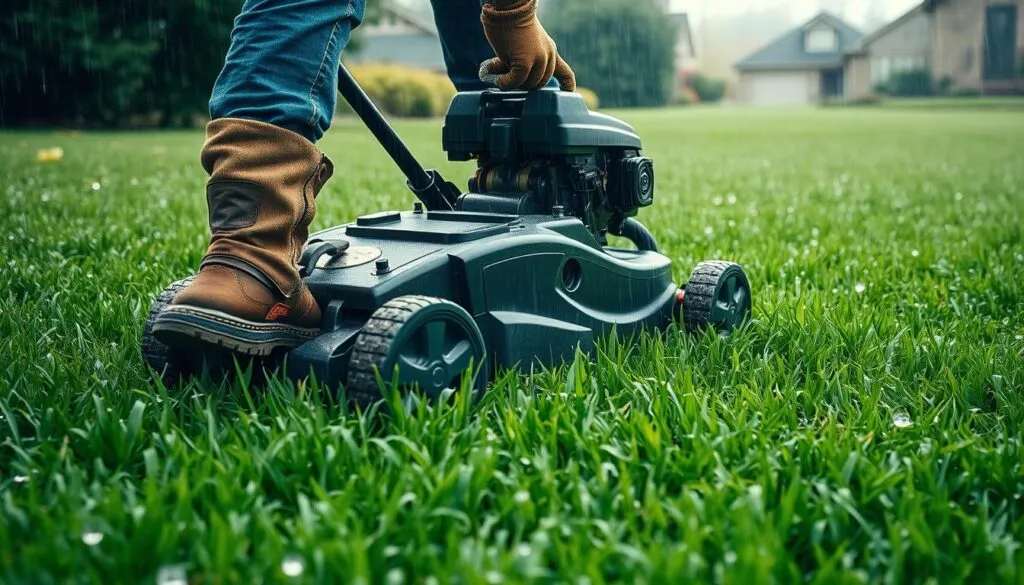
Have you ever looked at your lush, rain-soaked lawn and wondered if you should grab the mower right away? Many homeowners face this exact dilemma when showers disrupt their carefully planned yard maintenance schedule.
Rain brings wonderful benefits to your grass, especially during spring growth periods. The moisture helps your lawn thrive and look vibrant. However, I’ve learned through years of lawn care experience that timing matters tremendously when it comes to mowing after rainfall.
The U.S. Consumer Product Safety Commission reports sobering statistics: approximately 80,000 people visit emergency rooms each year with lawn mower-related injuries. Wet conditions significantly increase these risks. Rushing to cut your grass too soon can create safety hazards and damage your equipment.
Your lawn’s health also depends on proper timing. Mowing wet grass can lead to uneven cuts, soil compaction, and disease spread. The temporary wait ensures you maintain a beautiful, healthy yard without compromising safety.
In this guide, I’ll share assessment techniques and practical tips to help you determine the ideal timing. You’ll learn how to balance lawn appearance with proper care practices.
Key Takeaways
- Rain provides essential moisture for healthy lawn growth but creates temporary mowing challenges
- Wet conditions significantly increase safety risks during mowing activities
- Proper timing prevents damage to both your grass and mowing equipment
- Soil compaction and disease spread are major concerns with premature mowing
- Patient waiting leads to better cutting results and long-term lawn health
- Assessment techniques help determine when conditions are safe for mowing
- Balancing lawn appearance with proper care practices ensures optimal results
Understanding the Risks of Mowing Wet Grass
Cutting grass while it’s still wet creates a chain reaction of problems that can damage your lawn and equipment. The moisture affects everything from cutting quality to personal safety.
Potential Lawn Damage and Uneven Cuts
Wet grass blades bend instead of standing upright. This causes your mower to tear rather than cleanly cut the blades. The result is an uneven, ragged appearance.
Torn grass blades create entry points for fungal diseases. Conditions become perfect for dollar spot, rust disease, and brown patch to develop.
I advise not to mow when grass is wet if the lawn shows signs of disease. Wait until afternoon when turf dries to prevent disease spread through equipment.
Safety Hazards and Equipment Concerns
Wet grass creates slippery conditions that make footing unstable. This risk increases significantly on slopes where control becomes difficult.
Your lawn mower faces multiple problems with wet grass. Clumps jam under the deck, restricting airflow and straining the engine. Heavy equipment can also create ruts in soft soil.
| Risk Category | Lawn Impact | Safety Concern | Equipment Damage |
|---|---|---|---|
| Wet Grass Cutting | Uneven cuts, disease | Slippery surfaces | Clogged deck, engine strain |
| Soil Conditions | Compaction, poor drainage | Loss of traction | Rut formation |
| Blade Performance | Torn grass blades | Reduced control | Jam potential |
These risks highlight why timing matters after rainfall. Proper waiting prevents multiple problems from developing.
Assessing Your Lawn’s Moisture and Soil Conditions
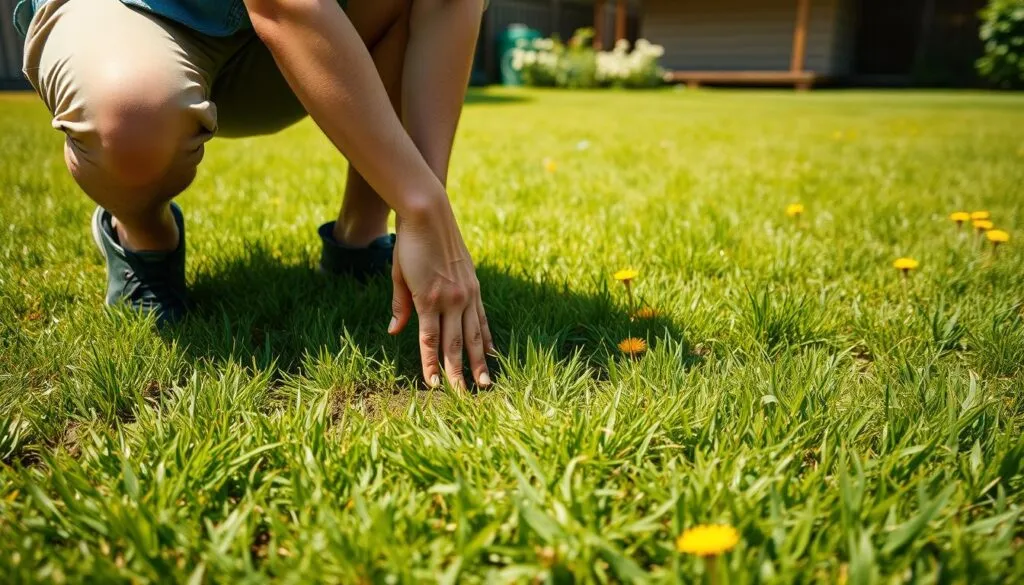
Many homeowners make the mistake of relying solely on visual cues when assessing mowing conditions. I’ve found that proper evaluation requires multiple simple tests to ensure your lawn is truly ready.
The foot test provides immediate feedback about soil saturation. Walk across your lawn and observe whether footprints remain visible. If the grass springs back quickly, conditions may be suitable.
Using the Foot and Visual Test
Persistent footprints indicate overly wet soil that needs more drying time. Visually inspect grass blades for water droplets and clumping patterns. These signs suggest excess moisture that could damage your mower.
Touch the grass to feel for dampness. I also recommend the screwdriver test for deeper soil assessment. Push a standard screwdriver into the ground—easy penetration means the soil is too soft.
Employing a Soil Moisture Meter
For precise measurements, consider using a soil moisture meter. This tool eliminates guesswork by providing accurate moisture readings at various depths.
Ideal mowing conditions occur when soil feels damp but not soggy. The grass should appear dry with minimal moisture retention. Proper assessment protects both your lawn’s health and equipment functionality.
| Assessment Method | Procedure | Ideal Result | Warning Signs |
|---|---|---|---|
| Foot Test | Walk across lawn | Grass springs back | Visible footprints remain |
| Visual Inspection | Check grass appearance | Blades stand upright | Water droplets visible |
| Screwdriver Test | Push tool into soil | Moderate resistance | Easy penetration |
| Moisture Meter | Measure soil dampness | Moderate reading | High moisture level |
These quick tests take only minutes but prevent significant lawn damage. They help determine when grass is truly dry enough for safe cutting.
how long to wait after rain to mow
The duration needed before cutting your grass post-rainfall depends heavily on weather conditions and soil composition. I’ve found that patience pays off when dealing with moist turf.
A general guideline suggests allowing 24 hours after precipitation ends. This timeframe works well for average rainfall situations. Light showers or morning dew may only require 3-5 hours of drying time.
Heavy storms demand more caution. When soil becomes saturated, wait at least 48 hours for proper drying. The footprint test provides reliable confirmation—walk across your lawn and observe the results.
If grass springs back quickly, conditions are suitable. Persistent footprints indicate excess moisture that needs more time. Environmental factors significantly influence drying rates.
Warm, windy days accelerate moisture evaporation. Cool, humid conditions slow the process considerably. Soil type also plays a crucial role—sandy soils drain faster than clay-based earth.
Different grass varieties respond uniquely to wet conditions. Fescue handles moisture better than Bermuda grass. These are flexible guidelines, not rigid rules.
Always assess actual conditions before mowing. While waiting can test patience, proper timing prevents serious long-term lawn problems.
Practical Tips for Mowing Wet Grass Safely
When scheduling conflicts or persistent rainfall demand immediate action, special precautions become essential. I’ve developed these practical tips for those rare occasions when you must mow wet grass.
Adjusting Mower Height and Speed
Raise your mower deck higher than usual to prevent clumping. This simple adjustment reduces stress on both your grass and equipment. The taller cut allows better airflow and minimizes wet clippings from sticking.
Slow down your pace significantly when you cut wet grass. Reduced speed gives the mower time to process damp vegetation properly. This prevents tearing and ensures more even results.
Always verify your blade sharpness before attempting to mow wet grass. Sharp blades create clean cuts, while dull ones tear and damage turf further. Consider side-discharge settings instead of mulching for wet conditions.
Regularly Cleaning the Mower Deck
Frequent cleaning stops wet grass accumulation under the deck. I stop every 15 minutes to clear built-up clumps. Always turn off the lawn mower completely before cleaning for safety.
Avoid heavily waterlogged areas even when mowing wet sections. These spots present the highest risk for slipping and equipment damage. Proper footwear with good traction maintains stability during this challenging task.
These tips help you cut wet vegetation safely when circumstances leave no alternative. Remember that mowing wet should remain your last resort for lawn care.
Preventing Lawn and Equipment Damage
The aftermath of mowing damp turf often reveals hidden dangers that compromise both your lawn’s vitality and equipment longevity. Many homeowners focus on the cutting process but overlook the critical cleanup phase.
Wet grass clippings left on the surface create immediate problems. These clumps smother the grass beneath, blocking essential sunlight and oxygen. The trapped moisture creates ideal conditions for fungal growth.
Avoiding Clumping and Thatch Buildup
Decomposing clippings accumulate into thatch—a dense layer on the soil surface. This barrier prevents water, nutrients, and air from reaching grass roots. The resulting problems can weaken your entire lawn over time.
Purdue University experts recommend double-cutting techniques for wet conditions. Making two passes over the same area distributes clippings more evenly. This approach significantly reduces clumping issues.
When excessive moisture creates too many clippings, bagging becomes necessary. These wet clippings work well as compost or mulch elsewhere. Proper disposal prevents thatch buildup and soil compaction.
Wet grass places extra strain on your mower’s motor and blades. The added weight and resistance can cause premature equipment damage. Sticky grass frequently clogs the mower deck, reducing efficiency.
Regular maintenance after cutting wet grass prevents rust and corrosion. Thorough cleaning protects your investment and ensures optimal performance. Preventing clumps and thatch buildup saves you from costly remediation later.
Optimizing Your Mowing Schedule Around the Weather
Strategic lawn care planning transforms weather challenges into manageable routines rather than stressful emergencies. I’ve found that establishing a consistent schedule prevents the urgency that leads to poor decisions about cutting damp turf.
Creating a regular mowing calendar helps maintain your lawn at ideal heights. This routine prevents grass from becoming overgrown, which creates significant problems when wet weather arrives. Long, wet grass proves much harder to cut properly.
Planning Mowing Sessions Based on Rainfall
Monitoring weather forecasts allows you to adjust your mowing lawn plans proactively. When rain appears imminent, I schedule sessions earlier to avoid having to mow wet vegetation. Postponing becomes necessary when conditions remain too damp.
The best time to mow lawn typically falls during mid-morning or late afternoon. These periods allow dew to evaporate while avoiding midday heat stress. This timing creates ideal cutting conditions for your turf.
Seasonal adjustments keep your schedule effective throughout the year. Spring growth often requires more frequent mowing, while fall may permit longer intervals. Understanding regional rain patterns helps tailor your approach.
Flexibility within your structured schedule prevents pressure to mow lawn under poor conditions. This approach maintains lawn health without compromising safety or equipment longevity. Proper planning makes weather disruptions manageable rather than problematic.
Personal Lawn Care Insights and Best Practices
Through years of trial and error in my own yard, I’ve discovered that patience truly is the most valuable tool in lawn care. My journey from impatient beginner to seasoned homeowner taught me hard lessons about timing and turf health.
Early in my lawn maintenance journey, I made the classic mistake of rushing to mow too soon after showers. I prioritized immediate appearance over long-term health. The results were consistently disappointing.
My Experiences with Wet and Dry Mowing
Attempting to mow wet grass created multiple problems I now avoid. My mower would clog frequently, leaving unsightly clumps across the lawn. The torn grass blades turned brown at the tips, creating a patchy appearance.
Contrast this with sessions where I waited for proper drying. The clean cuts and even distribution made maintenance significantly easier. My equipment performed better and the yard looked healthier weeks later.
| Aspect | Wet Mowing Experience | Dry Mowing Experience | Key Difference |
|---|---|---|---|
| Cut Quality | Torn, ragged blades | Clean, even cuts | Blade integrity |
| Equipment Performance | Frequent clogging | Smooth operation | Maintenance needs |
| Lawn Health | Brown patches | Consistent green | Disease resistance |
| Time Investment | Longer cleanup | Efficient process | Overall efficiency |
I’ve learned that different areas of my property dry at varying rates. Sunny spots recover quickly while shaded sections need extra time. This awareness helps me plan sequential mowing rather than rushing the entire yard.
Proper timing has saved me considerable time in maintenance and repair costs. The learning curve requires attention to your specific lawn characteristics. Developing this judgment makes lawn care more rewarding and effective.
Conclusion
Successful yard maintenance hinges on recognizing when grass has sufficiently dried. I’ve learned that patience consistently delivers superior results compared to rushing the process.
The general 24-hour guideline provides a solid starting point, but specific conditions may require adjustments. Rainfall intensity and environmental factors influence drying times significantly.
Mowing wet turf presents multiple risk factors including lawn damage, equipment problems, and safety hazards. When grass is still wet, it becomes more susceptible to disease and tearing.
Simple assessment techniques like footprint tests and visual inspection provide reliable readiness indicators. These methods help determine when your lawn dry enough for safe cutting.
Implementing the practical tips and scheduling strategies I’ve shared transforms lawn maintenance from a frustrating chore into an effective practice. Proper timing protects both your lawn and equipment investment while promoting healthy growth.
When you cut grass under ideal conditions, you ensure a vibrant, attractive yard. Your lawn will thank you for the careful attention to timing.
FAQ
What is the main risk of cutting wet grass?
The biggest risk is causing serious damage to your lawn. Wet grass blades are soft and tear instead of getting a clean cut. This can lead to brown, ragged tips and make your turf more vulnerable to disease. It also creates clumps of wet clippings that can smother the grass underneath.
Can mowing on a damp lawn harm my mower?
Yes, it absolutely can. The moisture and wet clippings stick to the underside of the mower deck, leading to rapid rust and corrosion. This buildup also clogs the deck, which strains the engine and can result in poor performance and costly maintenance issues over time.
How can I tell if my grass is dry enough to mow?
I use a simple two-step check. First, I walk across the lawn. If my shoes leave footprints or the soil feels spongy, it’s still too wet. Second, I look at the grass blades themselves. If they are no longer beaded with water and spring back up after being walked on, it’s usually safe to proceed with mowing.
Is there a specific amount of time I should wait after it rains?
There’s no single perfect number of hours, as it depends on factors like sunlight, wind, and soil type. In my experience, you typically need to wait at least several hours, and often a full 24 hours, for the lawn to dry sufficiently after a good rain. Sunny, breezy conditions will speed up the drying process significantly.
What if I absolutely have to mow wet grass?
If you must cut wet grass, take precautions. Raise your mower’s cutting height to reduce stress on the grass. Go slower than usual to allow the mower to process the wet clippings better. Most importantly, stop frequently to scrape the clumped grass from the mower deck to prevent clogging and potential damage.
How does mowing wet grass lead to thatch problems?
When you mow wet grass, the clippings are heavy and sticky. Instead of dispersing evenly as mulch, they clump together on the lawn’s surface. These dense, wet mats of clippings decompose slowly and can contribute to a thick layer of thatch, which blocks water and nutrients from reaching the soil and grass roots.