

Is your freshly cut lawn a source of pride or a hidden disaster? That perfect Saturday morning chore can turn into a nightmare if the weather doesn’t cooperate. Many homeowners face the tricky question of timing their yard work around unpredictable showers.
Cutting your grass when it’s damp seems like a simple shortcut. But this common practice can seriously harm your lawn and your mower. I want to guide you through the smart approach to post-rain mowing.
The right time to mow lawn depends on several key factors. Soil type, grass variety, and recent weather all play a role. Understanding these elements helps you protect your yard’s health and your equipment’s longevity.
This guide will give you expert advice and easy tests to determine if your wet grass is ready. You’ll learn to recognize the risks and make the best decision for your green space.
Key Takeaways
- Mowing damp turf can damage both the grass and the mower.
- Several factors influence the ideal waiting period after precipitation.
- A simple footprint test can reveal if the lawn is dry enough.
- Proper timing promotes a healthier, more beautiful yard.
- Understanding the risks helps you avoid costly mistakes.
Understanding the Impact of Mowing Wet Grass
The decision to cut grass while it’s still wet can lead to problems that extend far beyond a messy appearance. Moisture changes how your grass blades behave and how your mower performs.
Lawn health and disease risks
When grass is wet, the blades bend over instead of standing upright. This causes your mower to tear rather than cut cleanly. These ragged edges create perfect entry points for fungal diseases.
Common lawn diseases that thrive in these conditions include Dollar Spot, Brown Patch, and Red Thread. According to Dr. Aaron J. Patton of Purdue University, “If you see active disease in the morning, wait until the turf dries and mow your grass in the afternoon.”
Effects on grass appearance and clumping
Mowing wet grass results in uneven cuts that leave your lawn looking unkempt. The moisture causes severe clumping as cut pieces stick together.
These wet clumps block sunlight and airflow to the grass beneath them. As they decompose, they create thatch buildup. This layer prevents water and nutrients from reaching roots.
The combination of torn blades and moisture creates ideal conditions for pathogens. Understanding these impacts helps you avoid long-term damage to your lawn.
Risks and Challenges of Cutting Wet Grass
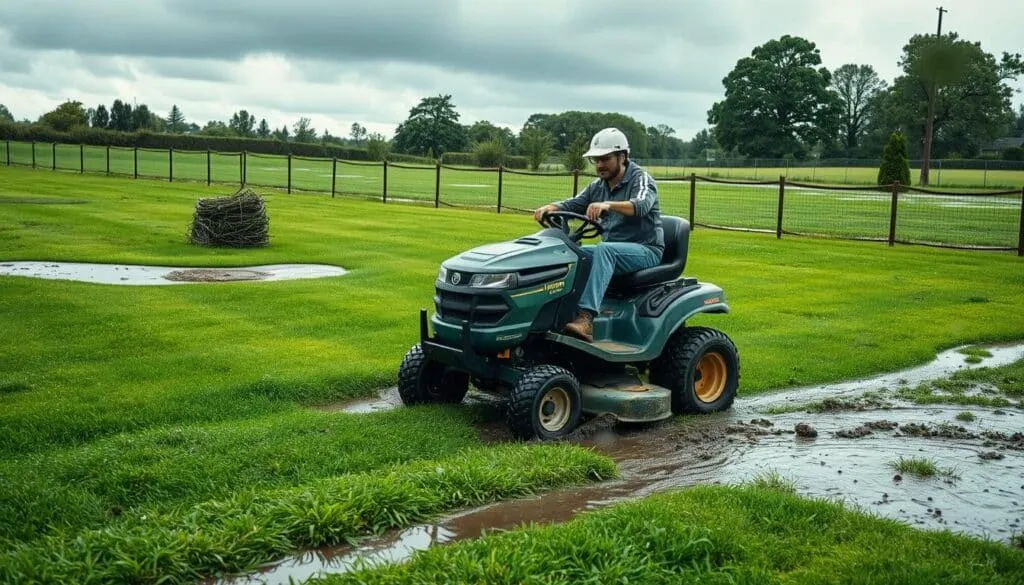
Operating your mower on damp turf introduces a spectrum of dangers many overlook. The primary concerns extend to personal safety and potential damage to your equipment.
Safety hazards and slippery conditions
Wet grass creates a significant slipping risk. The U.S. Consumer Product Safety Commission notes 80,000 annual ER visits from lawn mower injuries. Moisture reduces traction dramatically.
This is especially dangerous on slopes. Losing footing near a spinning blade can lead to severe injury. Riding mowers can skid unexpectedly.
Hidden objects in tall, wet grass become dangerous projectiles. Corded electric mowers pose shock hazards if water contacts frayed cords.
Potential damage to mower blades and motor
Your equipment suffers too. Wet grass clumps stick inside the mower deck. This blocks the discharge chute and jams the blades.
The engine strains against this resistance, risking overheating. Cutting damp grass also dulls mower blades faster.
Left uncleaned, moisture from clippings causes rust on metal components. This leads to long-term damage.
| Mower Type | Primary Wet Grass Risk | Potential Consequence |
|---|---|---|
| Push Mower | Operator Slipping | Loss of control, personal injury |
| Riding Mower | Loss of Traction | Skidding, rollover risk |
| Corded Electric | Electrical Shock | Severe injury from water contact |
How Long to Wait to Mow After Rain: Expert Recommendations
Professional landscapers rely on specific assessment techniques to gauge when turf has sufficiently dried after rainfall. The standard 24-hour guideline serves as a solid starting point, but actual timing depends on your unique situation.
Assessing soil moisture and grass texture
Perform the simple footprint test across different lawn areas. If your footsteps leave deep impressions, the ground remains too saturated. The soil should feel damp but not soggy underfoot.
Examine the grass blades themselves. Wet grass appears flattened and clumpy. When properly dried, blades stand upright and resilient. For precise measurement, consider using a soil moisture meter.
Determining the optimal waiting period based on weather and soil type
Environmental factors significantly impact drying time. Warm, windy days accelerate moisture evaporation. Cool, humid conditions prolong the process.
Your soil composition plays a crucial role. Sandy soils drain quickly, often ready within hours. Clay soils retain water longer, requiring extended waiting periods.
| Rainfall Intensity | Sandy Soil Wait Time | Clay Soil Wait Time | Assessment Method |
|---|---|---|---|
| Light shower | 4-6 hours | 12-18 hours | Footprint test |
| Moderate rain | 12-18 hours | 24-36 hours | Grass blade inspection |
| Heavy downpour | 24+ hours | 48+ hours | Moisture meter recommended |
Techniques and Equipment Considerations for Wet Conditions
For homeowners facing extended wet periods, mastering specific techniques can make the difference between lawn damage and successful maintenance. When waiting for complete drying isn’t feasible, strategic adjustments become essential.
Adjusting mower height and speed for wet grass
Reducing your mowing speed significantly improves results with damp turf. Slower operation gives the mower more time to process each section, reducing clumping dramatically.
Raise the cutting height to its highest setting. This approach minimizes stress on both the wet grass and your equipment. Short cuts increase clumping and damage risk substantially.
Ensure your mower blades are razor-sharp. Sharp blades create clean cuts even in challenging conditions, while dull blades tear and shred the grass.
Choosing the right mower for damp conditions
Side-discharge mowers outperform mulching or bagging models in wet scenarios. They handle the volume and moisture content of clippings without clogging the discharge system.
Some manufacturers explicitly warn against cutting wet grass with their products. Stihl USA and LawnMaster cordless models advise against this practice due to electrical component risks.
For high-rainfall regions, consider mowers designed specifically for damp conditions. Look for powerful motors, specialized blade designs, and clog-resistant deck features.
Modern robotic lawn mower options offer weather-sync capabilities that automatically adjust to changing conditions, reducing operator risk while maintaining consistent lawn care.
Maintaining Your Lawn and Equipment Post-Rain
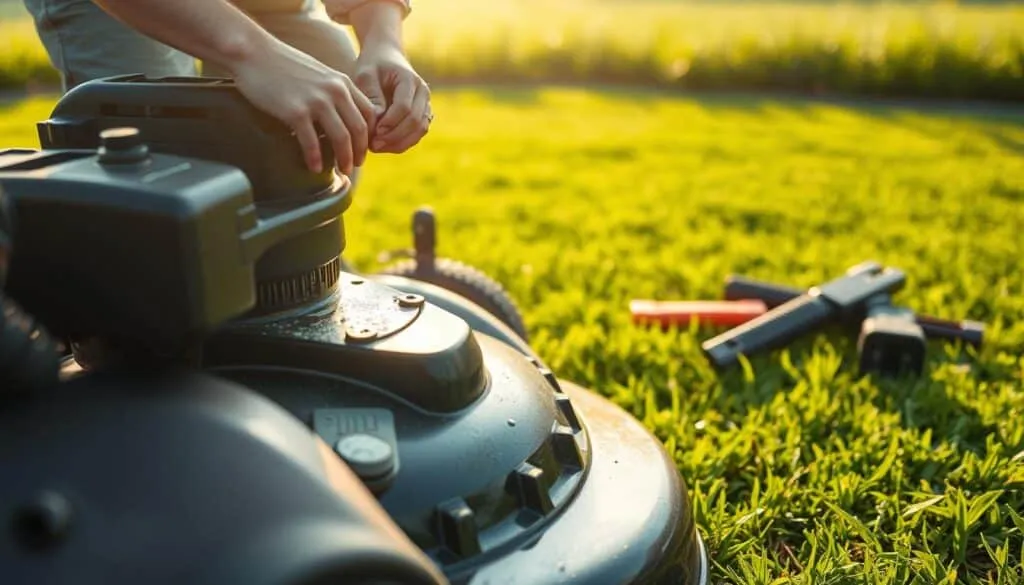
Successfully navigating wet conditions doesn’t end when you turn off the mower – it continues with essential maintenance steps. Both your equipment and turf need careful attention after working in moisture-rich environments.
Immediate action prevents long-term issues with your machinery and lawn health. I’ll guide you through the critical post-mowing procedures.
Proper cleaning of mower deck and blades
Cleaning your equipment immediately after use is non-negotiable. Wet grass clippings stick aggressively to the mower deck and discharge chute.
Never wait for debris to dry before cleaning. Moisture trapped against metal components causes rapid rust formation. This leads to permanent damage and reduced performance.
Always disconnect the spark plug or battery before cleaning. Use a putty knife and stiff brush to remove stuck clumps thoroughly.
“Regular maintenance extends equipment life significantly. Neglecting wet grass cleanup invites corrosion and mechanical failure.”
| Cleaning Tool | Best Use | Effectiveness |
|---|---|---|
| Putty Knife | Removing thick clumps | Excellent |
| Stiff Brush | Fine debris removal | Good |
| Pressure Washer | Thorough cleaning | Excellent (use cautiously) |
Lawn recovery tips and preventing soil compaction
Heavy equipment on saturated soil creates compaction problems. This compression restricts air and water movement to grass roots.
Watch for rut formation in soft ground. These depressions create mowing difficulties and potential safety hazards. They can also hold standing water.
Excessive wet clippings should be bagged rather than left on the lawn. Heavy clumps smother grass and contribute to thatch buildup.
For compacted areas, consider core aeration once conditions improve. This restores proper soil structure and promotes healthy root development.
Conclusion
Your lawn’s long-term health depends on smart decisions made during wet weather periods. While it’s technically possible to cut grass when damp, waiting for dry conditions protects your lawn, equipment, and personal safety.
The 24-hour guideline serves as a solid starting point, but always verify using the footprint test. Mowing wet grass carries significant risk of disease, uneven cuts, and equipment damage.
When waiting isn’t practical, apply the techniques and tips shared throughout this guide. Remember that no mowing schedule is worth compromising your safety.
Making informed choices about when to mow grass contributes to a healthier, more resilient lawn. Apply this knowledge confidently for optimal results.
FAQ
Why is mowing wet grass bad for my lawn?
Mowing wet grass can harm your lawn’s health. The moisture makes grass blades tear instead of getting a clean cut. This creates open wounds that invite lawn disease. Wet clippings also clump together, blocking sunlight and air from reaching the soil, which can smother your grass.
What are the risks to my mower when cutting wet grass?
Using your mower on a wet lawn poses several risks. The wet grass clippings clog the mower deck and discharge chute, straining the motor. Wet soil is softer, increasing the chance of creating ruts and damaging the turf. The mower blades can also rust faster when covered in wet clippings.
How can I tell if my grass is dry enough to mow?
I check two things before mowing after rainfall. First, I walk on the lawn. If my feet sink in or leave prints, the soil is too wet. Second, I touch the grass blades. If they feel dry and spring back up, and no water brushes onto my hand, conditions are usually safe for mowing.
Does the type of mower matter for damp conditions?
Yes, the mower type matters. I find a mulching mower struggles more with wet grass because it relies on fine cuts. A side-discharge mower can handle slightly damp conditions better by ejecting clumps. For consistently wet lawns, a mower with high-lift blades and a powerful engine, like some Honda mowers, provides better performance.
What should I do to my mower after cutting wet grass?
Cleaning is crucial. I always turn off the mower and disconnect the spark plug. Then, I use a brush or putty knife to scrape off all the wet, clumped grass from underneath the mower deck. I also wipe the blades dry to prevent rust. This maintenance keeps my mower running smoothly.
Can I mow if there is still morning dew on the grass?
I recommend waiting for the dew to evaporate. Mowing with morning dew presents similar problems to mowing after rain. The moisture leads to uneven cuts and clumping. It’s best to wait a few hours for the sun to dry the grass blades for a cleaner, healthier cut.