
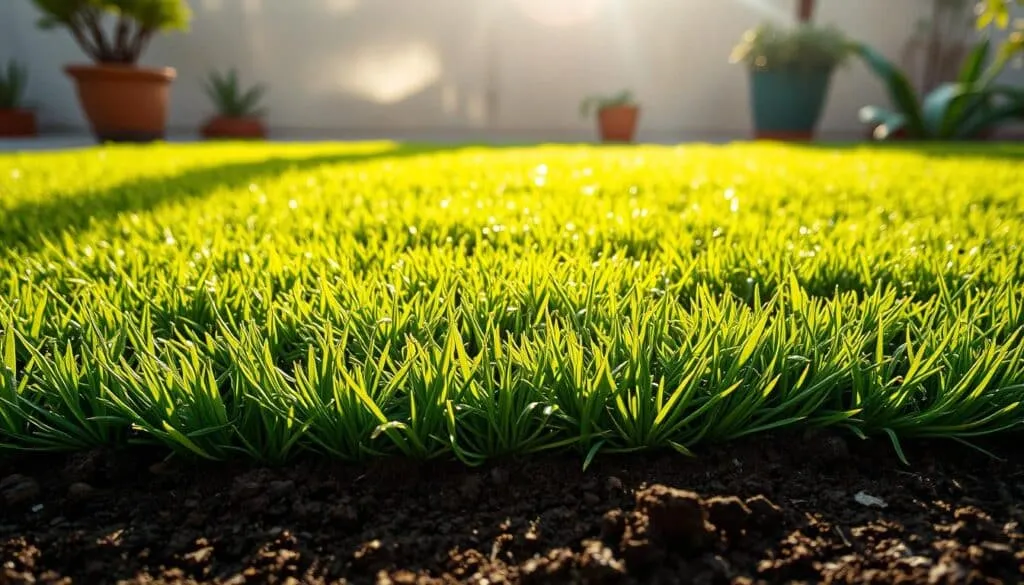
What if the single most important step for a perfect lawn happens before you ever start the mower? Establishing a vibrant, resilient lawn from new sod requires more than just regular watering. The true secret lies in the delicate timing of that first cut.
I created this guide because I’ve seen too many homeowners risk their investment by starting maintenance routines too soon. Your beautiful new lawn is a living carpet, and its success depends on unseen root development beneath the surface. This initial care period is a critical time for the grass to anchor itself firmly in your yard‘s soil.
This resource will walk you through the entire process. We’ll cover how to assess root establishment, identify the optimal moment for that first mow, and discuss ongoing practices for a thriving landscape. Protecting your sod now ensures a lush, healthy area for years to come.
Key Takeaways
- Patience during the initial establishment phase is non-negotiable for long-term lawn health.
- The first mowing should only occur after the sod’s root system has firmly anchored itself.
- Proper soil preparation before installation sets the stage for successful root development.
- Rushing into regular maintenance can damage young grass and undo your hard work.
- Understanding the biological processes underground is key to effective new sod care.
- Following a guided timeline will transform your investment into a beautiful, durable lawn.
Getting Started with New Sod Installation
Proper groundwork transforms your yard from ordinary soil into a nutrient-rich growing environment. I always emphasize completing all construction and underground work before beginning your sod installation. This includes fences, walkways, and especially irrigation systems.
Planning ahead prevents costly repairs and protects your investment. Your future landscape deserves this careful preparation.
Preparing Your Soil and Layout
The success of your installation depends heavily on soil quality. I recommend thorough plowing and leveling of the ground. Amend your soil with 2-3 inches of compost tilled into the top layer.
Create a slight slope away from structures—about 1% grade ensures proper drainage. This prevents water pooling that could damage your turf.
Spread a landscape mix of 50% loam and 50% organic compost. Aim for at least 6 inches of cultivated soil depth. This allows proper movement of water, oxygen, and nutrients.
Essential Tools and Materials
You’ll need basic tools like tillers and rakes for soil preparation. The landscape mix components create the ideal growing medium. Have your irrigation materials ready before starting.
Lightly mist the ground before laying sod to lower temperatures. Avoid creating muddy conditions. This pre-watering technique maintains moisture without complicating the installation process.
Proper planning during this phase sets the stage for efficient watering management. Your new lawn will establish more quickly in well-prepared soil.
Assessing Root Development and Readiness
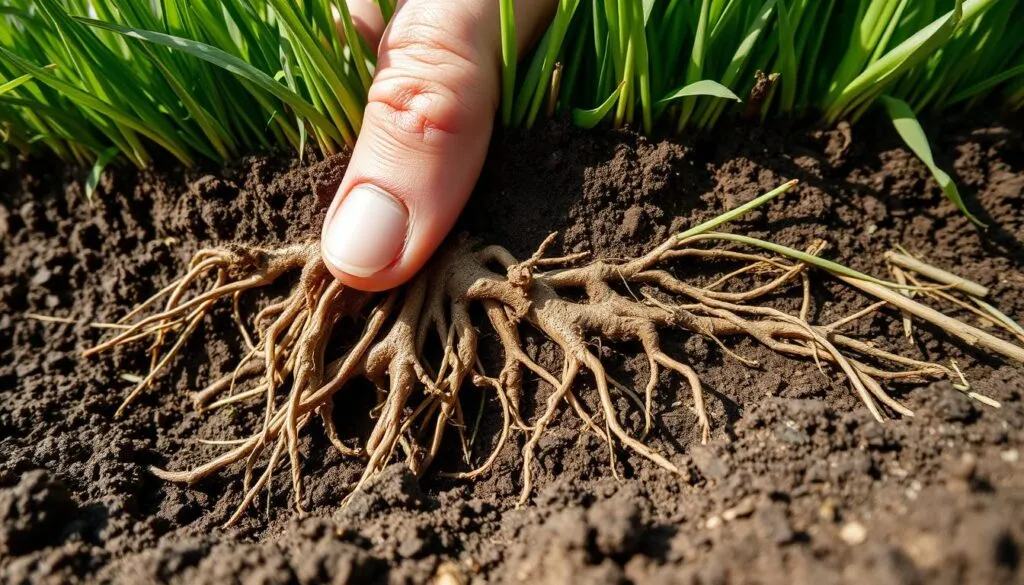
Successful sod establishment depends entirely on what happens underground during those first crucial weeks. I focus on two key indicators: root anchoring and soil moisture balance. These factors determine when your turf is truly ready for maintenance.
Performing the Gentle Tug Test
I use a simple tug test to check root development. Gently pull upward on a corner of your sod. If you feel solid resistance, the roots have anchored properly.
Easy lifting means you need more patience. This test reveals whether the root system has integrated with your native soil.
Understanding Soil Moisture and Health
During the first two weeks, consistent watering is essential for root growth. I recommend 1-1.5 inches of water daily, applied in the early morning.
After this initial period, gradually reduce watering frequency. This transition encourages deeper root development and firms the soil. Proper sod care balances moisture without oversaturation.
Healthy roots show through vibrant grass color and firm turf attachment. Watch for consistent growth patterns across your entire lawn area.
how long to wait to mow new sod
The transition from freshly laid turf to a fully established lawn hinges on recognizing specific visual and physical cues. I focus on several key indicators that signal your grass is ready for maintenance.
Observing Signs of Sod Resilience
Your turf demonstrates readiness through clear physical signs. The gentle tug test remains my primary method for checking root development. When you feel solid resistance, the roots have properly anchored.
Watch for consistent growth patterns across your entire lawn area. The grass should reach approximately 4 inches in height before considering that initial trim. Vibrant color and firm attachment when walked upon indicate healthy establishment.
Timing Recommendations and Weather Considerations
Most installations require 2-3 weeks before the first maintenance session. I typically recommend planning for three weeks as the ideal timeframe. Weather conditions significantly influence this schedule.
Unusually hot, dry periods may delay root development. Cooler spring or fall installations often take longer than summer placements. Adjust your expectations based on seasonal variations.
| Establishment Scenario | Recommended Wait Time | Special Considerations |
|---|---|---|
| Ideal summer conditions | 2-3 weeks | Moderate temperatures, consistent moisture |
| Hot, dry weather | 3-4 weeks | Extended watering may be necessary |
| Cool spring/fall installation | 3-5 weeks | Slower root development in cooler soil |
| Poor soil preparation | 4+ weeks | Focus on soil amendment before mowing |
Stop irrigation at least one day before your planned maintenance session. This allows the soil to firm up sufficiently. Proper timing prevents damage and ensures your investment thrives.
Essential Mowing Techniques for New Sod
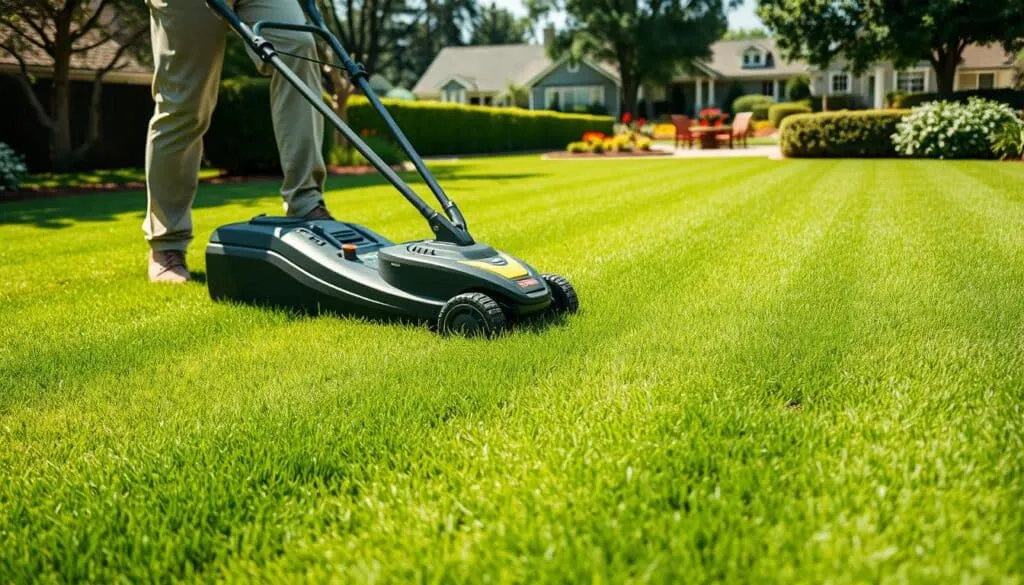
Your first mowing session sets the foundation for your lawn’s future health and appearance. The right techniques during this critical period support root development while preventing damage. I approach this maintenance phase with careful attention to equipment settings and timing.
Setting Your Mower to the Proper Height
I always begin with the highest setting on my mower for that initial cut. This typically maintains the grass at 3-4 inches tall. The extra length helps the turf store more nutrients while establishing.
The 1/3 rule is non-negotiable in my care routine. Never remove more than one-third of the blade height in a single session. Cutting more signals the plant to prioritize top growth over root development.
If your lawn has grown too tall, raise the mower blades for an initial trim. Wait several days before lowering them slightly for the next cut. This gradual approach prevents shock to young sod.
Importance of Sharp Mower Blades and Bagging Clippings
Sharp blades are essential for clean cuts. Dull mower blades tear rather than slice, creating entry points for disease. This damage gives grass a whitish, unhealthy appearance.
I strongly recommend bagging clippings during the first month of mowing. Removing clippings prevents matting and improves air circulation. You can compost these nutrient-rich cuttings.
After establishment, transition to mulching clippings back into the lawn. This provides natural fertilization. Time your mowing sessions for early morning or evening when temperatures are cooler.
Always ensure the turf is completely dry before starting your mower. Wet conditions cause clumping and can spread disease across your entire lawn area.
Additional Maintenance Tips for a Thriving Lawn
Your lawn’s journey continues beyond the establishment phase with strategic maintenance routines. Proper care during this period ensures your investment develops into a resilient, beautiful landscape.
Managing Watering and Irrigation Effectively
After the first month, I transition to a drought-stress approach for watering. I apply water when grass shows wilted leaves or lasting foot impressions. This promotes deep root development and drought tolerance.
During dry summer periods, I increase frequency to once or twice weekly. Early morning irrigation between 2-10 AM minimizes evaporation. Each session delivers 1-1.5 inches per zone for deep soil saturation.
Scheduling Fertilization and Routine Lawn Care
I wait at least one month before the first fertilizer application. This allows the sod to strengthen its root system. Grass requires primary nutrients like nitrogen, phosphorus, and potassium.
In spring, I use balanced fertilizers after green-up. Fall feeding focuses on potassium and phosphorus for winter hardiness. I avoid high-nitrogen formulas during extreme heat.
Regular mowing maintains health during peak growth periods. I adjust frequency seasonally and raise blades during hot weather. This integrated approach creates a thriving lawn.
Conclusion
The journey from a freshly laid patch of sod to a resilient, established lawn is a testament to patience and proper care. I’ve shared that the ideal time for the first cut is typically after roots have anchored, which often aligns with a specific post-installation period.
Remember the critical steps: the gentle tug test confirms root establishment, and using your mower‘s highest setting with sharp blades protects young grass. Always follow the one-third rule and bag clippings initially.
Successful lawn care extends far beyond that first mow. It includes your initial soil preparation, a smart water schedule, and timely fertilization. Assess your specific sod‘s condition rather than just watching the calendar.
Your diligence during this establishment phase pays off tremendously. The result is a beautiful, healthy lawn that will be a source of pride for years.
FAQ
How soon after installation can I walk on my new sod?
I recommend avoiding any foot traffic on your new lawn for at least the first two weeks. This waiting period is crucial to prevent damaging the delicate root system as it establishes itself in the soil. Heavy use should be avoided for the first month.
What is the best time of year to install sod for faster establishment?
In my experience, the ideal seasons for sod installation are early fall and spring. The moderate temperatures during these periods reduce stress on the grass and promote vigorous root growth, helping your new lawn establish much quicker than during the heat of summer.
Should I water my new sod before the first mowing?
Yes, proper irrigation is essential. I always water new sod deeply to keep the soil moist but not soggy. This consistent moisture is vital for root development. Water the area the day before you plan to mow for the first time to ensure the ground is firm enough to support the mower’s weight.
Why is it so important to bag the grass clippings from the first few mows?
Bagging the clippings during the initial mowing sessions prevents them from smothering the young grass. This allows maximum sunlight and air to reach the soil and new blades, which supports healthy growth and reduces the risk of lawn disease as your turf becomes established.
Can I fertilize my new sod right away?
I advise waiting about 3-4 weeks after installation before applying fertilizer. Your new lawn needs time for its root system to develop enough to effectively absorb the nutrients. Applying fertilizer too soon can potentially harm the tender new roots.