
Are you unsure about the voltage of your lawn mower battery and how it affects your equipment’s performance? Understanding the voltage requirements of your lawn mower is crucial for maintaining its reliability and longevity.
We will explore the essential aspects of lawn mower batteries, including the different voltage requirements for gas-powered and battery-powered mowers. Knowing your lawn mower’s voltage is vital for diagnosing common starting problems and ensuring you purchase the correct replacement when needed.
Our comprehensive guide will provide you with practical information about testing, maintaining, and troubleshooting your lawn mower battery to keep your equipment running smoothly.
Key Takeaways
- Understand the voltage requirements for your lawn mower battery.
- Learn how to diagnose common starting problems.
- Discover the importance of maintaining your lawn mower battery.
- Find out how to troubleshoot issues with your lawn mower.
- Know what to look for when purchasing a replacement battery.
Understanding Lawn Mower Battery Voltage
Understanding the voltage of your lawn mower battery is crucial for maintaining its performance and longevity. Lawn mower batteries are not one-size-fits-all; they come in different voltages designed to meet specific mowing needs.
Gas-Powered Mower Batteries
Gas-powered lawn mowers typically use lead-acid batteries to power their electrical systems. These batteries are usually categorized into two main voltage types.
Standard 12-Volt Systems
Most modern gas-powered mowers use 12-volt batteries. These batteries are widely available and provide sufficient power for the mower’s electrical components.
Older 6-Volt Systems
Some older models may still use 6-volt batteries. It’s essential to check your mower’s manual to determine the correct voltage.
Battery-Powered Mower Batteries
Battery-powered lawn mowers, on the other hand, use lithium-ion batteries that come in various voltages tailored to different lawn sizes and mowing requirements.
For instance, 20V systems are ideal for small yards, while 40V systems are better suited for medium-sized lawns. Higher voltage systems, such as 56V to 80V, are designed for larger properties or commercial use.
When choosing a battery-powered mower, it’s crucial to consider the size of your lawn and the type of grass you’re dealing with to select the appropriate voltage.
How Many Volts Is a Lawn Mower Battery?
Understanding the voltage of your lawn mower battery is crucial for maintaining its performance and longevity. Lawn mower batteries are primarily categorized into two types based on their voltage characteristics: 12-volt lead-acid batteries and lithium-ion batteries.
12-Volt Lead-Acid Batteries
12-volt lead-acid batteries are commonly used in gas-powered lawn mowers. These batteries are known for their reliability and cost-effectiveness.
Voltage Ranges for Healthy Batteries
A healthy 12-volt lead-acid battery should have a voltage reading between 12.4 and 12.7 volts when fully charged. Regular checks are essential to ensure the battery remains within this range.
AGM vs. Standard Lead-Acid
Absorbent Glass Mat (AGM) batteries and standard lead-acid batteries differ in their construction and performance. AGM batteries offer better durability and resistance to vibration.
Lithium-Ion Battery Voltages
Lithium-ion batteries are used in many modern electric lawn mowers due to their high energy density and long cycle life. These batteries offer significant advantages over traditional lead-acid batteries.
Nominal vs. Peak Voltage
Lithium-ion batteries have a nominal voltage, which is the voltage they are rated at, and a peak voltage, which is the maximum voltage when fully charged. Lithium batteries can reach 13.2 volts or more when fully charged.
Voltage Stability During Discharge
One of the key benefits of lithium-ion batteries is their ability to maintain a steady voltage output until they are nearly depleted. This characteristic ensures that your lawn mower runs at full power throughout the task.
| Battery Type | Nominal Voltage | Peak Voltage | Voltage Stability |
|---|---|---|---|
| Lead-Acid | 12V | 12.7V | Gradually drops |
| Lithium-Ion | 12V or 13.2V | 13.2V or more | Remains steady |
In conclusion, understanding the voltage characteristics of your lawn mower battery, whether it’s a 12-volt lead-acid or a lithium-ion battery, is crucial for optimal performance and longevity. Regular checks and appropriate maintenance can significantly extend the life of your battery.
How to Test Your Lawn Mower Battery Voltage
Lawn mower battery voltage testing is a simple process that can help you diagnose potential issues before they become major problems. Ensuring your lawn mower’s battery is functioning correctly is crucial for maintaining optimal performance.
Tools You’ll Need
To test your lawn mower battery voltage, you’ll need a few essential tools. These include a digital multimeter and appropriate safety equipment.
Digital Multimeter
A digital multimeter is a versatile tool that measures electrical voltage, current, and resistance. When choosing a multimeter, look for one that can handle DC voltage readings, as lawn mower batteries produce DC voltage.
Safety Equipment
When working with batteries, it’s essential to wear protective gear, including gloves and safety glasses, to prevent injury from potential electrical shorts or acid spills.
Step-by-Step Testing Process
Testing your lawn mower battery voltage involves a straightforward process. Follow these steps to ensure accurate readings.
Preparing the Battery
Before testing, ensure your lawn mower is turned off. Disconnect the battery if possible, and clean the terminals to remove any corrosion that might affect the reading.
Setting Up the Multimeter
Set your multimeter to DC voltage (usually denoted by a ‘V’ with a straight line above it). Choose a range that includes the expected voltage of your battery (typically 12V or 13V for lawn mowers).
Taking Accurate Readings
Connect the multimeter leads to the battery terminals (red to positive, black to negative). Take a reading and note the voltage displayed.
Interpreting Voltage Readings
Understanding the voltage reading is crucial for determining your battery’s condition. Different battery types have different ideal voltage ranges.
Ideal Voltage Ranges
For lead-acid batteries, a fully charged state is typically between 12.6-12.8 volts. For lithium batteries, it’s between 13.2-13.4 volts. Readings below these ranges may indicate a discharged or faulty battery.
Warning Signs of Battery Issues
If your voltage reading is significantly lower than the ideal range (below 12.2V for lead-acid or below 12.0V for lithium), it’s a sign that your battery may be undercharged or deteriorating. Regularly low readings can indicate it’s time to replace your battery.
Why Battery Voltage Matters for Your Mower
Battery voltage is a critical factor that affects both the starting performance and the lifespan of your lawn mower battery. Maintaining the appropriate voltage is essential for ensuring your mower operates efficiently and effectively.
Impact on Starting Performance
The voltage of your lawn mower battery directly impacts its starting performance. A battery with sufficient voltage ensures that your mower starts reliably. Minimum voltage for reliable starts is crucial, especially in cold weather conditions.
Minimum Voltage for Reliable Starts
For most lawn mowers, a 12-volt battery is standard. To ensure reliable starts, the battery should be maintained at or above 12.4 volts. Dropping below this threshold can lead to starting issues.
Cold Weather Considerations
Cold weather exacerbates starting problems. Batteries lose capacity in low temperatures, making it even more critical to maintain optimal voltage levels during winter months.
Effect on Battery Lifespan
The lifespan of your lawn mower battery is also significantly affected by its voltage. Operating a battery at low voltage leads to deep discharge and sulfation, reducing its capacity and lifespan.
Voltage Levels and Battery Damage
For lead-acid batteries, discharging much below 50% repeatedly can shorten their lifespan. It’s essential to keep lead-acid batteries above 12.4V whenever possible to prevent damage.
Optimal Voltage for Longevity
Maintaining optimal voltage levels is key to extending battery life. Different battery types have different thresholds, with lead-acid being more sensitive to deep discharge than lithium-ion batteries.
- Keeping your lawn mower battery properly charged ensures durability and longevity.
- Regularly checking voltage levels can help prevent premature battery failure.
- Understanding the optimal voltage range for your specific battery type is crucial for maintaining its health.
Maintaining Proper Battery Voltage
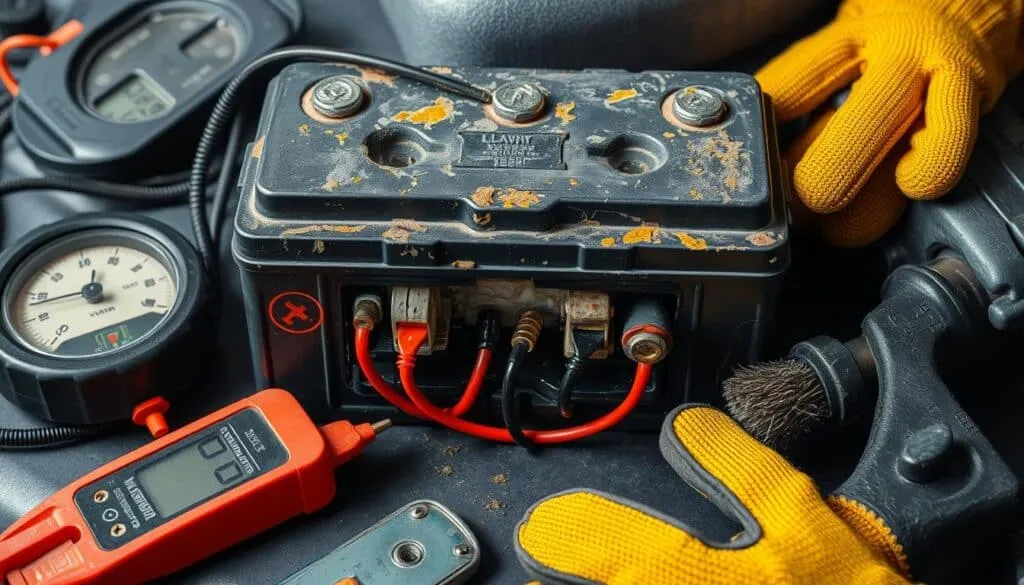
The longevity and efficiency of your lawn mower depend significantly on maintaining proper battery voltage. A well-maintained battery ensures your mower starts reliably and performs optimally throughout its lifespan.
Regular Charging Practices
Regular charging practices play a crucial role in maintaining the health of your lawn mower battery. Proper charging helps prevent issues such as sulfation, which can reduce battery performance.
Charging Frequency
It’s essential to charge your lawn mower battery according to the manufacturer’s instructions. Typically, this involves charging after each use or at least once a month during the off-season.
Choosing the Right Charger
Using the correct charger for your lawn mower battery is vital. Ensure the charger matches the battery type (e.g., lead-acid or lithium-ion) and voltage rating.
Seasonal Storage Tips
Proper storage during the off-season is critical for maintaining your lawn mower battery’s health. This includes specific procedures for winter storage and the use of trickle chargers.
Winter Storage Procedures
Before storing your lawn mower for an extended period, charge the battery fully. Then, disconnect it and store it in a cool, dry place, away from direct sunlight.
Using Trickle Chargers
A trickle charger can be used to maintain the battery’s charge level during long storage periods. This helps prevent deep discharge, which can damage the battery.
Cleaning Battery Terminals
Cleaning the battery terminals is a simple yet effective way to maintain proper voltage. Corrosion on the terminals can lead to poor connections and reduced battery performance.
Removing Corrosion
To remove corrosion, use a wire brush to scrub away any debris. For tougher corrosion, a mixture of baking soda and water can be applied to the terminals before brushing.
Ensuring Good Connections
After cleaning, apply a terminal protector or petroleum jelly to the terminals to prevent future corrosion. Ensure the connections are tight and secure to maintain good electrical contact.
| Maintenance Task | Frequency | Benefit |
|---|---|---|
| Clean Battery Terminals | Every 3 months | Prevents Corrosion |
| Check Charging System | Every 6 months | Ensures Proper Charging |
| Store Battery Properly | During Off-Season | Extends Battery Life |
“A well-maintained battery is key to a reliable lawn mower. Regular maintenance can significantly extend the life of your battery and ensure your mower is always ready to use.”
Troubleshooting Common Battery Voltage Issues
When your lawn mower battery fails to hold its charge or experiences voltage drops, it can be frustrating and disrupt your lawn care routine. Understanding how to troubleshoot these issues is essential to maintaining your mower’s performance.
Battery Won’t Hold Charge
If your lawn mower battery won’t hold a charge, it could be due to several factors. Possible causes include sulfation, age, or internal damage.
Possible Causes
- Sulfation: A condition where lead sulfate crystals form on the battery plates.
- Age: Batteries have a limited lifespan and may need replacement.
- Internal damage: Physical damage or manufacturing defects.
Solutions to Try
To address the issue, try recharging the battery properly, checking for corrosion on the terminals, or replacing the battery if it’s old or damaged.
Voltage Drops Quickly
Rapid voltage drops can indicate a problem with the battery or the mower’s electrical system. Diagnosing the root cause is crucial.
Diagnosing Parasitic Drains
Use a multimeter to check for parasitic drains by measuring the current draw when the mower is turned off. A reading above 0.1 amps may indicate a problem.
When to Replace the Battery
If your battery is old, damaged, or can’t hold a charge, it’s time to replace it. Choose a replacement that matches the original voltage and physical dimensions.
| Battery Type | Typical Voltage | Lifespan |
|---|---|---|
| Lead-Acid | 12V | 3-5 years |
| Lithium-Ion | 12V or 36V | 5-7 years |
Conclusion
In conclusion, understanding the voltage of your lawn mower battery is crucial for its performance and longevity. We’ve covered the key aspects of lawn mower battery voltage, including the typical voltages used by gas-powered and electric mowers.
By testing your battery voltage using a multimeter and maintaining proper voltage levels, you can ensure reliable starting and optimal performance. Regular charging practices, proper storage, and terminal cleaning are also essential for maximizing your battery lifespan.
By following our guide, you can keep your lawn mower running smoothly and reliably throughout the mowing season, saving you time, money, and frustration.
FAQ
What is the typical voltage of a gas-powered lawn mower battery?
Most gas-powered lawn mowers use 12-volt lead-acid batteries. We can verify the voltage by checking the battery label or consulting the owner’s manual.
How do I test the voltage of my lawn mower battery?
To test the voltage, we need a multimeter. We set it to DC voltage, connect the positive probe to the positive terminal, and the negative probe to the negative terminal. A fully charged 12-volt battery should read around 12.6 volts.
What is the ideal voltage for a fully charged lawn mower battery?
A fully charged 12-volt lead-acid battery typically reads between 12.6 and 12.8 volts. If the voltage is significantly lower, it may indicate a discharged or faulty battery.
How does battery voltage affect the performance of my lawn mower?
Battery voltage directly impacts the starting performance of our lawn mower. Low voltage can lead to slow or failed engine starts. Maintaining proper voltage ensures reliable engine starts and overall performance.
How can I maintain the battery voltage of my lawn mower?
Regular charging practices, such as keeping the battery charged during the mowing season, and proper storage during the off-season, help maintain battery voltage. We should also clean the battery terminals to prevent corrosion.
What are the signs of a lawn mower battery that won’t hold a charge?
If our lawn mower battery won’t hold a charge, it may be due to a faulty battery, corroded terminals, or excessive discharge. We can troubleshoot by testing the voltage and checking for corrosion on the terminals.
Can I use a charger to maintain my lawn mower battery voltage?
Yes, using a battery charger specifically designed for lead-acid batteries can help maintain the voltage. We should follow the charger’s instructions and take necessary safety precautions.