
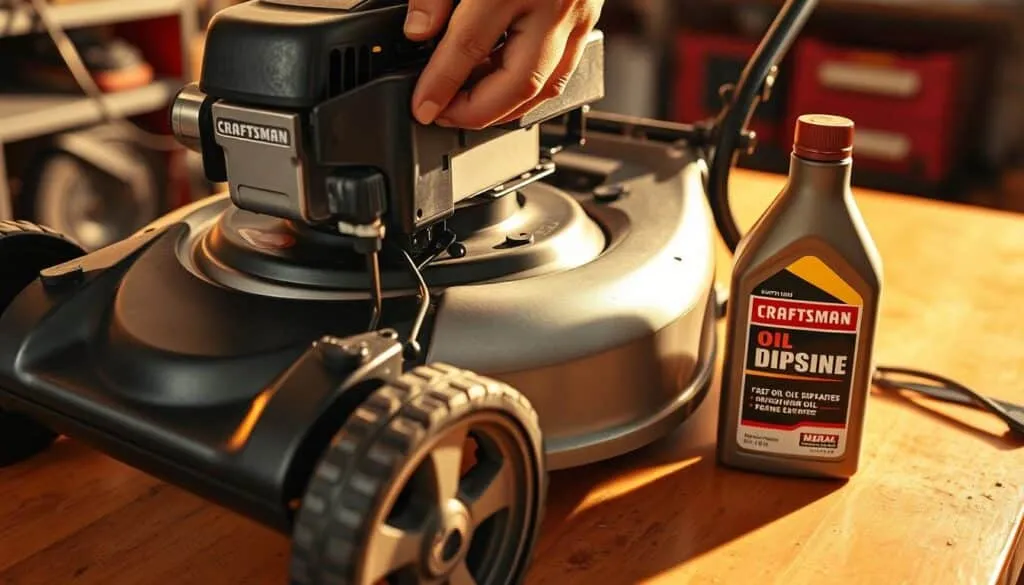
Have you ever wondered if the simple act of checking your lawn equipment’s fluid could be the difference between a flawless yard and a costly repair? Proper engine lubrication is the unsung hero of a well-maintained lawn.
Your Craftsman push mower is a reliable partner in keeping your property looking its best. To protect that investment and ensure peak performance, understanding its specific needs is essential. This guide provides the precise information required for proper upkeep.
We will cover the exact engine lubrication capacity for your machine. You will also learn about the best types of fluid to use and the correct procedure for a change. Following these steps guarantees your equipment runs smoothly season after season.
Whether you are a new owner or performing routine service, this knowledge is powerful. It prevents engine wear and significantly extends the life of your tool. A little care goes a long way in preserving the beauty of your green space.
Key Takeaways
- Knowing the correct oil capacity is critical for engine health and performance.
- Using the right type of oil prevents damage and ensures efficient operation.
- Regular maintenance, including oil changes, extends your mower’s lifespan.
- Proper care protects your investment and keeps your lawn looking great.
- This guide provides exact specifications and step-by-step procedures.
Introduction to Craftsman Push Mower Maintenance
Proper upkeep of your lawn care tools ensures they perform at their best when you need them most during peak mowing seasons. Your Craftsman equipment features reliable Briggs and Stratton engine technology designed for consistent operation.
Why Regular Maintenance Matters
Consistent care prevents unexpected breakdowns and extends your equipment’s service life. Each mowing season brings unique challenges that proper maintenance can address effectively.
Following a scheduled routine keeps your machine running smoothly. This approach saves you time and money while maintaining your lawn’s appearance throughout the year.
Understanding Your Mower’s Engine Requirements
Your Craftsman push mower’s small engine has specific needs for optimal performance. The Briggs and Stratton power plant requires attention to fluid levels and component condition.
As an equipment owner, familiarizing yourself with these requirements ensures long-term reliability. Basic maintenance knowledge applies to most small engine applications in lawn care.
| Maintenance Task | Spring Season | Summer Season | Fall Season |
|---|---|---|---|
| Oil Level Check | Before first use | Every 5-8 hours | Before storage |
| Air Filter Inspection | Monthly | Bi-weekly | Final check |
| Blade Sharpening | Season start | As needed | Pre-storage |
| General Cleaning | After each use | Weekly | Thorough clean |
These maintenance tips help you stay ahead of potential issues. Regular attention to your equipment’s needs ensures reliable performance season after season.
How Much Oil Does a Craftsman Push Mower Take?
Accurate fluid quantities play a crucial role in protecting your outdoor power equipment from premature wear. Knowing the precise measurement ensures your machine operates at peak efficiency throughout the mowing season.

Exploring the Engine Oil Capacity
Most walk-behind push lawn equipment requires between 15 and 18 ounces of lubricant. This standard oil capacity range applies to many residential mower models. The exact amount depends on your specific engine specifications.
Your equipment’s capacity is carefully calculated by manufacturers. Overfilling can cause serious damage to internal components. Always consult your operator’s manual for the precise measurement.
Many Craftsman models feature Briggs and Stratton engines with consistent requirements. These reliable power plants typically fall within the 15 to 18 ounce range. The engine size and design determine the exact fluid volume needed.
Regular checks during the season help maintain proper levels. Change the lubricant every 50 hours or annually for optimal performance. This maintenance routine extends your equipment’s service life significantly.
Selecting the Proper Engine Oil for Optimal Performance
Temperature fluctuations throughout the mowing season directly impact your engine’s lubrication needs. The right engine oil protects your equipment during both cool spring mornings and hot summer afternoons.
Choosing the correct oil type ensures smooth operation across different weather conditions. Your gas equipment requires specific formulations designed for small engines.
Oil Types and Temperature Considerations
SAE 30 works well in warmer conditions above 40°F. This recommended oil provides excellent protection during typical lawn care seasons.
For changing temperatures, SAE 10W-30 offers better cold-weather starting. Monitor levels closely when using this type in heat above 80°F.
Briggs Stratton® suggests synthetic SAE 5W-30 for year-round protection. This oil gas blend flows easily in cold weather while maintaining stability in heat.
Synthetic vs. Conventional Oil Options
Synthetic engine oil provides superior protection across a wider temperature range. It reduces consumption compared to conventional options.
When you use oil with detergent additives, look for SF, SG, SH, or SJ classifications. These keep your gas engine clean without special additives.
Briggs Stratton® confirms synthetic oils work in all conditions without changing maintenance schedules. The right oil type ensures your equipment performs reliably throughout the lawn care season.
Step-by-Step Guide to Checking and Changing Your Mower Oil
Verifying your equipment’s lubrication is a straightforward process that safeguards its internal components. Following the correct procedure ensures an accurate reading and prevents potential damage.

This guide breaks down the essential tasks. You will learn to check oil levels correctly and understand when a full change oil is necessary.
How to Check Your Oil Level
Always park your machine on a flat, level surface before you start. Locate and remove the dipstick cap from the engine.
Pull out the dipstick and wipe it clean with a rag. Reinsert it fully, then remove it again to view the level. The fluid should be between the “Full” and “Add” marks.
If the level is low, add a small amount of lubricant. Wait a moment for it to settle before you check oil again. This prevents overfilling.
Make sure you’re aligning the cap teeth with the tube grooves when reinstalling. A proper seal keeps dirt out.
Guidelines for an Effective Oil Change
For most walk-behind mowers, a full fluid replacement is needed every 50 operating hours. An annual change oil is recommended if you use the equipment less.
Adhering to this schedule is crucial for engine longevity. It maintains warranty coverage and ensures peak performance for your lawn care.
Regularly check oil during the mowing season. A quick inspection before you use the lawn mower can prevent major issues.
| Maintenance Step | Checking Oil | Changing Oil |
|---|---|---|
| Frequency | Before each use | Every 50 hours or annually |
| Primary Tool | Dipstick | Drain pan and fresh lubricant |
| Key Action | Verify level is between marks | Completely replace old fluid |
| Critical Tip | Park on level ground | Dispose of used oil properly |
This comparison helps you manage both routine checks and scheduled maintenance effectively for your outdoor power equipment.
Conclusion
The difference between seasonal performance and long-term reliability lies in attention to detail. Your understanding of proper fluid capacity protects your equipment investment effectively.
Push mower maintenance differs significantly from riding lawn equipment requirements. The compact design of walk-behind mowers demands more frequent checks during heavy use periods.
Briggs Stratton engines maintain their reputation through consistent care. Following manufacturer guidelines for oil changes and fluid levels ensures optimal operation.
Whether maintaining residential lawn equipment or commercial riding mowers, the principles remain unchanged. Proper care guarantees your tools perform season after season.
FAQ
What is the typical oil capacity for a Craftsman push mower?
Most Craftsman push mowers with Briggs & Stratton engines hold approximately 20 ounces of oil. This is a common capacity for small engines. Always consult your owner’s manual for the exact specification for your specific model to ensure you add the correct amount.
How often should I change the oil in my lawn mower?
For optimal engine health, you should change the oil every season or after every 25-50 hours of operation. Regular maintenance like this helps keep your Briggs & Stratton engine running smoothly and extends the life of your equipment.
What type of oil should I use in my Craftsman mower?
You should use a high-quality detergent oil that is API certified for service classification SJ or higher. Many owners use SAE 30 for warmer temperatures, but a multi-viscosity oil like 10W-30 is often recommended for varying climates. Check your manual for the manufacturer’s specific recommendation.
How do I check the oil level correctly?
Make sure your mower is on a level surface. Clean the area around the dipstick cap, then remove and wipe the dipstick clean. Reinsert it fully without screwing it in, then pull it out again to check the level. The oil should be between the “Full” and “Add” marks on the dipstick.
Can I use synthetic oil in my push mower?
A> Yes, synthetic oil is an excellent choice for small engines. It provides better protection in extreme temperatures and can improve engine performance. Both conventional and synthetic options are suitable, as long as they meet the viscosity and service classification requirements for your engine design.