
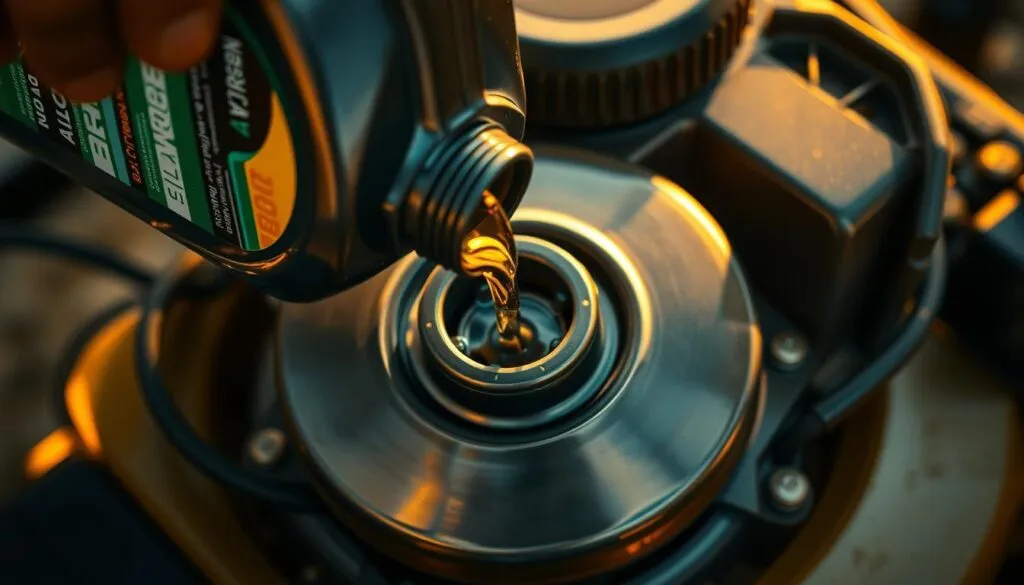
Have you ever wondered if that quick oil top-off could actually be harming your equipment? Many homeowners make this common mistake without realizing the consequences.
Proper lubrication is essential for your lawn mower’s engine health. The right oil level ensures optimal performance and prevents costly damage. Using incorrect amounts can lead to serious engine problems.
Different types of equipment require specific oil capacities. Walk-behind models typically need less than riding mowers. Your owner’s manual provides the exact specifications for your particular machine.
Maintaining correct oil levels protects your investment. It ensures smooth operation throughout the mowing season. Proper care extends the lifespan of your equipment significantly.
This guide will help you understand the fundamentals of lawn mower maintenance. You’ll learn to check levels correctly and choose the right products. Protecting your engine starts with knowing these basic principles.
Key Takeaways
- Proper oil levels are critical for engine performance and longevity
- Different mower types require specific oil capacities
- Always consult your owner’s manual for exact specifications
- Correct lubrication prevents premature wear and costly repairs
- Regular maintenance ensures optimal equipment performance
- Understanding oil requirements protects your investment
- Proper care extends your mower’s operational lifespan
Understanding Lawn Mower Oil Basics
Temperature fluctuations throughout the mowing season directly impact which lubricant will protect your equipment best. The right choice ensures smooth operation and prevents engine wear.
Oil Types and Their Importance
Selecting the proper lubricant depends on your local climate. SAE 30 works well in warmer conditions above 40°F. For changing temperatures, SAE 10W-30 offers versatile performance.
Synthetic SAE 5W-30 provides superior protection across all conditions. It improves cold starts and reduces consumption. Always choose high-quality detergent oils with SF/SG/SH/SJ ratings.
Avoid special additives that can harm your engine. Synthetic options maintain their benefits without changing service intervals.
Engine Capacity and Manufacturer Guidelines
Different equipment requires specific amounts of lubricant. Walk-behind models typically need 15-18 ounces. Riding mowers often require 48-64 ounces.
Your owner’s manual provides exact specifications for your model. Following these recommendations ensures optimal lubrication and performance.
Understanding capacity prevents overfilling or underfilling. Both scenarios can lead to serious engine damage over time.
Step-by-Step Process for Changing Your Lawn Mower Oil
Following proper procedures when servicing your equipment guarantees optimal lubrication and protection. Each step in the oil change process contributes to engine longevity and performance.
Preparing Your Mower and Safety Precautions
Begin by positioning your equipment on a flat, level surface. Ensure the engine has cooled completely before starting any maintenance work. This prevents burns and ensures accurate oil drainage.
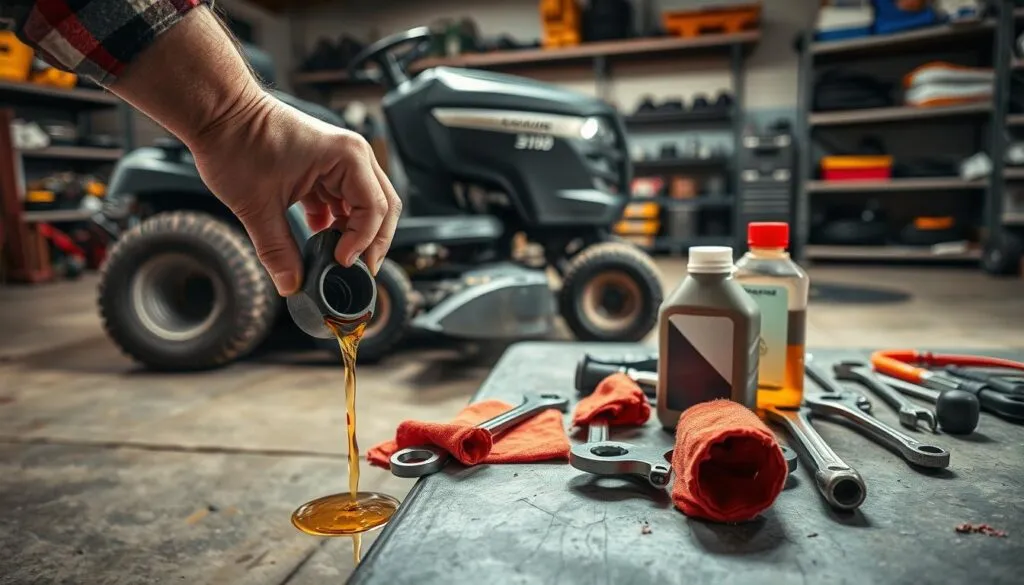
Gather all necessary parts and tools before beginning. You’ll need fresh lubricant, a collection pan, protective gloves, and safety glasses. For riding models, have an oil filter wrench ready.
Run the engine for about 15 minutes to warm the existing lubricant. This makes drainage more effective. Always disconnect the spark plug wire as your first safety measure.
Draining Old Oil and Adding New Oil
Locate the fill cap, typically marked “oil” on the engine. Rotate it counterclockwise to remove. Carefully tilt the equipment with the oil side downward.
Allow the old lubricant to drain completely into your collection pan. For riding models, replace the filter using proper technique. Apply fresh oil to the new filter’s gasket before installation.
Return the equipment to its upright position. Slowly pour new lubricant through the fill tube. Use the dipstick to check levels multiple times, avoiding overfilling.
Proper disposal completes the process. Take used oil to recycling facilities. Wipe any spills to maintain a clean workspace.
Key Maintenance Tips for Optimal Mower Performance
Establishing a consistent maintenance routine transforms your equipment’s performance and longevity. Regular attention prevents unexpected breakdowns during peak mowing season. Your commitment to proper care ensures reliable operation.
Routine Checks and Engine Care
Develop a regular schedule for your lawn equipment. Check oil levels before each engine start using the dipstick. This simple habit prevents lubrication issues.
Change lubricant every 50 hours for walk-behind models. Riding mowers require changes every 100 hours. Annual replacement works if you don’t track operating hours.
New equipment needs special attention. Perform the first oil change after 5-10 hours. This removes manufacturing residue from the break-in period.
Watch for warning signs indicating needed service. Black or gritty oil on the dipstick signals degradation. Unusual engine noises or reduced performance also require attention.
Your maintenance routine should include air filter inspections. Check filters before each mowing season. Clean or replace clogged filters to maintain engine efficiency.
Keep a maintenance journal documenting service dates and hours. This helps track intervals accurately. Proper records identify developing patterns early.
How much oil should i put in my lawn mower: Accurate Measurements for Every Engine
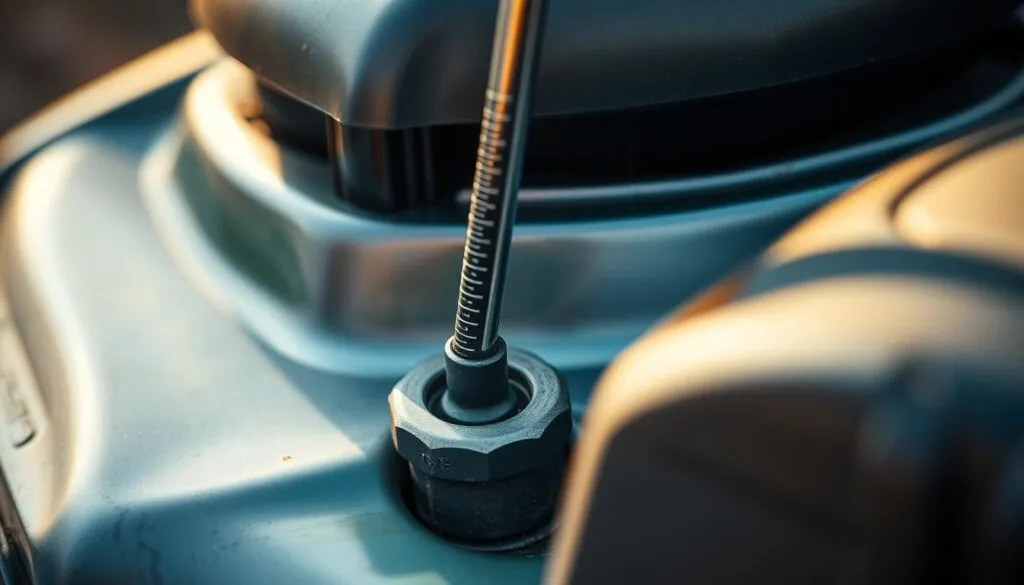
Your dipstick serves as the ultimate guide for determining correct lubrication levels. This simple tool provides precise feedback about your engine’s needs. Proper measurement techniques ensure optimal performance and longevity.
Measuring with the Dipstick for Correct Levels
Park your equipment on a flat surface before checking. Remove the dipstick and wipe it completely clean. Reinsert it fully, then withdraw it for an accurate reading.
The oil level should fall between the “Full” and “Add” marks. This range represents the safe operating zone for your lawn mower engine. Clean the dipstick before each measurement to avoid false readings.
Add small amounts when levels appear low. Allow time for the lubricant to settle between additions. This prevents overfilling that can cause engine damage.
Adjusting Oil Quantities Based on Temperature and Usage
Environmental conditions affect your engine oil requirements. Hot weather may increase consumption with certain lubricant types. Synthetic oil often performs better across temperature ranges.
Your maintenance schedule should reflect operating hours. Intensive use demands more frequent checks and changes. Adjust your routine based on actual equipment usage patterns.
Following the Owner’s Manual and Manufacturer Recommendations
Consult your manual for specific capacity information. Different mowers require varying amounts of lubricant. Walk-behind models typically need 15-18 ounces, while riding units require 48-64 ounces.
Manufacturer recommendations provide the definitive answer for your equipment. These guidelines account for your specific engine design. Following them prevents both underfilling and overfilling issues.
Combine dipstick measurements with manual specifications for best results. This approach ensures proper lubrication throughout the mowing season.
Conclusion
The knowledge you’ve gained about engine care transforms routine maintenance into a simple, effective process. Your understanding of proper lubrication ensures your equipment operates at peak efficiency throughout every mowing season. This practical expertise protects your investment and delivers reliable performance.
Regular checks before each use and timely changes based on operating hours keep your engine running smoothly. Selecting the correct mower oil for your climate conditions prevents premature wear. Following manufacturer recommendations in your owner’s manual guarantees optimal lubrication levels.
Your consistent attention to maintenance extends your lawn mower’s operational lifespan significantly. The step-by-step procedures and measurement techniques covered provide confidence in handling your equipment’s needs. Your commitment to proper care ensures years of dependable service for your lawn maintenance tasks.
FAQ
What type of oil is best for my mower engine?
The best type depends on your engine and the temperatures you operate in. Most small engines use SAE 30 for warmer weather. For varied temperatures, a 10W-30 is common. Always check your owner’s manual for the manufacturer’s specific recommendations to ensure proper engine protection.
How do I check the oil level in my equipment?
First, ensure your mower is on a level surface. Locate the dipstick, wipe it clean, reinsert it fully, and then pull it out again to check. The oil should be between the “Full” and “Add” marks on the dipstick. Never overfill, as this can harm engine parts.
How often should I change the oil in my lawn mower?
A good rule is to change the oil every 25-50 hours of operation or at least once per mowing season. For new equipment, an initial change after the first 5 hours is often recommended. Refer to your manual for exact intervals based on your specific model and usage.
What happens if I put too much oil in the engine?
Overfilling can cause serious damage. Excess oil can lead to frothing, which reduces lubrication and can cause overheating. It may also lead to oil leaking into the air filter or smoking from the exhaust, harming overall mower performance.
Can I use synthetic oil in my lawn mower?
Yes, synthetic oil is often an excellent choice as it provides superior protection, especially under high temperatures and during extended operation. However, always verify that it meets the specifications outlined in your engine’s manual.
Where can I find the oil capacity for my specific model?
The most accurate information is in your owner’s manual. If you’ve lost it, you can usually find the capacity online by searching for your mower’s brand, model number, and engine specifications. Never guess the amount.